
Last updated October 31, 2026
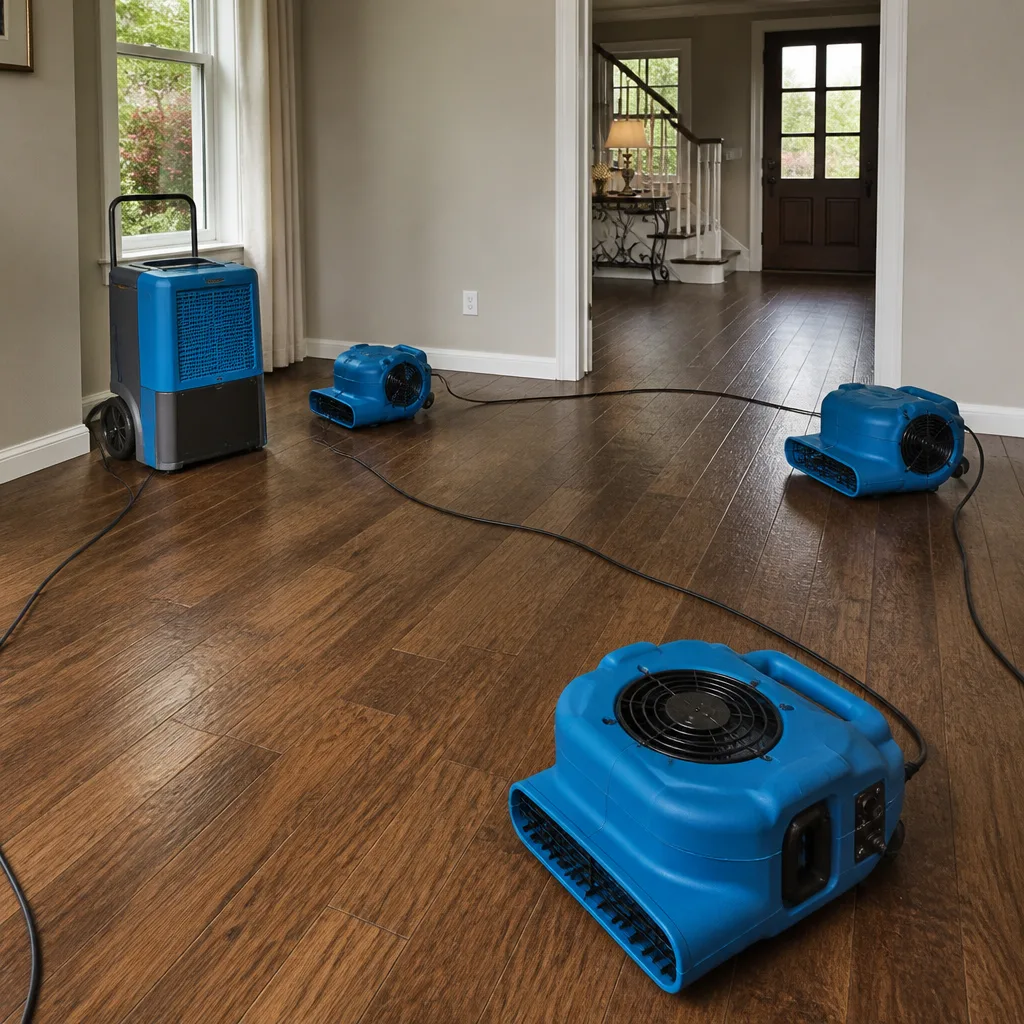 Water damage drying
 Fire & smoke cleanup
 Mold remediation
 Storm response
 Sewage cleanup
 Reconstruction
Free visual inspection and a written scope of work before any mitigation begins - photos, moisture readings, and drying logs go in your claim file
The scope we write is the scope we bill. Anything new gets shown to you, in writing, before we touch it.
Get your free estimateWater Damage Restoration Troubleshooting: Common Problems and How to Fix Them
If your floors are buckling two weeks after a restoration company said the job was done, the moisture meter readings they logged, if they logged any, will tell you exactly who’s at fault. In Orange, where coastal humidity meets older construction, incomplete dry-outs are more common than most homeowners realize. This Complete Guide to Damage Restoration in Orange walks you through the specific failures that cause post-restoration problems, how to diagnose them yourself, and what a competent crew must do to correct the work. You’ll learn how to read moisture meters, spot the three classic signs of a botched dry-out, and understand when a simple troubleshooting visit fixes things versus when the entire drying protocol needs to be redone.
Restoration work we handle
Quick Answer
Most problems with our Water Damage Restoration services stem from one root cause: the drying protocol was cut short or the affected area boundary was drawn too narrowly. You can verify this yourself with a moisture meter, which should read under 15% wood moisture equivalent in dry materials. If readings remain elevated, odors return, or floors buckle after equipment was removed, the previous contractor failed to meet IICRC S500 drying standards, and corrective action is required.
Table of Contents
- Why Floors Buckle After Restoration Is “Complete”
- How to Read a Moisture Meter Yourself
- The Three Signs of an Incomplete Dry-Out
- Why Mold Smell After Restoration Means the Boundary Was Wrong
- How to Pull Drying Logs from a Previous Contractor
- Troubleshooting Visit vs. Full Re-Remediation: IICRC S500 Standards
- Common Mistakes to Avoid
- When to Call a Professional
- Frequently Asked Questions
- The Bottom Line
Why Floors Buckle After Restoration Is “Complete”
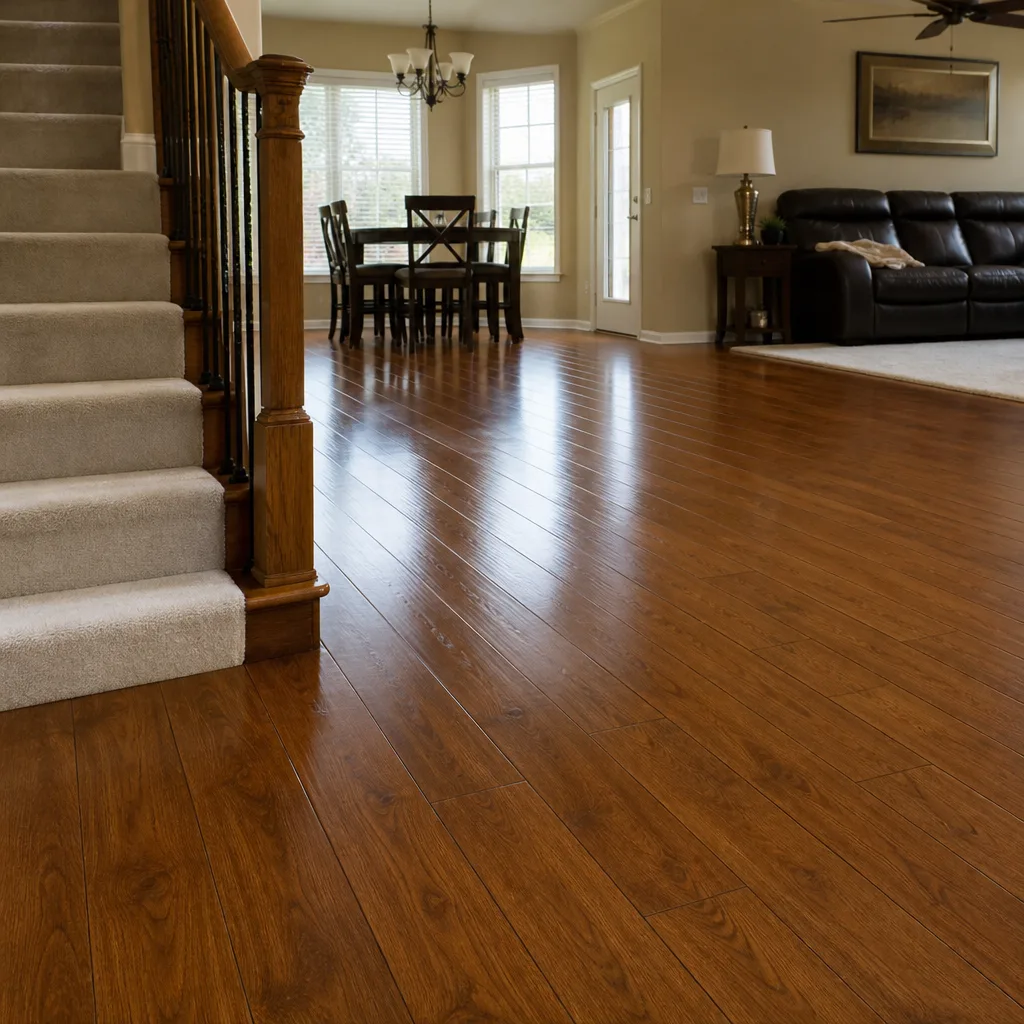
A floor that buckles weeks after a restoration company packed up its equipment almost always means one thing: moisture was trapped beneath the surface when the dry-out was declared finished. Wood absorbs water slowly and releases it even more slowly. In Orange, where homes often sit on slab foundations with engineered hardwood or laminate over concrete, that trapped moisture has nowhere to go except up through the flooring material.
The sequence is predictable. Water penetrates the flooring, the visible surface gets dried with air movers, the technician checks a few spots with a moisture meter, and the equipment comes out. But subsurface readings in the concrete slab or subfloor remain elevated. Over the following weeks, that moisture migrates upward, the wood expands, and the boards begin to cup, crown, or buckle at the seams. What looks like a new problem is actually the original problem that was never fully resolved.
We see this pattern repeatedly in homes across Orange, and the fix is straightforward: the affected flooring must be pulled back to expose the subfloor, the slab or subfloor must be dried to IICRC S500 target moisture levels, and new flooring reinstalled. Patching the buckled section without addressing the moisture source just moves the problem six inches down the hall. For a deeper look at how proper water damage restoration should be performed, see our Water Damage Restoration in Orange page.
How to Read a Moisture Meter Yourself
A basic pinless moisture meter costs between $40 and $80 and is the single best tool a homeowner can own for verifying a contractor’s drying claims. Before any restoration crew demobilizes equipment, you can check their work in about ten minutes. Here’s how.
- Get a pinless meter with a wood and building materials setting. Models from general hardware stores work fine for verification purposes. The meter sends an electromagnetic signal into the material and measures moisture content as a percentage.
- Press the meter flat against the surface. Pinless meters read approximately 3/4 inch deep, so they capture subsurface moisture that visual inspection misses.
- Check multiple points. Take readings at the center of the affected area, the edges, and at least 3 feet beyond what the contractor marked as the dry-out boundary. Moisture migrates laterally, and the boundary is often drawn too small.
- Record the numbers. Dry wood typically reads 8% to 12% moisture content. Dry drywall reads 5% to 12%. Anything above 15% in wood or 12% in drywall means drying is incomplete.
- Compare dry and wet readings. Always take a baseline reading from an unaffected area of the same material type. If your affected wall reads 18% and the opposite wall reads 9%, the affected wall is not dry.
If the contractor’s final moisture log shows numbers inconsistent with what your meter reads, ask for an explanation. IICRC-certified crews document readings at every visit and can walk you through their drying curve data. A crew that refuses to show you drying logs or dismisses your meter readings has something to hide. Our teams at Renew Water Damage home have always operated on the principle that homeowners deserve to see the data that justifies equipment demobilization.
The Three Signs of an Incomplete Dry-Out
Even without a moisture meter, your senses and basic observation can catch most incomplete dry-outs. In our experience across Orange, three indicators show up again and again.
1. Elevated Pin Readings in Adjacent Materials
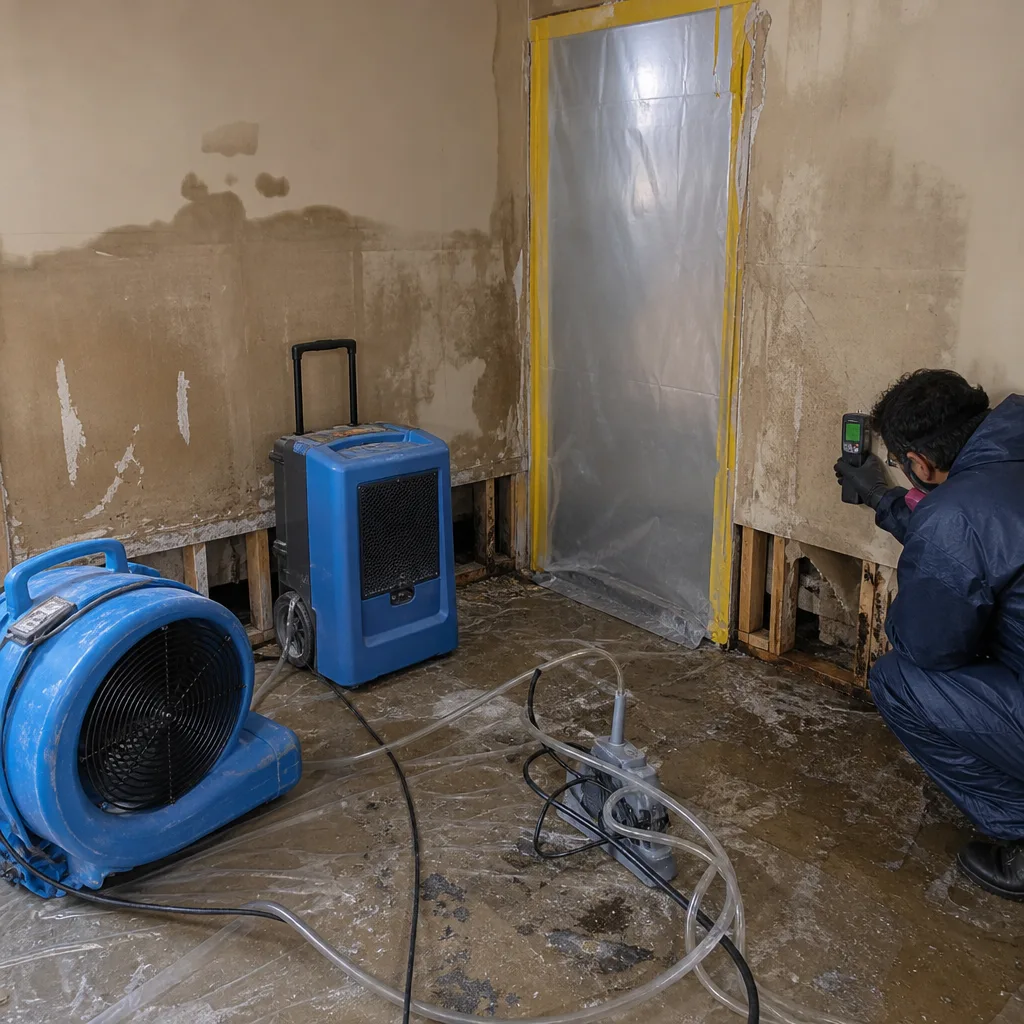
Water doesn’t respect property lines, and it doesn’t respect room boundaries either. When a kitchen flood is dried, the crew should check the dining room wall on the other side of the affected wall, the hallway flooring that butts against the affected tile, and the cabinet bases adjacent to the water source. If those materials weren’t checked, they weren’t dried. A pin meter pushed into baseboards, under cabinet toe kicks, and into the wall cavity behind the affected area will reveal elevated readings that a surface scan missed. This is why commercial-grade equipment like Injectidry wall-cavity drying systems matter: they pull moisture from spaces that air movers can’t reach.
2. HVAC Musty Odor Cycling
When your AC or heating system runs and you catch a musty smell that disappears when the system cycles off, that’s moisture inside the ductwork or the HVAC cabinet downstream of the original water event. Water that entered a floor vent during the incident can sit in low points in the ductwork for months. Standard restoration crews often skip duct inspection entirely. A proper dry-out includes checking the HVAC system for moisture, cleaning any affected duct sections, and replacing saturated insulation within the cabinet. If the musty smell returns whenever the HVAC kicks on, the drying protocol missed a whole system, not just a corner.
3. Drywall That Passes Visual But Fails Thermal Imaging
Drywall can look perfectly fine, paint intact, no staining, no warping, while the wall cavity behind it remains wet. Thermal imaging cameras reveal temperature differentials caused by evaporative cooling, which indicates moisture. IICRC-certified technicians should perform thermal imaging during the initial assessment and again before demobilizing equipment. If no thermal scan was performed, or if the scan was only done at the start, there’s no way to confirm the cavity is dry. A wall that feels cool to the touch compared to surrounding walls is a low-tech version of the same test. In Orange’s climate, where humidity regularly sits above 60%, cavity moisture doesn’t resolve on its own.
Why Mold Smell After Restoration Means the Boundary Was Wrong
A musty or moldy smell that returns after restoration is not bad luck. It means the affected material boundary was drawn too narrow. When water strikes, moisture wicks into materials far beyond the visible water line. Drywall wicks upward and sideways. Subfloor water travels under walls into adjacent rooms. Carpet padding acts like a sponge and carries moisture meters beyond the obvious wet zone.
IICRC S500 standards require technicians to establish a drying perimeter that extends beyond the visible affected area, then verify with moisture mapping that the perimeter captures all wet materials. When that perimeter is drawn at the visible water line instead of the moisture-mapped boundary, the outer edges of the wet zone never get dried. Mold then establishes in the warm, damp margin that was left behind. That smell is mold metabolizing in materials that should have been removed or dried.
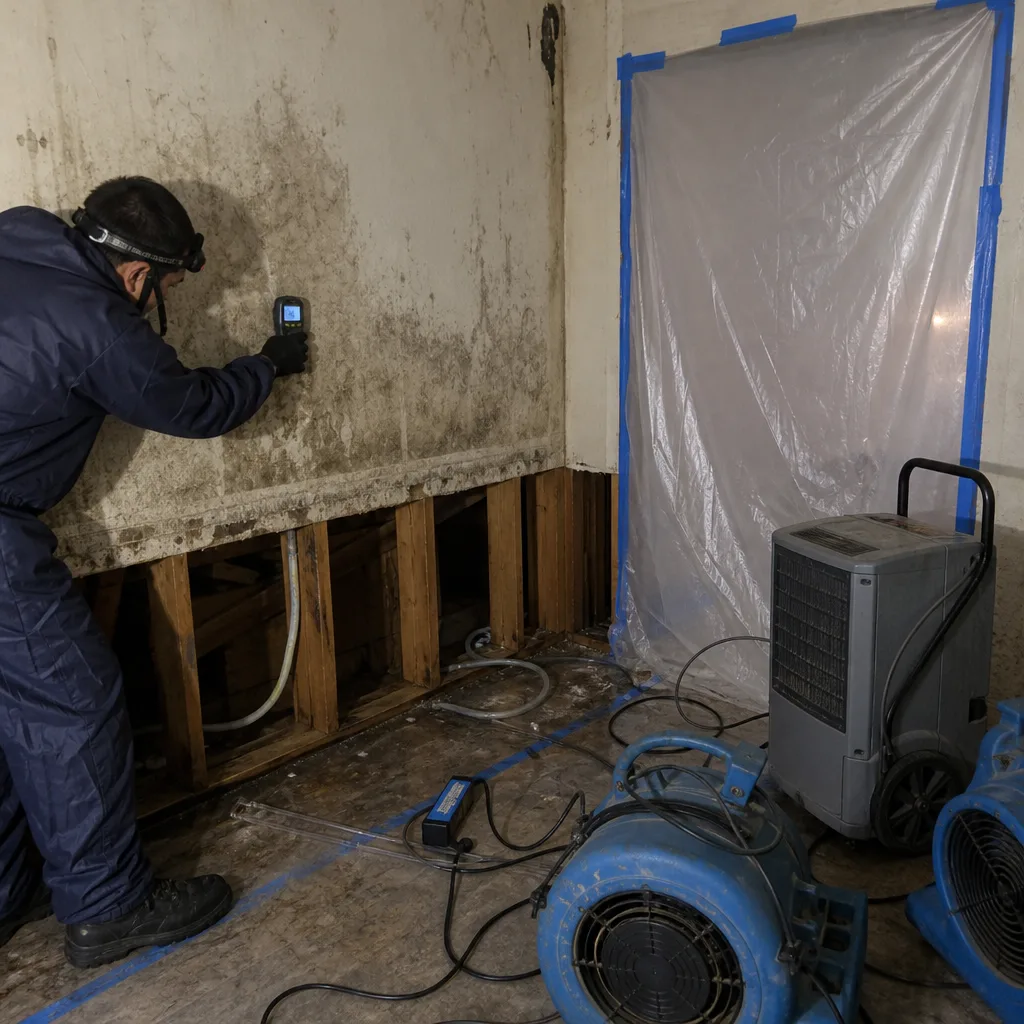
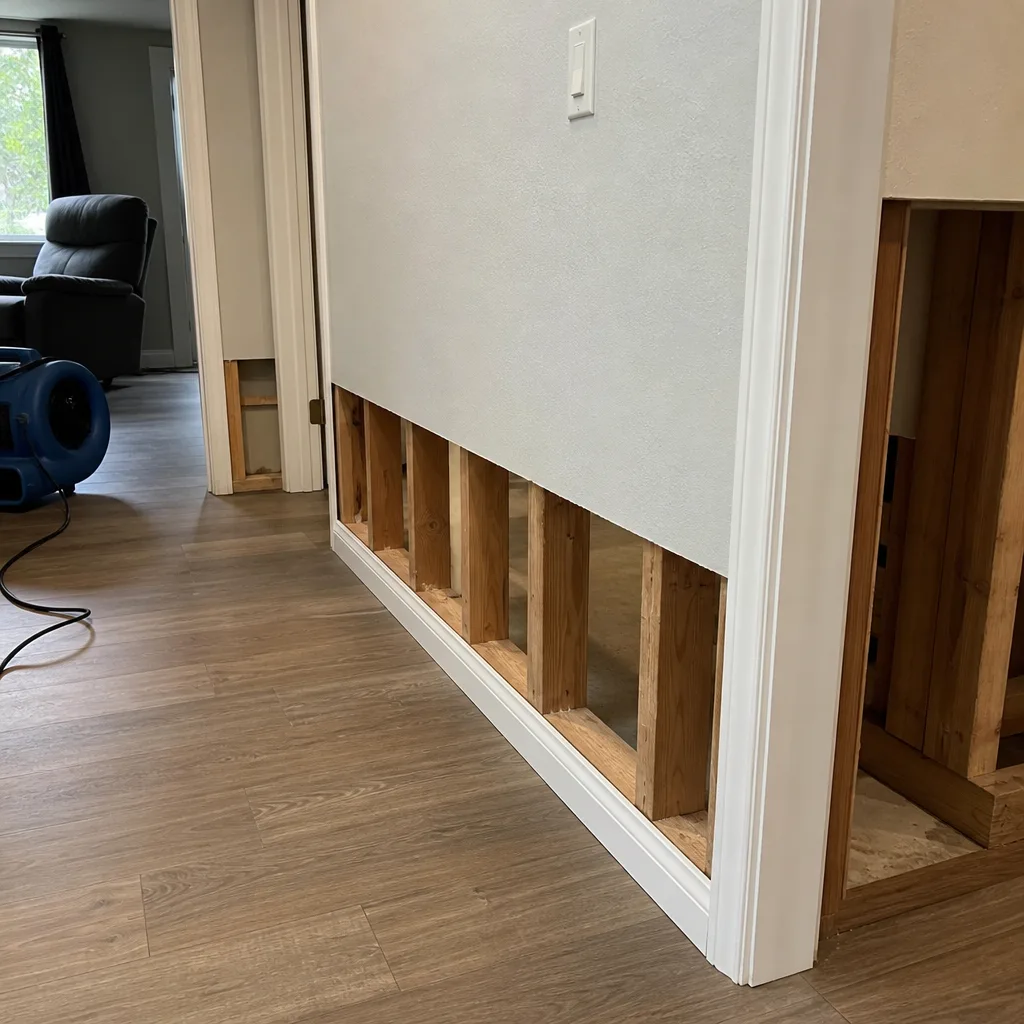
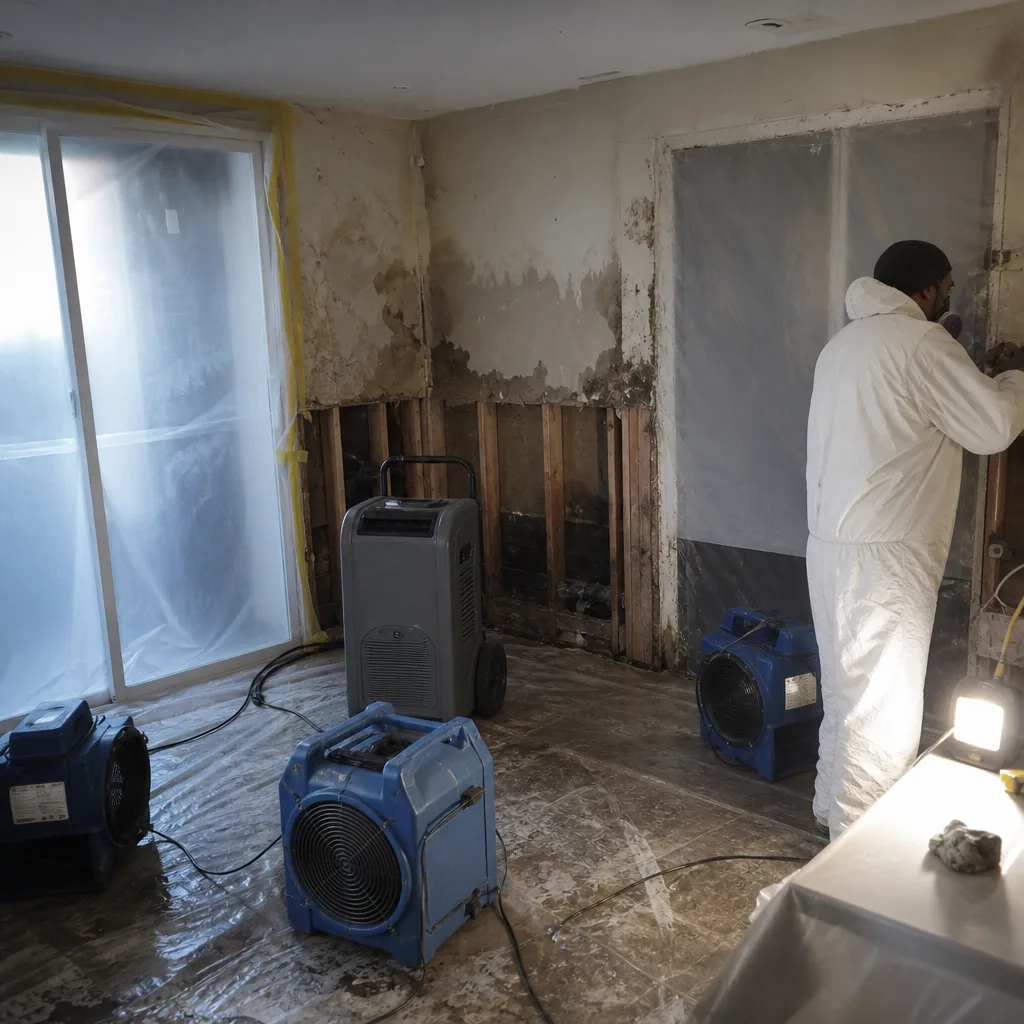
Proper material removal scope looks like this: removing all drywall that reads above acceptable moisture levels, cutting it back to the studs at the moisture boundary plus a margin, removing all saturated insulation, and pulling baseboards and flooring that are trapping moisture against subfloor. The goal is to expose the entire wet cavity so drying equipment can do its job. If the original crew removed only what was visibly stained, they left wet material behind. For a deeper understanding of what proper mold remediation looks like after a bad water job, see our Mold Remediation in Orange page.
How to Pull Drying Logs from a Previous Contractor
Drying logs are the documentary record of a restoration project. IICRC-certified crews maintain them as standard practice: date, time, technician name, moisture readings at each monitoring station, equipment placement, psychrometric readings (temperature and relative humidity), and drying goals. If you’re disputing a restoration result or hiring a second-opinion crew, those logs are your evidence.
Here’s how to obtain and use them.
- Request them in writing. Send an email to the original contractor requesting all drying logs, moisture maps, psychrometric readings, and equipment inventory from your project. Note that you’re requesting documentation under the terms of your service agreement.
- Ask for the initial moisture map. This document shows the affected area as recorded at the start of the job. It should include readings from every affected room and adjacent areas. If no moisture map exists, the initial assessment was incomplete.
- Request daily moisture readings. Each day equipment ran, the technician should have logged readings at fixed monitoring stations. The numbers should trend downward. Flat or erratic readings mean equipment wasn’t drying effectively or wasn’t running consistently.
- Ask for the final readings and drying goals. The final log should show every monitoring station below the stated drying goal, normally under 15% wood moisture equivalent. If the final log shows some stations above goal or unrecorded, drying was not verified complete.
- Give the logs to your new contractor. A second-opinion crew can use the original logs to identify which materials were never brought to target moisture, which areas were under-served by equipment, and where the drying protocol failed. That data shortens the diagnosis and strengthens your case if you pursue recovery from the original company.
If the original contractor can’t produce drying logs because they don’t use them, that tells you everything. Restoration built on industry standards, not contractor shortcuts, always includes documentation. Our teams operate with the same logging discipline required of large commercial losses because residential jobs deserve the same rigor.
Troubleshooting Visit vs. Full Re-Remediation: IICRC S500 Standards
Not every post-restoration problem requires tearing everything out and starting over. A qualified IICRC-certified crew can often distinguish between a minor drying gap and a systemic protocol failure. The distinction matters because it determines scope and cost.
When a Troubleshooting Visit Is Sufficient
- Elevated readings are isolated to a single contained area less than 10 square feet.
- The original drying logs show near-target readings across most stations with one or two stragglers.
- No mold odor is present and visual inspection shows no active microbial growth.
- The affected material is accessible without demolition, such as an exposed subfloor or open wall cavity.
- Targeted equipment, such as a single dehumidifier or a few air movers with Injectidry panels, can finish the job in 3 to 5 days.
When Full Re-Remediation Is Required Under IICRC S500
- Mold is visible or confirmed by laboratory analysis in any material.
- Moisture readings remain above 20% in structural wood weeks after the original event.
- Drying logs are missing, inconsistent, or show no downward trend in moisture readings.
- The affected boundary clearly missed adjacent rooms or wall cavities.
- Building materials show signs of deterioration: crumbling drywall, separating baseboards, swollen subfloor.
- HVAC ductwork was exposed to water and was never inspected or cleaned.
IICRC S500 is the standard of care for professional water damage restoration. It defines the drying process, documentation requirements, and verification procedures. When a previous contractor’s work falls short of S500, full re-remediation is often the only responsible path. In Orange, where multi-level homes and condos complicate water travel paths, proper initial assessment is the difference between a clean dry-out and a recurring problem. Our Fire Damage Restoration in Orange work follows the same standards because fire suppression water causes the same hidden moisture problems.
Common Mistakes to Avoid
- Accepting surface drying as complete drying. A floor that feels dry to the touch can hide 30% moisture in the subfloor beneath. Demand moisture meter readings in the subfloor, not just the surface material.
- Demobilizing equipment too early. Drying equipment often gets removed when the surface looks dry but before structural materials reach target moisture. Insist on final readings that show every monitoring station at or below drying goals.
- Drawing the affected boundary at the visible water line. Moisture wicks well beyond the stain. The drying perimeter must extend into unaffected-looking materials that meter reads show as wet.
- Ignoring the HVAC system. Water that enters ductwork stays there until someone looks for it. A standard dry-out includes duct inspection and cleaning where needed.
- Skipping thermal imaging. Visual inspection catches surface problems. Thermal imaging catches hidden moisture. A crew that doesn’t use it is guessing.
- Hiring by price alone. The cheapest restoration quote in Orange often excludes documentation, cavity drying, and HVAC inspection. Those omissions cost more later.
- Not requesting drying logs. If the contractor can’t produce documentation of daily moisture readings, they weren’t following a defensible drying protocol.
When to Call a Professional
Call a restoration professional when your own moisture meter reads above 15% in wood or above 12% in drywall more than a week after the original incident, when you smell musty odors that persist or cycle with your HVAC, when floors show cupping or buckling, or when you find visible mold anywhere in the previously affected area. These are not problems that resolve themselves. The longer trapped moisture remains, the deeper the damage goes and the more expensive the corrective work becomes. If you’re disputing a previous contractor’s work, a second-opinion assessment with documentation gives you the evidence you need. Renew Water Damage offers free estimates in Orange, call (833) 620-3891 to schedule an assessment.
Frequently Asked Questions
A properly executed drying protocol typically takes 3 to 5 days for most residential water losses in Orange, though larger or deeper losses can take 7 to 10 days. The drying time depends on the materials affected, the depth of water penetration, and the drying conditions. IICRC-certified crews monitor daily and remove equipment only when moisture readings hit documented drying goals. If your contractor pulled equipment after 2 days without final readings at target moisture, the job wasn’t finished.
Most homeowners insurance policies cover water damage restoration performed by licensed contractors, and many will also cover corrective work when the original restoration was demonstrably incomplete. The key is documentation: drying logs, moisture readings, photographs, and a written assessment from a second-opinion contractor. If the original work fell below IICRC S500 standards, your insurer may pursue recovery from the original contractor or cover the corrective scope directly. Call (833) 620-3891 for help documenting your situation.
Household fans and consumer dehumidifiers can handle small, contained water spills on non-porous surfaces, but they cannot dry wall cavities, subfloors, or structural materials. Professional drying requires commercial-grade equipment like Dri-Eaz and Phoenix dehumidifiers paired with high-volume air movers, and often Injectidry systems for cavity drying. Without that equipment and the moisture mapping to verify completion, DIY drying leaves hidden moisture that causes mold and structural damage later.
IICRC S500 standards define dry as wood moisture content at or below 15% wood moisture equivalent, with drywall at or below 12%. Readings should be taken at multiple depths and locations, including structural materials behind finished surfaces. A single surface reading below 15% does not confirm the wall cavity is dry. Always ask for the full moisture map, not a summary number.
When the musty smell appears only during HVAC operation, moisture is trapped in the ductwork or the HVAC cabinet, usually from water that entered a floor vent during the original incident. That moisture supports microbial growth inside the duct, and air moving through the system distributes the odor throughout the house. The fix is duct inspection, cleaning of affected sections, and replacement of any saturated insulation inside the cabinet. This is a commonly missed step in residential dry-outs.
Look for IICRC certification, documented drying protocols, thermal imaging capability, and a willingness to share moisture readings and drying logs. Ask about their equipment: do they run commercial-grade dehumidifiers and air movers, or household units? Do they offer cavity-drying systems like Injectidry for wall and subfloor moisture? In Orange, where homes range from older stucco construction to modern condos, experience with local building types matters. Call (833) 620-3891 to ask us directly about our equipment and process.
The Bottom Line
Post-restoration problems are not mysterious. They trace back to specific, identifiable failures in the drying protocol: boundaries drawn too narrow, equipment removed before materials hit target moisture, cavities never dried, HVAC systems never inspected, and documentation never kept. A homeowner with a $60 moisture meter and this guide to Choosing the Right Damage Restoration Brand can catch most of these failures before the crew packs up. When the original contractor’s work falls short, IICRC S500 standards define what a proper fix looks like, and drying logs provide the evidence to hold someone accountable. If you’re dealing with a failed dry-out in Orange, call (833) 620-3891 for a free assessment and a straight answer on what corrective work is actually needed.
Written by the team at Renew Water Damage, serving Orange since 2015.
See the difference
 Before
 After
 Before
 After
 Before
 After