Last updated October 31, 2026
 Water damage drying
 Fire & smoke cleanup
 Mold remediation
 Storm response
 Sewage cleanup
 Reconstruction
Free visual inspection and a written scope of work before any mitigation begins - photos, moisture readings, and drying logs go in your claim file
The scope we write is the scope we bill. Anything new gets shown to you, in writing, before we touch it.
Get your free estimateChoosing the Right Damage Restoration Brand: A Buyer’s Guide for Orange
Here’s the uncomfortable truth that most homeowners in Orange discover too late: the national restoration brand on the side of the truck tells you almost nothing about the person who steps out of it. Two Servpro franchises operating ten miles apart in Orange County can have completely different equipment inventories, technician certification rates, and average response times. The brand guarantees a logo and a color scheme, not a drying standard. This guide will teach you how to evaluate what actually determines outcomes: the equipment on the truck, the certifications in the technician’s wallet, and the organizational structure of the specific local operator who will walk through your door in Orange. For more guides & resources, see our blog.
Quick Answer
The right damage restoration company in Orange isn’t chosen by brand recognition. It’s chosen by verifying three operator-level facts: the individual technician’s IICRC certifications (not just the company’s franchise agreement), the specific drying equipment the company owns rather than rents, and the company’s willingness to provide a written scope of work before starting. Independent IICRC-certified restoration specialists operating in Orange often deliver faster response times and more thorough drying outcomes than franchise operators because their business model depends on technical competence rather than brand licensing. Before you sign anything, ask to see the technician’s certification card and a line-item equipment plan for your specific loss.
Restoration work we handle
Table of Contents
- The Franchise Problem: Why Brand Names Fail in Restoration
- The Certification Hierarchy: Individual Credentials Beat Company Accreditations
- The Equipment Inventory Question That Separates Specialists From Generalists
- Orange Climate Realities That Shape Restoration Work
- Organizational Signs of a True Restoration Specialist
- Red Flags in the First Phone Call
- How Insurance Shapes the Restoration Process in Orange
- A Step-by-Step Selection Process for Orange Homeowners
The Franchise Problem: Why Brand Names Fail in Restoration
The damage restoration industry runs on a franchise model that creates what economists call information asymmetry: the consumer thinks they’re buying a standardized national service, but they’re actually buying the capabilities of a single independent operator who purchased naming rights. In Orange, where older homes built before the 1980s often contain plaster walls, galvanized supply lines, and original subfloor materials, the variance between operators matters more than it does in newer development areas like Irvine or Tustin Legacy.
When you hire a national restoration franchise, here’s what the franchise agreement guarantees: the operator can use the brand’s name, buy chemicals and supplies through the brand’s purchasing program, and follow the brand’s operations manual. Here’s what the franchise agreement does not guarantee: the number of LGR dehumidifiers the operator owns, whether the technicians hold current IICRC certifications, how many jobs the operator runs simultaneously, or whether the operator has ever handled a Class 3 water loss in a structure like yours. Those variables are determined by the local owner’s capital investment and hiring practices, not by the corporate franchisor.
We see the consequences regularly in Orange. A homeowner with a slab leak in an Old Towne Orange bungalow calls a national brand, gets a franchise operator from a different city who runs five crews across three counties, and receives a drying plan that relies on rental equipment scheduled for pickup two days later. The moisture sits, the humidity spreads, and secondary damage sets in. The brand was familiar. The outcome was not.
None of this means franchise operators are universally bad. Some franchise owners in Orange County have invested heavily in equipment and training. The point is that brand recognition cannot be your selection criterion. You must evaluate the operator behind the brand, and the following sections give you the specific questions to ask.
The Certification Hierarchy: Individual Credentials Beat Company Accreditations
The restoration industry’s most meaningful credential is individual technician certification from the IICRC, the Institute of Inspection, Cleaning and Restoration Certification. IICRC-certified crews follow documented drying protocols based on peer-reviewed standards such as S500 for water damage and S520 for mold remediation. These protocols specify moisture measurement methods, drying chamber configurations, and equipment calculations rather than leaving those decisions to on-the-job guesswork.
But here’s the distinction most homeowners in Orange miss: an IICRC-certified firm is not the same as an IICRC-certified technician. The firm certification means that at least one person associated with the company holds a current certification. That person might be an office manager who never touches a moisture meter. The technician who actually extracts water from your home might have no IICRC training at all.
When you evaluate a restoration company, ask this direct question: “Which certified technician will be assigned to my job, and may I see their certification card?” A legitimate restoration operation will produce the card without hesitation. Cards list the specific certifications held: WRT (Water Damage Restoration Technician) is the baseline, ASD (Applied Structural Drying) indicates advanced psychrometry training, and AMRT (Applied Microbial Remediation Technician) is the credential you want when mold is present. If a company deflects this request, you have your answer about how they run their operation.
Beyond the IICRC, membership in industry associations provides a secondary accountability layer. The Renew Water Damage home operation maintains membership in the Restoration Industry Association (RIA) and the IFA, both of which require adherence to ongoing professional standards beyond initial certification. Association membership signals that the operator invests in continuing education and industry engagement rather than treating restoration as a low-commitment line of work. We’re also transparent about the certifications our technicians hold because we’ve learned that informed customers make better partners throughout a restoration project.
The Equipment Inventory Question That Separates Specialists From Generalists
Here’s a question that reveals more about a restoration company than any marketing brochure: “How many LGR dehumidifiers and air movers does your company own, and how many will you deploy on my job?”
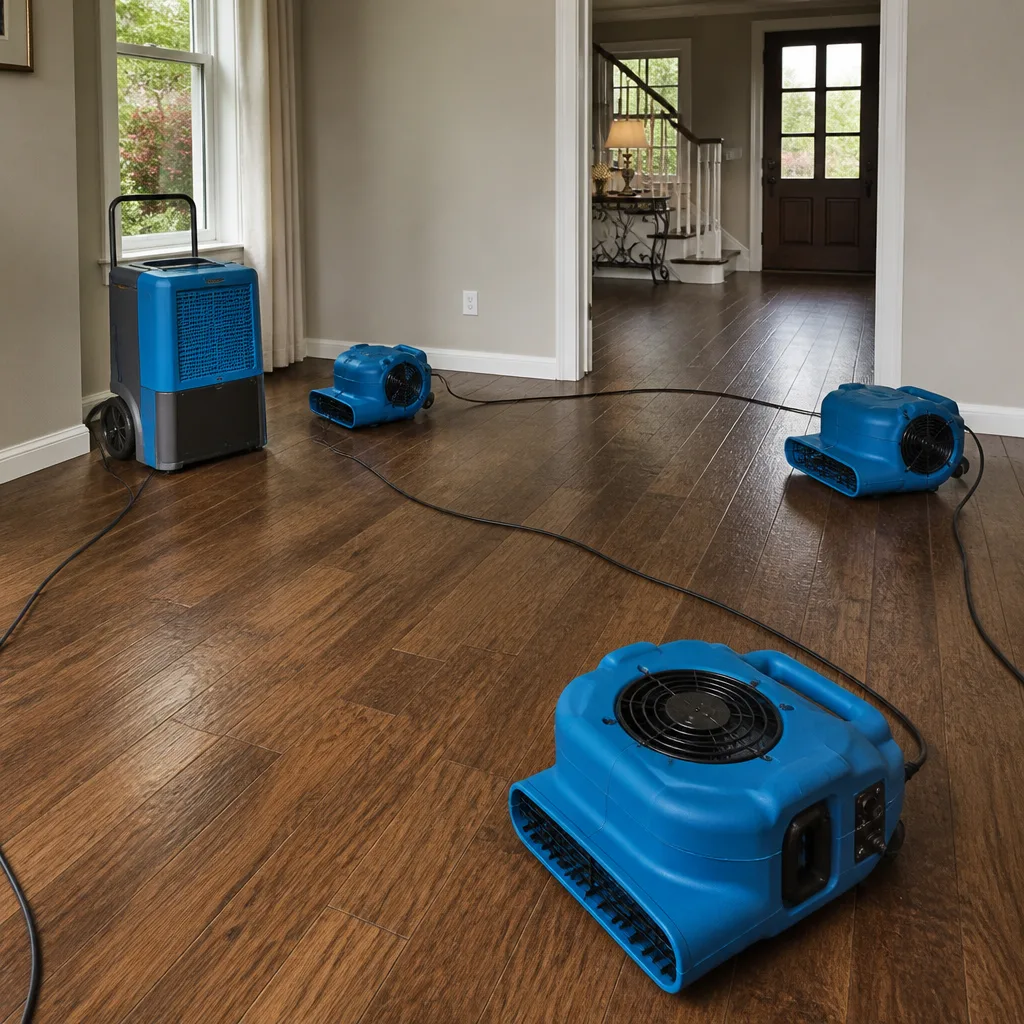
The answer separates two fundamentally different business models. Restoration specialists own commercial-grade drying equipment: LGR (low-grain refrigerant) dehumidifiers from Dri-Eaz or Phoenix, and air movers from XPOWER or B-Air. These are the same machines used on large-scale commercial losses, and they’re capable of pulling moisture from structural materials efficiently because they operate at lower humidity ratios than residential-grade units. A company that owns this equipment responds to your Orange home with trucks that are already loaded. A company that rents equipment responds with a plan that depends on equipment availability at a rental yard across town.
The rental dependency problem compounds quickly. If a restoration operator plans to rent dehumidifiers for your job, response time extends by the rental pickup window. Per-day rental costs add up over a multi-day drying project, and those costs pass through to you or your insurer. Some rental-dependent operators will claim your job is “dry enough” prematurely because the equipment needs to go back to the yard. An owned-equipment specialist has no incentive to cut drying time short; the machines sit idle until the moisture readings say the structure is dry.
There’s one more equipment-level question worth asking: does the company deploy specialized cavity-drying systems like Injectidry panels when water migrates inside walls or beneath subfloors? Injectidry systems attach to wall cavities and force desiccated air through enclosed spaces, drying what conventional equipment never reaches without removing drywall and flooring. This technology directly reduces demolition costs and project timelines. We deploy Injectidry on Water Damage Restoration in Orange jobs where interior cavities hold moisture, because cutting out drywall that could have been dried costs homeowners thousands in unnecessary reconstruction.
Orange Climate Realities That Shape Restoration Work
Orange’s climate shapes restoration outcomes in ways that generic national guides never mention, which is why we published The Complete Water Damage Restoration Guide for Orange Homeowners. The city sits in a transitional zone between coastal marine influence and warmer inland conditions, which means interior humidity levels fluctuate through the day more than they do in either coastal Newport Beach or inland Anaheim. A drying chamber that reads stable at 10 a.m. can spike relative humidity when the afternoon marine layer presses inland. Restorers who understand this pattern plan longer monitoring cycles near exterior walls and adjust dehumidifier settings accordingly.
The building stock in Orange presents its own moisture dynamics. Homes in Old Towne and the historic districts often contain lath-and-plaster walls over decades-old framing, materials that absorb water differently than the gypsum wallboard common in newer construction. Crawl spaces beneath many Orange bungalows trap moisture after supply line breaks, and that hidden moisture migrates upward through subflooring and joists long after visible surfaces appear dry. Restorers who only measure surface conditions will miss this moisture, declare the job complete, and leave you with a future mold problem.
That’s why moisture documentation matters as much as drying speed. A competent restoration company in Orange will place moisture meters against interior wall cavities, subfloor materials, and crawl space framing, logging readings that demonstrate drying progress over days, not hours. Photo documentation of moisture mapping protects you when it comes time to file an insurance claim. The documentation proves that drying occurred properly, which is the evidence adjusters need to authorize final repairs.
Organizational Signs of a True Restoration Specialist
“Specialist” gets thrown around loosely in the restoration industry, but there are specific organizational signs that indicate whether a company built itself around restoration as a core discipline or added it to a general contracting menu. When you evaluate a company in Orange, look for these structural markers.
Dedicated estimators represent the first signal. A restoration company that employs estimators whose sole function is damage assessment and scope-writing has invested in the most consequential phase of a restoration project. That estimator will document every affected area, create a room-by-room damage map, and produce a written scope that specifies equipment placement, drying durations, and remediation protocols. A company that sends a general project manager to estimate water damage alongside kitchen remodels is handling your emergency as a side task.
Moisture technicians on staff rather than on-call is the second signal. Companies that can’t staff moisture monitoring as a daily function miss the critical adjustment windows. If dehumidifier runtime evaluations happen irregularly, drying stalls, and the mold count rises. We maintain moisture technicians as staff, not subcontractors, because daily monitoring determines whether a drying plan is working or needs adjustment.
The third signal is in-house reconstruction capacity. Restoration work divides into two phases: mitigation (extraction, drying, remediation) and reconstruction (drywall replacement, painting, flooring). Companies that handle both phases under one roof eliminate the coordination gaps that come from juggling multiple contractors. When mitigation crews and reconstruction teams report to the same project manager, the handoff doesn’t lose information. Your Mold Remediation in Orange project benefits from the same continuity: the remediation crew knows exactly which materials were removed and where the reconstruction crew needs to rebuild.
Red Flags in the First Phone Call
A restoration company’s behavior in the first phone call predicts service quality more reliably than any online review. We’ve identified five specific patterns that signal trouble during that initial interaction in Orange homes.
- Inability to commit to a specific response time. A professional restoration company manages dispatch capacity and can tell you when a crew will arrive. “We’ll get someone out there when we can” indicates that your emergency is competing with an overloaded schedule.
- Refusal to provide a written scope before starting work. Verbal agreements in restoration favor the contractor. A written scope that itemizes affected areas, equipment plans, and estimated durations protects you and gives your insurer documentation from day one.
- Pressure to sign an Assignment of Benefits as a condition of service. An AOB transfers your insurance claim rights to the contractor, giving them control of payment and creating legal entanglements that can leave you liable for inflated charges. No legitimate restoration company will make service contingent on an AOB.
- Hesitation to provide technician certification information. The company should be able to tell you, by name, which certified technician will handle your job, and support that claim with IICRC documentation upon request.
- Downplaying moisture documentation. If a company dismisses questions about moisture mapping or drying logs, they’re likely planning to rush the job without creating the paper trail your insurance claim requires.
How Insurance Shapes the Restoration Process in Orange
Homeowners in Orange file water damage and fire damage claims through the same insurers that dominate the broader California market, but the restoration process follows a predictable sequence that’s worth understanding before you need it. When you call a restoration company first, they can begin mitigation immediately and work with your insurer from the start. When you call your insurer first, you wait for an adjuster assignment while moisture spreads.
Photo documentation sits at the center of the insurance equation. Every claim you file should be supported by images that show the source of damage, the extent of affected materials, and the moisture readings that justified removal or drying decisions. A restoration company that documents every phase of work with timestamped photography gives your adjuster the evidence they need to authorize payment without contested line items. This becomes especially important in Orange’s older homes, where adjusters may question whether certain materials were truly water-damaged or simply old.
The sequence matters too: mitigation first, then adjustments to scope. When a restoration company writes a scope that anticipates reconstruction needs before all demolition occurs, changes become inevitable. A better process involves documenting conditions as they exist, adjusting the written scope when new information emerges during demolition, and keeping the adjuster informed through each change. The goal is a final claim that matches the work actually performed, eliminating the billing disputes that drag restoration projects out for months.
For fire damage restoration, the insurance conversation includes content valuation, cleaning specifications for smoke-affected materials, and the choice between pack-out cleaning versus on-site treatment. Our Fire Damage Restoration in Orange process includes documentation aligned with the IICRC S700 standard for fire and smoke restoration, giving insurers a recognizable framework for evaluating the claim.
A Step-by-Step Selection Process for Orange Homeowners
When water is spreading or mold is present, you don’t have weeks to evaluate restoration companies. But you can complete this selection process in 60 to 90 minutes, and it will protect you from the operator-level variance that brands hide.
- Call three companies, not one. Emergency or not, you can make three calls and compare the responses. Pay attention to answer speed, the specificity of questions asked, and whether the company asks about your insurance status.
- Ask the certification question during the first call. “Are your technicians IICRC certified, and which technician will be assigned to my job?” Document the answer. A hesitant answer during triage gets worse when a contract is on the table.
- Request the equipment inventory information. “How many LGR dehumidifiers does your company own?” If the answer includes words like “we can get” or “we have access to,” you’re talking to a rental-dependent operator.
- Demand a written scope before signing anything. The scope should itemize affected areas, planned equipment, estimated drying time, and expected reconstruction needs. If the company can’t produce this document, walk away.
- Verify the company through public records. Check the CSLB license by company name and cross-reference the IICRC firm certification. These are public records intended for consumer verification.
- Filter reviews for substance. Google reviews that mention specific equipment (“they used dehumidifiers immediately”), documentation (“moisture readings were shared with me”), and timelines (“dry in four days”) reveal more than generic five-star praise about “professional service.”
The Drying Continuum: Why Water, Mold, and Fire Are One System
Most restoration companies force you to coordinate three separate disciplines: water extraction, mold remediation, and fire restoration. That division creates responsibility gaps when one condition creates another. A water loss that isn’t fully dried becomes a mold problem. A fire loss that leaves water from suppression becomes a mold problem inside smoke-damaged materials. These conditions are phases of a single process, not separate projects.
A restoration company that handles the full damage-to-restoration continuum under one roof removes the coordination burden from the homeowner during the most stressful period of property ownership. The same project manager who supervised water extraction oversees mold remediation and reconstruction. The same documentation system that tracked drying logs tracks remediation clearance testing. You don’t become the messenger between three companies that each blame the others for gaps.
In Orange’s climate, this continuity matters because water damage and mold conditions develop in tandem. The marine layer keeps relative humidity elevated, which slows natural drying and encourages microbial growth inside building materials. When one team manages the entire process, decisions about drying extend naturally into decisions about mold prevention. When coordination splits across companies, the mold remediation crew often never sees the moisture mapping that explains where the problem originated.
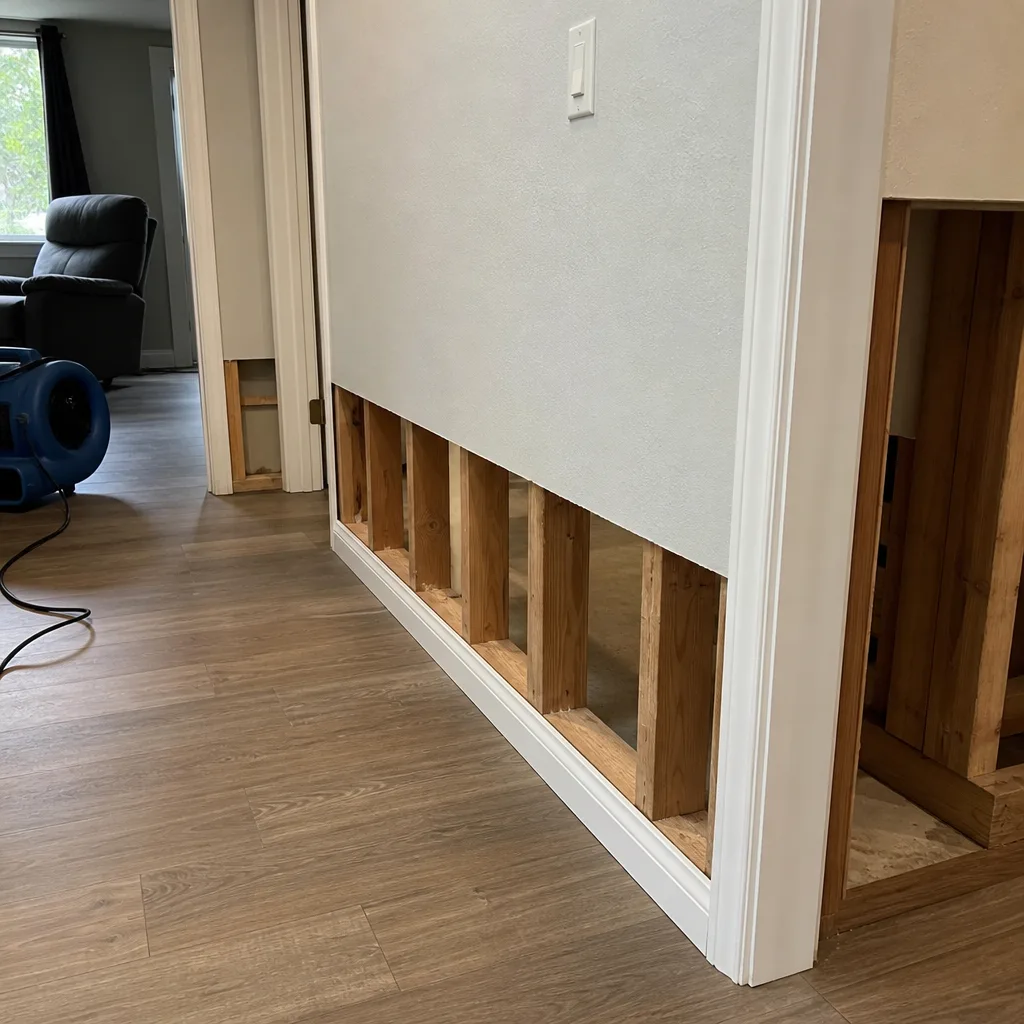
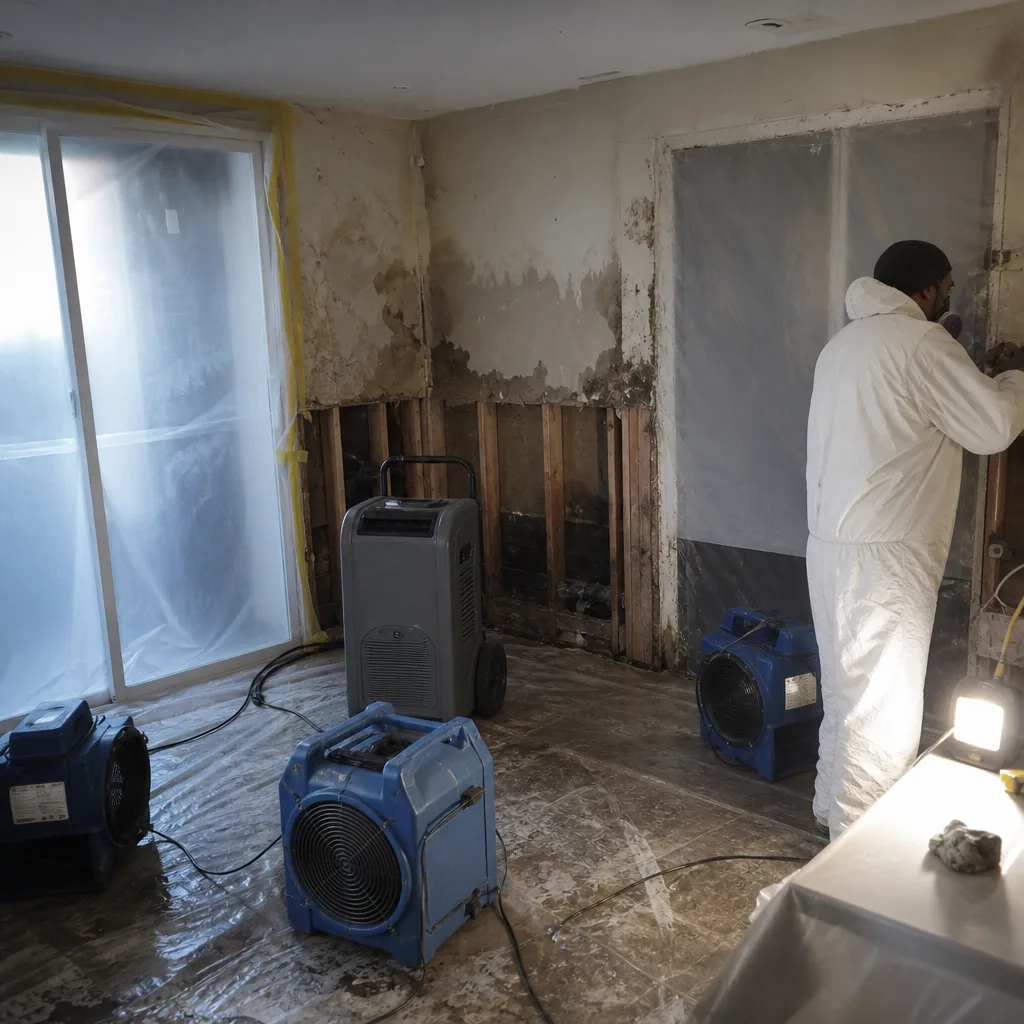
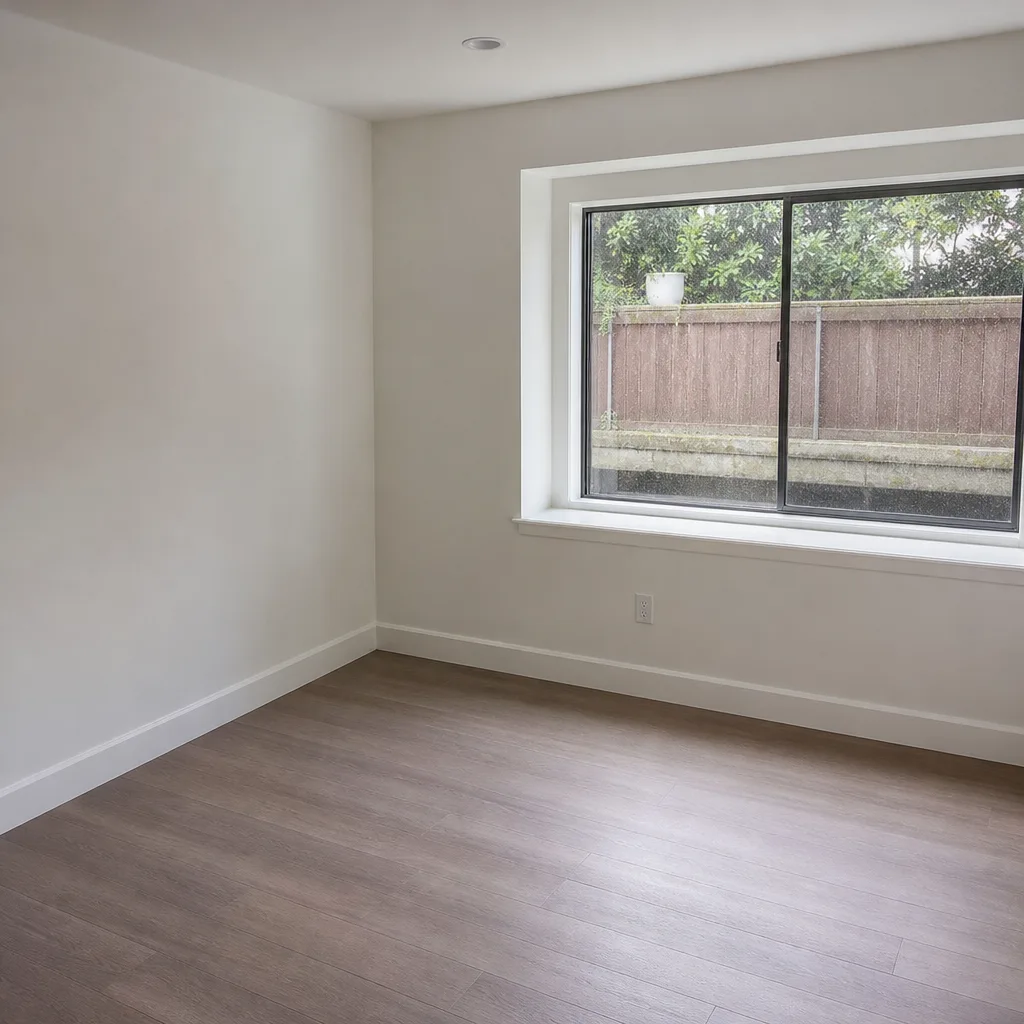
See the difference
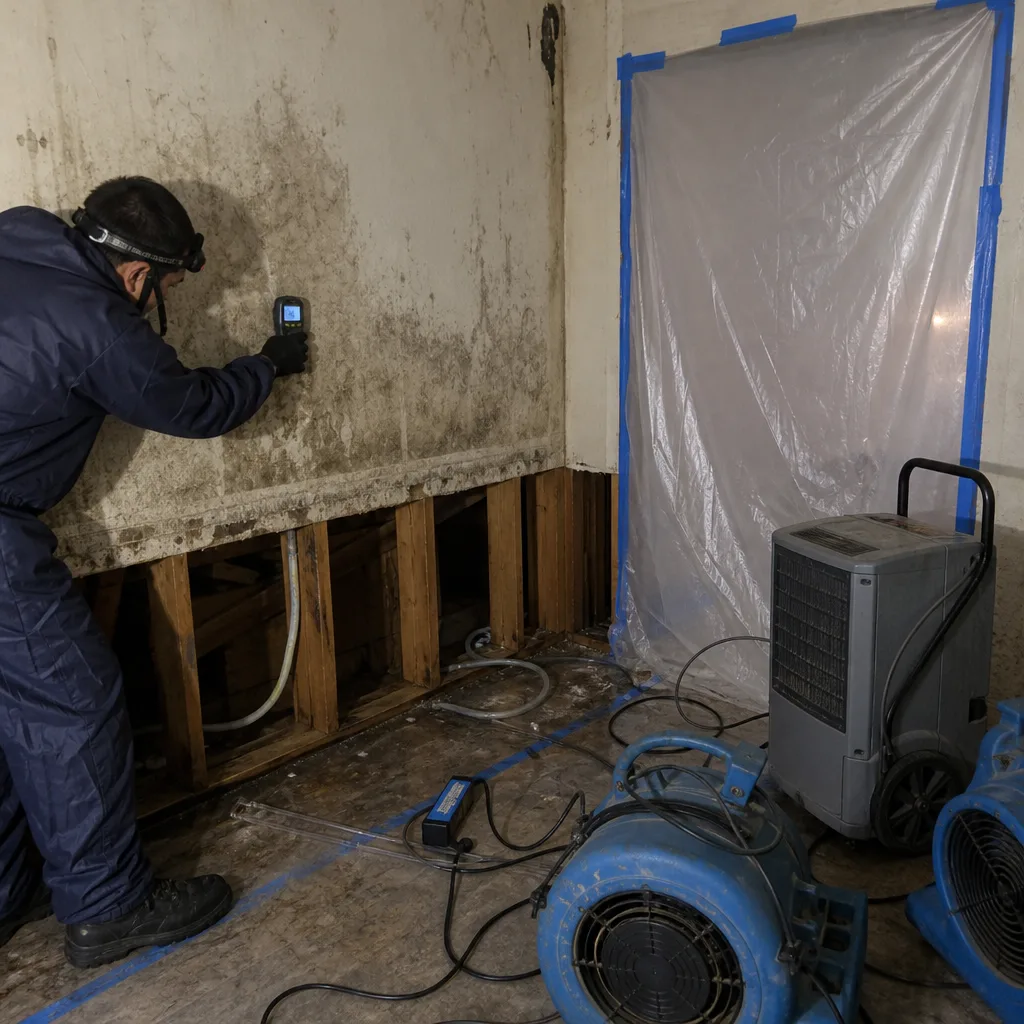 Before
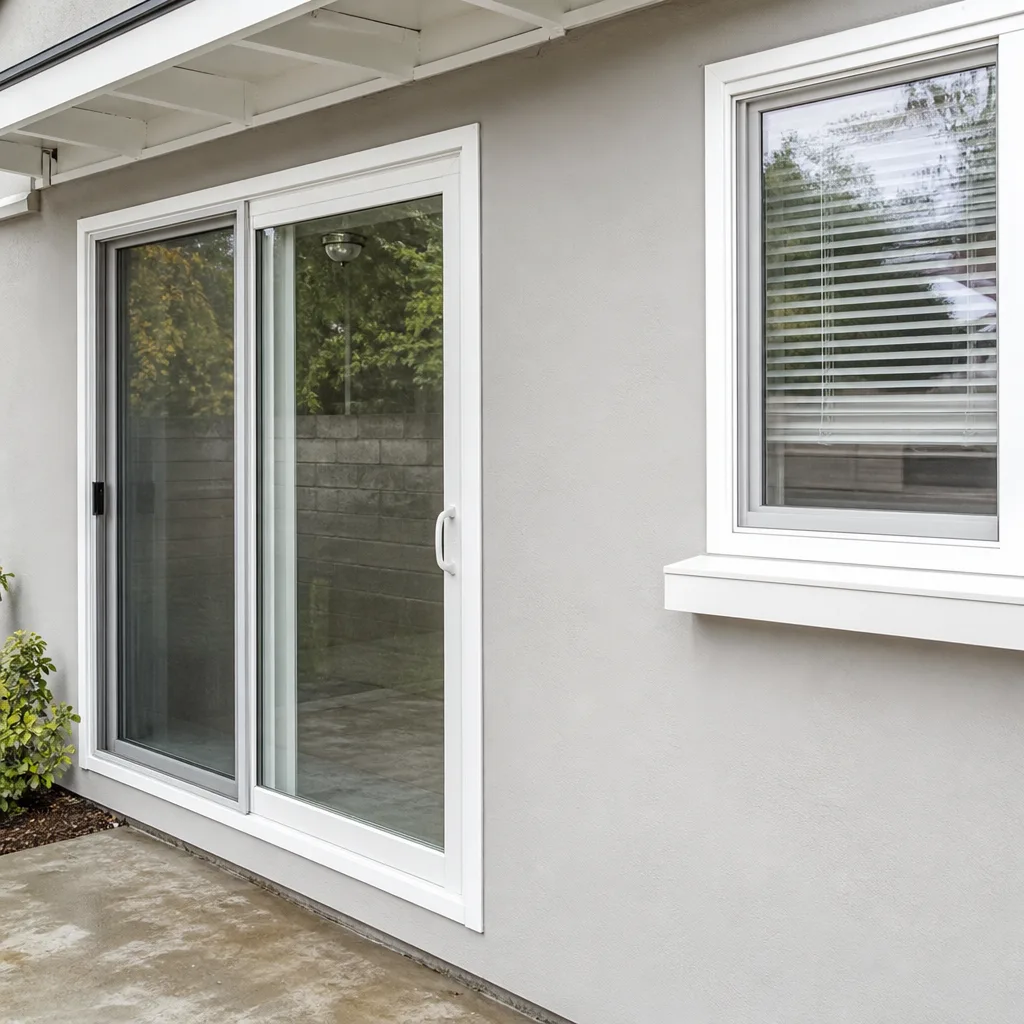 After
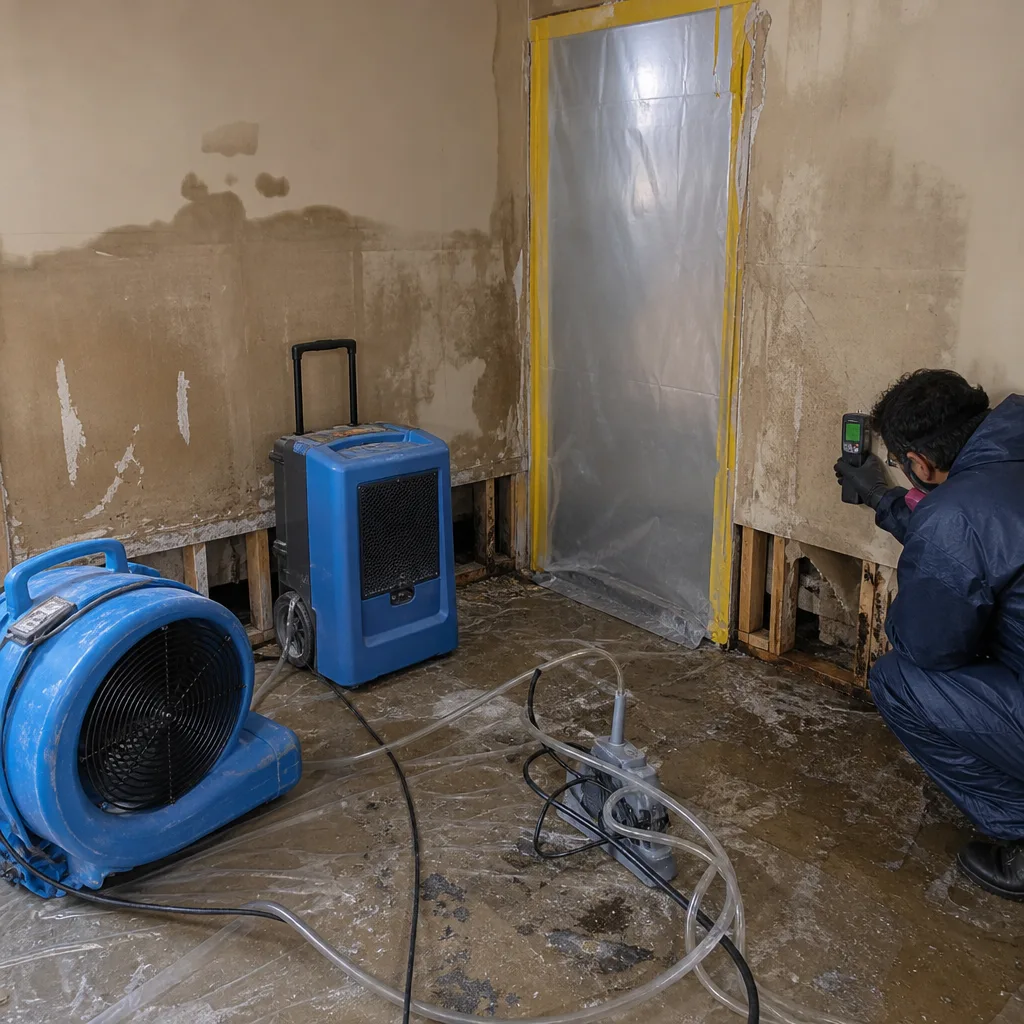 Before
 After
 Before
 After
Common Mistakes to Avoid
- Choosing by brand recognition alone. The franchise logo on the truck is the least informative aspect of the operator showing up at your door. Evaluate the specific company, not the corporate brand.
- Signing an Assignment of Benefits without understanding it. Once you sign an AOB, the contractor controls your claim. This can raise your rates, create legal conflicts, and leave you paying for charges your insurer should have covered.
- Accepting verbal scopes of work. In Orange’s older homes, where reconstruction costs vary widely by material type and condition, a written scope is your only protection against scope creep and inflated charges.
- Skipping moisture documentation review. You’re entitled to see drying logs and moisture readings for your own home. These records prove the job was completed properly and support your insurance claim.
- Delaying mitigation while insurance decisions are pending. Moisture doesn’t wait for adjuster calls. A certified restoration company can begin emergency mitigation immediately and document everything for your eventual claim.
- Hiring a general contractor to handle restoration. Generalists lack the psychrometric training to calculate drying chamber requirements, and their equipment typically includes residential-grade dehumidifiers that can’t achieve the low humidity ratios structural drying requires.
- Overlooking cavity moisture in Orange’s older housing stock. Plaster walls and original subfloors hide moisture that surface readings miss. Ask specifically about cavity-drying capability before work begins.
When to Call a Professional
Some situations demand professional restoration immediately. Water intrusion that crosses room boundaries or contacts structural materials requires extraction equipment and drying calculations that no household fan can replicate. Mold growth covering more than about ten square feet, or hidden mold inside wall cavities after water events, requires containment and professional remediation under IICRC S520 protocols. Fire damage that leaves smoke residue embedded in porous materials requires specialized cleaning agents and ozone or hydroxyl treatment that only professional restoration companies operate safely. Electrical hazards from water contact with outlets, panels, or wiring require professional assessment before you re-enter the affected area. Renew Water Damage offers free estimates in Orange – call (833) 620-3891 to discuss your specific situation with a certified technician before permanent decisions are made.
Frequently Asked Questions
Water damage restoration in Orange typically ranges from $2,500 to $8,000 for mitigation alone depending on the affected area size, water classification, and drying complexity. Homes in Orange’s historic districts often cost more because plaster walls and original materials require specialized drying approaches. Call (833) 620-3891 for a written estimate specific to your loss, and check your policy for coverage details.
Look for individual technician IICRC certifications (WRT for water, ASD for advanced drying, AMRT for mold remediation) held by the specific people who will work in your home. The company-level IICRC firm certification matters less than the individual credentials of assigned technicians, and any legitimate operation will show you certification cards upon request.
Response times vary critically by operator. Companies that own their equipment and maintain dedicated emergency crews can often begin mitigation within hours, while rental-dependent operators wait on equipment availability and juggle schedules. Call three companies during an emergency and compare answer speed, specificity, and dispatch commitments before choosing.
Insurance coverage for mold remediation depends on the cause of the mold and your specific policy language. Mold caused by a covered water loss is frequently covered under the water damage claim provisions, while mold from long-term maintenance issues typically isn’t. Your restoration company’s documentation of the cause and moisture readings directly supports your claim eligibility.
An Assignment of Benefits (AOB) transfers your insurance claim rights to a contractor, allowing them to bill your insurer and sue on your behalf. AOBs are not required for restoration service in California, and pressure to sign one as a service condition is a documented red flag. Legitimate restoration companies like Renew Water Damage work with your insurer without requiring claim rights transfer.
Verify a restoration company’s California Contractor State License Board (CSLB) license by looking up the exact company name on the CSLB website. Cross-reference the IICRC firm certification through the IICRC’s public firm locator. Match the licensed entity name to the company name on your contract, as some operations use different names in marketing materials than appear on licenses.
The Bottom Line
The restoration brand you choose matters far less than the capabilities of the specific operator behind that brand. In Orange, where climate conditions and aging housing stock create specific moisture dynamics, capabilities manifest in concrete facts: individual technician certifications you can verify by card, commercial-grade equipment the company owns rather than rents, and written documentation that protects you through the insurance process. Evaluate these factors systematically, ask the equipment and certification questions directly, and demand written scopes before any work begins. The right company will welcome these questions because their operation was built to answer them. The Renew Water Damage home approach treats restoration as a technical discipline, not a franchise opportunity, and that approach protects Orange homeowners before, during, and after every restoration project.
Written by the team at Renew Water Damage, serving Orange since 2015.