Last updated October 31, 2026
 Water damage drying
 Fire & smoke cleanup
 Mold remediation
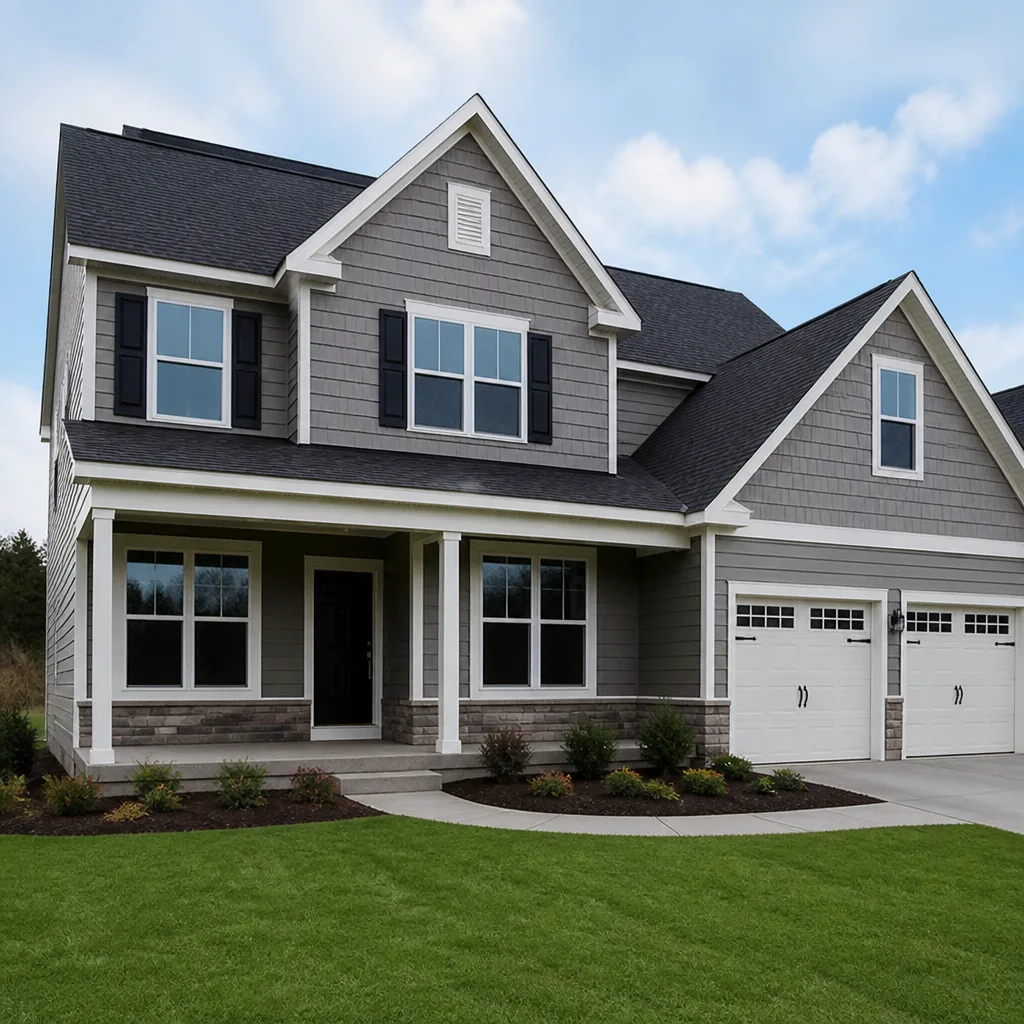 Storm response
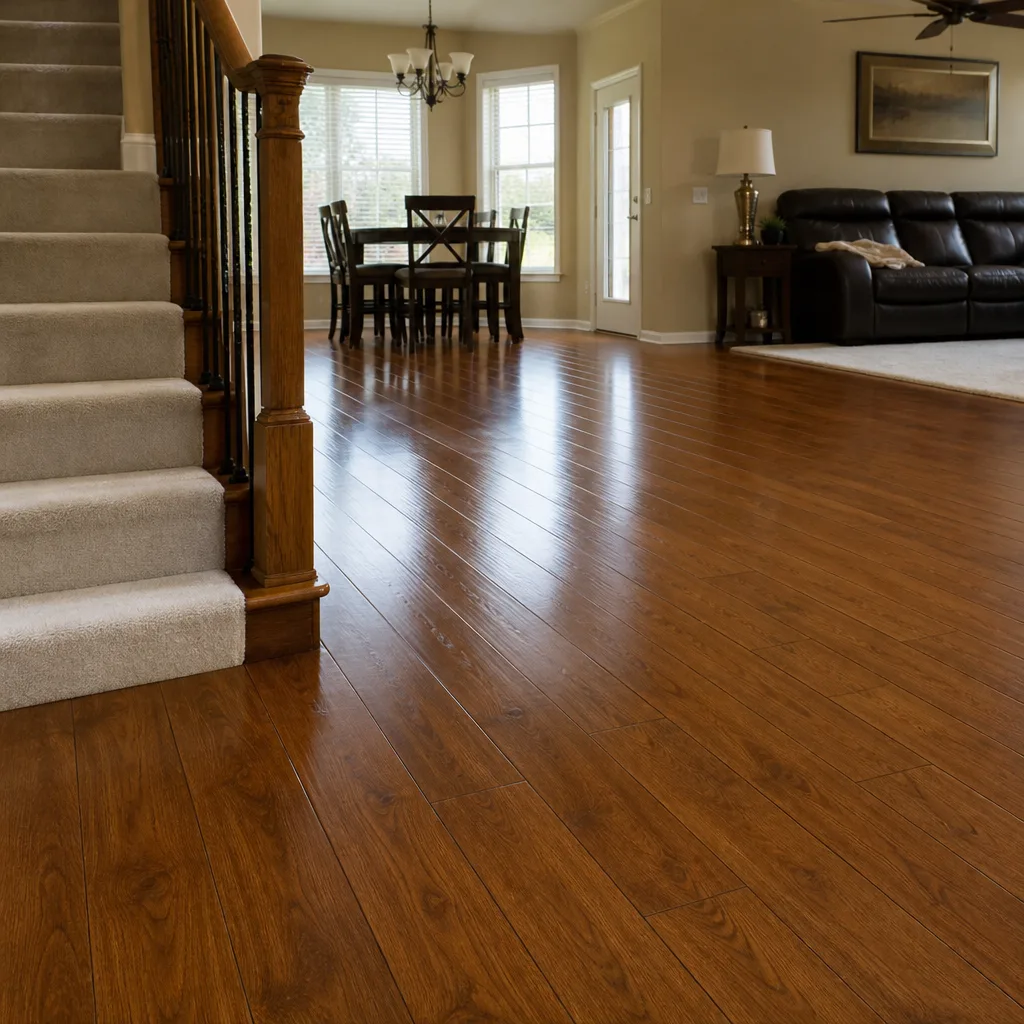 Sewage cleanup
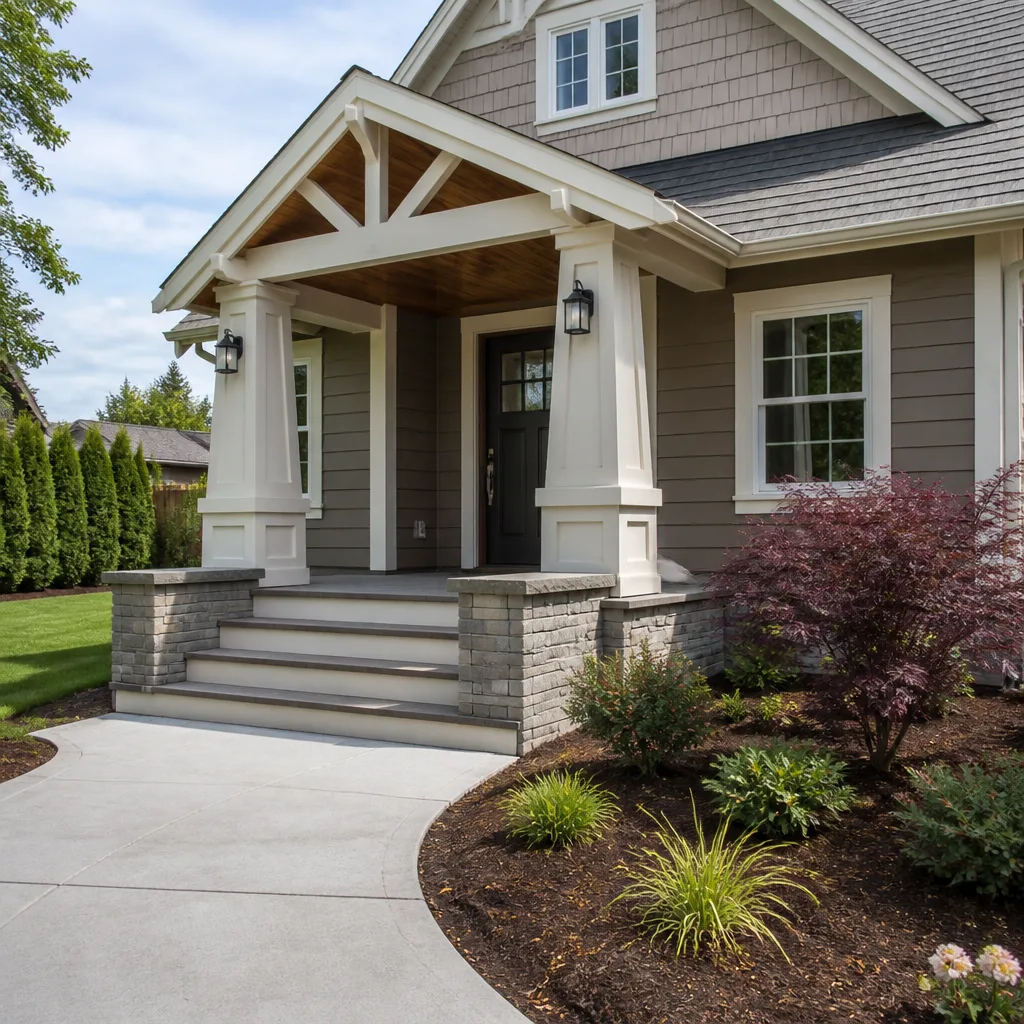 Reconstruction
Free visual inspection and a written scope of work before any mitigation begins - photos, moisture readings, and drying logs go in your claim file
The scope we write is the scope we bill. Anything new gets shown to you, in writing, before we touch it.
Get your free estimateThe Complete Water Damage Restoration Guide for Orange Homeowners
Most water damage isn’t fixed the day the crew leaves. It’s fixed on day four, when the psychrometric readings finally confirm the structural wood has hit equilibrium and the moisture content reads below 10 percent. Everything before that is setup. Here’s the thing most national restoration guides won’t tell you: Orange’s coastal-adjacent humidity and aging post-war housing stock create drying conditions that don’t match the timelines you’ll find in generic articles. A home built in 1958 with stucco over wood frame, sitting at 72 percent average relative humidity in June, doesn’t dry like a newer build in Phoenix. This guide maps the actual process, the real equipment, and the honest timelines a certified crew uses on Orange jobs. By the end, you’ll know what should happen on day one, what should never happen on day three, and how to verify the job was actually completed to standard.
Restoration work we handle
Quick Answer
Water damage restoration in Orange, CA follows the IICRC S500 standard: extract standing water, remove unsalvageable materials, set up commercial drying equipment, monitor moisture daily until structural wood reaches equilibrium (typically 3 to 5 days in Orange’s climate), then verify with documented readings. The full process, from first response to final clearance, usually takes 5 to 10 days depending on the water category, the materials affected, and how quickly mitigation began. A certified restoration company like Renew Water Damage handles extraction, drying, and any necessary mold remediation or reconstruction under one roof, which eliminates the gaps that come from juggling multiple contractors.
Table of Contents
- Why Orange’s Climate Changes the Drying Equation
- The Three Water Categories That Determine Everything
- The Restoration Process, Step by Step
- What Each Piece of Equipment Actually Does
- The Hidden Moisture Problem: Orange’s Stucco and Wall Cavities
- Why Documentation Is Your Insurance Claim’s Best Friend
- Realistic Timelines for Orange Homes
- Common Mistakes to Avoid
- When to Call a Professional
- Frequently Asked Questions
- The Bottom Line
Why Orange’s Climate Changes the Drying Equation
Orange sits close enough to the coast that marine-layer humidity rolls in most evenings, especially from May through July. Average relative humidity hovers between 65 and 75 percent during those months, and that number matters more than most homeowners realize. Drying equipment doesn’t just remove water from wet materials. It removes water from wet materials and pushes it into the surrounding air. If the surrounding air is already saturated, the equipment works harder and moves less moisture.
Here’s the technical translation. Commercial dehumidifiers are rated in pints per day at specific conditions, and the target during active drying is to pull the air down to a specific vapor pressure deficit that lets moisture leave the wood. In a dry climate, a dehumidifier might need to depress the relative humidity to 35 percent. In Orange during marine-influence months, we adjust the target downward because the outside air keeps seeping in through the building envelope. The equipment runs longer, the grain depression targets get recalibrated daily, and the drying timeline extends by a day or two compared to inland cities like Riverside or San Bernardino.
This is not a small detail. It’s the difference between a dry stud and a stud that reads 9 percent on the moisture meter when the crew packs up, then creeps back to 16 percent a week later because the core was never actually dry. In our experience with Orange homes, that scenario is the leading cause of repeat service calls on water damage jobs.
The Three Water Categories That Determine Everything
The IICRC S500 standard classifies water damage into three categories, and the source classification, not the visible damage, determines the entire remediation protocol. Most homeowners understandably focus on what they can see, a soaked carpet, a warped baseboard, a puddle in the kitchen. But a certified crew looks at the source first, because Category 3 water on a small area requires a more aggressive response than Category 1 water on a large area.
Category 1: Clean Water. This comes from a sanitary source, such as a broken supply line under the sink, a leaking water heater, or a tub overflow with no contaminants involved. With prompt extraction and proper drying, most affected materials can be salvaged. The response window is longer, but still finite: after 48 hours, Category 1 can degrade into Category 2 as microbial growth begins.
Category 2: Gray Water. This is water with significant contamination, such as discharge from a washing machine, a dishwasher overflow, or a sump pump that picked up soil and debris. Gray water can cause illness if ingested and requires faster, more thorough drying along with antimicrobial treatment on affected surfaces. Salvage decisions become more conservative.
Category 3: Black Water. This is grossly contaminated water containing sewage, rising floodwater, or standing water that has begun growing pathogens. Category 3 requires removal of all porous materials, including drywall, carpet, padding, and often insulation. Hard surfaces require aggressive cleaning and disinfection. No one should attempt Category 3 cleanup without professional-grade PPE and training.
In Orange, we see a specific pattern worth noting. Older neighborhoods like the President Streets and the areas around Chapman University have a higher percentage of homes with original cast-iron sewer lines, and those lines eventually crack or shift. A sewer backup is always Category 3, regardless of how clean the water looks at first glance. If you’re not certain about the source classification, treat it as the more serious category until a trained professional can verify.
The Restoration Process, Step by Step
When we talk to Orange homeowners about Water Damage Restoration in Orange, the most common first question is what actually happens after the call. The process follows a specific sequence under IICRC S500, and skipping steps is where unqualified contractors cause long-term problems. Here’s the real protocol, in order.
- Emergency Contact and Assessment. The first call gets you a dispatch and a response. A certified crew arrives, identifies the water source, and determines whether it’s been stopped. If it hasn’t, shutting the water off is step one, before any extraction begins.
- Water Category Identification. The crew classifies the water as Category 1, 2, or 3 and documents the category in writing. This single decision drives every subsequent step, from salvage decisions to PPE requirements.
- Safety Inspection and Electricity. Standing water and electrical systems don’t mix. The crew checks outlets, appliances, and the breaker panel before putting any equipment on the floor or any hands in the water.
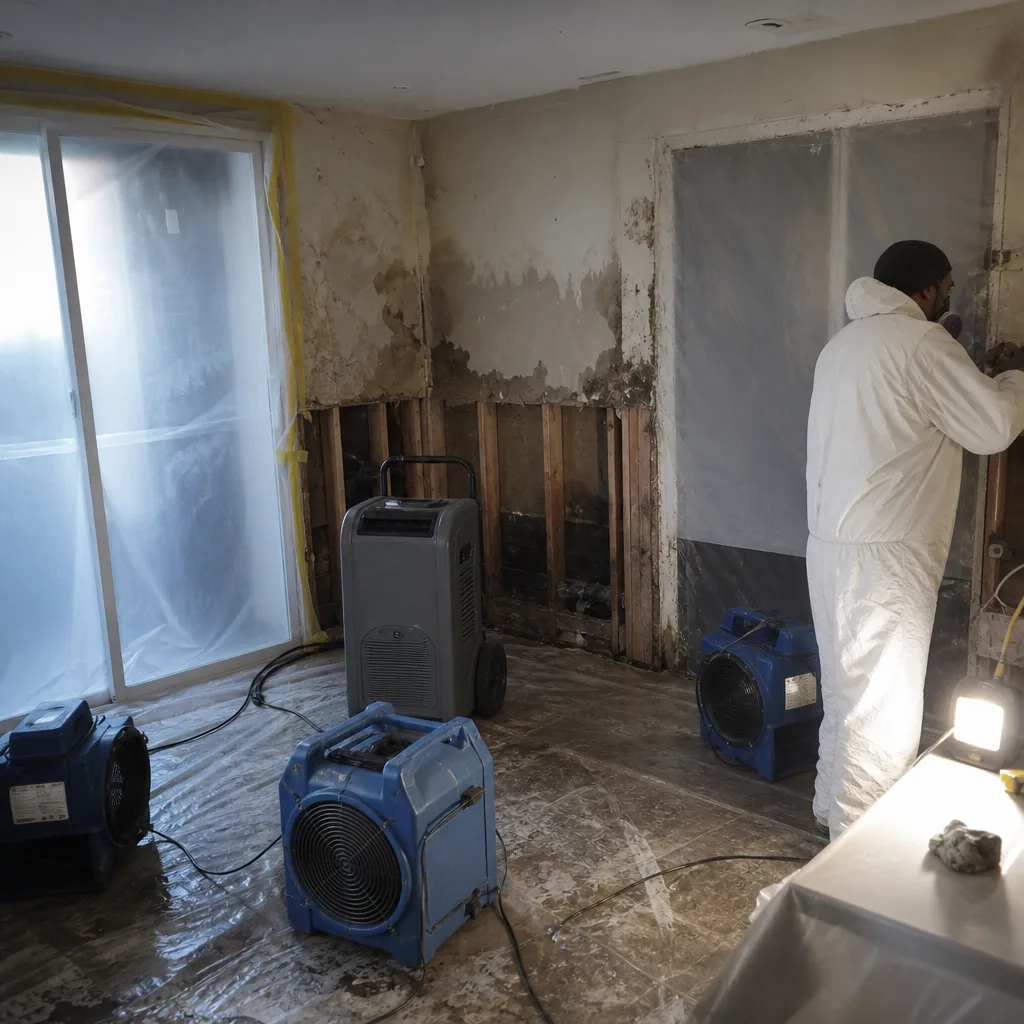
- Source Shutdown and Containment. With the water stopped, the crew sets up containment to prevent cross-contamination, especially on Category 2 and 3 jobs. This means plastic sheeting, negative air pressure, and sealed doorways.
- Extraction. Truck-mounted extractors pull the bulk water out of carpet, padding, and hard surfaces. The goal here is fast bulk water removal, not drying. Speed matters because every hour of standing water extends the drying phase.
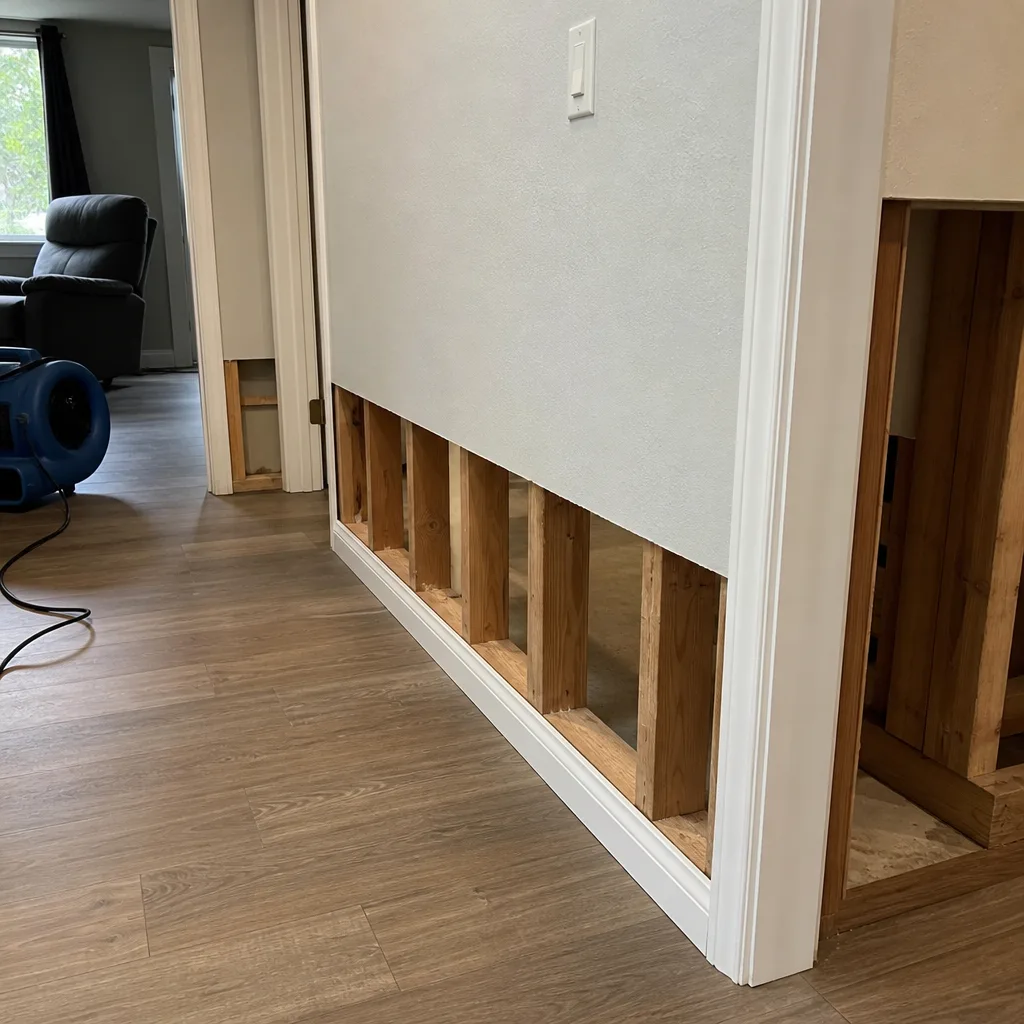
- Material Removal. Unsaturated, salvageable materials stay. Saturated, contaminated, or non-salvageable materials come out. This includes carpet padding (nearly always removed), damaged drywall, and any insulation that’s been wet.
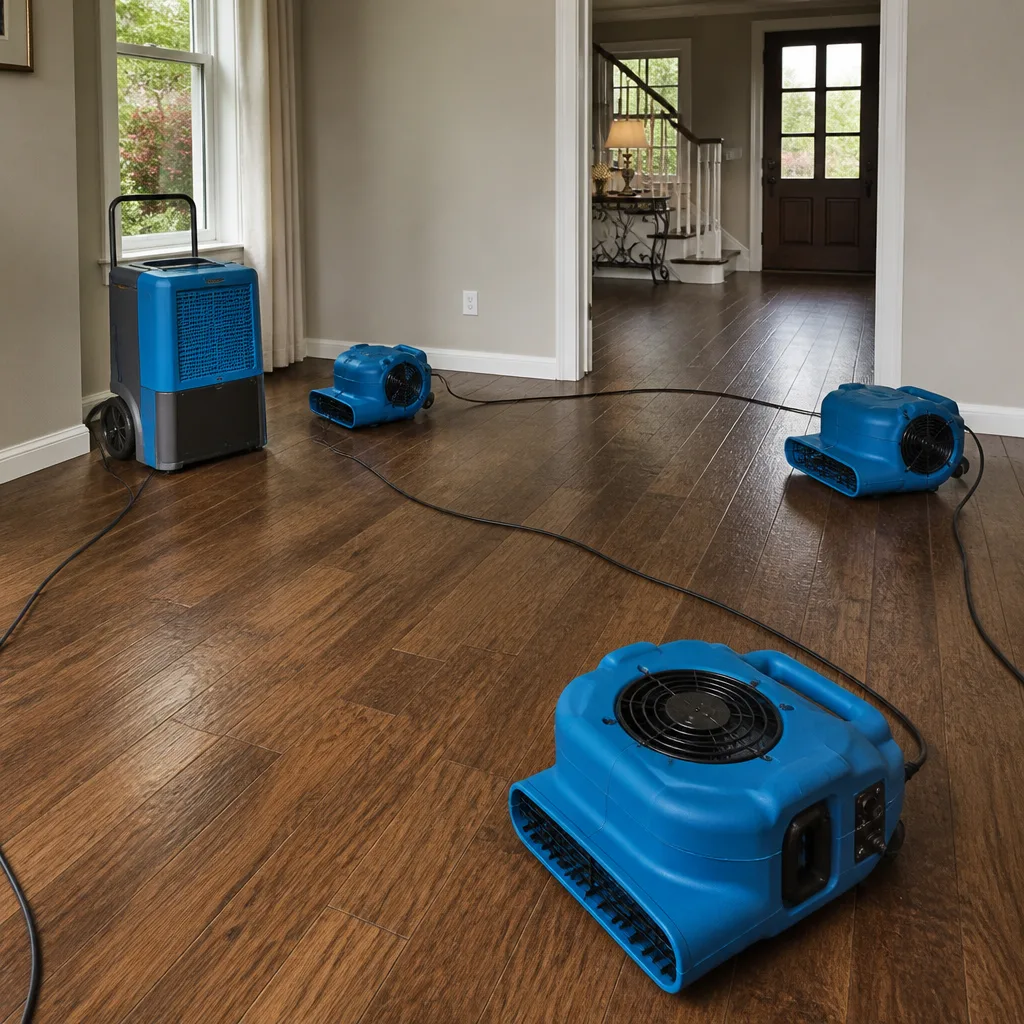
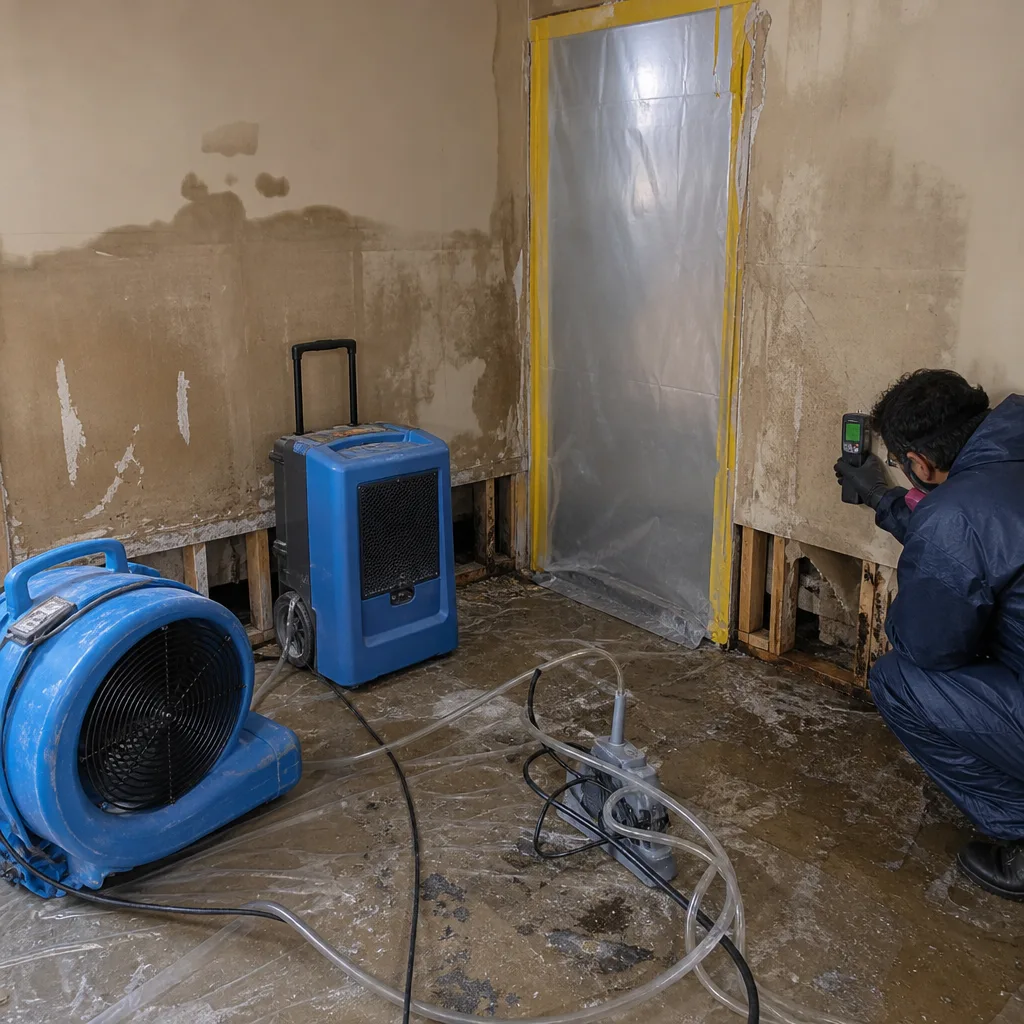
- Equipment Placement. Air movers go in positions that create vortex airflow across wet surfaces. Dehumidifiers are sized to the cubic footage and the water class. In Orange homes with wall or under-floor moisture, cavity drying systems go in next.
- Daily Monitoring. The crew returns daily to take moisture readings, adjust equipment positions, and document progress. Drying is not a set-it-and-forget-it process. Equipment gets moved, added, or removed based on readings.
- Final Clearance. When moisture meters read at or below the dry standard for the material, and the psychrometric readings confirm equilibrium with the surrounding environment, the job is done and documented. This is the standard, not the visual appearance.
What Each Piece of Equipment Actually Does
Restoration equipment isn’t a mystery, and you shouldn’t have to guess whether the crew that showed up brought the right tools. Here’s what a certified Orange crew deploys and what each piece is measuring or doing.
Truck-Mounted Extractors. These are not shop vacs. A truck-mounted extractor pulls water through a high-powered vacuum system that can remove hundreds of gallons per hour. The extraction phase is about bulk water removal, and the faster it happens, the less water remains to evaporate into the structure. If a crew shows up with only a portable carpet cleaner, the extraction step is already compromised.
LGR Dehumidifiers. Low-grain refrigerant dehumidifiers are the workhorses of structural drying. Unlike residential dehumidifiers, LGR units continue pulling moisture from the air even as the air gets very dry, which is exactly what’s needed to draw moisture out of wood, drywall, and concrete. Brands like Dri-Eaz and Phoenix dominate commercial restoration because their LGR units maintain performance in conditions that would stall a consumer portable.
Axial Air Movers. These high-velocity fans create the airflow that moves moisture-laden air away from wet surfaces. Placement matters more than raw count. A properly placed air mover creates a vortex that sweeps moisture off the surface and into the air stream, where the dehumidifier can then remove it. Brands like XPOWER and B-Air are standard on Orange jobs because they’re durable, adjustable, and sized for residential rooms.
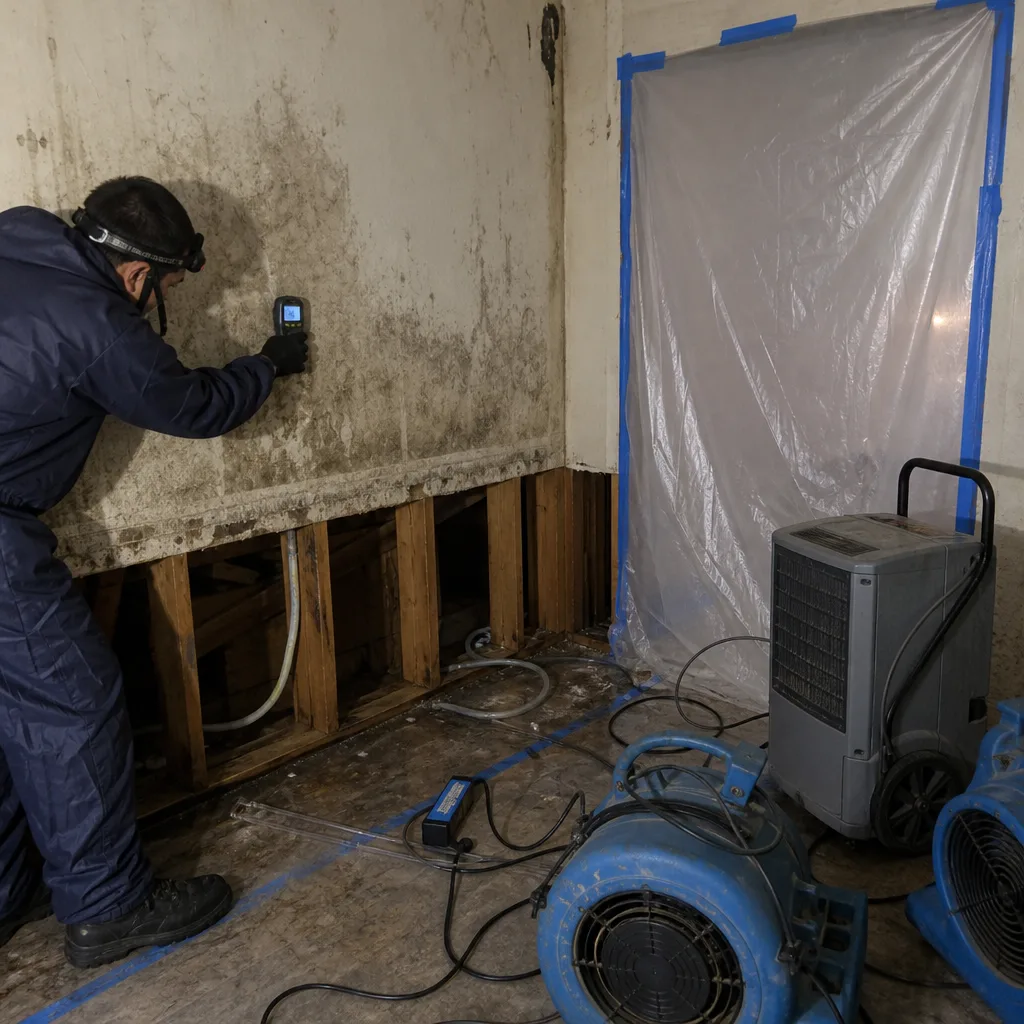
Thermal Imaging Cameras. A thermal camera doesn’t measure moisture directly. It measures surface temperature variations, which can indicate where moisture is present behind walls or under floors. Think of it as a targeting tool: the camera shows the crew where to put the moisture meter. Without a thermal image, hidden water pockets behind Orange’s stucco and plaster walls can go completely undetected.
Moisture Meters. These are the truth-tellers. A quality moisture meter reads the actual moisture content of wood, drywall, and concrete. Readings around 6 to 9 percent for wood indicate dry, readings above 16 percent indicate active moisture problems. Daily moisture readings are what drive the drying plan, not a visual check.
The Hidden Moisture Problem: Orange’s Stucco and Wall Cavities
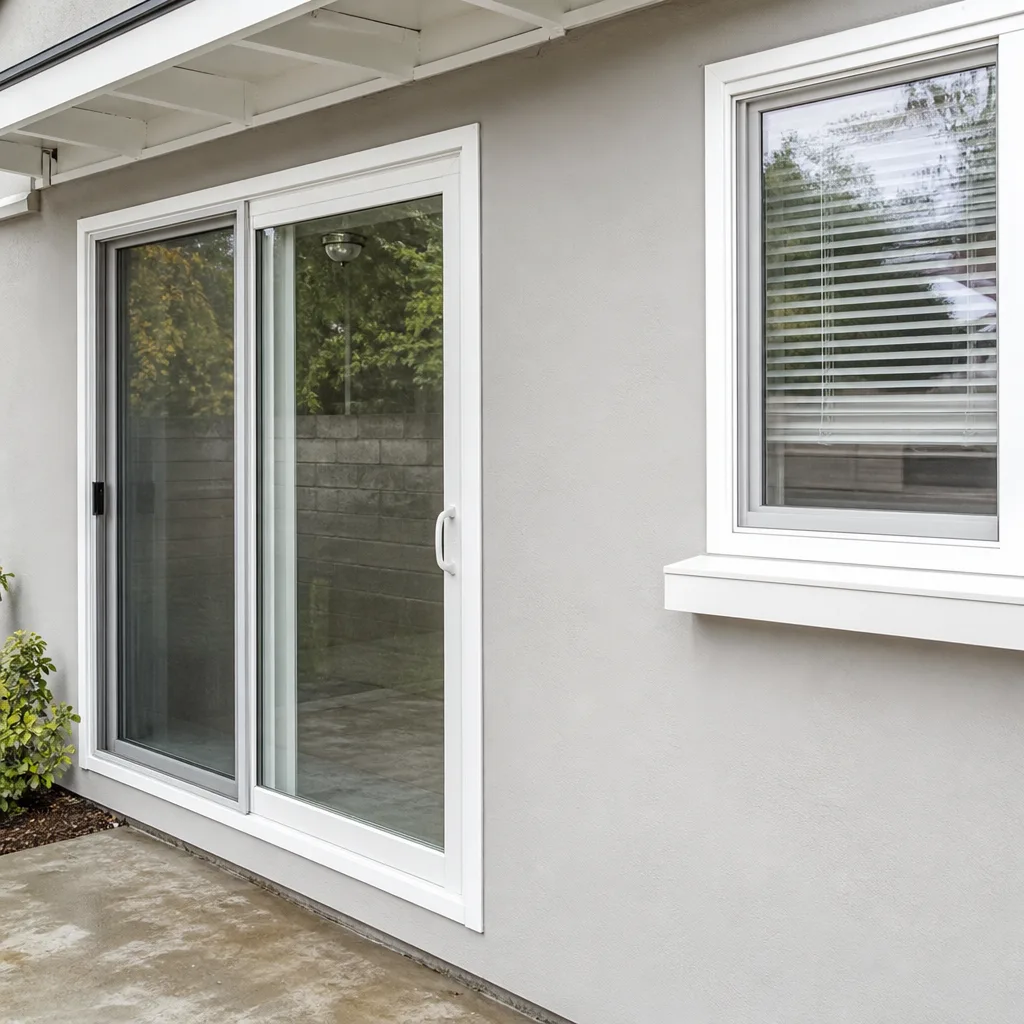
Orange has a lot of post-war housing stock. Homes built between 1945 and 1970 in neighborhoods like the El Modena area and along the 55 corridor often feature stucco over wood frame construction with little to no drainage plane between the stucco and the sheathing. That construction method creates a specific vulnerability: water that enters the wall system gets trapped between non-breathable stucco on the exterior and drywall on the interior, and it has nowhere to go.
The surface can look completely dry. The drywall can feel dry to the touch. But inside the wall cavity, the sheathing and framing are sitting in conditions that are warm, dark, and damp, which is the recipe for fungal growth. Traditional drying methods that rely on surface air movement and room-level dehumidification do not reach these enclosed spaces. That’s why Orange restoration jobs increasingly rely on cavity drying systems.
Injectidry systems are specifically built for this. They connect small-diameter tubing into the wall cavity through access holes, creating negative or positive pressure that pulls dry air through the enclosed space, or pushes moisture out. The point is not just to dry the visible drywall. The point is to dry the inside of the wall without tearing out the entire stucco exterior. We dry what others miss, including inside walls and subfloors, with Injectidry cavity systems, because the alternative of ripping apart a stucco wall to expose a stud bay is expensive, disruptive, and often avoidable.
The same principle applies to subfloors. Water that gets under tile, hardwood, or vinyl flooring is trapped between the floor covering and the subfloor. Injectidry panels can be used in this situation too, pulling air through the subfloor cavity. This is the difference between drying a floor and drying the structure under it.
Why Documentation Is Your Insurance Claim’s Best Friend
Insurance claims live and die on documentation. You’re probably focused on getting the water out, and that’s the right priority. But the paper trail, or photo trail, that the restoration company produces is what determines whether your claim gets paid at the right amount, and whether the mold problem that shows up six months later can be tied back to the original event.
A proper documentation chain on a water damage job in Orange includes three elements.
Moisture Logs. Daily moisture readings from every affected room, recorded in writing. These logs show the starting moisture content, the daily progress, and the final dry standard. If a dispute arises about whether the structure was actually dry, the moisture log is the evidence.
Psychrometric Reports. These capture the ambient conditions at the time of drying: temperature, relative humidity, and specific humidity. Psychrometric data proves the drying environment was appropriate for the materials, and it shows the crew was adjusting for Orange’s elevated humidity rather than running the same settings they’d use in a dry climate.
Photo Logs. Before, during, and after photos of every affected area, including the source, the water category, the equipment placement, and the final dry conditions. Photos are the most immediate and understandable form of documentation, and they’re what an adjuster will look at first.
When an insurance adjuster walks the job, they’re comparing what they see to what’s documented. A clean, complete documentation package means your claim moves faster and with less friction. A missing log or a gap in the photo record gives the insurance company a reason to question the claim. This is one of the biggest reasons to use a certified restoration company: IICRC-certified crews follow documented drying protocols, not guesswork, and that documentation protects you downstream.
Realistic Timelines for Orange Homes
Restoration timelines depend on the water category, the affected materials, the drying environment, and how quickly mitigation started. Here’s what a realistic timeline looks like for a typical Orange single-family home.
Days 1 to 2: Extraction and Setup. The initial response, source shutdown, extraction, material removal, and equipment setup typically happen within the first 24 to 48 hours. For Category 1 water loss with prompt response, this is the fastest phase.
Days 3 to 5: Active Drying. Daily monitoring, equipment adjustments, and moisture readings. In Orange’s climate, this phase typically runs 3 to 5 days for a moderate-sized loss. Larger losses or Category 2 and 3 water may extend to 5 to 7 days.
Days 6 to 10: Final Clearance and Reconstruction. Once the structure is dry, reconstruction begins, replacing drywall, flooring, and trim that was removed. This phase can extend well beyond ten days depending on the scope. Full reconstruction on a major loss can take weeks, but the drying portion is usually complete within the first week.
The key inflection point is the first 48 hours. Water that sits for more than 48 hours in a warm Orange home starts to support microbial growth. Fast response doesn’t eliminate that risk, but it dramatically reduces the size of the problem.
Common Mistakes to Avoid
- Waiting a few days to see how bad it gets. Every 24 hours of delay expands the affected area and pushes the water classification up. What starts as clean water becomes gray water, then black water. Timelines compound quickly.
- Using a general contractor instead of a restoration specialist. Generalists know how to build and rebuild, but IICRC-certified restoration technicians are trained in the specific science of drying, psychrometrics, and material salvage. The skills are related but not interchangeable.
- Turning off the equipment early. Drying equipment is loud and runs continuously. It’s tempting to shut it off at night or skip a day. But turning off air movers and dehumidifiers resets the vapor pressure timeline and extends the whole job.
- Assuming surface dryness means structural dryness. The surface of a stucco wall or a tile floor can feel completely dry while the cavity behind it holds enough moisture to feed mold for weeks. Moisture meters and thermal imaging are the only reliable indicators.
- Skipping the documentation. If you handle cleanup yourself or hire a company that doesn’t document the drying process, you’ve lost the evidence you need for an insurance claim. Get everything in writing from day one.
- Ignoring the source. Fixing the damage without identifying and stopping the source is like bailing out a boat without patching the hole. The water will come back, and the second event will be worse than the first.
When to Call a Professional
You should call a professional restoration company immediately when the water spans more than one room, the source is a sewer line or any Category 3 water, the water has been sitting for more than 48 hours, or the water has reached walls, subfloors, or structural framing. You should also call when you suspect water has entered a wall cavity or under flooring, because these conditions are invisible without specialized equipment. Electrical involvement, water near panels or outlets, is a firm stop-and-call boundary. If you have any doubt about the water category or the extent of the damage, a professional assessment costs less than a failed DIY drying job. Renew Water Damage offers free estimates in Orange, call (833) 620-3891.
Frequently Asked Questions
Our Water Damage Restoration services in Orange typically cost between $3.75 and $7.50 per square foot of affected area, with most single-room jobs landing in the $2,000 to $6,000 range before reconstruction. Category 3 water, sewer backups, or large multi-room losses can run higher. The final number depends on the water category, the materials affected, and how quickly mitigation began. For an exact quote on your specific situation, call (833) 620-3891.
Active drying typically takes 3 to 5 days in Orange’s climate, with the full restoration process, including reconstruction, running 5 to 14 days for most residential water losses. Marine-layer humidity in Orange can extend drying timelines by a day or two compared to inland cities, especially between May and July. Larger Category 3 losses or losses that sat for more than 48 hours before mitigation can extend significantly.
Most homeowner’s policies cover sudden and accidental water damage, such as a burst pipe, water heater leak, or appliance failure, but exclude damage from gradual leaks, neglect, or flooding from an external water source. Flood damage requires a separate flood insurance policy and is not covered by standard homeowners insurance. The best way to know what your policy covers is to call your insurer or ask the restoration company to help you document the claim; see our Damage Restoration Cost Breakdown: The Orange Homeowner’s Reference for 2026 for related cost guidance.
You can remove standing water and run residential equipment, but you cannot achieve true structural drying with consumer-grade fans and dehumidifiers in Orange’s humidity. Residential dehumidifiers are not built to depress the relative humidity low enough to pull moisture from wood framing, and surface airflow alone does not reach inside wall cavities or under flooring. The result is often a partially dried structure that looks fine, then grows mold months later after your gut renovation is complete. For prevention tips, read our Damage Restoration Emergency Preparedness Guide for Orange Homes.
Water damage restoration focuses on extracting water, drying the structure, and salvaging materials after a water event. Mold remediation addresses the fungal growth that can occur when water has sat too long or when hidden moisture in Orange’s stucco wall cavities creates the conditions for growth. The two are closely related, and many water damage jobs require at least some Mold Remediation in Orange before reconstruction can begin.
Yes, often directly. When a fire is extinguished, the water used to put it out becomes a secondary loss that requires the same drying protocols as any other water event. This is why Fire Damage Restoration in Orange and water damage restoration are handled by the same certified crews under one roof. At Renew Water Damage, our certified team handles both disciplines, and we bring the same equipment and documentation standards to each.
The Bottom Line
Water damage restoration in Orange is a process, not an event. The crew leaves after the extraction, but the drying continues for days, and the success of the entire job depends on what happens during those days: the equipment that was placed, the readings that were taken, and the adjustments that were made. Orange’s coastal humidity and aging stucco construction mean the details matter more here than in most places. IICRC-certified crews follow documented drying protocols, not guesswork, and use commercial-grade equipment from Dri-Eaz, Phoenix, XPOWER, and B-Air to hit the drying targets. If you’ve had water damage in Orange, start by understanding the water category, start the documentation, and call a certified specialist at (833) 620-3891. The sooner the process starts, the more of your home gets saved.
Written by the team at Renew Water Damage, serving Orange since 2015.
See the difference
 Before
 After
 Before
 After
 Before
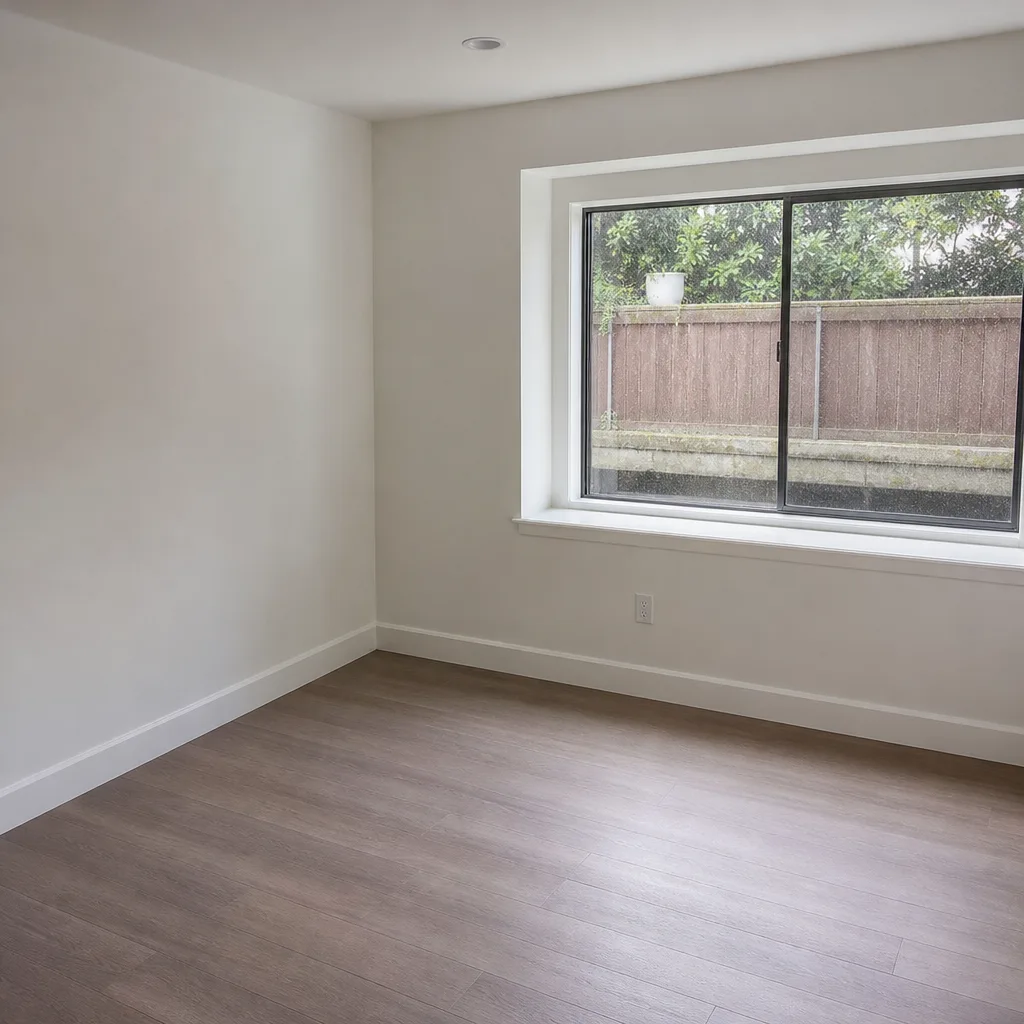 After