
Last updated October 31, 2026
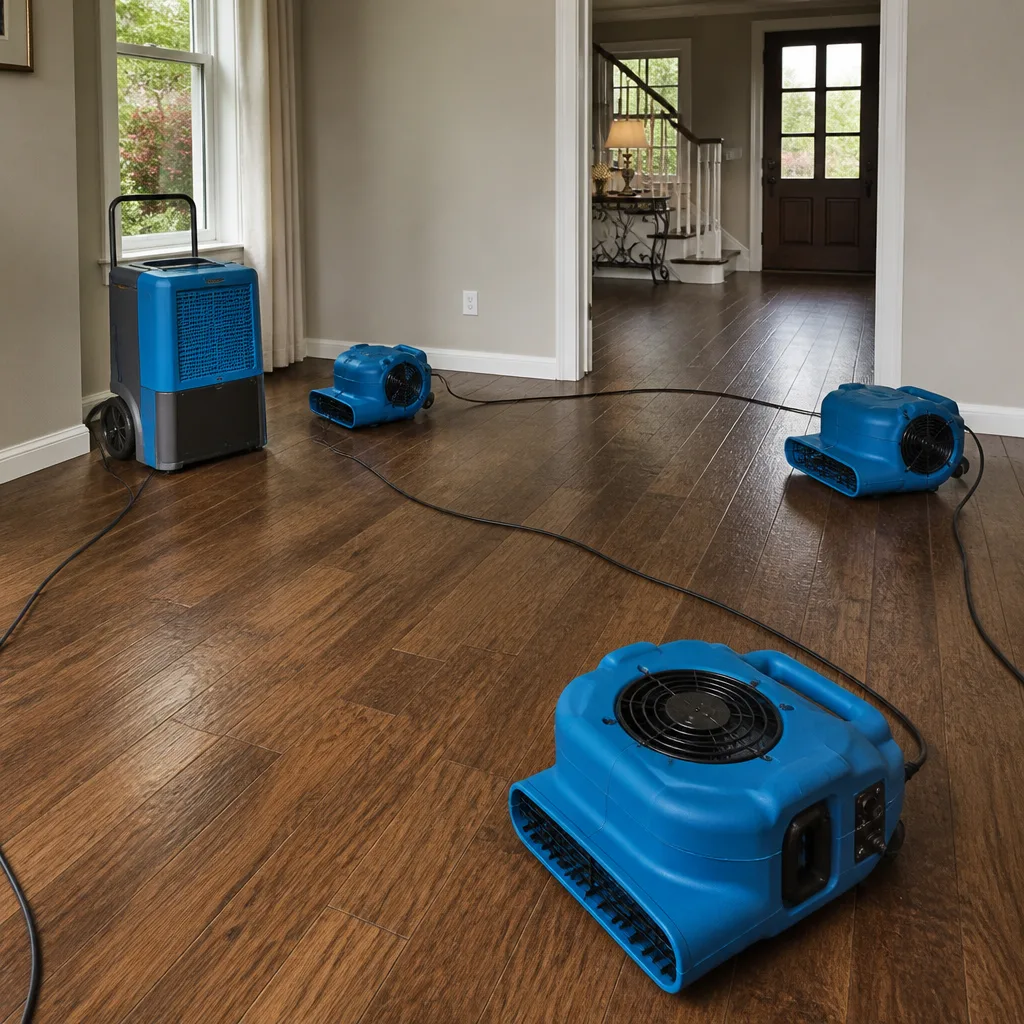 Water damage drying
 Fire & smoke cleanup
 Mold remediation
 Storm response
 Sewage cleanup
 Reconstruction
Free visual inspection and a written scope of work before any mitigation begins - photos, moisture readings, and drying logs go in your claim file
The scope we write is the scope we bill. Anything new gets shown to you, in writing, before we touch it.
Get your free estimateDamage Restoration Emergency Preparedness Guide for Orange Homes
The average Orange homeowner takes 23 minutes to locate their main water shutoff during an active leak. That’s long enough for a 1/2-inch supply line failure to release more than 150 gallons into walls, floors, and subfloor cavities, based on standard residential water pressure of 50 to 60 PSI and typical flow rates. This guide is built around a simple premise: the best emergency response is the one you never have to improvise. You’ll learn how to build a pre-event documentation package, read your insurance policy’s water damage provisions before you need them, vet a restoration contractor when you’re calm rather than panicked, and understand how Orange’s winter atmospheric river season changes everything about contractor availability.
Restoration work we handle
Quick Answer
Water damage emergency preparedness in Orange, CA means creating a pre-event system: photograph and document every utility shutoff location in your home, keep your insurance policy’s 24-hour claims line and water damage provisions in a physical folder, and vet an IICRC-certified restoration contractor before an emergency removes your ability to evaluate options rationally—our DIY vs Professional Damage Restoration: The Orange Homeowner’s Decision Guide can help with that evaluation. The first 15 minutes of a water event determine whether you face a $3,000 drying job or a $40,000 rebuild, and those 15 minutes are decided by decisions you make weeks or months before the leak starts.
Table of Contents
- The Documentation Package: What to Create Before Anything Goes Wrong
- Reading Your Orange Homeowner’s Insurance Policy’s Water Damage Provisions
- Shutoff Locations by Damage Type: Main Valve vs. Supply Stop vs. Appliance Valve
- The First 15-Minute Action Sequence During an Active Water Event
- Pre-Event Contractor Vetting: Why Calm Calls Beat Panic Calls
- Orange’s Atmospheric River Season and Contractor Capacity Constraints
- Common Mistakes to Avoid
- When to Call a Professional
- Frequently Asked Questions
- The Bottom Line
The Documentation Package: What to Create Before Anything Goes Wrong
Most emergency preparedness advice focuses on supplies: sandbags, tarps, battery backups. We’ve seen hundreds of Orange homes after water events, and the families that recover fastest aren’t the ones with the most gear. They’re the ones who can find critical information in under two minutes while water is actively entering their living room. The documentation package is a physical folder, stored in a known location, that contains four things.
First, photograph every utility shutoff in your home. Not just the main water valve, but the supply stop valves under every sink, behind every toilet, and on every appliance hookup. Label each photo with a Sharpie on the printed copy: “Kitchen sink hot water stop, clockwise to close.” When water is spraying, fine motor control degrades and memory follows shortly after. A labeled photo removes both problems.
Second, write down your insurance policy number and the 24-hour claims line in block capitals on the folder’s inside cover. Not in your phone. Not in an app. On paper. Phones get left in flooded rooms. Cloud accounts get locked when you forget the password during an adrenaline spike.
Third, create a current home inventory with serial numbers. Walk through each room and photograph major appliances, electronics, furniture, and the serial number tags on anything mechanical. Upload the photos to cloud storage, then print a summary sheet with the serial numbers written out. When you file a claim, the adjuster will ask for this. If you’re producing it from scratch after the loss while your home is being torn apart by drying equipment, you will miss items, and missed items are unreimbursed items.
Fourth, include the contact information and certification numbers for a pre-vetted restoration contractor. That means a company whose IICRC certification you’ve verified, whose response time commitment you’ve confirmed in writing, and whose equipment inventory you’ve seen or had described. When a supply line bursts at 2 a.m., you want to call a number you’ve already dialed once. Orange homeowners who do this skip the triage queue entirely. They’re calling a company that already knows their name.
Reading Your Orange Homeowner’s Insurance Policy’s Water Damage Provisions
The single most consequential distinction in residential water damage claims is the line between “sudden and accidental” and “gradual.” Most standard HO-3 policies in California cover sudden and accidental water damage, which includes supply line bursts, water heater failures, and washing machine hose blowouts; for a deeper look at regulatory requirements, see our guide to Damage Restoration Permits, Codes & Inspections in CA: What You Need to Know. Most exclude gradual damage, which is the slow leak behind a wall that has been saturating framing for six months before you noticed the baseboard stain.
The practical difference is simple in theory and brutal in practice. A supply line that bursts and floods your kitchen while you’re home is sudden. A pinhole leak in a copper pipe behind the shower valve that has been weeping for eight months is gradual. The claim on the second one will likely be denied, not because the insurer is unreasonable, but because the policy language was written decades before most Orange homes were built and has not changed to reflect how water actually moves through modern construction assemblies.
What you need to document to support a sudden and accidental claim: the date and time you noticed the water, photographs of the visible damage immediately upon discovery, a record of when you shut off the water supply, and the name and contact information of anyone who can corroborate that the water appeared suddenly. A neighbor who saw water running out from under your garage door. A family member who called you at work to say the hallway carpet was wet. Suddenness is established by witness testimony and timestamps, not by your description of what you think happened.
One nuance Orange homeowners often miss: many policies have a 14-day drying and mitigation deadline written into the water damage provisions. That means you have two weeks from the date of loss to have a restoration contractor begin professional drying, or the insurer can argue that mold growth was caused by your delay rather than the original water event. This is why pre-vetting matters. If you spend five days researching contractors after the leak, you’ve consumed a third of your window before anyone sets up a dehumidifier.
Read the section of your policy titled “Section I – Perils Insured Against” and look for the water damage exclusions. The language you’re looking for includes “constant or repeated seepage,” “leakage over a period of time,” and “continuous or repeated discharge.” These phrases are the boundary of your coverage. Knowing where that boundary sits before a loss event changes every decision you make during one.
Shutoff Locations by Damage Type: Main Valve vs. Supply Stop vs. Appliance Valve
Different water events require different shutoffs, and using the wrong one wastes time you don’t have. Here’s the breakdown Orange homeowners need before water starts moving.
- Main water shutoff valve: This is downstream of the water meter and controls flow to the entire house. In Orange, most homes built before 2000 have the main valve at the front of the property near the hose bib or in a covered box at the street. Some mid-century homes in the Old Towne Orange district have it in the crawlspace. Find it, photograph it, and practice turning it one full turn clockwise. If it’s a gate valve (round handle) rather than a ball valve (lever handle), note that gate valves corrode and can fail to fully close after years of non-use. Test it twice a year.
- Supply stop valves (angle stops): These are the small valves under sinks, behind toilets, and on appliance connections. They shut off water to a single fixture. If a toilet supply line bursts, you don’t need to kill water to the whole house. You need to close the angle stop behind that one toilet. The problem: angle stops in homes over 20 years old are often seized. That’s when you go to the main valve.
- Appliance-specific valves: Washing machines have both hot and cold supply valves at the wall behind the unit. Water heaters have a cold water inlet shutoff at the top. Dishwashers may have a shutoff under the kitchen sink or behind the kick plate. These valves are the first line of defense when a specific appliance fails, and they’re the ones homeowners are least likely to have located in advance.
Our crews have responded to Orange homes where a water heater relief valve was discharging, and the homeowner couldn’t find the cold water inlet shutoff because it was behind an access panel they’d never opened. Meanwhile, water was running into the garage and down the driveway. Thirty seconds of calm pre-location would have saved the garage drywall.
The First 15-Minute Action Sequence During an Active Water Event
When water is actively entering your Orange home, the first 15 minutes determine the scope of damage. Here is the sequence we train our technicians on, adapted for homeowners.
Step 1: Shut off the water source. If the water is coming from a specific fixture or appliance, close the nearest supply stop valve or appliance valve. If the source is unknown or the water is coming from a wall, floor, or ceiling, go directly to the main water shutoff and close it. Every minute of hesitation adds gallons.
Step 2: Assess electrical contact. If water has reached floor level near any electrical outlet, appliance cord, or power strip, go to the electrical panel and shut off the breakers serving the affected rooms. Do not walk through standing water to reach the panel if the panel itself is in the flooded area or if the water is in contact with exposed wiring. Call the Orange Fire Department’s non-emergency line or your utility provider for guidance if you’re uncertain. Electrocution from standing water is a real risk, and no drying job ever got worse while you waited 10 minutes for professional advice.
Step 3: Do not run fans yet. This is the most common mistake we see. Homeowners plug in box fans and start pushing air across wet carpet within minutes. Here’s why that’s wrong: if the water source is a supply line or plumbing overflow, the water is classified as Category 1 (clean). Air movement may be fine. But if the water came from sewage backup, a toilet overflow with waste, or groundwater flooding, it’s Category 3, and running fans aerosolizes bacteria and viruses into the living space. You cannot visually distinguish clean water from contaminated water with certainty. Wait for a professional assessment before moving air.
Step 4: Remove what you can safely move. Books from low shelves, electronics from the floor, furniture legs off wet carpet. Work fast but don’t hurt yourself moving a waterlogged sofa. Your back injury is a bigger problem than the sofa’s water exposure.
Step 5: Call your pre-vetted restoration contractor. If you have a company you’ve already confirmed holds IICRC certification and document their response time, your call is five minutes. If you’re calling around at 2 a.m. hoping a dispatcher answers, your call is two hours. Two hours is the difference between a dry-out and a gut job.
Step 6: Document everything. Photograph the standing water, the affected rooms, the water source, and any visible damage before you touch anything. These photos go into your claim file. Timestamps matter. The metadata on your phone photos establishes the sequence of events better than any written account.
Renew Water Damage arrives with a full commercial drying arsenal: Dri-Eaz dehumidifiers, XPOWER air movers, and Phoenix refrigerant dehumidifiers sized for the cubic footage of the affected space. We calculate drying chamber dimensions, not guess with equipment we happen to have on the truck. That’s the difference between professional restoration and a fan pointed at wet carpet.
Pre-Event Contractor Vetting: Why Calm Calls Beat Panic Calls
When a water heater ruptures at 7 a.m. on a Tuesday, you will not be doing careful due diligence. You will call the first company that appears in a search result and say yes to whoever answers the phone. This is exactly how Orange homeowners end up with unqualified crews, inflated scopes, and incomplete drying that shows up as mold six months later.
The alternative: call restoration contractors now, while your home is dry and your judgment is intact. Ask these specific questions:
- Are you IICRC-certified, and can I see your firm certification number? The IICRC (Institute of Inspection, Cleaning and Restoration Certification) is the restoration industry’s most recognized credentialing body. Certified firms have demonstrated that their technicians are trained to documented, peer-reviewed standards, not on-the-job guesswork.
- What is your actual response time to a water event in Orange, and is that commitment in writing? “We’ll get there as soon as we can” is not a response time. Ask for a number in hours.
- What drying equipment do you carry, and how do you size the drying chamber? The answer should include specific brands and a calculation method tied to cubic feet and moisture load, not “we have some fans.”
- Do you handle mold and fire damage as well, or do you sub out anything beyond water extraction? You want a company that handles the full damage-to-restoration continuum in-house, because the coordination gaps between multiple contractors are where timelines and costs inflate.
- Are you a member of the Restoration Industry Association (RIA) or another professional trade body? Membership signal ongoing accountability beyond the initial certification, which matters when a company’s practices drift after years in business.
A pre-vetted contractor call takes 20 minutes and costs nothing. It means that when your wall is actively leaking, you’re calling a company whose standards you’ve already verified, whose equipment inventory you’ve heard described, and whose voice on the phone you recognize. Renew Water Damage welcomes these calls. We’d rather spend 20 minutes on the phone with a calm homeowner in 2025 than 20 minutes on the phone with a panicked one in 2026 at 2 a.m.
For homeowners who want more context on what professional water damage restoration actually involves, our Water Damage Restoration in Orange page walks through the full process from extraction to drying verification.
Orange’s Atmospheric River Season and Contractor Capacity Constraints
Orange sits in a Mediterranean climate with a distinct winter wet season. Atmospheric rivers, narrow bands of concentrated moisture that sweep in from the Pacific, generate the heaviest rainfall between January and February. In some years, a single atmospheric river can drop more rain on Orange in 72 hours than the city sees in the preceding three months combined. The result is predictable to anyone in the restoration industry: demand spikes, response times stretch, and contractor triage starts ranking jobs by severity rather than by call order.
What this means for you: if a pipe bursts inside your home during an atmospheric river event in February, you are competing for restoration capacity with every flooded basement, every roof leak, and every garage intrusion in the region. Contractors that normally respond in two hours are responding in eight. Contractors that normally answer the phone are letting it go to voicemail. The triage queue is real, and it is brutal.
This is the strongest argument for pre-event contractor vetting that we can make from direct experience. A homeowner who called around in September, confirmed our response time in writing, and spoke to a dispatcher before the chaos of January has a relationship. When that homeowner calls during an atmospheric river event, they’re not a new lead in a queue of 40 calls. They’re someone who did the work early. That call gets answered differently.
Orange’s mid-century housing stock adds another layer. Many homes in the Old Towne Orange area and the El Modena district were built during the 1950s and 1960s, when galvanized steel plumbing was common. Galvanized pipe corrodes from the inside, and the failure pattern tends to be sudden pinhole leaks that spray under pressure rather than weep slowly. We see a concentration of these failures during atmospheric river season, not because the rain causes them, but because the saturated ground shifts slightly and removes the last structural support from aging pipe joints. A pipe that was fine in December fails in February because the soil moved two millimeters.
For Orange homeowners with older homes, the documentation package matters even more. Know where your main shutoff is, because a 1960s galvanized supply line can deliver more water in 20 minutes than a modern PEX line delivers in an hour. And if your home is older and you want a professional assessment of your restoration risk factors, see our Renew Water Damage home page to understand what a certified restoration assessment covers.
Common Mistakes to Avoid
- Running fans on standing water before classifying the water’s cleanliness. If the water is from sewage backup or toilet overflow with waste, air movement aerosolizes pathogens. We see this in Orange regularly, especially after the city’s older sewer lines back up during heavy rain events. Wait for professional classification.
- Calling a general contractor instead of a restoration contractor. General contractors build things. They don’t hold IICRC certification, don’t carry commercial drying equipment, and generally treat restoration as a side job. We’ve been called into Orange homes after a general contractor “dried” a flooded room with two rental fans and declared victory. The walls were wet for six weeks.
- Waiting weeks to call about a “small” leak because it didn’t seem urgent. A pinhole leak behind a wall doesn’t look urgent. But every day of moisture is a day of mold growth risk. If you see a water stain or a musty smell, call within 24 hours. The drying threshold for preventing mold colonization is 48 to 72 hours from moisture introduction.
- Assuming your homeowner’s policy covers all water damage. Most policies exclude gradual damage, seepage, and flood damage (which requires separate flood insurance through the NFIP). Reading your policy’s water provisions before a loss is the single highest-value hour you can spend on this topic.
- Not photographing the damage before cleanup begins. The strongest insurance claim includes photos of the water, the source, and the affected materials taken before anything is moved or dried. If you rip out wet drywall before photographing it, you lose evidence every adjuster needs to see.
- Choosing a contractor based on who answers the phone fastest during a regional emergency. Atmospheric river events in Orange create a scramble for restoration capacity. The contractors who are still answering the phone may be the ones nobody else has called, not because they’re good, but because they’re unknown. Pre-vetting solves this permanently.
When to Call a Professional
Call a certified restoration contractor when water has entered wall cavities, subfloor spaces, or ductwork, when the water source is anything other than a clean supply line, when standing water covers more than a small contained area, when electrical systems have been exposed to water, or when you smell mustiness within days of a water event. Delaying professional drying beyond 48 hours significantly increases mold colonization risk, and mold remediation is more invasive and more expensive than rapid-response drying would have been. If you’re in Orange and you’re not sure whether your situation warrants professional attention, call us. We’ll tell you whether you need us or whether a shop vac and a fan will handle it. Renew Water Damage offers free estimates in Orange, call (833) 620-3891.
Frequently Asked Questions
Shut off the water source at the nearest supply stop valve or the main shutoff, kill electrical breakers to any affected rooms if water has reached floor level near outlets, do not run fans until the water category is professionally classified, and call your pre-vetted restoration contractor. Photograph everything before moving anything. The first 15 minutes are about stopping the water and preserving safety, not about beginning cleanup.
Most standard HO-3 policies in California cover sudden and accidental water damage, including supply line bursts and appliance failures. Exclusions apply for gradual damage, seepage, and flood. Document the date and time of discovery, photograph the damage before cleanup, and call your insurer’s 24-hour claims line within the first day. Most policies also have a mitigation deadline, typically 14 days, for beginning professional drying. Call (833) 620-3891 for guidance on documentation requirements.
During Orange’s January to February atmospheric river season, response times across the industry extend from hours to days as demand exceeds capacity. A pre-vetted contractor relationship, established before the event, is the most reliable way to shorten that window. We confirm written response time commitments to homeowners who call us before an emergency occurs. If you’re calling us now, mid-event, we’ll give you an honest current estimate rather than a promise we can’t keep.
If water has been absorbed into drywall, baseboards, carpet padding, or subflooring, cleaning the visible surface is not enough. Moisture trapped inside wall cavities and subfloors supports mold growth even after the surface looks dry. Professional drying with equipment like Injectidry wall-cavity drying systems removes moisture from inside assemblies without unnecessary demolition, reducing repair costs and timelines. A quick cleaning that misses cavity moisture is a false economy.
Ask for their IICRC firm certification number and verify it directly with the IICRC. Ask about RIA membership. Ask what drying equipment they carry by brand name, such as Dri-Eaz, Phoenix, XPOWER, or B-Air, and ask how they size a drying chamber. Companies that can’t answer those questions specifically are not restoration specialists. Our Mold Remediation in Orange page explains the certification standards involved in mold-specific work.
Mold appearing weeks after a water event usually means the original drying was incomplete, especially inside enclosed cavities. Call a certified mold remediation contractor for an assessment. The IICRC S520 standard governs mold remediation practices, and certified firms follow it. Do not attempt to clean mold with bleach, which can feed the colony and aerosolize spores. For details on what professional mold remediation in Orange involves, see our mold remediation page linked above.
The Bottom Line
Emergency preparedness for water damage in Orange is not about stockpiling supplies. It’s about building the information architecture that lets you act fast when water starts moving. Know where every shutoff is, with photos and labels. Read your insurance policy’s water damage provisions now, before a claims adjuster explains them to you. Vet a restoration contractor pre-event, while you can ask smart questions and compare calm answers. Understand that Orange’s winter atmospheric river season creates predictable contractor capacity constraints, and that your pre-established relationship is your bypass. The first 15 minutes determine the scope of damage. That 15 minutes is decided by the hour you spent preparing last month. If you’re an Orange homeowner reading this before an emergency, that hour is available to you right now. For a free estimate or a pre-event contractor vetting call, reach out to (833) 620-3891. Our Fire Damage Restoration in Orange page covers the fire side of preparedness if you want a complete picture.
Written by the team at Renew Water Damage, serving Orange since 2015. Explore more guides & resources from our team.
See the difference
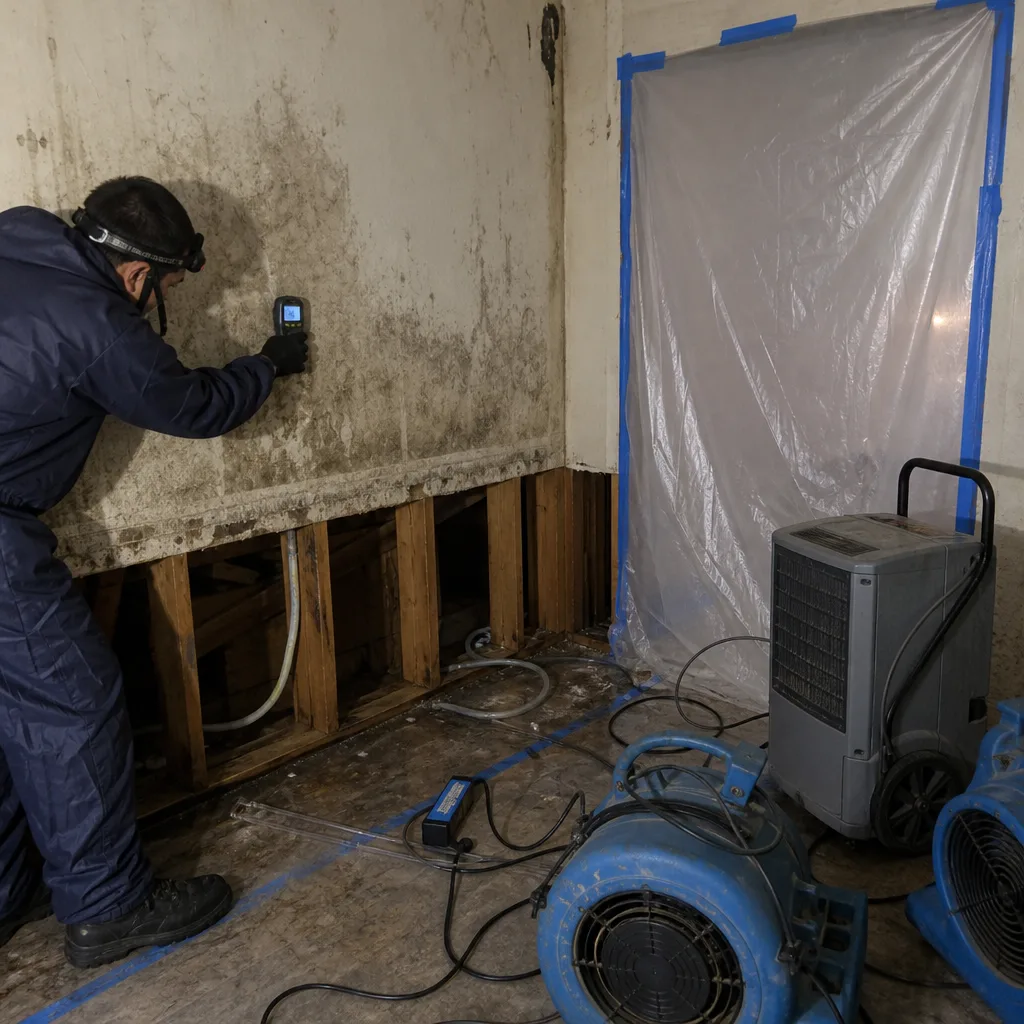 Before
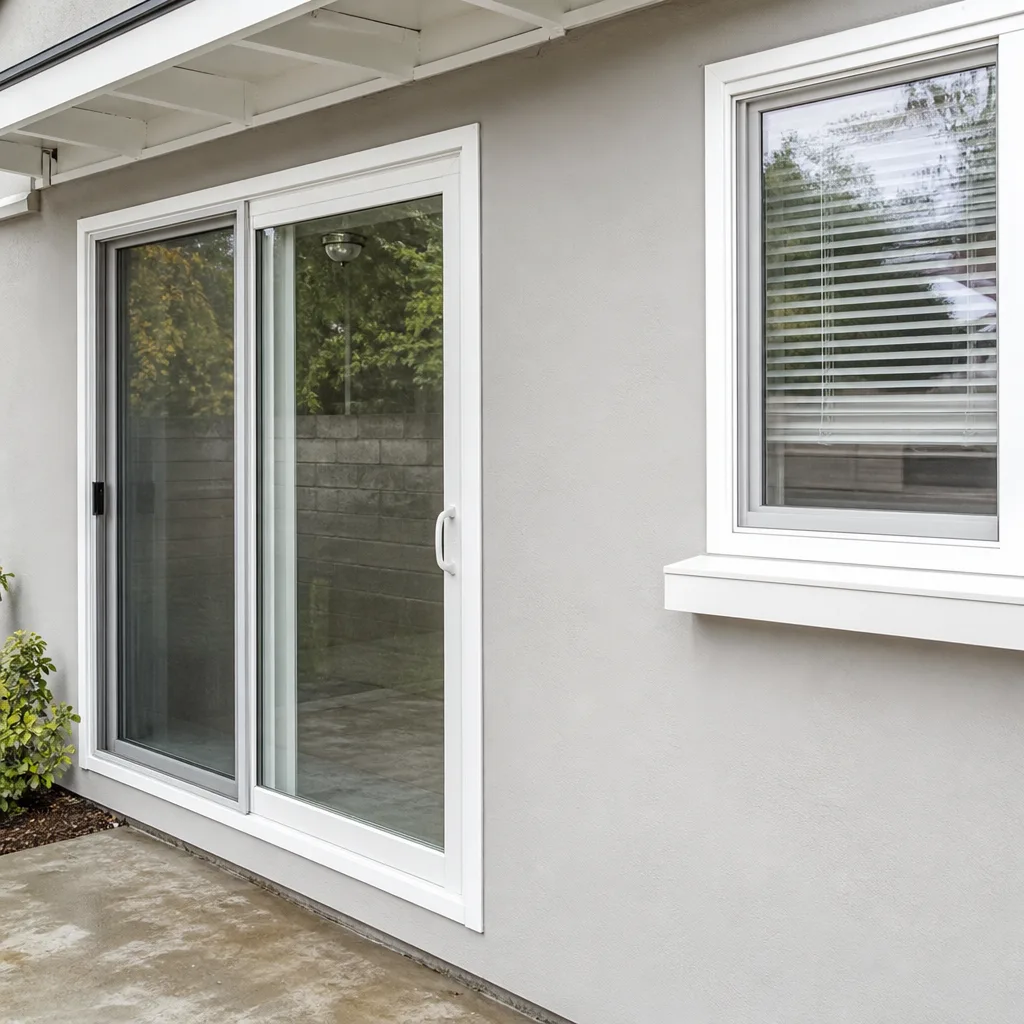 After
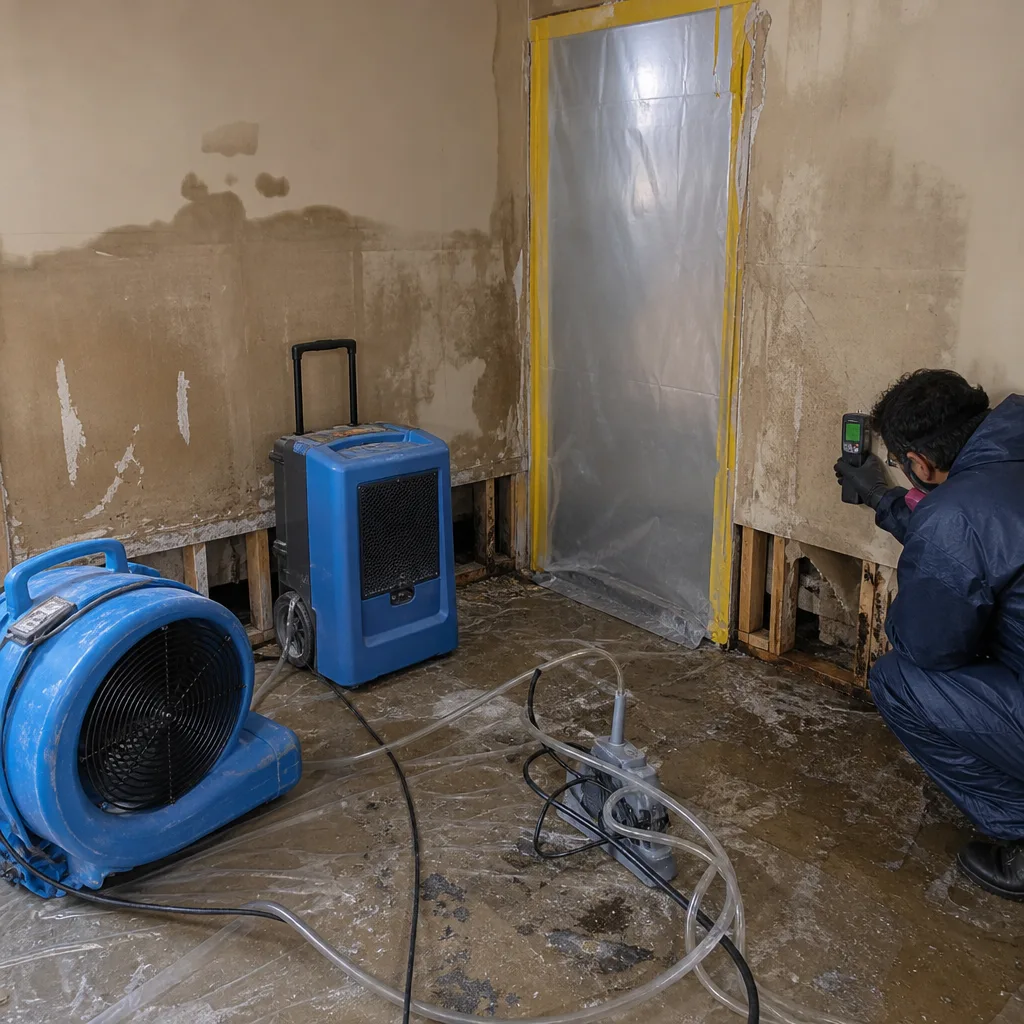 Before
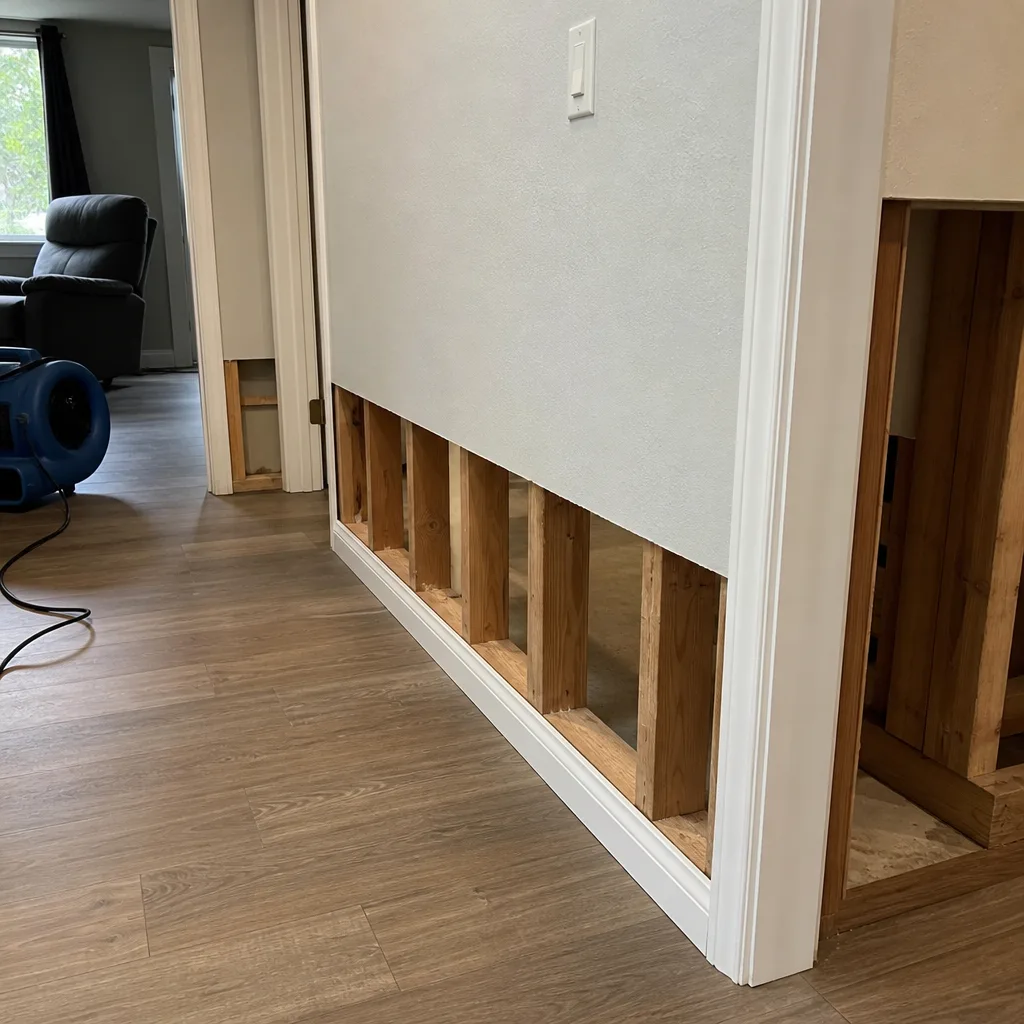 After
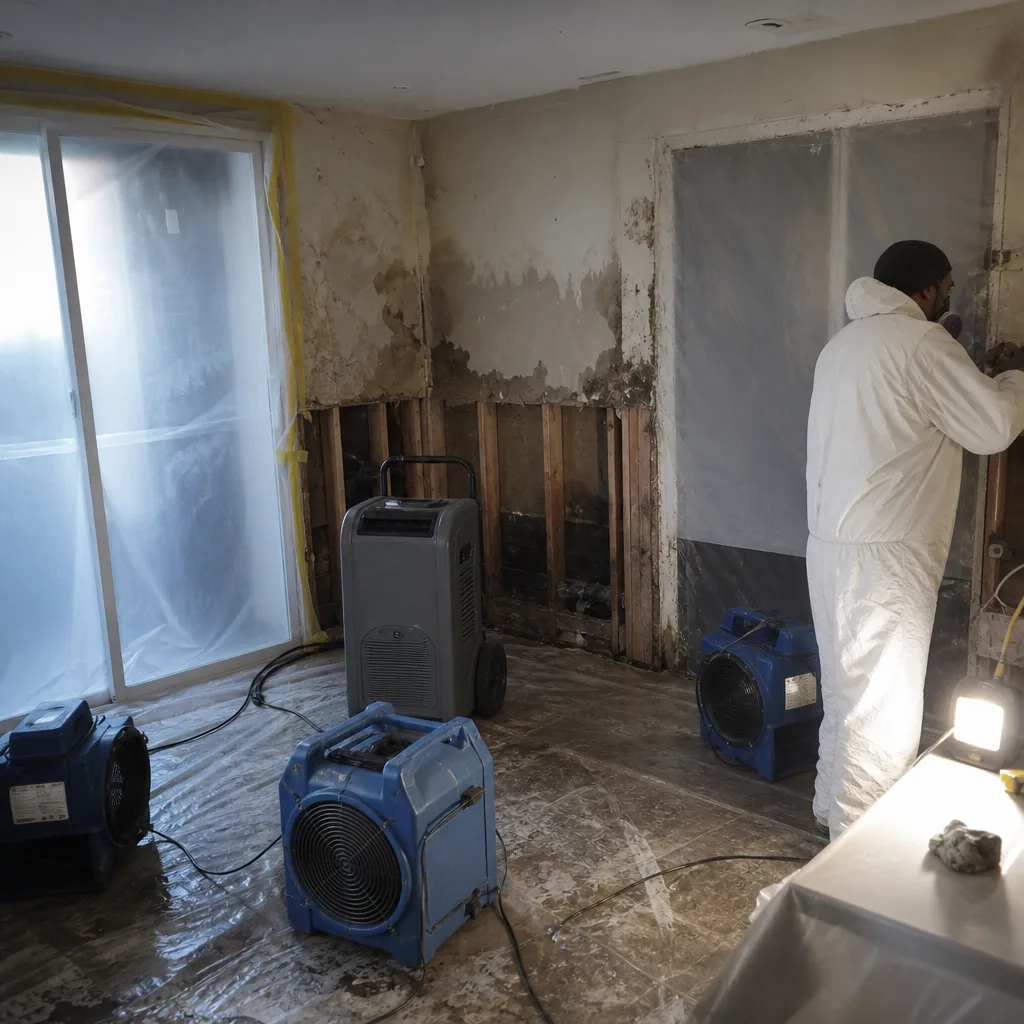 Before
 After