Last updated October 31, 2026
 Water damage drying
 Fire & smoke cleanup
 Mold remediation
 Storm response
 Sewage cleanup
 Reconstruction
Free visual inspection and a written scope of work before any mitigation begins - photos, moisture readings, and drying logs go in your claim file
The scope we write is the scope we bill. Anything new gets shown to you, in writing, before we touch it.
Get your free estimateDIY vs Professional Damage Restoration: The Orange Homeowner’s Decision Guide
Most Orange homeowners who attempt their own water damage restoration don’t fail because they lack effort. They fail because they stop when the surface looks dry. A wet-vac and a box fan will remove standing water. What they won’t remove is the moisture trapped inside drywall cavities, under baseboards, and within subfloor layers. That trapped moisture is where the real damage begins, and it’s invisible. This guide—along with our more guides & resources—walks through the three technical thresholds that separate a legitimate DIY job from one that creates a bigger problem than the original leak. We’ll cover exact drying standards, contamination categories, the insurance documentation trap, and the specific Orange, CA scenarios where doing it yourself is a reasonable choice.
Quick Answer
DIY restoration makes sense for small, clean-water spills under roughly 10 square feet that you can fully dry within 48 hours, with no water behind walls or under flooring. Professional restoration becomes necessary when water is Category 2 or 3 contaminated, when moisture has penetrated behind any finished assembly, or when the 72-hour mold window has been crossed. In Orange, CA, the typical cost difference between DIY and professional water damage restoration is narrower than most homeowners expect once insurance deductibles and hidden-damage repair costs are factored in—something we break down in our How to Hire a Damage Restoration Contractor in Orange: A Step-by-Step Guide.
Restoration work we handle
Table of Contents
- The IICRC S500 Drying Standard: What “Dry” Actually Means
- Water Contamination Categories and Your DIY Boundary
- The 72-Hour Mold Window: Why Timing Outweighs Effort
- Moisture Behind Finished Assemblies: The Costliest Blind Spot
- The Insurance Documentation Problem with DIY
- Orange-Specific Scenarios Where DIY Is Defensible
- California Disclosure Law and the DIY Paper Trail Problem
- The Equipment Gap: What Professionals Use That Rentals Don’t Provide
The IICRC S500 Drying Standard: What “Dry” Actually Means
The restoration industry’s governing document for water damage is the IICRC S500 Standard for Professional Water Damage Restoration. It defines “dry” not by how a surface feels, but by measurable moisture content thresholds. Wood substrates like studs, joists, and subfloor must read below 16% moisture content. Concrete must read below 0.5%. Ambient air in the affected space must register a specific grains per pound (GPP) reading relative to the outside air, typically within 10 GPP of the baseline for the structure.
These numbers matter because a surface that feels dry to the touch can still be at 20% moisture content or higher. At that level, wood is wet enough to support fungal growth. In Orange’s climate, where summer temperatures routinely sit in the mid-80s with moderate humidity, a wall cavity that isn’t actively dried can hold elevated moisture for weeks. The homeowner sees no visible water and assumes the problem is resolved. The moisture meter would tell a different story.
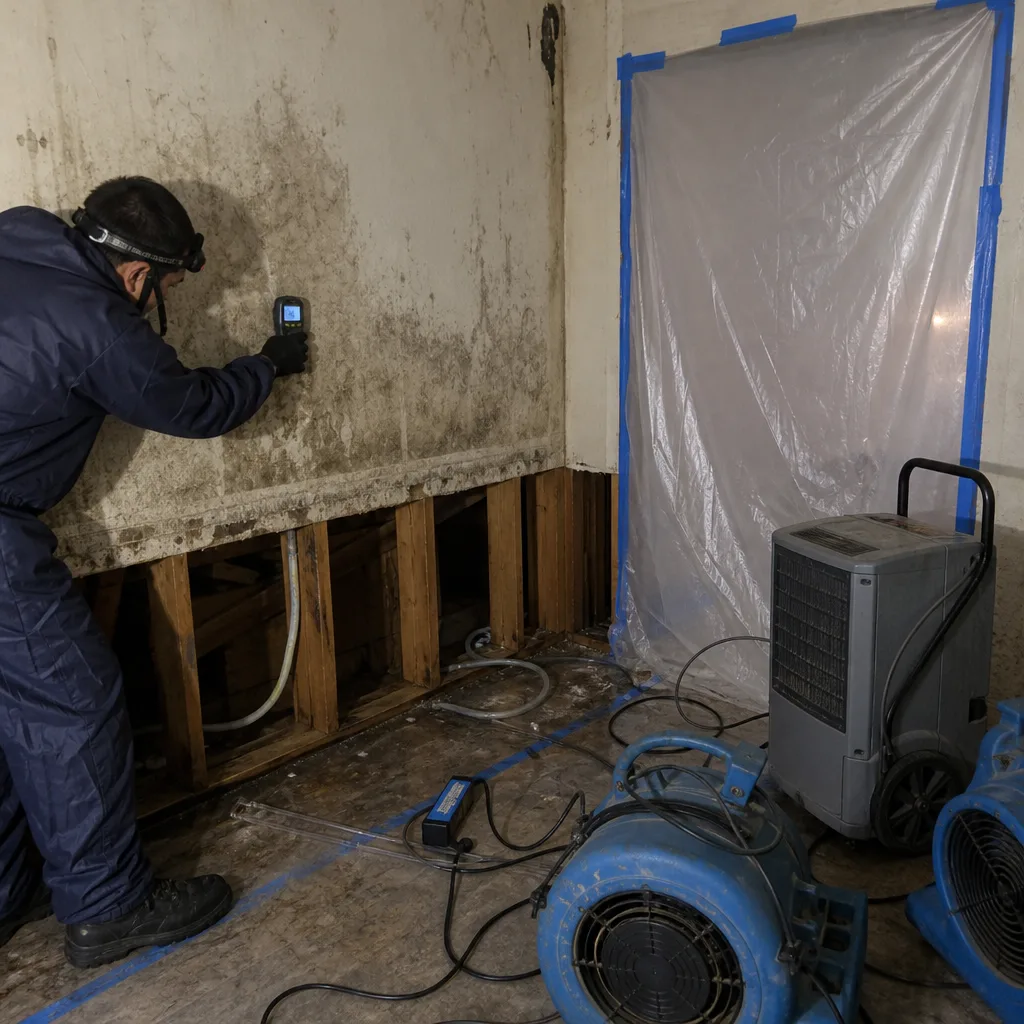
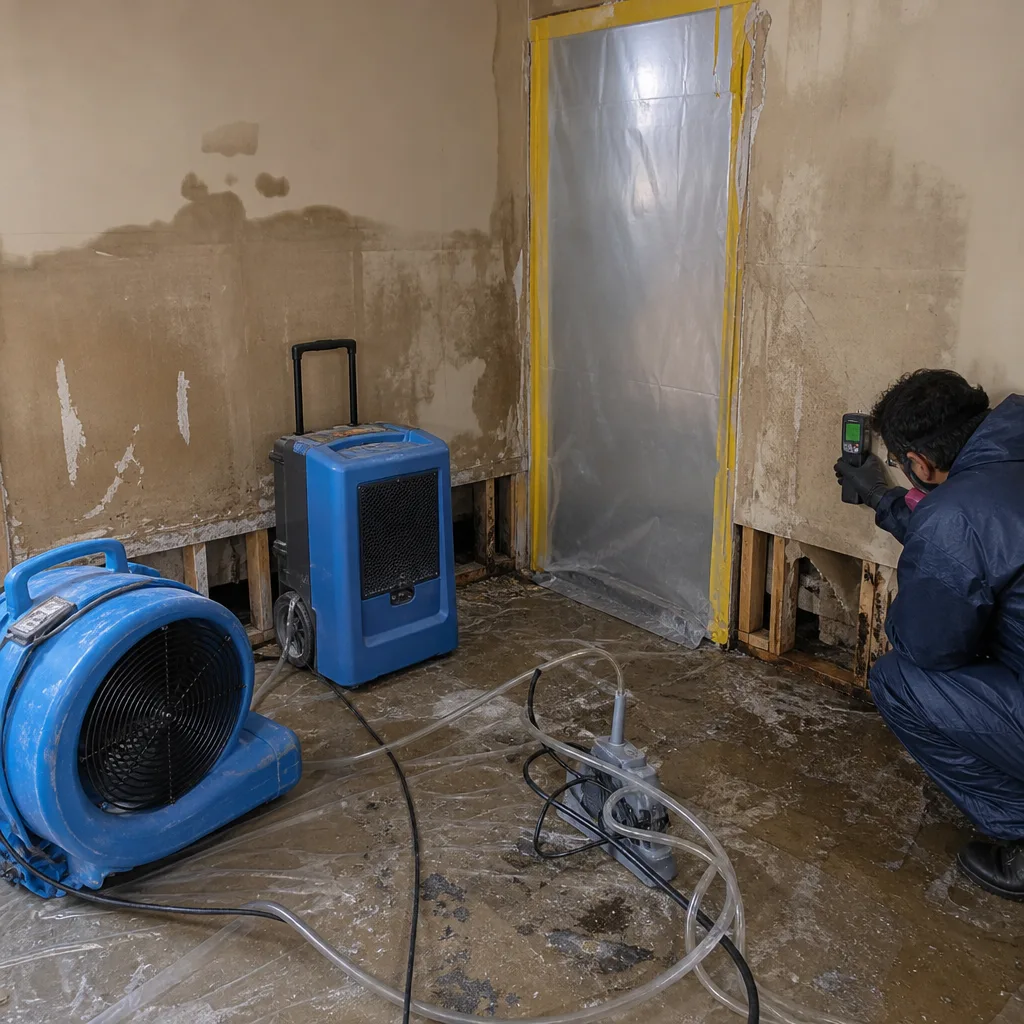
IICRC-certified technicians use calibrated moisture meters to document readings at multiple points in the affected area, before, during, and after drying. That documentation serves two purposes. It verifies the structure actually reached the drying target, and it creates the drying log that insurance carriers require. A visual inspection doesn’t meet either bar.
What a Professional Drying Protocol Looks Like
- Extraction of standing water using truck-mounted or portable extraction units
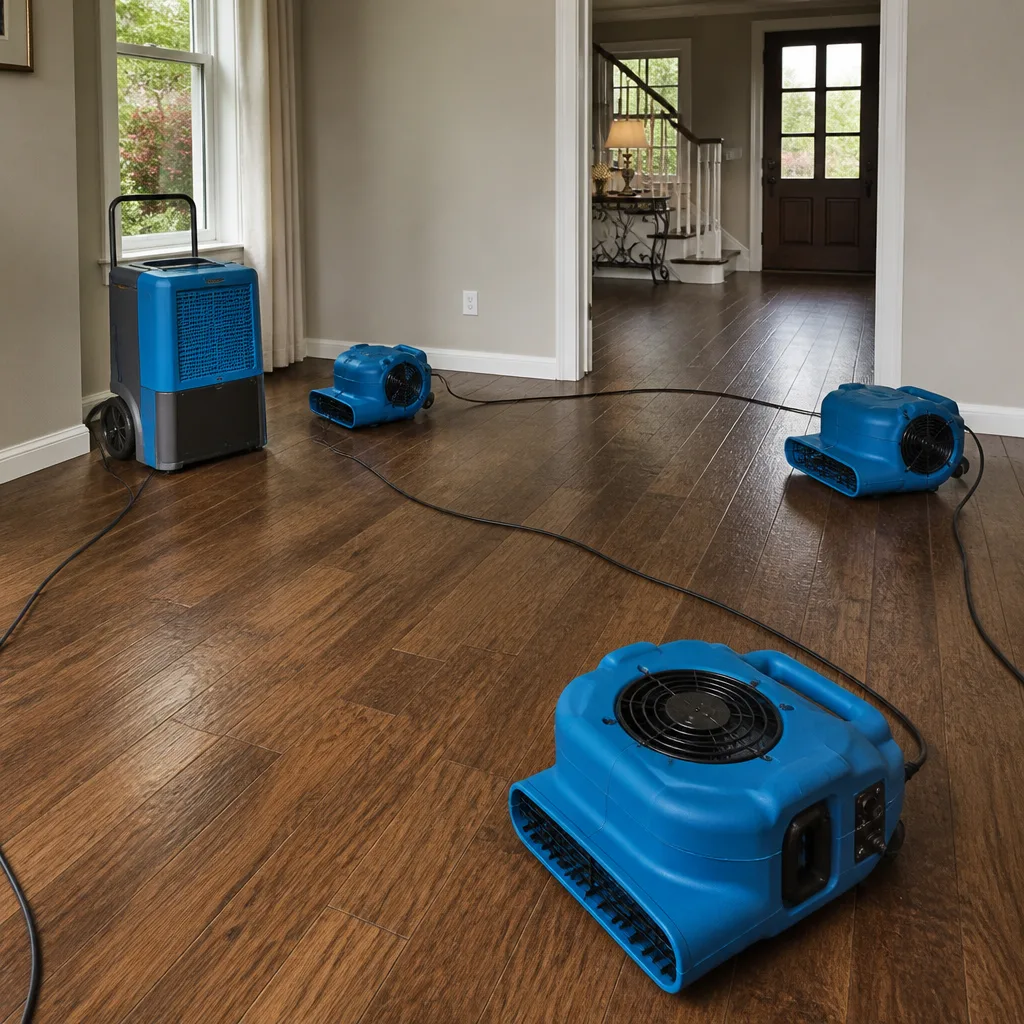
- Placement of air movers at specific angles to create airflow across surfaces
- Dehumidifier placement sized to the cubic footage of the affected area
- Daily moisture readings at documented locations
- Equipment adjustment or repositioning based on those readings
- Final verification that all substrates meet S500 thresholds
In our experience serving Orange homes, the biggest DIY gap isn’t effort. It’s measurement. Without a moisture meter, you’re guessing. And guessing wrong on a water damage job means paying for mold remediation later.
Water Contamination Categories and Your DIY Boundary
The IICRC classifies water damage into three categories, and the category determines whether DIY is even safe to attempt. Understanding this classification is the single most important factor in your decision.
Category 1: Clean Water
This is water from a sanitary source: a supply line, a toilet tank (not bowl), a faucet left running, or a water heater with a clean supply. Category 1 water has no significant contaminants. If you catch it quickly and the affected area is small and accessible, DIY extraction and drying is defensible. The clock starts immediately, though. Category 1 water degrades to Category 2 within 48 to 72 hours as it picks up contaminants from the surfaces it contacts.
Category 2: Gray Water
This includes water from washing machines, dishwashers, toilet bowls with urine only, and sump pump failures. Category 2 water contains significant biological or chemical contamination. It requires PPE (personal protective equipment), containment to prevent cross-contamination, and antimicrobial treatment after drying. These protocols aren’t safely improvised with household cleaning supplies. A washing machine drain overflow in an Orange home is a common Category 2 event, and it usually carries detergent residue and bacteria from clothing into whatever it touches.
Category 3: Black Water
This is grossly contaminated water: sewage, floodwater, water from a toilet bowl with feces, or any water that has sat long enough to support bacterial growth regardless of origin. Category 3 requires full PPE, negative air containment, controlled demolition of affected porous materials, and biocide application. No homeowner should attempt Category 3 restoration. The health risk is immediate and serious.
The DIY boundary is clear: Category 1 within 48 hours on a small, accessible area is the only legitimate DIY water damage scenario. Category 2 and Category 3 require professional restoration with proper safety protocols.
The 72-Hour Mold Window: Why Timing Outweighs Effort
Mold spores are everywhere, including in every Orange home. They’re dormant until they encounter moisture, and they don’t need much time to activate. Under warm, humid conditions, mold can begin colonizing wet building materials within 24 to 48 hours. By 72 hours, visible growth is common on drywall, carpet padding, and wood surfaces.
This is the arithmetic of water damage: the 72-hour window isn’t a suggestion, it’s a biological deadline. A homeowner who discovers water damage on a Friday evening and decides to “deal with it on Monday” has already given mold a three-day head start. Even if the visible water is removed on Monday, the mold colonization in hidden spaces has begun.
In Orange’s climate, this window can compress. Summer temperatures accelerate mold growth significantly. A warm, damp wall cavity in August provides optimal conditions. Winter is somewhat more forgiving, with cooler temperatures slowing fungal activity, but the 72-hour marker remains the point where professional remediation becomes the safer call.
The mold timeline also affects insurance. Most homeowners policies cover sudden and accidental water damage, but many exclude or limit coverage for mold that results from “lack of diligence” in addressing the initial water event. A DIY delay that leads to mold can turn a covered water claim into a partially denied mold claim.
Moisture Behind Finished Assemblies: The Costliest Blind Spot
The phrase “finished assembly” refers to any building component that conceals what’s behind it: drywall over studs, flooring over subfloor, tile over backer board, paneling over framing. Water that penetrates these assemblies creates what restoration professionals call a “hidden moisture pocket.” These pockets are where the most expensive damage occurs, because they’re invisible until structural failure or mold makes them obvious.
Here’s the mechanics of why hidden moisture is so destructive. Drywall acts as a wick. Water that reaches the bottom edge of drywall is drawn upward through capillary action, often wicking 12 to 18 inches above the visible water line. The face of the drywall may still feel dry to the touch while the back side, where it contacts the studs, is saturated. The studs themselves begin absorbing moisture. The sill plate, the bottommost horizontal framing member, sits in direct contact with the wet subfloor and wicks water horizontally along the wall’s length.
This is why professional restoration companies in Orange use Injectidry wall-cavity drying systems. These systems force air through small holes drilled behind baseboards or through the wall cavity itself, drying the space between the drywall and the studs without tearing out the wall. The alternative is demolition: cutting out the wet drywall, removing wet insulation, and rebuilding the wall assembly. Injectidry drying typically preserves the wall and reduces both cost and project timeline.
A box fan pointed at a wall does nothing for the cavity behind it. A dehumidifier running in the room doesn’t either, because the moisture is trapped in a semi-enclosed space with limited air exchange. The homeowner believes the fan and dehumidifier are “doing the job” because the room feels dry. The wall cavity is quietly growing mold.
The Insurance Documentation Problem with DIY
Insurance carriers don’t process water damage claims on good faith. They process them on documentation. A standard homeowners claim for water damage requires a drying log that records daily moisture readings at multiple locations, equipment placement records showing what equipment was used and where, and before-and-after documentation of the affected materials. This is not something a homeowner with a rental dehumidifier and a phone camera is equipped to produce.
The drying log serves a legal purpose for the carrier. It demonstrates that the property was dried to an industry-accepted standard, which limits their ongoing liability for mold or structural issues. Without that documentation, the adjuster has no basis to approve the claim, and the homeowner has no evidence that the damage was properly addressed.
We’ve seen Orange homeowners with legitimate water damage claims get reduced settlements because their DIY drying attempt couldn’t be documented to IICRC standards. The carrier’s position is straightforward: no drying log, no verified moisture readings, no way to confirm the structure was actually dried. The homeowner absorbs the difference.
Professional restoration companies in Orange understand this documentation requirement and build it into their process. Calibrated moisture meters provide daily readings. Equipment placement is recorded and photographed. The final drying verification is documented and shared with the adjuster. This paperwork is part of what you’re paying for when you hire a certified restoration firm, and it’s often the difference between a smooth claim and a disputed one. For a deeper look at how this works in practice, our Water Damage Restoration in Orange page walks through the full process.
Orange-Specific Scenarios Where DIY Is Defensible
The DIY vs. professional decision is not all-or-nothing. There are specific situations in Orange homes where a homeowner with basic competence can handle the issue without professional help. The key criteria: the water is Category 1, the affected area is small and fully accessible, and no finished assembly has been breached. For a deeper look at ongoing prevention, see our Water Damage Restoration Maintenance Checklist for Orange Homeowners.
Scenario 1: Small-area tile or vinyl floor extraction under 10 square feet. A supply line leak under a kitchen sink that pools on a tile floor, contained by the room’s layout, with no water reaching walls or cabinetry. Extract with a wet-vac, dry the surface, and verify the subfloor didn’t absorb moisture. If the tile grout is sealed and the exposure was brief, this is a legitimate DIY job.
Scenario 2: Single-point ceiling drip from a supply line with no assemblies below. A pinhole leak in an attic supply line that drips onto a concrete garage floor, with no drywall below the drip point and no insulation in the path. Extract, dry the concrete, repair the line. No hidden cavities were wetted.
Scenario 3: Exterior drainage corrections before water enters the structure. Water pooling against a foundation due to a clogged downspout or improper grading is a problem you can and should correct yourself. Redirect downspouts, clear drainage channels, regrade the soil slope. None of this requires restoration equipment, and preventing water from entering the structure is always the best outcome.
What all three scenarios share: the water source is clean, the affected area is visible and accessible, and no water penetrated behind drywall, under flooring, or into framing. Once any of those conditions changes, the DIY window closes.
California Disclosure Law and the DIY Paper Trail Problem
California Civil Code requires home sellers to disclose any known material defects, including water damage and mold, to prospective buyers. The disclosure form specifically asks about water intrusion, leaks, and moisture problems. This creates a documentation burden that DIY restoration doesn’t meet.
Here’s the scenario we see repeatedly in Orange. A homeowner discovers a leak, dries it themselves, and the home is sold two years later. The buyer discovers hidden mold or water damage during their inspection or after move-in. The seller’s position is that they addressed the problem. But they have no documentation proving the structure was properly dried: no moisture readings, no drying log, no professional report. The disclosure statement becomes a gray zone, and gray zones in real estate transactions turn into lawsuits.
Professional restoration with written clearance documentation eliminates this ambiguity. The drying log, final moisture readings, and remediation report create a paper trail that says: this damage was addressed to documented industry standards on this date by a certified firm. That documentation transfers with the property and protects both parties.
This is also where the value of a Mold Remediation in Orange specialist becomes concrete. If mold is discovered during a pre-sale inspection, a remediation company that provides written clearance documentation resolves the disclosure issue rather than leaving it open. The alternative is a delayed sale, a price reduction, or a legal dispute.
The Equipment Gap: What Professionals Use That Rentals Don’t Provide
The equipment available at big-box rental counters in Orange is a fraction of what professional restoration firms deploy. The difference isn’t just power; it’s the type of drying that the equipment performs.
A rental dehumidifier is typically a small refrigerant unit rated for a few pints per day. Commercial restoration dehumidifiers, like the Dri-Eaz and Phoenix units used on professional jobs, are rated in pints per hour and are designed for continuous operation in challenging conditions. They’re the same units used on large commercial losses, but sized appropriately for residential work.
Air movers tell a similar story. Rental air movers are often consumer-grade units with limited airflow. The XPOWER and B-Air air movers used in professional restoration move significantly more air, which matters because drying speed is directly proportional to airflow across wet surfaces. More air movement means faster evaporation, which means hitting the drying standard before mold gets established.
The most significant equipment gap isn’t available at any rental counter: Injectidry wall-cavity drying systems. These systems are the only alternative to demolition when moisture is trapped inside wall cavities or under subfloors. They force dry air through the actual cavity, drying the space from the inside out. No rental equipment replicates this function. Without it, the professional choice is cutting out drywall to expose the cavity, which adds demolition and reconstruction costs to the project.
There’s also the matter of expertise in equipment placement. Air movers placed incorrectly create “dead zones” where moisture lingers. Dehumidifiers sized incorrectly fail to keep pace with evaporation. The equipment matters, and so does knowing where to put it. IICRC-certified crews follow documented drying protocols, not guesswork. That’s the difference between drying a room and drying a room to the S500 standard.
Common Mistakes to Avoid
- Stopping when the surface feels dry. Touch is not measurement. A wall can feel dry at 20% moisture content, which is wet enough to support mold. Without moisture meter readings, you don’t know what you’re leaving behind.
- Using a household fan instead of an air mover. Household fans move far less air than commercial air movers, and they’re not designed for the sustained, directed airflow that drying requires. The drying process takes longer, which gives mold more time.
- Skipping the documentation. If you’re going to file an insurance claim, you need a drying log with moisture readings and equipment records. Without it, the adjuster has no basis to approve your claim.
- Treating Category 2 water as if it were clean. Washing machine and dishwasher overflows contain biological contaminants. Drying the area without antimicrobial treatment leaves bacteria behind, and the problem returns as odor or mold.
- Waiting to see if it “gets better on its own.” Water damage doesn’t self-resolve. Moisture trapped in building materials continues doing damage until it’s actively dried. Every day of delay is a day of mold colonization.
- Pulling up carpet without addressing the pad and subfloor. Carpet padding is essentially a sponge. The visible carpet may dry while the pad underneath stays saturated, and the subfloor below that absorbs the moisture. Partial drying is not drying.
- Assuming insurance covers DIY mistakes. Most policies cover sudden and accidental water damage. Damage caused by inadequate drying or delayed response may be classified as neglect, and the resulting mold claim can be denied.
See the difference
 Before
 After
 Before
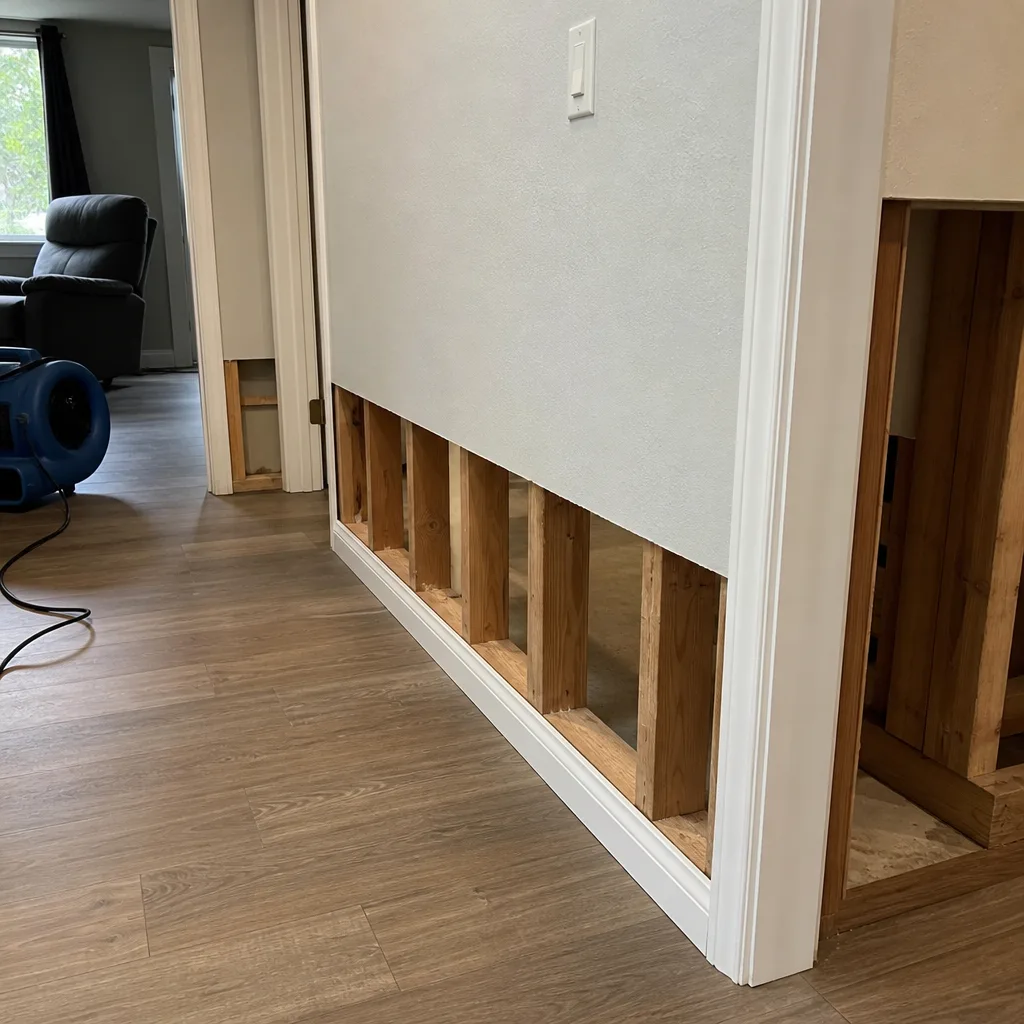 After
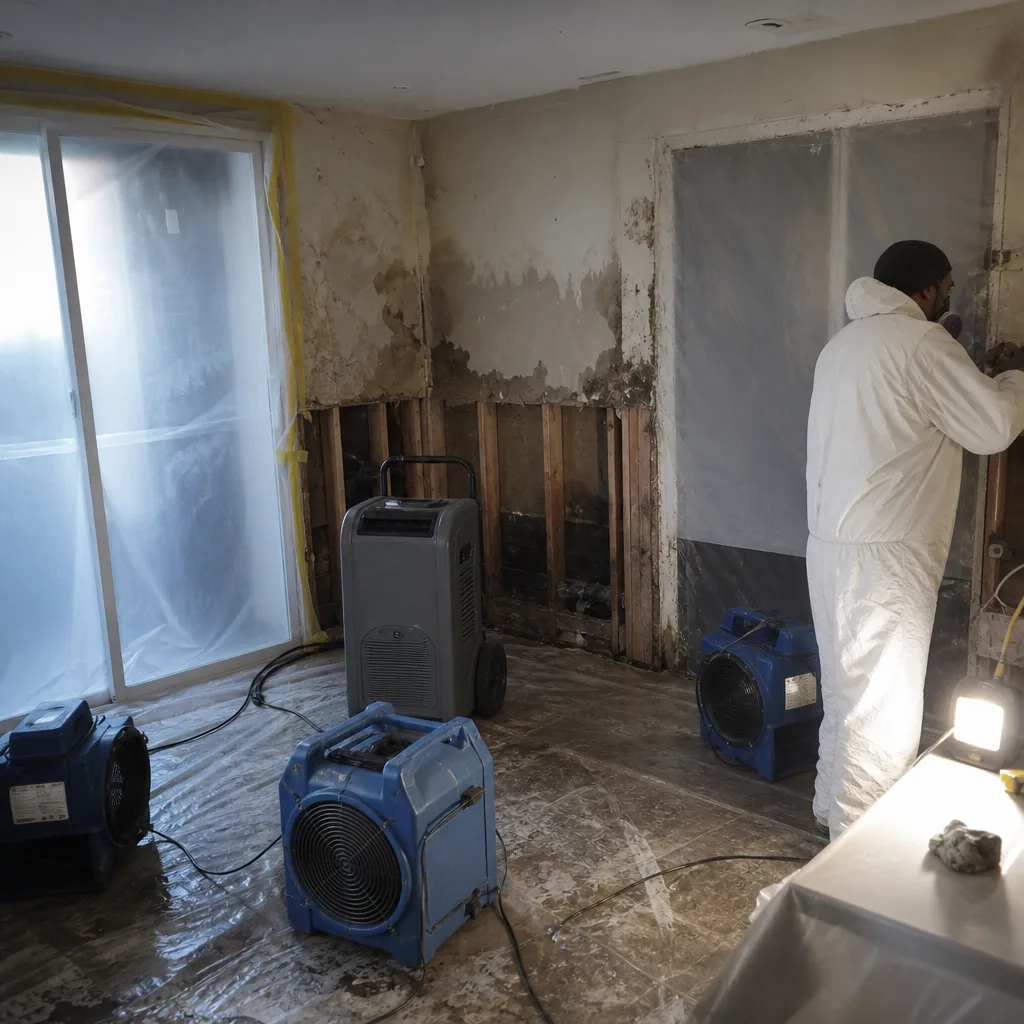 Before
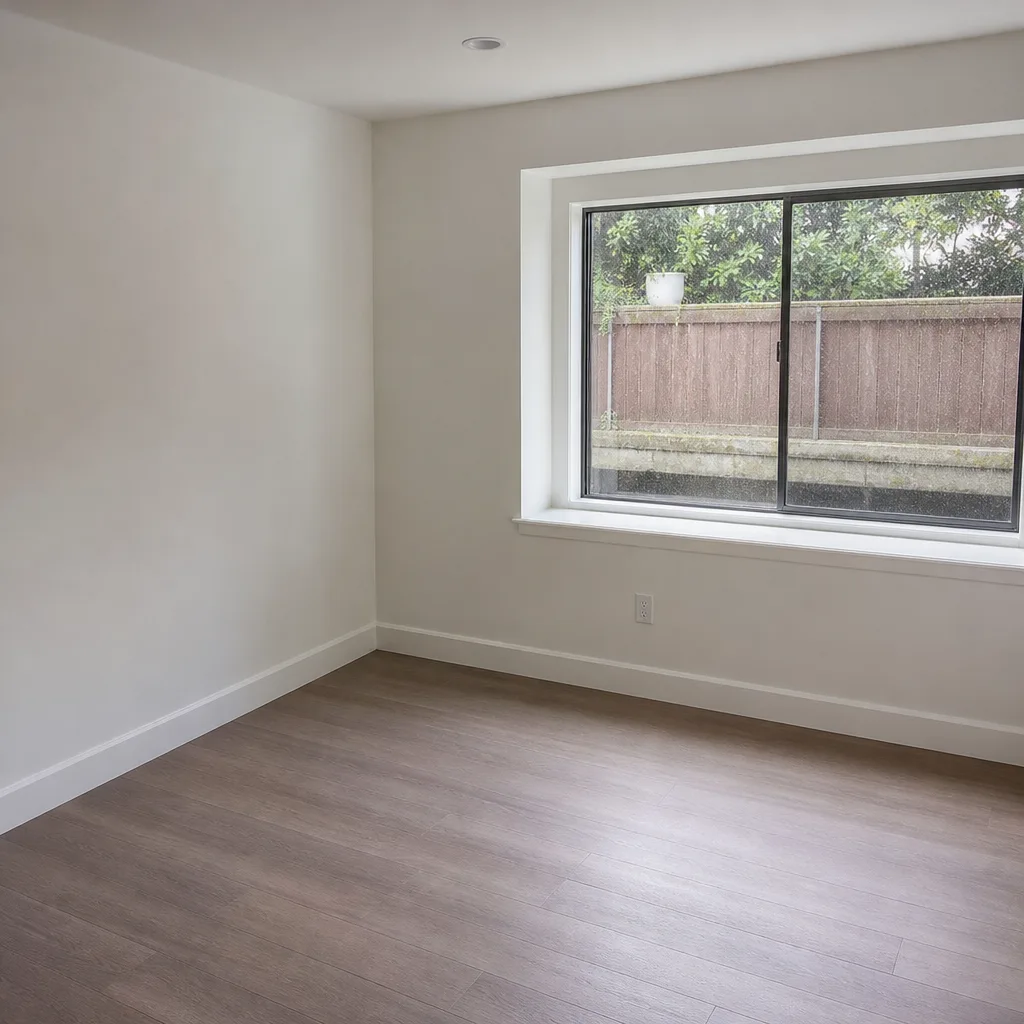 After
When to Call a Professional
Call a professional restoration company when the water is Category 2 or Category 3, when moisture has penetrated behind drywall or under flooring, when the affected area exceeds roughly 10 square feet, or when the damage is more than 48 hours old. Also call when your insurance claim requires documented drying records, when mold is visible or suspected, or when the damage involves electrical systems. Fire and smoke damage always requires professional restoration; the particulate and chemical residues can’t be safely addressed with household cleaning methods. If you’re facing fire damage, our Fire Damage Restoration in Orange page covers the full scope of what’s involved. Renew Water Damage offers free estimates in Orange, and we’ll give you an honest assessment of whether your situation is a legitimate DIY job or requires professional equipment and documentation. Call (833) 620-3891.
Frequently Asked Questions
Water damage restoration in Orange typically ranges from $1,200 to $4,500 for moderate Category 1 damage involving one or two rooms, with costs rising for larger affected areas, Category 2 or 3 contamination, or damage requiring demolition and reconstruction. Your insurance deductible is often the practical floor for out-of-pocket cost, since most water damage claims are covered events. Call (833) 620-3891 for a specific estimate based on your situation.
Household dehumidifiers and fans can dry small, clean-water spills on hard surfaces, but they lack the capacity to dry moisture inside wall cavities, under flooring, or in structural wood. The S500 standard requires drying to specific moisture content levels, and household equipment rarely achieves those targets in hidden spaces. If the water didn’t penetrate any finished assembly, DIY drying is reasonable. If it did, professional equipment and expertise are needed.
Most homeowners insurance covers sudden and accidental water damage regardless of initial DIY efforts, but the carrier will require documentation that the structure was properly dried. Without professional moisture readings and a drying log, your claim may be reduced or challenged. Insurance companies don’t cover damage that results from inadequate drying or delayed response, so a failed DIY attempt can actually reduce your coverage.
Most professional restoration companies in Orange can respond to water damage calls the same day, and many offer 24-hour emergency response. The speed of response matters because the 72-hour mold window starts when the water event occurs, not when you discover it. Faster professional response means less mold risk and lower total restoration cost.
Mold coverage varies significantly by policy in California. Most policies cover mold remediation only when the mold results from a covered water damage event that was addressed promptly and documented properly. Mold that develops from gradual leaks, neglected maintenance, or DIY drying that missed hidden moisture is often excluded. The documentation of professional drying is frequently the difference between covered and denied mold claims.
A general contractor can repair visible damage, but they typically lack the specialized equipment and IICRC-certified protocols for proper drying, mold prevention, and insurance documentation. Restoration specialists like Renew Water Damage home work to the IICRC S500 standard, deploy commercial-grade drying equipment like Dri-Eaz and Phoenix units, and provide the drying logs and moisture readings that insurance carriers require. The restoration specialist addresses the invisible problem; the general contractor addresses the visible one.
The Bottom Line
The DIY vs. professional restoration decision comes down to three thresholds. If the water is Category 1, the area is small and fully accessible, and no finished assembly was penetrated, DIY is defensible with proper effort and rental equipment. If any of those conditions fails, professional restoration is the financially rational choice. The cost of professional water damage restoration in Orange is almost always lower than the cost of mold remediation, hidden structural repair, an insurance claim dispute, or a real estate disclosure lawsuit. What looks like a savings on day one becomes an expense on day 90. The technical line is simple: below the thresholds, dry it yourself. Above them, call a certified crew. For Orange homeowners dealing with any of the three disciplines we handle, a phone call gets you an honest assessment. Call (833) 620-3891 for a free estimate.
Written by the team at Renew Water Damage, serving Orange since 2015.