
Last updated October 31, 2026
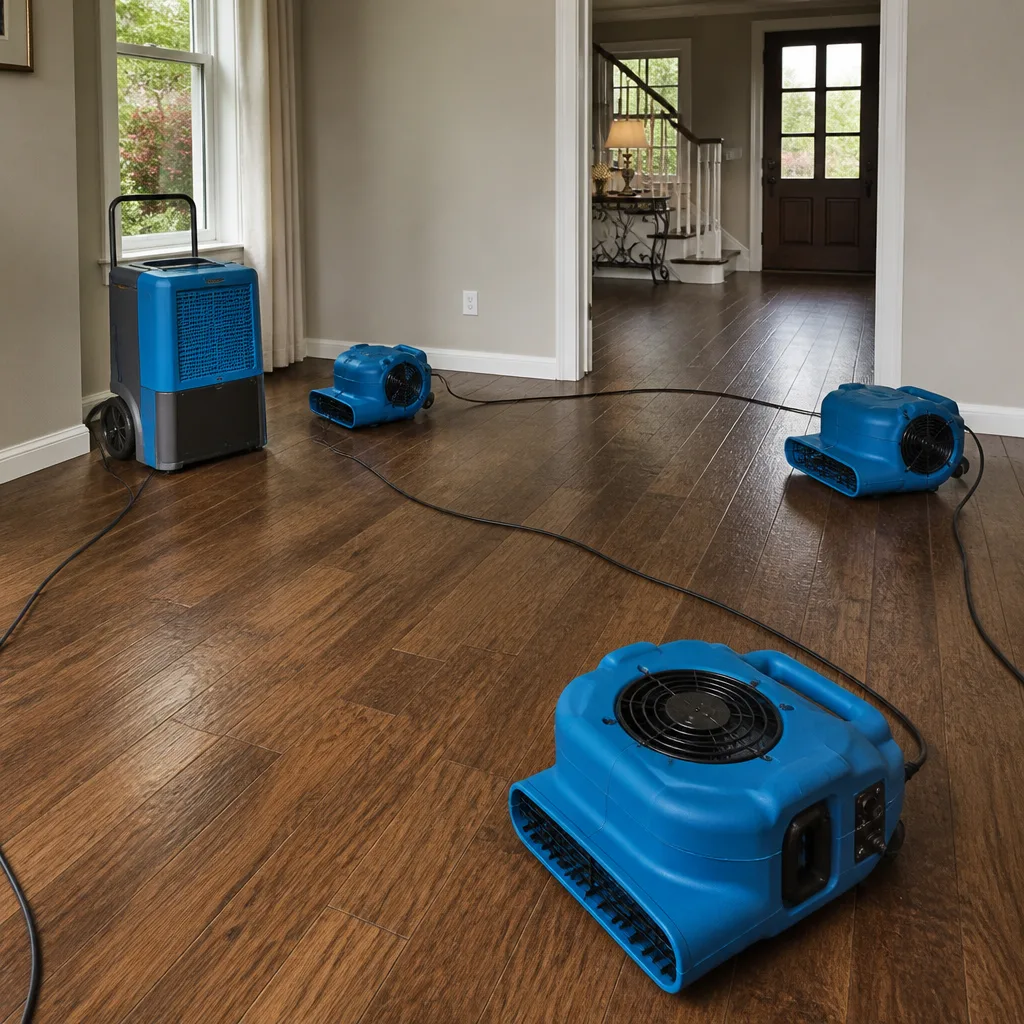 Water damage drying
 Fire & smoke cleanup
 Mold remediation
 Storm response
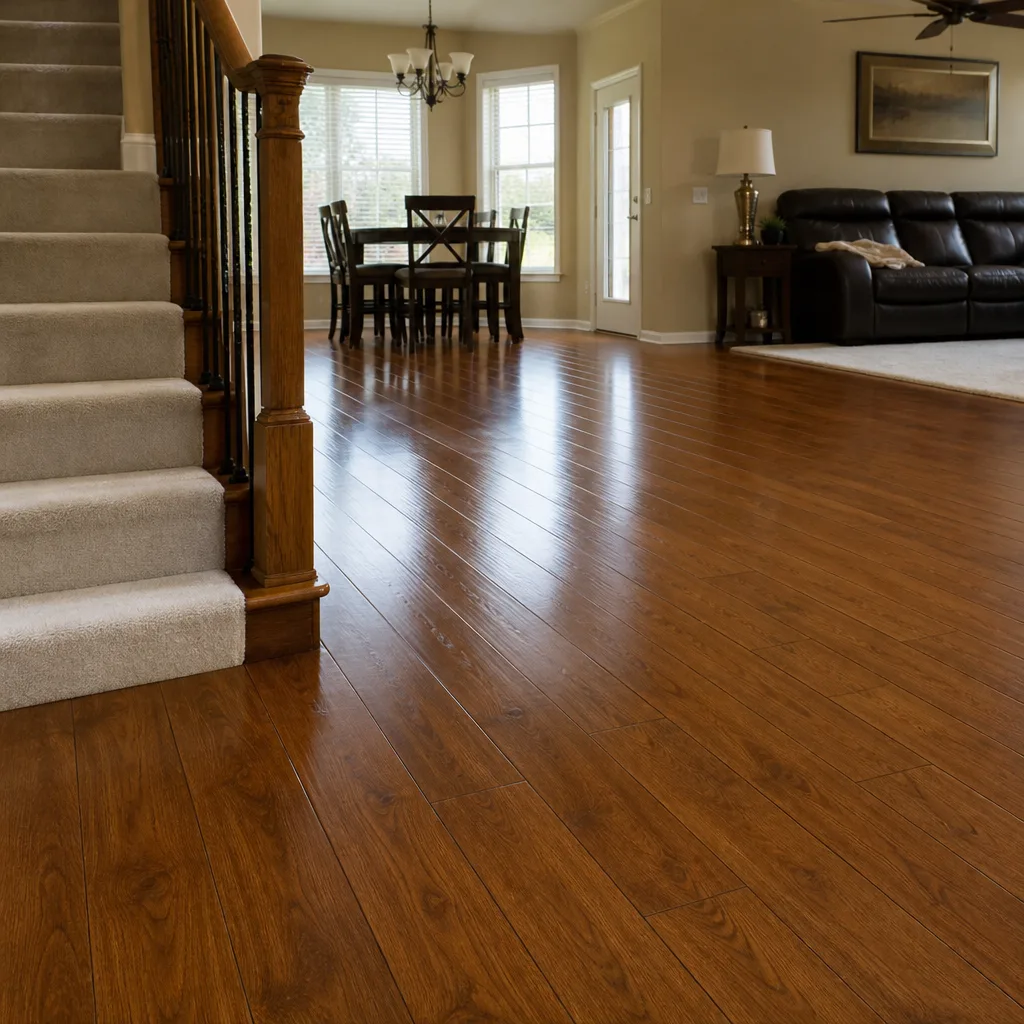 Sewage cleanup
 Reconstruction
Free visual inspection and a written scope of work before any mitigation begins - photos, moisture readings, and drying logs go in your claim file
The scope we write is the scope we bill. Anything new gets shown to you, in writing, before we touch it.
Get your free estimateDamage Restoration Warning Signs: A Orange Homeowner’s Reference Guide
Most water damage in Orange homes announces itself quietly. The cabinet base that feels slightly spongy under the sink. The paint that’s begun to bubble on a garage wall that backs up to the master bath. The faint but persistent mustiness that returns two days after you scrub the grout. Homeowners routinely file these under “old house, normal wear” and move on. That’s precisely what turns a $300 plumbing fix into a $14,000 mitigation and rebuild, and why we built this guide to help Orange homeowners read those quiet signals before they become emergency phone calls. For more guides & resources on protecting your home, explore our blog.
Restoration work we handle
Quick Answer
Water damage warning signs in Orange homes fall into five observable categories: persistent musty odors tied to HVAC operation, water stains with soft or spreading edges, flooring that cups or gaps at seams, doors and windows that stick outside rainy periods, and cabinet bases under sinks or around appliances that show swelling, darkening, or flaking. Any of these signals warrants a professional moisture assessment using calibrated meters and thermal imaging, because by the time visible damage appears, the hidden moisture source has usually been active for weeks or months.
Table of Contents
- Musty Odors: When Your Nose Is the First Detection Tool
- Reading Water Stains: Active vs. Historical Damage
- Stucco Cracking in Orange: Cosmetic vs. Structural
- Flooring Indicators: Cupping, Gapping, and Hollow Sounds
- Sticking Doors and Windows: The Non-Seasonal Warning
- Cabinet Base Deterioration: Splash Damage vs. Weeping Supply Lines
- Common Mistakes to Avoid
- When to Call a Professional
- Frequently Asked Questions
- The Bottom Line
Musty Odors: When Your Nose Is the First Detection Tool
A musty odor that appears only when the HVAC runs isn’t a minor nuisance. It’s a diagnostic sign that microbial growth has colonized the evaporator coil or condensate pan, and is being distributed through every room in the house each cooling cycle. In Orange, where air conditioning runs nine months out of the year, this pattern is especially common and especially telling. The evaporator coil sits in a dark, perpetually damp environment when the system is cooling. If the condensate drain line clogs, even partially, water backs up into the pan and the coil housing becomes a breeding ground for mold and bacteria. Every time the blower kicks on, it pushes air across that colonized surface and carries the odor throughout the home.
Orange homeowners should understand the distinction between different odor signatures. A sharp, ammonia-like smell near return vents often indicates mold feeding on dust accumulated in ductwork. A persistent earthy scent localized to one room usually points to a wall-cavity or subfloor moisture problem, not the HVAC. A musty smell that peaks in the first five minutes of AC operation and then fades points to coil or pan contamination specifically.
One thing we’ve observed repeatedly in Orange: homes built in the 1960s and 1970s, particularly in neighborhoods near the 55 freeway corridor, often have HVAC systems installed in unconditioned attics. Those systems condense more aggressively, clog more often, and distribute microbial odors more readily than systems in conditioned spaces. If your home fits that profile, an annual pan and coil inspection is cheap insurance against a problem that only reveals itself through smell until it’s already spread.
What to Check If You Smell Mustiness Only When HVAC Runs
- Condensate drain line: A clogged line backs water into the pan. Standing water in the pan is the number one indicator of an imminent problem.
- Evaporator coil condition: Visible dark spots or fuzzy growth on coil fins means microbial colonization has already begun.
- Return vent filters: If filters show gray-green discoloration rather than typical dust beige, the air passing through them is carrying mold spores.
- Duct insulation: Moisture wicking through duct insulation in attic runs creates a persistent odor that re-emerges every cooling cycle.
The takeaway is straightforward: if the smell only appears when air moves through your system, the problem is in the system or the air path, not in your carpets. That’s a fixable situation if caught early, and a significant mold remediation project if ignored. Our Mold Remediation in Orange team regularly finds HVAC-linked growth that homeowners assumed was a “musty closet” or “old house smell” for years before calling.
Reading Water Stains: Active vs. Historical Damage
Not every water stain on a Orange ceiling or wall is an emergency. Some are battle scars from leaks fixed years ago. The difference between active and historical stains is visible if you know what to look for, and reading that difference correctly can save you from either unnecessary demolition or catastrophic inaction.
Active stains have soft edges. The discoloration transitions gradually from dark center to lighter perimeter, and you’ll often see multiple rings or bands of varying color, each representing a different moisture event. Active stains also tend to feel cool or damp to the touch, and they grow over time. If you photograph a stain today and photograph it again in two weeks, an active stain will have changed shape, darkened, or expanded. Historical stains, by contrast, have crisp, sharp perimeters. The edge between stain and clean drywall is abrupt, the color is uniform, and the surface feels warm and dry.
Here’s the nuance most guides miss: a historical stain with a soft ring forming around it signals re-wetting. The original leak was repaired, but either the repair failed or a new water source has found the same path. That soft halo around an otherwise crisp stain is one of the most reliable early indicators of a recurring leak we see in Orange properties.
The location of the stain also matters for diagnosis. Stains directly below bathrooms on the first-floor ceiling of a two-story Orange home typically indicate a tub overflow, toilet wax ring failure, or supply line leak. Stains near exterior walls often point to failed caulking around second-story windows or stucco cracks allowing rainwater intrusion. Stains in the center of a ceiling with no plumbing directly above often mean roof flashing failure, or in the flat-roof sections common in some Orange mid-century homes, ponding water working through membrane seams.
Paper test: press a clean white paper towel firmly against the stain for 10 seconds. If the paper shows any moisture transfer, the stain is active regardless of how it looks. If it comes away dry, you’re dealing with historical damage. That single test resolves more ambiguity than any amount of visual inspection.
Stucco Cracking in Orange: Cosmetic vs. Structural
Stucco is everywhere in Orange. It’s the dominant exterior finish on homes built from the 1950s through the 1990s, and it remains popular on new construction. Stucco cracks constantly. Most of those cracks mean nothing. A few of them are water intrusion pathways that have been sending moisture into your wall cavities for years. Distinguishing between the two is one of the highest-value skills a Orange homeowner can develop.
Hairline spider cracking, the fine network of shallow fissures that resembles a cracked eggshell, is cosmetic. It forms as the stucco cures and thermally cycles, and it typically doesn’t penetrate deeper than the finish coat. These cracks are stable, don’t widen seasonally, and don’t invite water. You can monitor them, but you don’t need to lose sleep.
Cracks at 45-degree angles running from window corners or door frames are a different animal. These are differential settlement cracks. The window or door buck creates a stress concentration point, and when the structure settles unevenly, the stucco cracks along that stress line. In Orange, where homes sit on varied soil types and where the Santa Ana winds create a regular thermal expansion cycle, these cracks often run through the brown coat and sometimes through the scratch coat as well. When they do, they become water conduits. Rain follows the crack’s path and wicks into the wall cavity, where it soaks sheathing, insulation, and framing. In some cases, a 45-degree corner crack that’s been open for two rainy seasons has already caused significant sub-surface damage before the homeowner notices so much as a paint bubble on the interior wall. If you’re weighing whether to tackle repairs yourself or call a pro, see our DIY vs Professional Damage Restoration: The Orange Homeowner’s Decision Guide.
Here’s the diagnostic line: if the crack is wider than the edge of a dime, runs at an angle from a penetration point, or changes width between summer and winter, it warrants professional evaluation. A moisture meter reading at the interior wall surface behind the crack will tell you whether water is already moving through. IICRC-certified technicians who follow documented drying protocols use these readings, not guesswork, to determine whether a crack is cosmetic or structural. If you want to see what IICRC standards mean in practice, our Water Damage Restoration in Orange page explains how we evaluate moisture intrusion in stucco-clad homes.
Flooring Indicators: Cupping, Gapping, and Hollow Sounds
Engineered wood and luxury vinyl plank (LVP) dominate the flooring market in Orange’s renovation-heavy housing stock. Both materials respond to moisture differently from traditional solid hardwood, and both send distinct signals when subfloor moisture reaches problem levels. Reading those signals correctly can catch water damage months before a floor fails visibly.
Cupping is the earliest and most reliable indicator for engineered wood. The plank edges rise higher than the center, creating a subtle washboard texture across the floor surface. This happens because the unfinished underside of the plank absorbs moisture from the subfloor faster than the sealed top surface. When a Orange homeowner tells us their floor “feels wavy” in one room, our first question is almost always about the location, and the second is about whether that room shares a wall with a bathroom, kitchen, or laundry. Subfloor moisture migration through wall plates is one of the most common water damage mechanisms we document.
Gapping at seams is the second stage. As the plank absorbs moisture on the underside, the top surface remains dimensionally stable while the bottom swells. That differential movement creates stress at the plank joints, and you’ll see seams opening up that were previously tight. In LVP, the signal is slightly different: seams may tent upward or separate enough to catch a fingernail. LVP is waterproof as a surface material, which is precisely why it masks subfloor moisture so effectively. Water sits beneath the planks, soaking the substrate, while the floor above looks perfect.
Hollow sound underfoot is the late-stage warning. Solid feel is what you want. A hollow, resonant sound when you walk means the subfloor has delaminated from the joists or the flooring has delaminated from the subfloor. By this point, moisture has been active in the floor assembly long enough to dissolve adhesives or break down the subfloor’s structural integrity. In Orange homes on raised foundations, this often corresponds to a crawl space moisture problem rather than a specific leak. In slab-on-grade construction, it typically points to a plumbing leak beneath the slab or a failed moisture barrier.
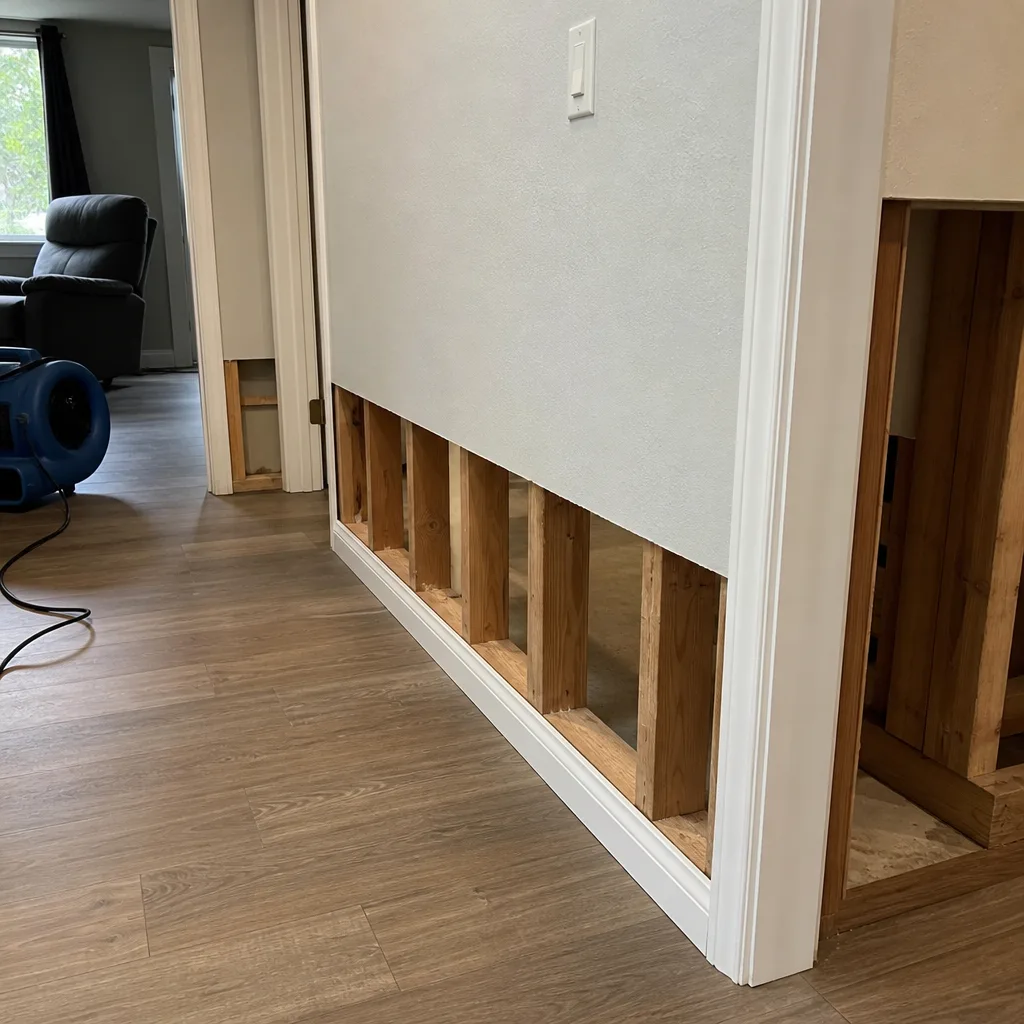
If you’re noticing any of these stages, the moisture source is already established. The only question is scope. Injectidry wall-cavity and subfloor drying systems can often dry floor assemblies without pulling up finished flooring, which matters enormously in renovations where matching the existing floor is impossible. We dry what others miss, including inside walls and subfloors, with Injectidry cavity systems designed specifically for that purpose.
Sticking Doors and Windows: The Non-Seasonal Warning
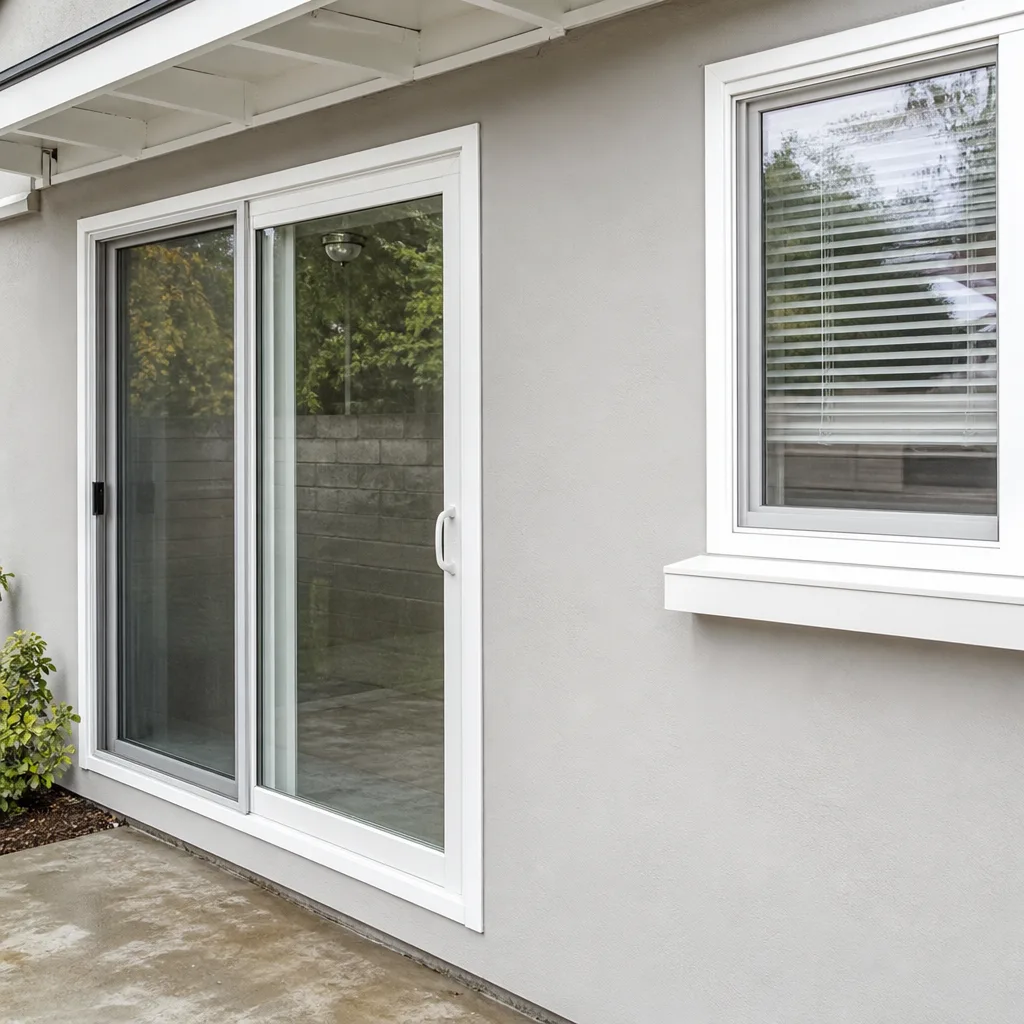
Doors that suddenly stick in August, when Orange hasn’t seen rain in months, are sending an unambiguous message. Wood framing has absorbed enough moisture to swell, and since the door itself hasn’t gotten wet, the moisture is coming from inside the wall cavity. In a non-rainy period, there are only a few possible sources: a slow plumbing leak inside the wall, a slab leak wicking up through the bottom plate, or chronic condensation inside an unconditioned cavity.
Seasonal sticking follows a predictable pattern. In winter and spring, when relative humidity in Orange climbs, wood swells and doors may rub slightly at the top or latch edge. In summer and fall, when Santa Ana winds drive humidity into the single digits, the same doors return to normal. That’s seasonal wood expansion and contraction, and it’s not a warning sign. For a complete calendar of prevention tasks, see our Seasonal Damage Restoration Care for Orange: Year-Round Homeowner’s Guide.
Non-seasonal sticking is different. It arrives without a weather trigger, persists for weeks, and often worsens progressively. The door that rubbed slightly at the latch last month now needs a hip bump to close. The window that was always tight now requires two hands. That progression is the signature of ongoing moisture absorption in the framing. Wood doesn’t swell unpredictably on its own in a stable climate like Orange’s.
Here’s the diagnostic test: close the door and look at the gap between door and frame. If the door is uniformly tight on all sides, you’re likely dealing with general humidity or hinge alignment. If the door is tight only on one side and loose on the opposite, you’re seeing asymmetric swelling, which means localized moisture in the framing on the tight side. A moisture meter reading through the drywall adjacent to the hinge side will confirm or rule out framing moisture in about five minutes. IICRC-certified crews follow documented drying protocols when they find elevated readings in wall framing, because guessing wrong means opening a wall that didn’t need opening, or worse, leaving water in the cavity to keep working. Need help finding qualified help? Read our How to Hire a Damage Restoration Contractor in Orange: A Step-by-Step Guide.
Cabinet Base Deterioration: Splash Damage vs. Weeping Supply Lines
Cabinet bases under kitchen and bathroom sinks are ground zero for slow water damage in Orange homes. The confined space under a sink, combined with attractive nesting conditions for everything from cleaning supplies to trash pull-outs, means deterioration gets hidden until the base visibly fails. But there’s a significant difference between one-time splash damage and ongoing supply line weeping, and telling them apart determines whether you’re facing a simple cosmetic repair or active water damage.
One-time splash damage, typically from a past plumbing repair or an overflow event, produces a specific pattern. The staining is concentrated where water pooled and sat, usually around the center of the cabinet floor. The discoloration has sharp edges, and the cabinet floor feels uniformly solid everywhere outside the stained zone. The particleboard or plywood may be discolored, but it’s dimensionally stable. It doesn’t flex when pressed, and a moisture meter reads dry.
Ongoing supply line weeping is different. It produces deterioration at the cabinet floor edges, where water runs downhill and collects against the cabinet sides. The back corners, especially where supply lines enter through the cabinet back, show the first signs. The base material swells, then crumbles. You’ll see particleboard that flakes away in layers, or plywood that shows delamination. The cabinet floor may feel spongy underfoot, and a moisture meter reads elevated not just in one spot but across the entire perimeter. In our experience with Orange plumbing systems, supply line failures at the angle stop connection are the single most common slow leak source under both kitchen and bathroom sinks.
Baseline moisture meter testing is the gold standard for distinguishing between active and historical cabinet damage. We take a baseline reading on a known-dry surface in the same room, typically at hip height on an interior wall, then compare readings from multiple points on the cabinet floor, the cabinet sides, and the drywall behind the cabinet. If all cabinet readings are within a few points of the baseline, the damage is historical. If the perimeter and cabinet-back readings are significantly elevated, you have an active moisture source that needs immediate attention, even if you can’t see a drip.
Common Mistakes to Avoid
- Letting a water stain “dry out” before calling anyone. Visible drying doesn’t mean the cavity behind the stain is dry. Evaporation at the surface concentrates moisture deeper in the wall, where it keeps working on framing and insulation for months after the stain stops growing.
- Treating musty odors with air fresheners or dehumidifiers. Masking odor does nothing to eliminate the moisture source feeding the microbial growth. The odor returns because the conditions that created it haven’t changed.
- Assuming LVP or tile flooring is protecting your subfloor. Waterproof surface flooring does exactly the opposite of what homeowners assume: it traps moisture beneath itself and hides the damage until the floor fails structurally. Solid-surface floors are moisture masks, not moisture barriers.
- Patching stucco cracks with caulk or paint before checking for water intrusion. Sealing a crack that’s been letting water into the wall cavity just traps the moisture inside. Check first, patch second.
- Dismissing sticking doors as “old house settling.” Houses settle in the first few years after construction. A 30-year-old Orange home that suddenly develops sticking doors isn’t settling. It’s swelling, and swelling means moisture.
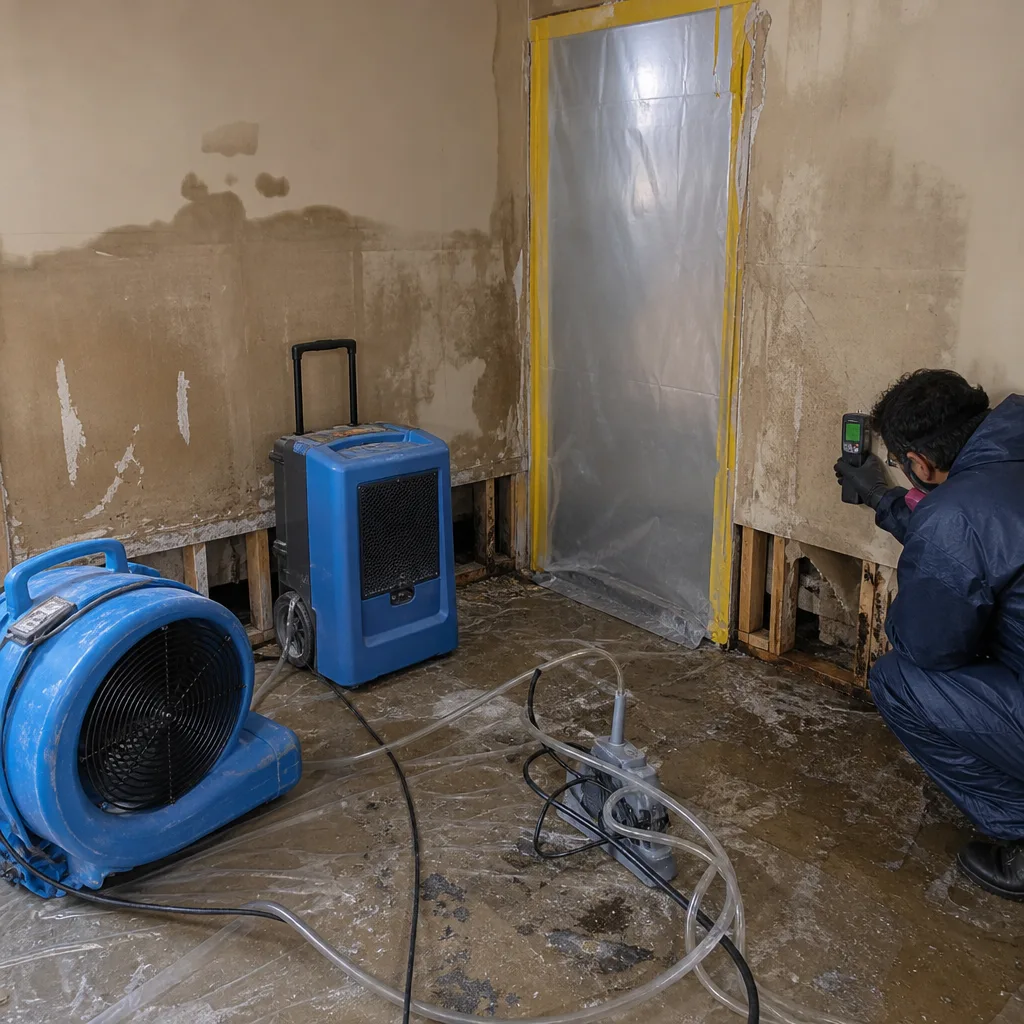
- Using a household dehumidifier to dry a known water damage event. A consumer-grade dehumidifier pulls water vapor from the air but doesn’t create the air pressure differentials needed to pull moisture from wall cavities and floor assemblies. That takes commercial-grade air movers and dehumidifiers operating at the volumes specified by IICRC S500 standards.
- Waiting to see if a problem “gets worse” before calling a professional. Water damage is compounding. The moisture that’s in your walls this week is growing mold next week and rotting framing next month. Every day of delay increases the repair scope and the cost.
When to Call a Professional
Call a restoration professional the moment you can answer yes to any of these questions: Is a water stain growing or changing shape between observations? Does a musty odor return within days of cleaning the area? Is your flooring cupping, gapping, or sounding hollow in a room adjacent to plumbing? Does a door stick in a non-rainy period? Is any cabinet base under a sink or appliance soft, swollen, or crumbling? These are all indications that water has been active long enough to cause measurable damage, and the proper response is a professional moisture assessment using calibrated equipment. Renew Water Damage offers free estimates in Orange. Call (833) 620-3891 and we’ll send an IICRC-certified technician to assess the situation properly.
Frequently Asked Questions
An active leak shows a stain with soft edges, visible rings of varying discoloration, and moisture that transfers to a paper towel pressed against it for 10 seconds. A historical stain has sharp, crisp edges and reads dry. If the stain has changed size or color in the last two weeks, it’s active and needs professional attention.
That pattern almost always means microbial growth on the evaporator coil or in the condensate pan is being distributed through the air handler. The coil sits in a perpetually damp environment during cooling cycles, and when the condensate drain clogs even partially, standing water in the pan creates ideal conditions for growth. A professional cleaning of the coil, pan, and drain line typically resolves the odor, but if the growth has spread into ductwork, more extensive remediation may be needed.
Yes, and it’s more common than homeowners realize. Slow leaks from supply lines, shower pan failures, and stucco crack intrusion can wet wall cavities for months without producing visible staining on the interior surface. The moisture wicks into framing and insulation before it reaches the finish layer. That’s why certified restoration teams use non-invasive moisture meters and thermal imaging to find hidden moisture before it becomes visible damage.
Water damage restoration in Orange typically ranges from $1,200 to $4,500 for a standard mitigation job involving one or two rooms. The final number depends on how long the water has been active, what materials are affected, whether mold remediation is needed, and how much demolition is required. A faster response consistently lowers the final cost, because the damage is smaller and the moisture hasn’t had time to compound. Call (833) 620-3891 for a free estimate and a written scope before any work begins.
Homeowner’s insurance in Orange typically covers sudden and accidental water damage, including burst pipes, appliance failures, and water heater ruptures. Gradual damage from slow leaks, poor maintenance, or long-standing moisture issues is usually excluded. We provide photo documentation of all findings and work directly with your adjuster to make sure the claim process moves forward cleanly. The key is responding quickly after a sudden event, because insurance companies look carefully at whether the homeowner took prompt action to mitigate the damage.
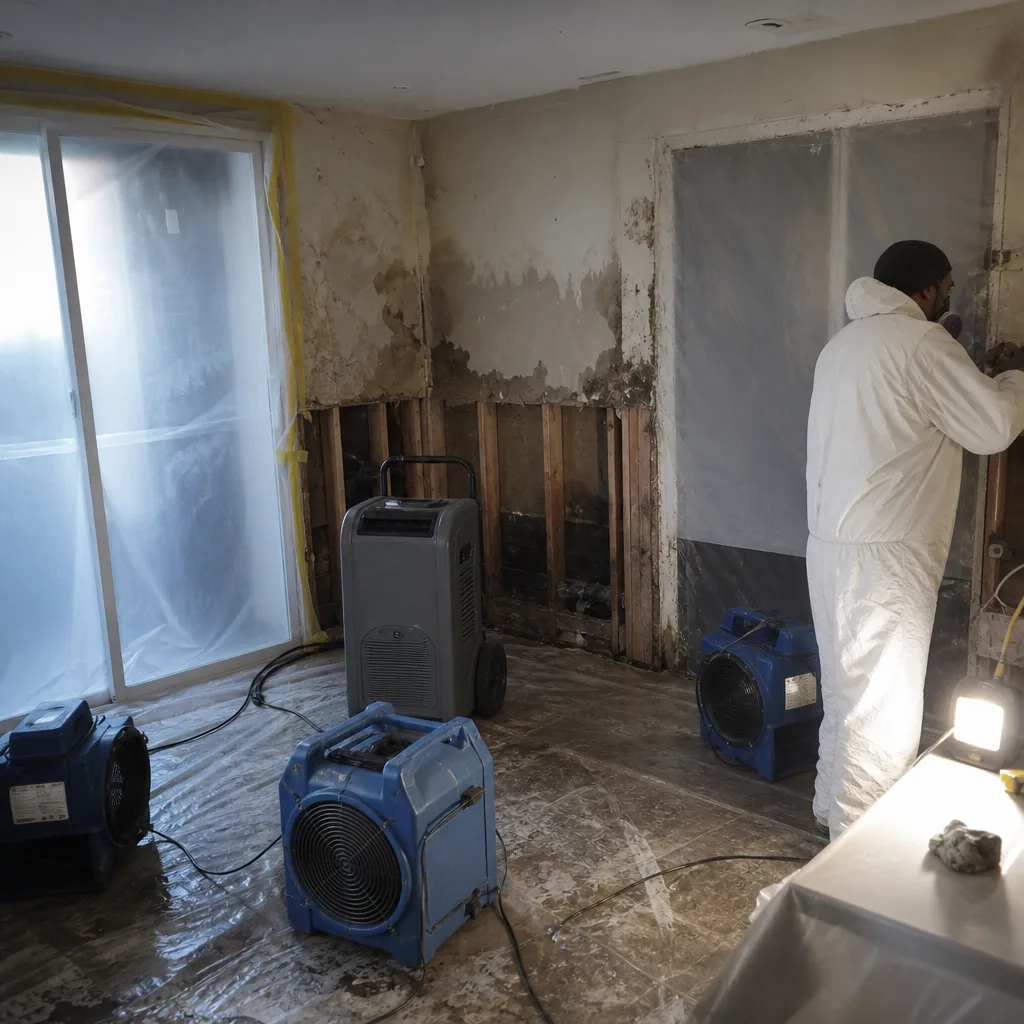
Water damage restoration focuses on extracting water, drying affected materials, and repairing the damage the water caused. Mold remediation, covered by IICRC S520 standards, addresses microbial growth that has colonized building materials, using containment, negative air pressure, and physical removal of affected material. In practice, the two are often connected: unresolved moisture creates the conditions for mold, and proper drying prevents mold from developing in the first place. We handle both under one roof, which eliminates the coordination gaps that happen when you juggle multiple contractors. The full continuum from water extraction through final restoration is what our Renew Water Damage home approach is built around.
The Bottom Line
Water damage in Orange homes rarely announces itself with a dramatic moment. It works quietly: a weeping supply line, a hairline stucco crack, a clogged condensate drain, a compromised wax ring. The warning signs are visible, but only if you know what to look for and resist the temptation to explain them away as old-house quirks. Musty HVAC-specific odors, soft-edged stains, cupping floors, non-seasonal sticking doors, and deteriorating cabinet bases all point to the same underlying message: water has been active long enough to cause damage, and every day of delay compounds the scope. Learn to read the signals, and when you find one, call a certified professional. The faster you act, the smaller the problem stays. For fire-related damage, our Fire Damage Restoration in Orange services follow the same philosophy: proper assessment, documented scope, certified protocols.
Written by the team at Renew Water Damage, serving Orange since 2015.
See the difference
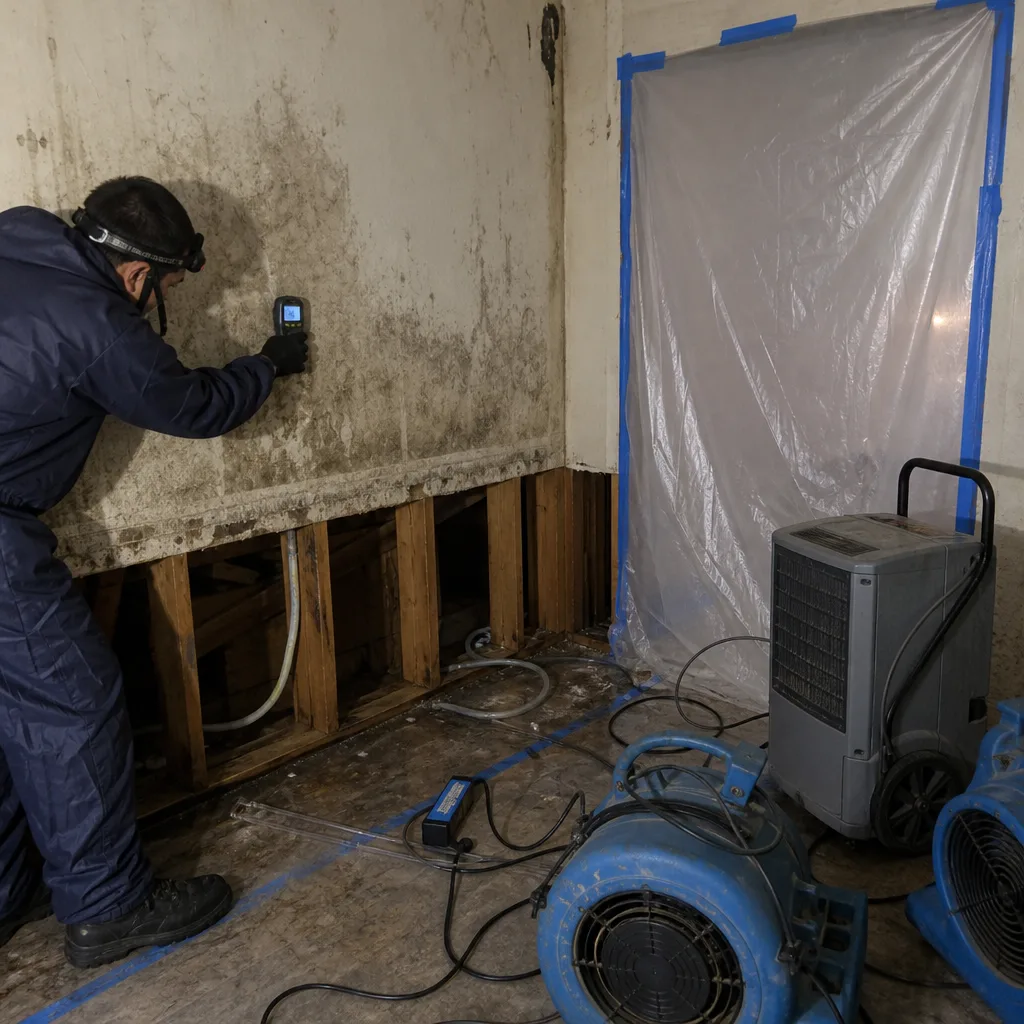 Before
 After
 Before
 After
 Before
 After