

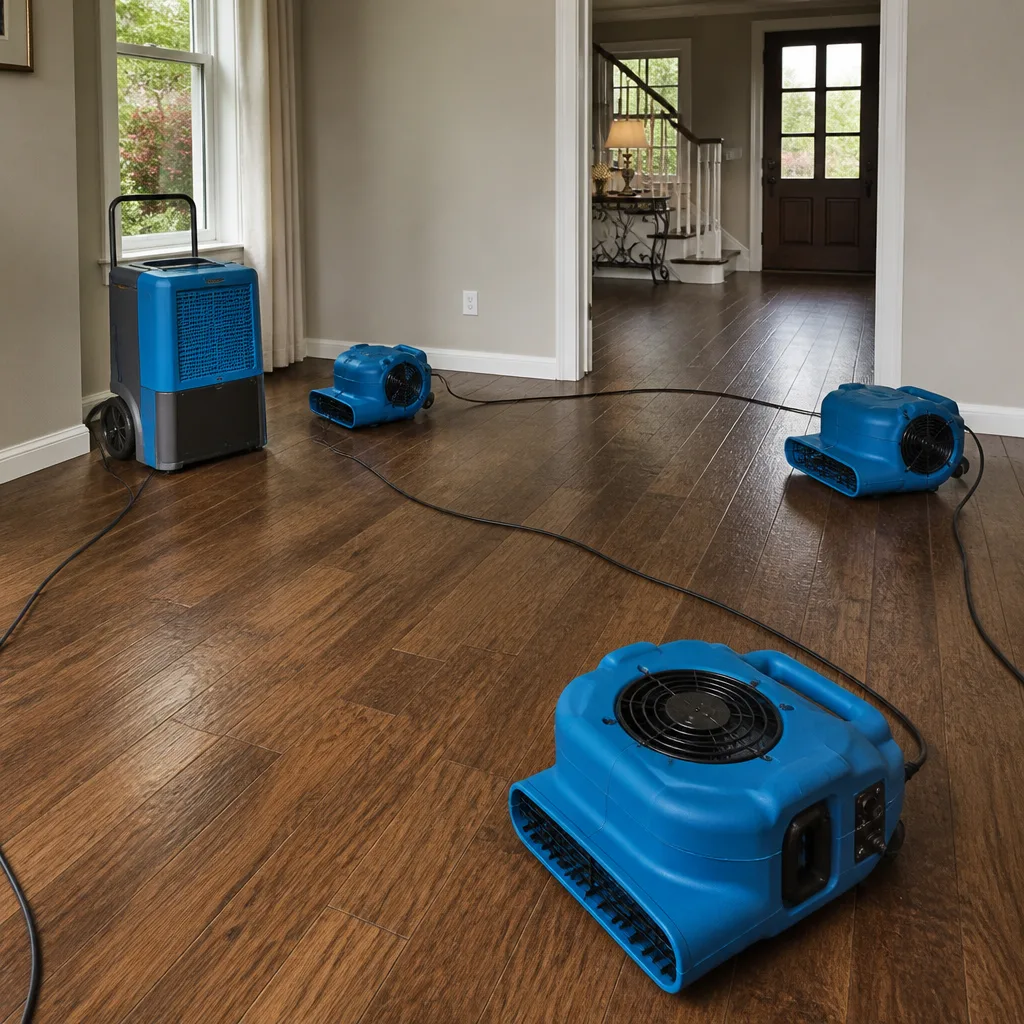
 Water damage drying
 Fire & smoke cleanup
 Mold remediation
 Storm response
 Sewage cleanup
 Reconstruction
Free visual inspection and a written scope of work before any mitigation begins - photos, moisture readings, and drying logs go in your claim file
The scope we write is the scope we bill. Anything new gets shown to you, in writing, before we touch it.
Get your free estimateFast, Reliable Water Damage Restoration Across Home Gardens
Water damage in Home Gardens moves fast, especially in older ranch homes where original copper plumbing has been in the walls since the 1950s. A pinhole leak behind a bathroom wall can feed moisture into the subfloor for weeks before you see the first stain on the ceiling. When you call Renew Water Damage at (833) 620-3891, we dispatch IICRC-certified crews who know Home Gardens housing stock and the county permitting process that governs every restoration job here. We’re based in Orange and respond quickly to the 92879 ZIP code, arriving with commercial-grade extraction and drying equipment already loaded. The goal is simple: stop the water, map the moisture, and dry the structure before mold sets in. In Home Gardens, that often means accounting for large lots, detached outbuildings, and plumbing that predates modern code.
Why Renew Water Damage Is Home Gardens’s Preferred Water Damage Restoration Company
Home Gardens homeowners call us because we understand what older rural residential properties actually require. The homes here weren’t built to modern plumbing standards, and many sit on private wells and septic systems rather than city water. That changes how a restoration job should be handled, from initial water source identification to final drying verification. Our Water Damage Restoration team works to IICRC S500 standards, which means documented drying protocols rather than guesswork. We never assume a Home Gardens job is identical to a tract-home loss in Corona.
Noel Carbajal leads our crews with a straightforward mandate: dry what others miss. That includes inside walls and subfloors using Injectidry cavity drying systems, equipment most generalist contractors don’t own. For a 1960s ranch on Magnolia Avenue, that capability meant tracing a hidden pinhole leak through thermal imaging, setting up containment, and drying the affected framing without tearing out half the bathroom. Home Gardens residents value that approach because unnecessary demolition on an older home can spiral into weeks of reconstruction.
Our local reputation in Home Gardens comes from showing up prepared for the specific conditions here. We know that county inspections happen through Riverside County, not a city building desk. We know that some parcels still rely on private wells, which affects how we classify and handle water intrusion. That local knowledge keeps projects moving instead of stalling at the permitting stage.
Restoration work we handle
Water Mitigation in Home Gardens
Water mitigation in Home Gardens means stopping the active loss and stabilizing the structure before it gets worse, which on an unincorporated Riverside County property often requires working around county inspection timelines while keeping drying equipment running continuously. A typical water mitigation job in Home Gardens runs $1,200 to $4,500 depending on how far the water has migrated and whether outbuildings are involved. The work includes extraction, containment, antimicrobial treatment on wet framing, and structural drying with professional-grade equipment.
Extraction and Containment First
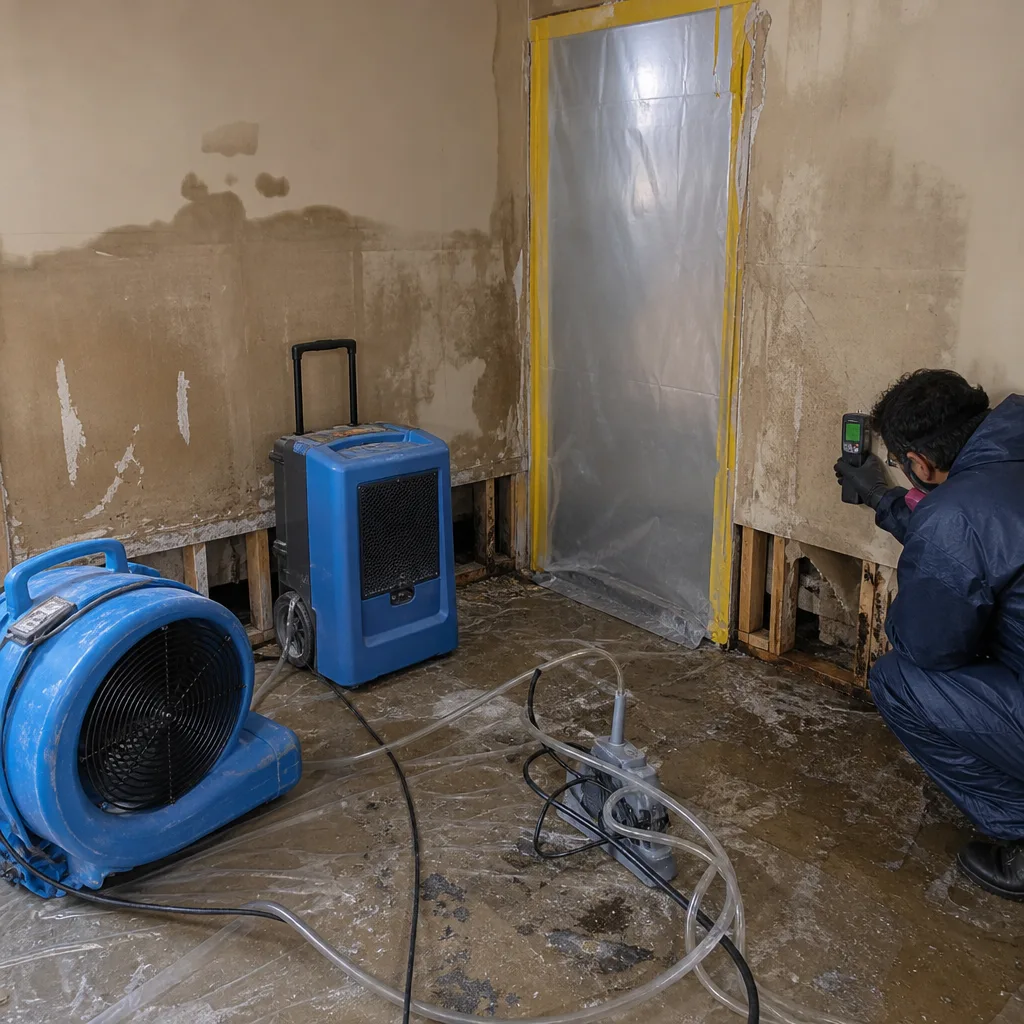
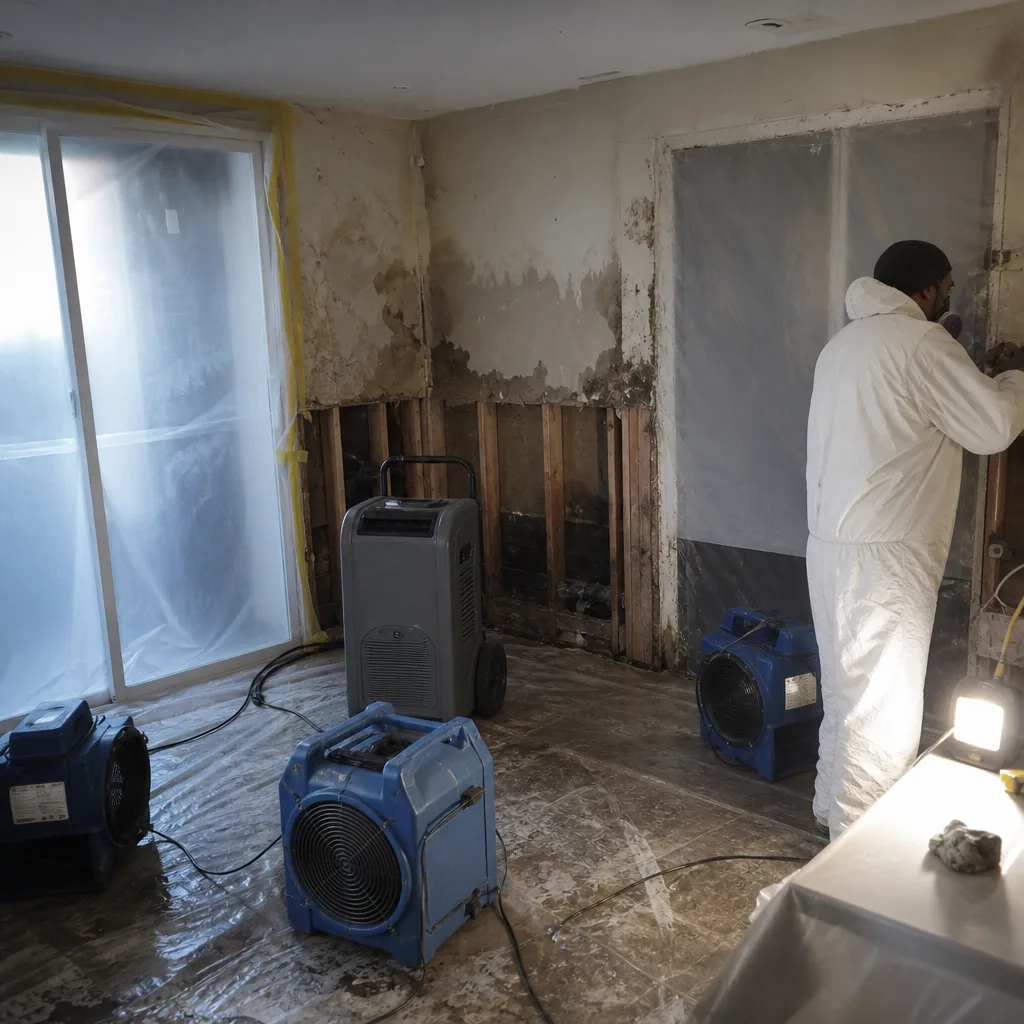
We remove standing water using truck-mounted extraction units and portable extractors, then set up containment barriers to keep moisture from spreading through the house. On older ranch homes with additions and converted garages, containment is critical because the floor plan rarely matches the original footprint. Air movers from XPOWER and B-Air go in immediately to start evaporation.
Monitoring the Drying Curve
Every Home Gardens mitigation job gets daily moisture readings tracked against a drying log, which county adjusters and inspectors can review. We use Dri-Eaz dehumidifiers sized to the cubic footage of the affected space, not a one-size-fits-all calculation. The heat here in summer actually helps drying, but it also accelerates mold growth if we don’t hit equilibrium fast enough, so our monitoring schedule is aggressive.
Flooded Basement in Home Gardens
A flooded basement in Home Gardens typically comes from one of three sources: a failed water heater, a broken supply line, or stormwater pushing through foundation cracks during rare but intense winter rain events. Because many Home Gardens homes sit on large lots with shallow-pitch roofs and older drainage, water that pools near the foundation finds its way into below-grade spaces quickly. Basement water removal in Home Gardens generally costs $800 to $3,200 depending on the depth of standing water and whether carpet, drywall, or stored contents are saturated.
Pump-Out and Debris Removal
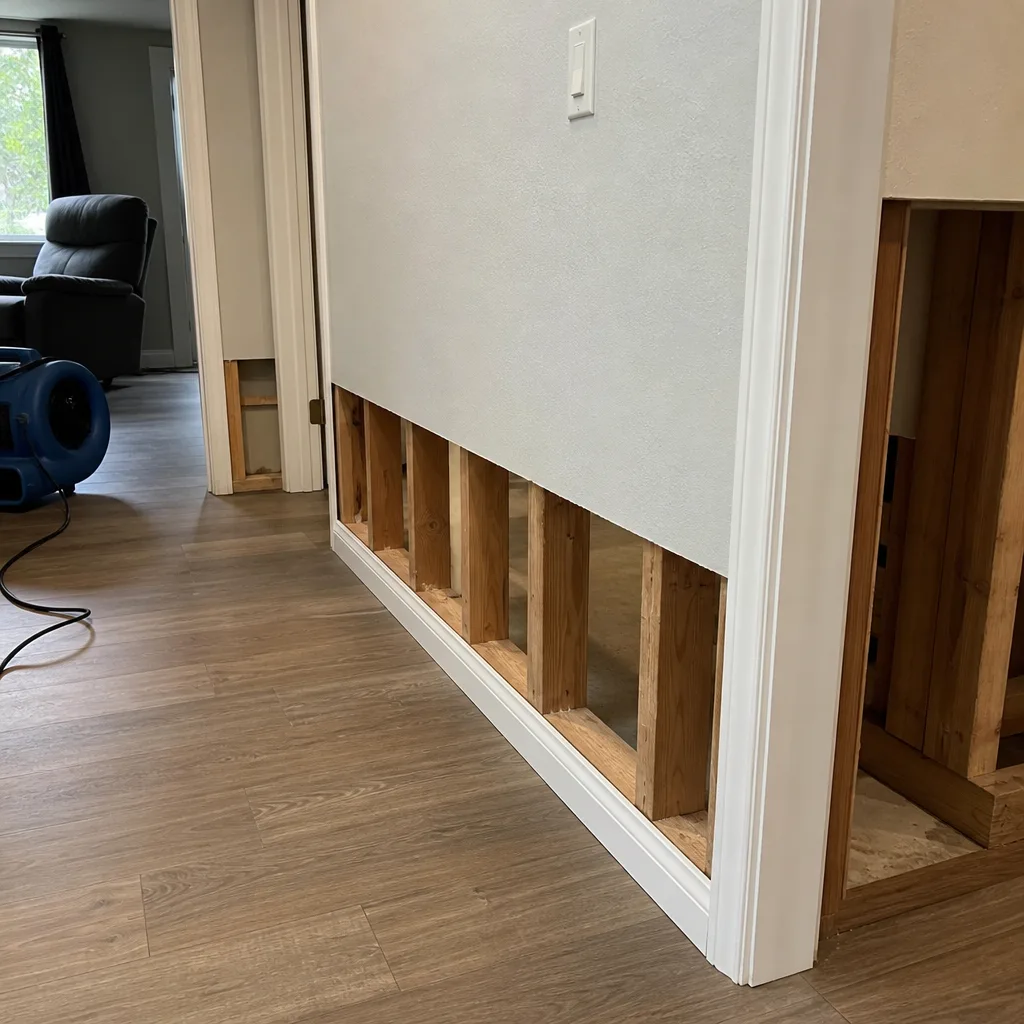
We bring in submersible pumps and truck-mounted extractors to pull water out of the basement, then remove saturated materials that can’t be salvaged. In older Home Gardens basements, that often means cutting out drywall that’s wicked moisture up from the slab, because the original construction rarely included proper vapor barriers. Every bag of debris is documented for insurance.
Drying Below Grade
Below-grade spaces dry slower than above-grade rooms, especially when outdoor humidity is high. Our crews position dehumidifiers and air movers to create cross-flow across the slab and walls, and we check the drying progress with penetrating moisture meters. If the basement has a sump pit or drainage system, we inspect it as part of the job, because a failed pump is often the root cause.
Trusted Brands We Service in Home Gardens
Our equipment inventory includes Dri-Eaz dehumidifiers and Phoenix low-grain refrigerant units, paired with XPOWER and B-Air air movers to create the evaporation rates needed on older Home Gardens structures. Because we carry these systems on every truck, we don’t wait for equipment rentals or warehouse transfers when a Home Gardens homeowner calls with standing water at 2 a.m. The same gear we deploy on commercial losses in Riverside County gets used on single-story ranch homes here, sized to the square footage and the moisture load. We stock replacement filters, hoses, and sensor kits for every unit so a clogged filter doesn’t slow down a job. That’s the difference between a company that owns its drying arsenal and one that rents whatever’s available.
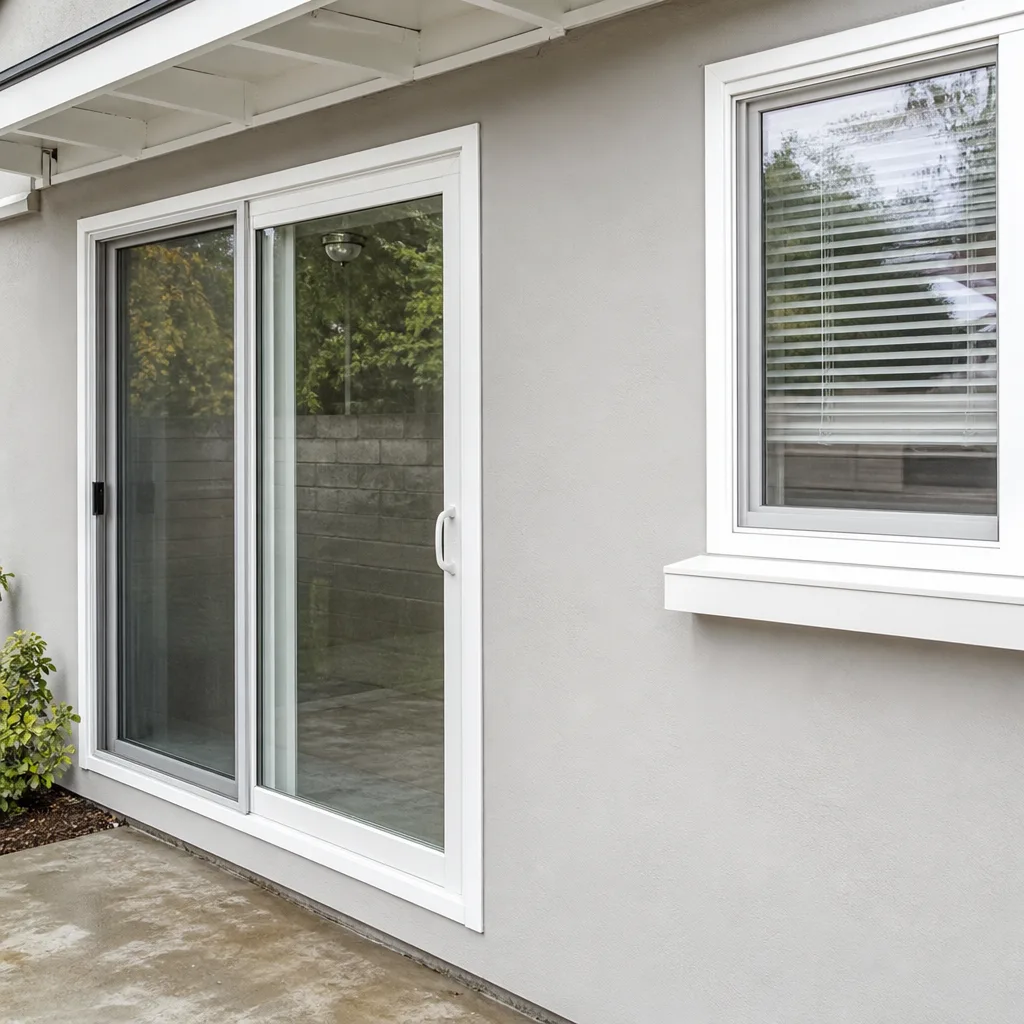
See the difference
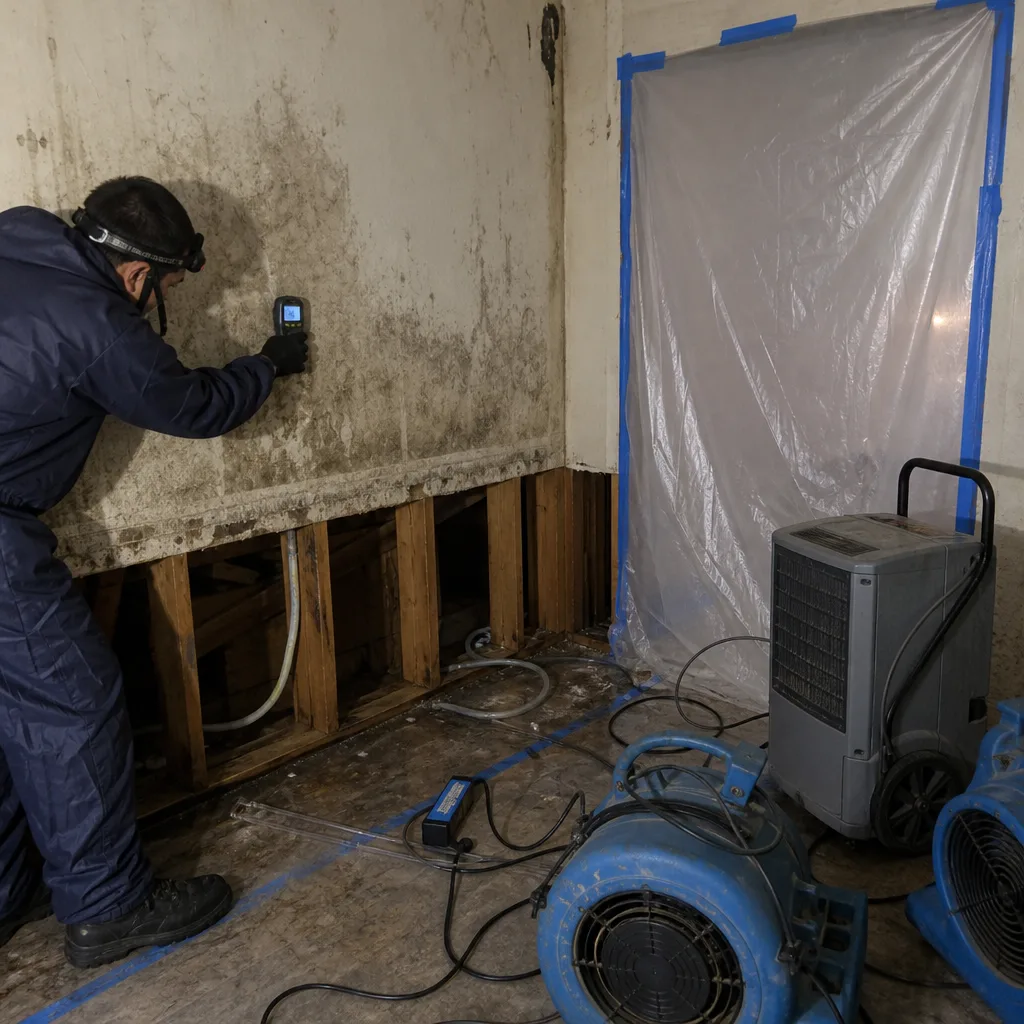 Before
 After
 Before
 After
 Before
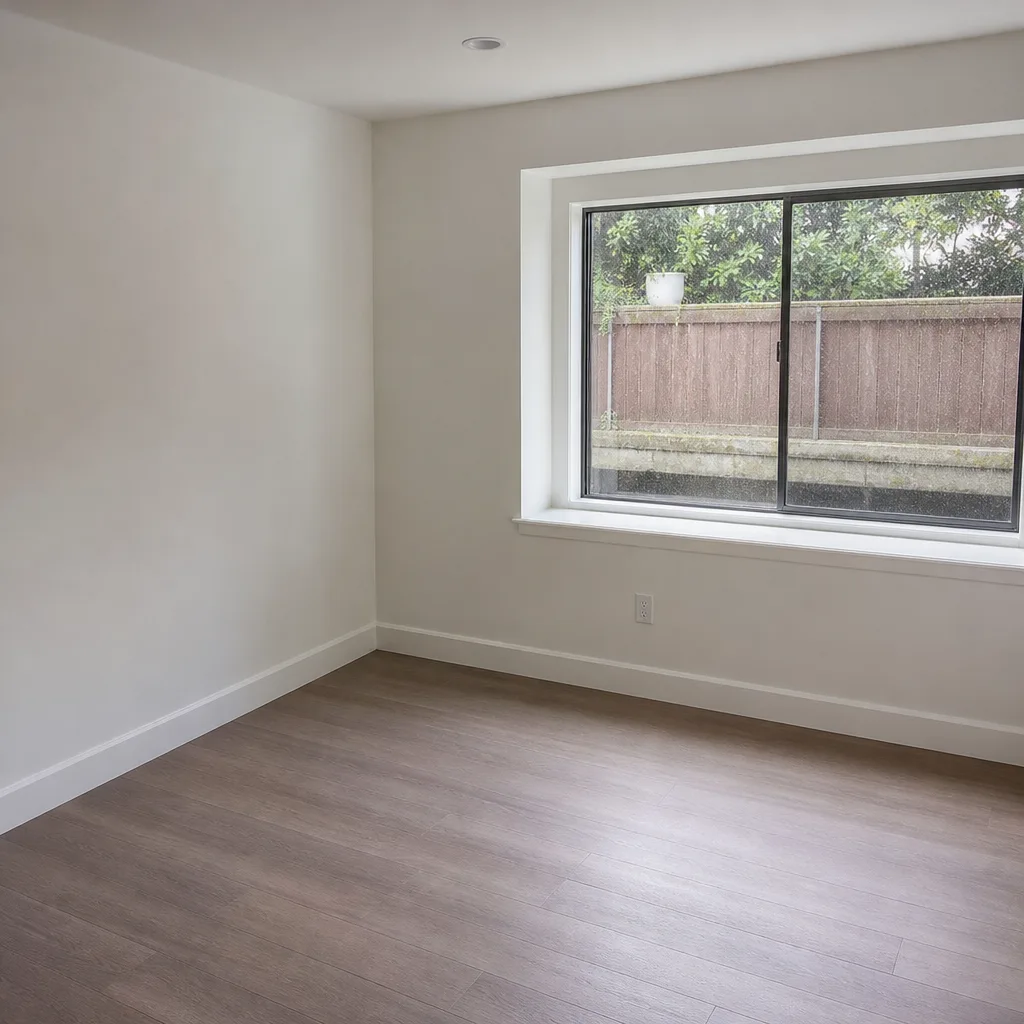 After
Common Water Damage Restoration Problems We See in Home Gardens Homes
- Original copper pinholing in 1950s-1970s plumbing. The copper supply lines installed when Home Gardens was a rural dairy community are now 50 to 70 years old. Pinhole leaks start behind walls and under slabs, feeding moisture into framing long before anyone notices a wet spot.
- Hidden moisture migration across large rural lots. Water travels laterally through soil and under slabs before it shows up inside the house. On properties with detached garages, barns, or shops, a leak near the main structure can wick into an outbuilding 30 feet away.
- Flat and shallow-pitch roof leaks during winter storms. The intense but infrequent rain events that hit this part of Riverside County expose weaknesses in older roofing materials. Water enters through deteriorated flashing and pools on low-slope sections, then drops into ceiling cavities.
- Category 2 and 3 water from private well failures. When a well pressure tank ruptures or a septic line backs up, the water classification changes and remediation requires different handling. Home Gardens parcels on private systems face risks that city-water homes don’t.
Pricing for Water Damage Restoration in Home Gardens, CA
We Also Serve Cities Near Home Gardens
Beyond our work across Home Gardens, Renew Water Damage handles water losses in Corona, Eastvale, Norco, and El Cerrito Corona. Each community has its own building department and permitting quirks, so we stay current on local requirements wherever we work. If your property sits near the Home Gardens boundary, call us and we’ll confirm coverage for your exact address.
Serving Home Gardens, CA — Our Local Coverage Area
We’re based in the Home Gardens area and know this community well. Use the map below to see our service coverage — if you’re nearby, we can almost certainly help.
FAQs About Water Damage Restoration in Home Gardens
How does the unincorporated status of Home Gardens affect a water damage restoration project?
Because Home Gardens has no city building department, every restoration project that involves structural repair must route permits and inspections through Riverside County agencies. That means inspection scheduling can differ from what a Corona or Riverside homeowner experiences, so we build county timelines into our project plan from day one. Our crews have worked enough Home Gardens jobs to know which county contacts handle water damage sign-offs, which keeps your project moving. If you’re facing water damage right now, call (833) 620-3891 and we’ll explain exactly what the county requires for your specific loss.
My Home Gardens home has a private well and septic system – does that change how you handle water damage?
Yes. When a home draws water from a private well, we have to determine whether the water entering your living space came from the potable supply line, the well pressure tank, or a septic backup, because that changes the water category and the remediation approach. A septic failure is category 3 water and requires different containment, antimicrobial treatment, and disposal than clean water from a supply line. We also check whether well equipment contributed to the loss. Call (833) 620-3891 and we’ll assess your system as part of the restoration scope.
What’s the typical drying time for water damage in older Home Gardens ranch homes?
Most Home Gardens water losses dry within 3 to 5 days when we start extraction and air movement promptly. Homes with original plaster walls, multiple additions, or subfloor saturation from slab leaks can take 5 to 7 days or longer, because moisture trapped in legacy building materials releases more slowly. Inland heat helps evaporation in summer, but it also shortens the window before mold starts, so our crews monitor daily and adjust equipment placement. The drying log we provide for your county adjuster shows the moisture curve over time.
Can you help with water damage in detached garages or outbuildings on my large lot?
Absolutely. Many Home Gardens properties have detached garages, shops, barns, and other outbuildings that carry their own water damage when a loss occurs. We set up separate drying zones for outbuildings, document each structure’s pre-loss condition, and coordinate with your insurance adjuster so nothing gets missed. Because large-lot water migration can travel under the surface, we often run moisture mapping across the entire parcel, not just the main house. Call (833) 620-3891 if water has reached any structure on your property.
How quickly can mold start growing after a water leak in my Home Gardens home?
In Home Gardens conditions, mold can begin growing within 24 to 48 hours of water intrusion, and the summer heat accelerates the timeline. That’s why we recommend calling within the first few hours of discovering a leak, not days later. Our crews apply antimicrobial treatment to wet framing and drywall during the mitigation phase, which prevents mold from taking hold during the drying process. If you’ve already noticed a musty odor or visible growth, call (833) 620-3891 and we’ll assess whether mold remediation is needed alongside the water damage work.
Written by Noel Carbajal, Owner at Renew Water Damage, serving Home Gardens since 2015. Home Gardens water damage restoration with county-permitting experience, IICRC-certified crews, and commercial-grade drying equipment.