 Water damage drying
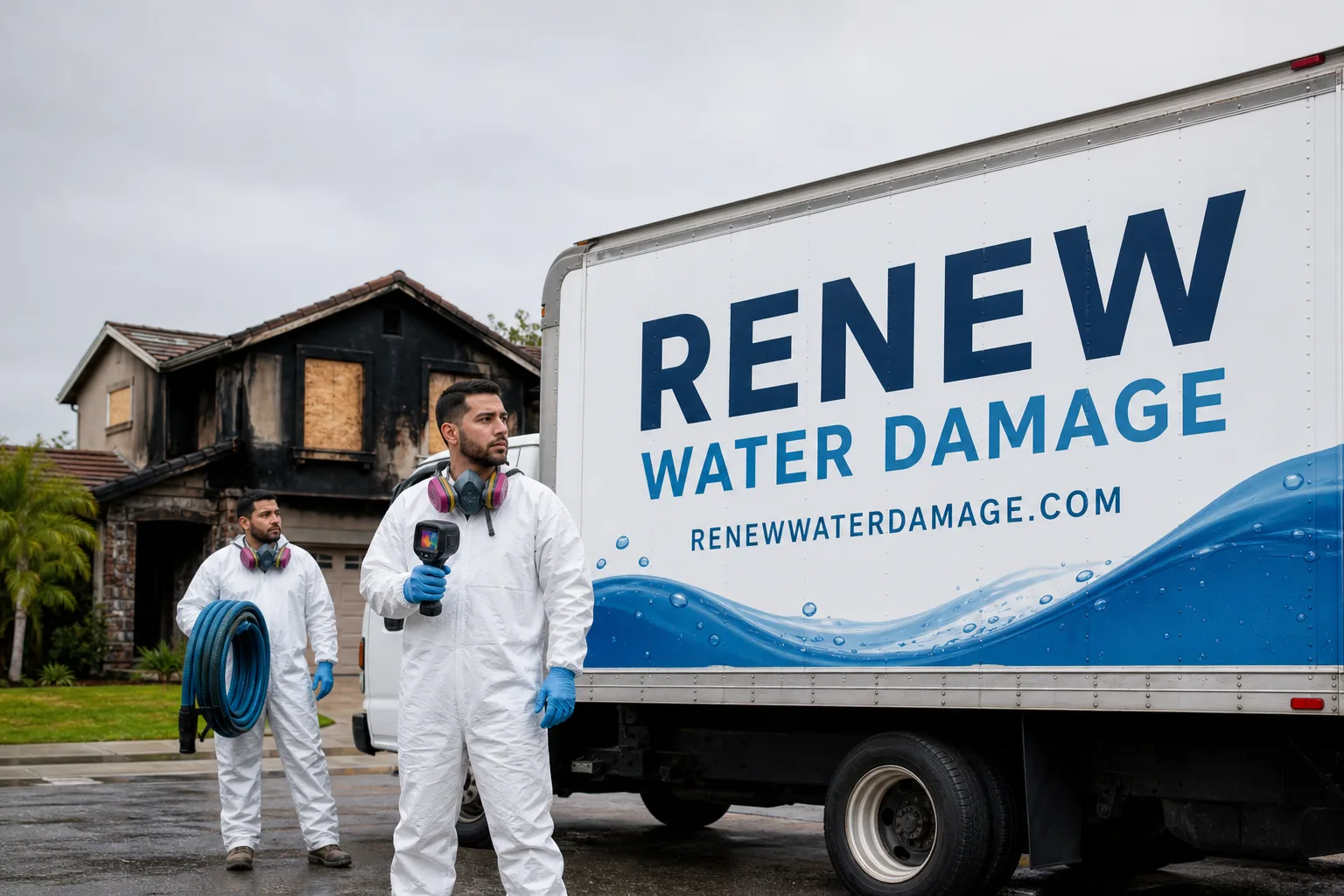
 Fire & smoke cleanup
 Mold remediation
 Storm response
 Sewage cleanup
 Reconstruction
Free visual inspection and a written scope of work before any mitigation begins - photos, moisture readings, and drying logs go in your claim file
The scope we write is the scope we bill. Anything new gets shown to you, in writing, before we touch it.
Get your free estimateFast, Reliable Water Damage Restoration Across Corona
Water damage in Corona rarely announces itself politely. It comes from a Santa Ana wind event driving rain through a failed slider door, or a winter storm overwhelming the foothill drainage channels, or a slab leak in a 1970s ranch home off Main Street. When it happens, the first 48 hours decide whether you’re looking at cleanup or reconstruction. Our IICRC-certified crews reach most Corona neighborhoods within 60 to 90 minutes, and we bring the extraction and drying equipment that actually matches the job. Not rented fans. Not guesswork. If water is spreading through your home right now, call (833) 620-3891 and we’ll walk you through the first steps over the phone while a crew heads your way.
Why Renew Water Damage Is Corona’s Preferred Water Damage Restoration Company
Corona homeowners call us after they’ve already had a generalist contractor in, someone who set a couple of box fans and said “let the dry heat handle it.” The dry heat doesn’t handle it. Corona’s arid climate tricks people into thinking moisture evaporates quickly, but stucco and framing trap water in wall cavities where surface readings look fine. That’s exactly the failure mode we’re built to catch. Led by Noel Carbajal, our team holds IICRC certification, the restoration industry’s most recognized credentialing body. Technicians train to documented, peer-reviewed standards, not on-the-job trial and error.
We’re also members of the Restoration Industry Association and the IFA, which means ongoing professional accountability beyond a one-time certificate. Every job gets the same commercial-grade arsenal: Dri-Eaz and Phoenix dehumidifiers, XPOWER and B-Air air movers, and Injectidry wall-cavity drying systems that pull moisture from inside walls and subfloors without tearing everything apart. That last part matters in Corona, where many homes have original 1960s and 1970s plumbing and demolition should be a last resort, not a first move. The page about our Water Damage Restoration process details the full protocol. For Corona specifically, we’ve worked enough losses in the 92879 core and the 92880 hills to know where the hidden channels run.
Restoration work we handle
Water Damage Cleanup in Corona
Water Damage Cleanup in Corona typically means removing standing water, hauling out soaked materials, and getting drying equipment placed before secondary damage sets in. Most Corona homes we see need this after wind-driven rain breaches a door or window, after a water heater ruptures in a garage, or after a supply line fails behind a wall. Cleanup runs $1,200 to $4,500 depending on how many rooms are involved and whether carpet, pad, and drywall need removal. If sewage or exterior floodwater is present, expect $4,000 to $9,000 because Category 3 water requires containment, antimicrobial treatment, and stricter disposal.
Extraction and Material Removal
We start with truck-mounted or portable extraction to pull the bulk water fast, then remove saturated materials that won’t dry reliably. Carpet pad almost always goes. Drywall that’s been wet for more than 48 hours usually goes too. We document every removal with photos so you’re not guessing later.
Containment and Airflow Setup
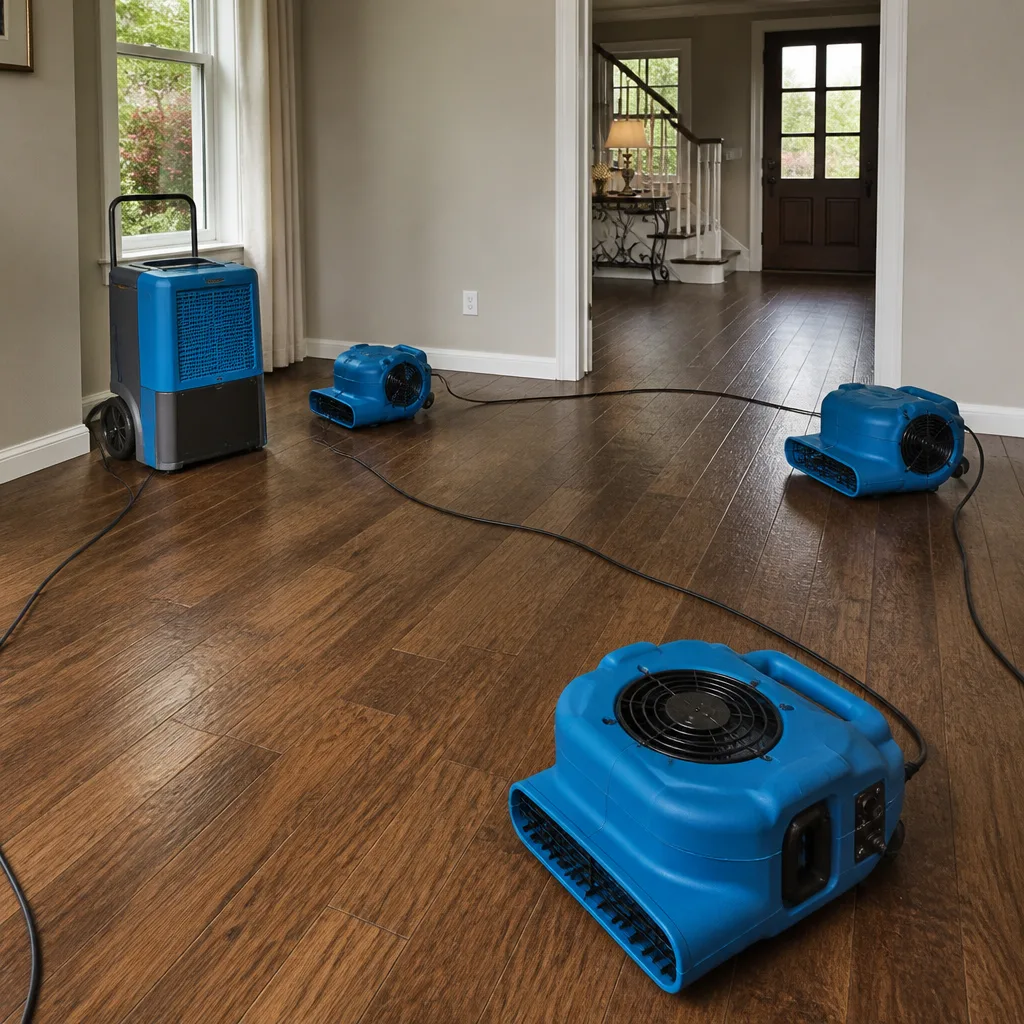
Drying doesn’t work when wet air just moves into dry rooms. We set containment barriers and position XPOWER air movers to create precise airflow patterns, paired with Dri-Eaz dehumidifiers sized to the cubic footage and moisture load. Each unit placement is logged, not random.
Emergency Water Damage Restoration in Corona
Emergency Water Damage Restoration in Corona often starts with a call at 2 a.m. after a Santa Ana gust tears a vent or a flex line bursts. What makes it emergency work is time: every hour of standing water spreads further into baseboards, under flooring, and up drywall. Emergency response in Corona typically runs $1,800 to $5,500 for extraction, initial material removal, and equipment setup on a standard single-room loss. When the job spans multiple floors or involves crawl spaces, expect $6,000 to $12,000 once demolition and drying arrays are fully staged.
Rapid Response Protocol
We dispatch from Orange with Corona-bound routes already mapped, which keeps travel predictable even when the 91 backs up. The first hour on site is triage: stop the source, kill power where water meets outlets, extract the standing water, and mark the moisture perimeter. You get a written scope after our initial assessment, before any demolition starts.
Storm-Surge and Flash Flood Intrusion
Corona’s position below the Santa Ana Mountains means winter storms can turn Temescal Creek and the foothill drainage channels into sudden flows. When that water enters a slab-on-grade home near the 92877 or 92880 corridors, it’s Category 2 or 3, not clean rain. We treat it accordingly: full extraction, antimicrobial application where indicated, and drying logs that track moisture until the assembly is verified dry.
Trusted Brands We Service in Corona
Corona households run on a mix of aging original fixtures and big-box replacements, and we see the failures from both. Water heaters from Rheem, Bradford White, and AO Smith are common in Corona garages, and we handle ruptures and supply-line failures across all three. Washing machine hoses from GE, Whirlpool, and LG show up constantly, as do Moen and Delta fixtures that fail at the valve after years of hard Corona water. We stock common connectors, valves, and hose kits locally so a replacement part doesn’t extend your wait by a day. For homes with water softeners or whole-house filtration, we coordinate the shutdown and restart so the restoration work doesn’t damage what you’ve already got running.
See the difference
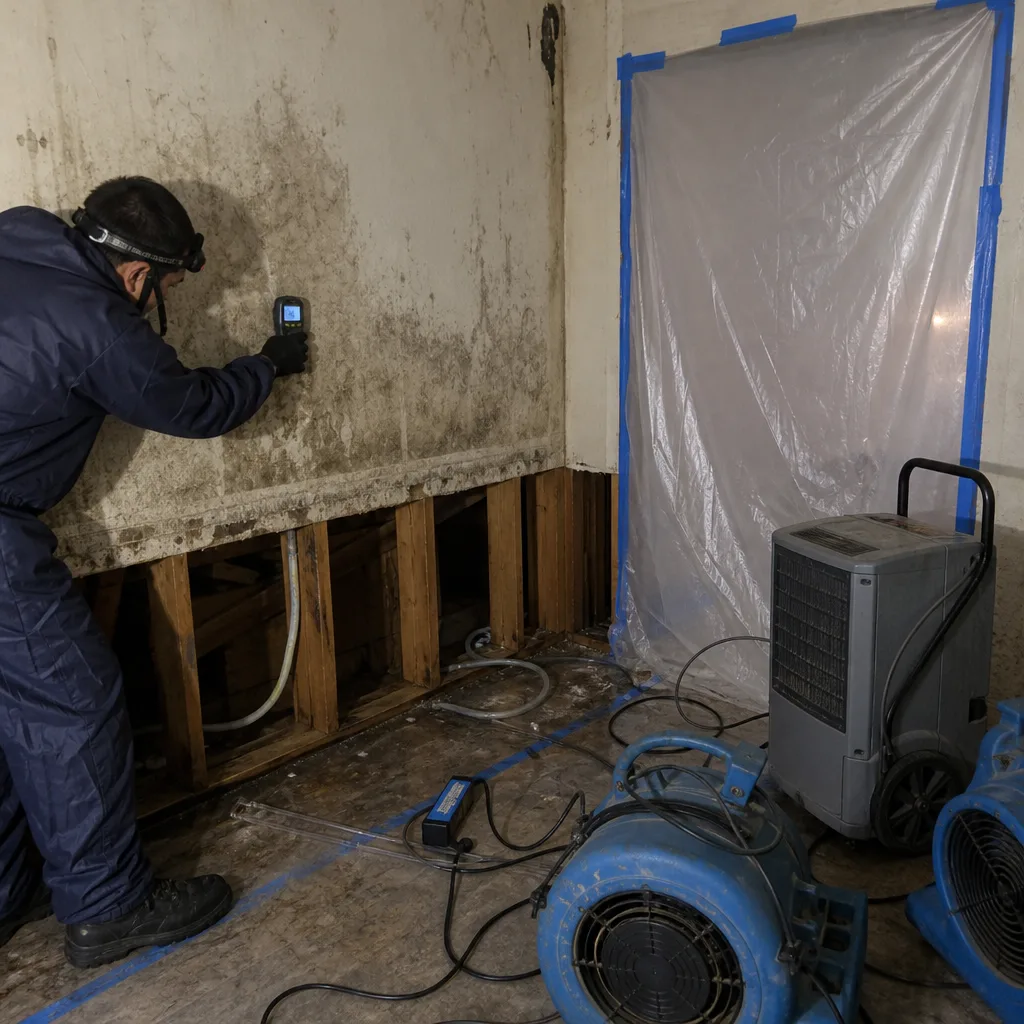 Before
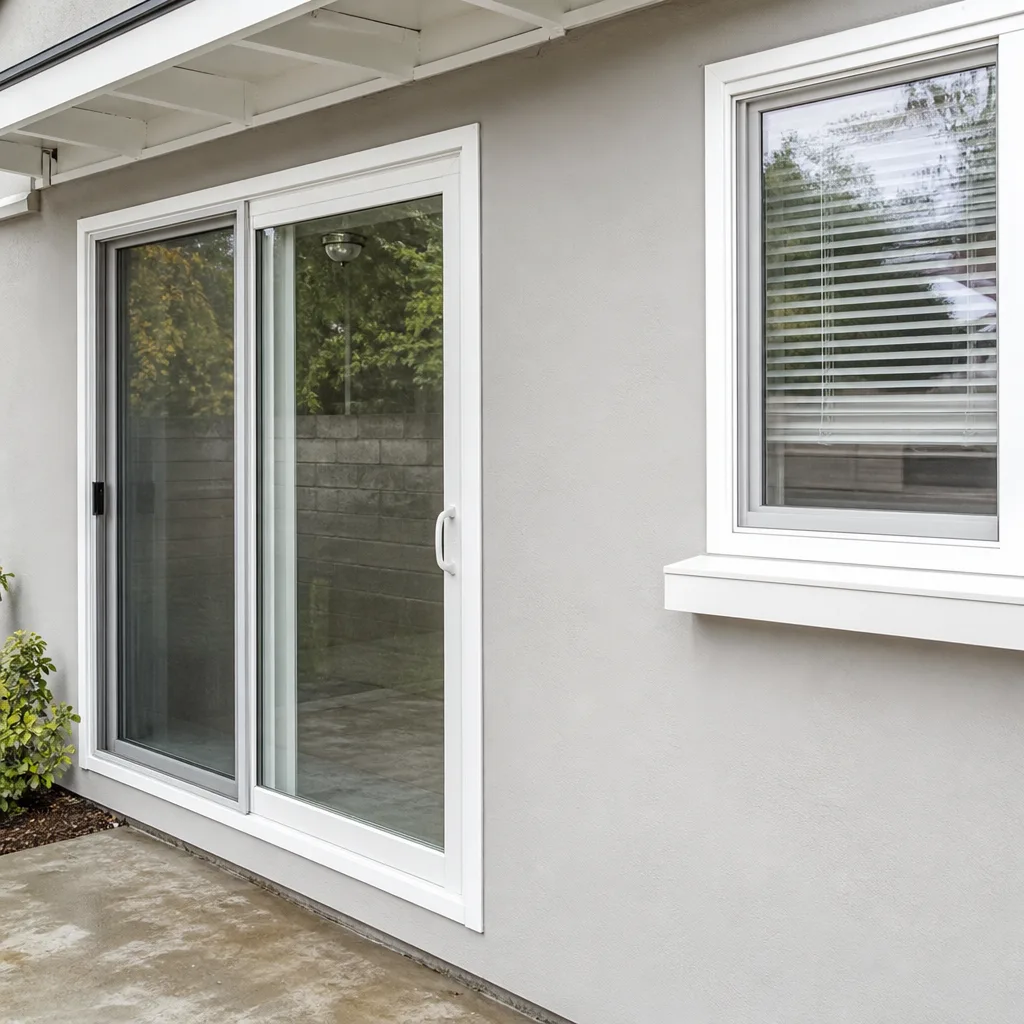 After
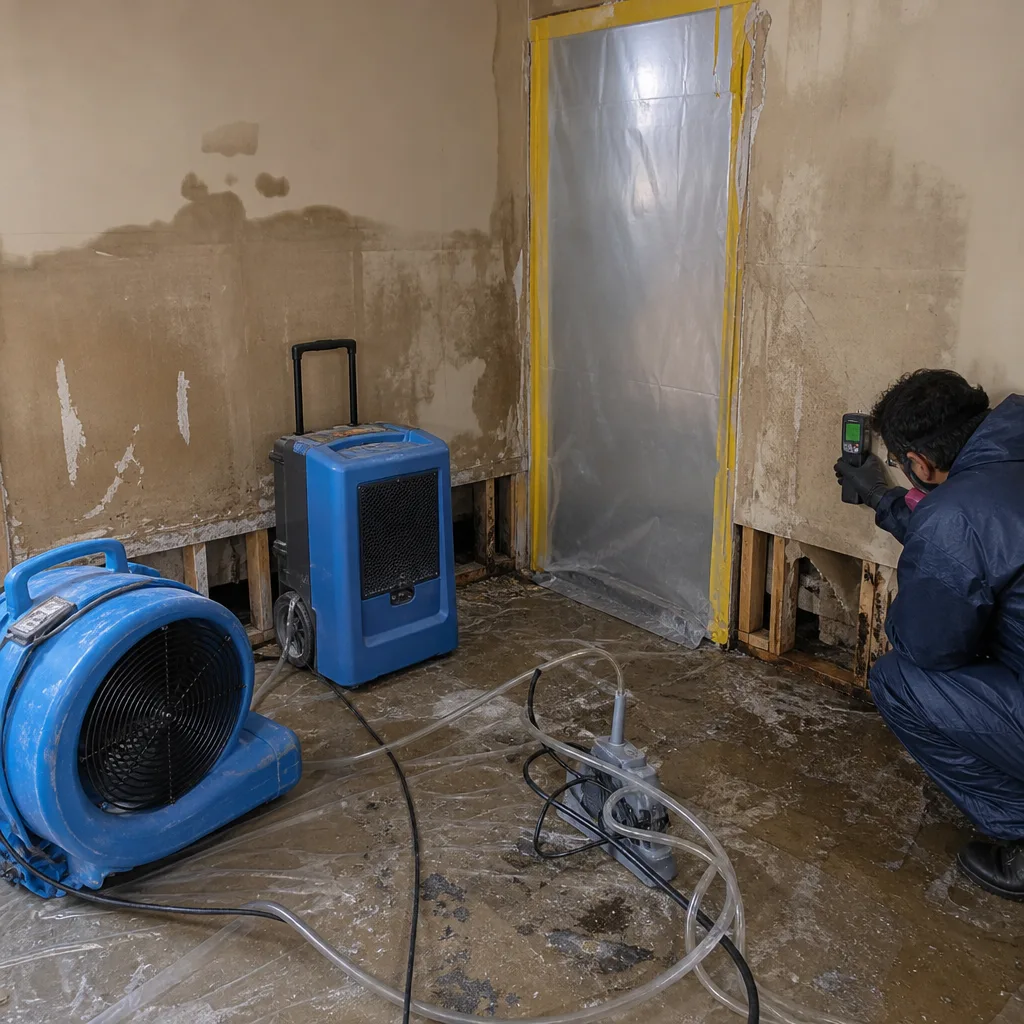 Before
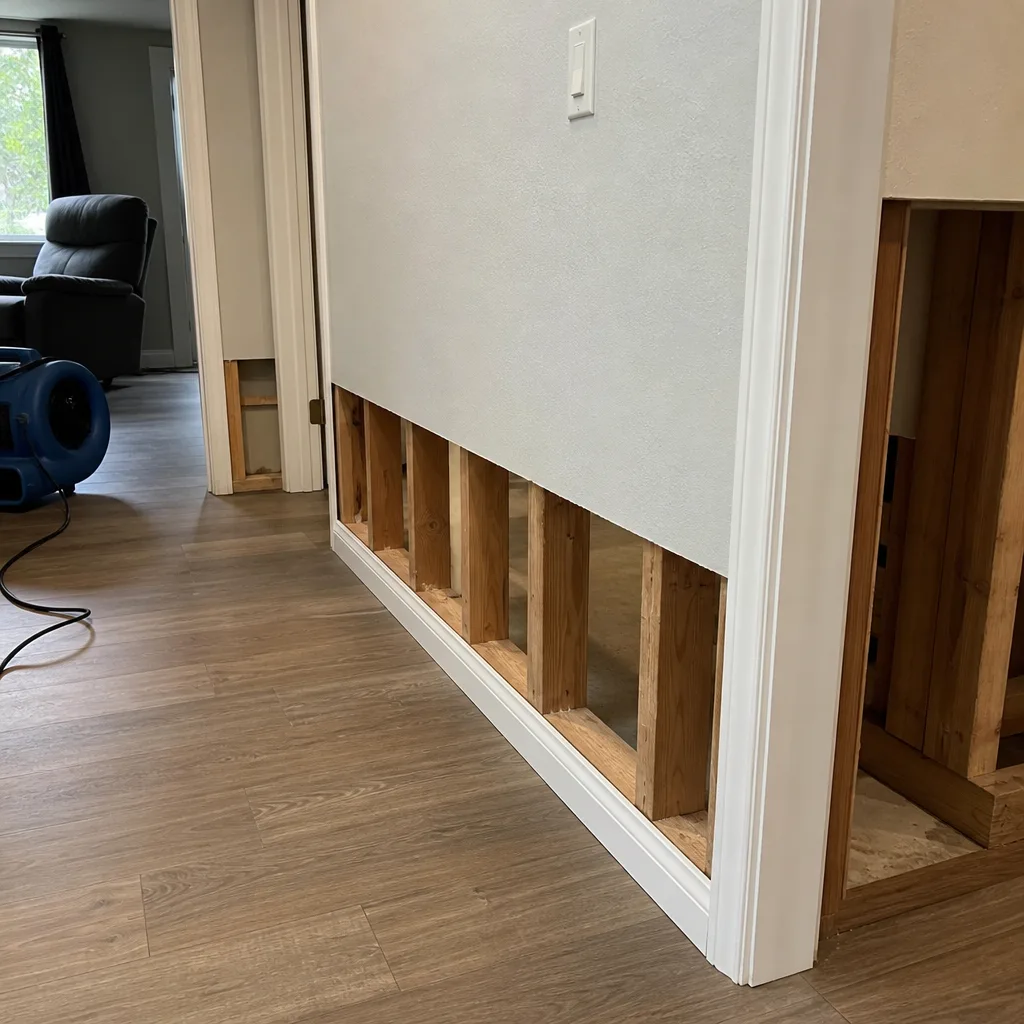 After
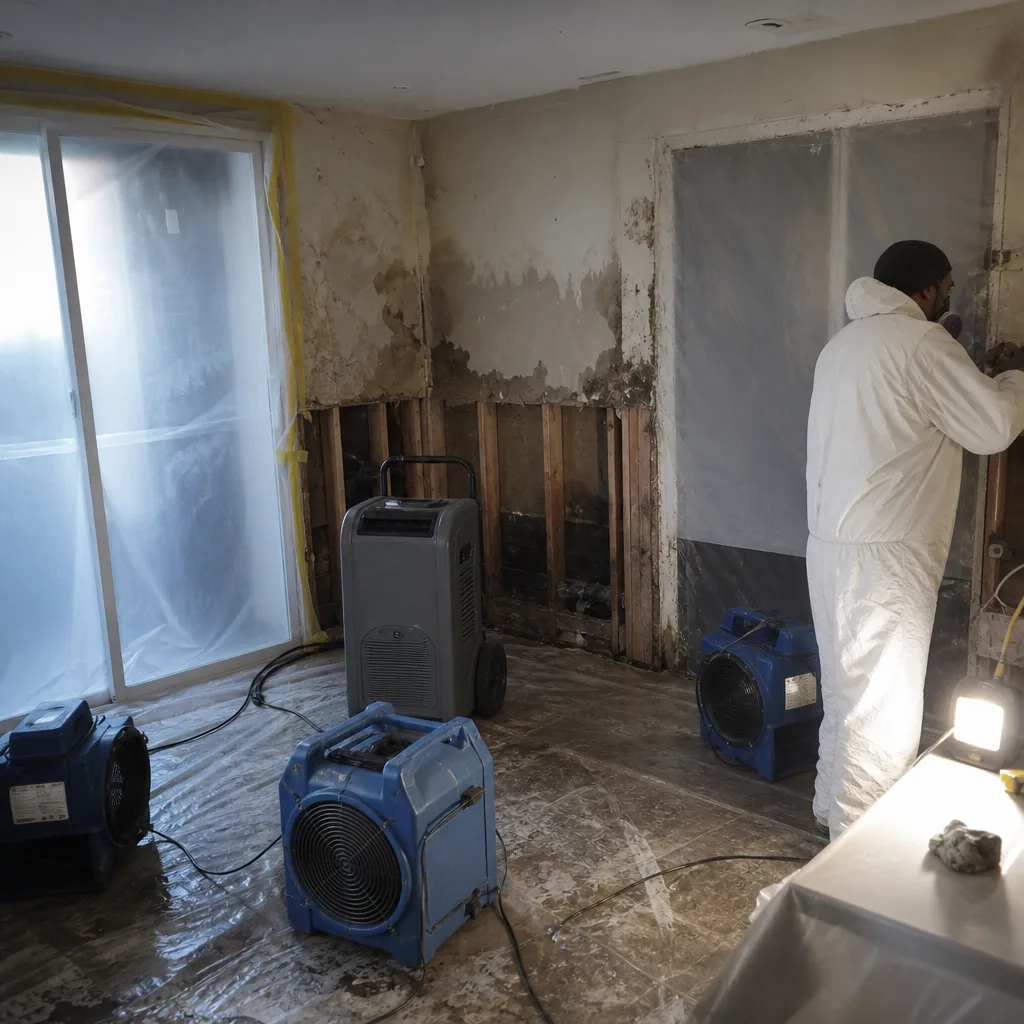 Before
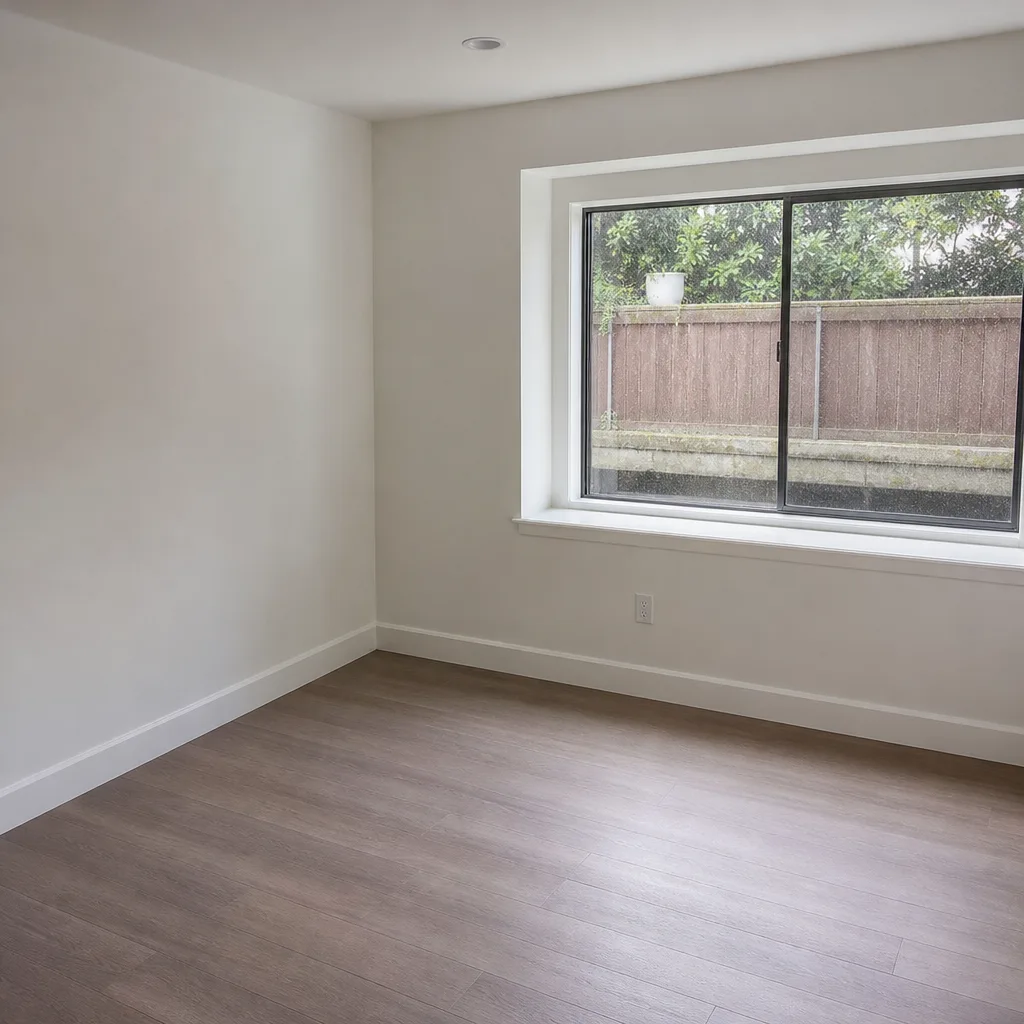 After
Common Water Damage Restoration Problems We See in Corona Homes
- Root intrusion in the 92879 core: Mature ficus and magnolia trees in older Corona neighborhoods send roots into clay sewer lines, causing backups that flood bathrooms and laundry rooms. The plumbing is often original to the 1960s or 1970s, so we dry the space and document the failure for your plumber.
- Wind-driven rain through stucco cracks in 92880 hillside homes: Santa Ana winds push rain horizontally into hairline stucco cracks that would never leak in normal weather. The water travels behind the paper barrier and shows up days later as bubbling paint or a musty closet.
- Ridge-vent ember intrusion after Santa Ana events: In the 1990s and 2000s tract homes of the southeast hills, embers lodge in ridge vents and smolder without flame. Smoke odor surfaces days later, and we trace it to the attic before you spend money replacing carpet that was never the source.
- Fast surface drying that hides wall-cavity moisture: Corona’s hot, dry air makes a wall feel dry to the touch within a day or two. Moisture mapping with penetrating meters tells a different story, especially behind stucco, where trapped moisture feeds mold for weeks before anyone notices.
Pricing for Water Damage Restoration in Corona, CA
Water damage restoration in Corona runs $1,200 to $12,000 depending on scope. A single-room water heater rupture with no structural damage averages $1,800 to $3,500. Wind-driven rain through a failed exterior door that saturates drywall and flooring typically lands between $3,000 and $8,000. A sewer backup that touches multiple rooms and requires containment, antimicrobial treatment, and material removal runs $6,000 to $14,000. What moves the number is square footage, water category, how long the water sat, and whether structural framing or subfloor needs drying. We write the scope before work starts and you approve it in writing. Call (833) 620-3891 for a free estimate, and we’ll give you a real number based on your specific loss, not a vague range designed to trap you later.
We Also Serve Cities Near Corona
We work throughout the Corona area including Home Gardens, El Cerrito Corona, Eastvale, and Norco. Many of those calls come from property managers and homeowners who found us through Water Damage Restoration in Corona searches and needed the same IICRC-certified process applied to a loss across the city line. Same crews, same equipment, same written-scope commitment.
Serving Corona, CA — Our Local Coverage Area
We’re based in the Corona area and know this community well. Use the map below to see our service coverage — if you’re nearby, we can almost certainly help.
FAQs About Water Damage Restoration in Corona
We check the attic first because embers from a Santa Ana wind event lodge in ridge vents and smolder undetected, and wind-driven rain enters through roofing penetrations that show no interior signs for days. If we skip the attic and start drying a first-floor carpet, we miss the actual intrusion point and the moisture keeps feeding from above. The attic inspection takes 20 minutes and tells us whether the water you’re seeing is the main event or just where the water ended up. Call (833) 620-3891 after any significant wind event and we’ll schedule the full assessment, attic included.
No. Corona’s climate dries the surface fast, which tricks homeowners into thinking the wall cavity is dry too. Behind stucco and drywall, trapped moisture sits in the framing and insulation where no breeze reaches it. Unattended, that trapped moisture supports mold growth within 48 to 72 hours and degrades structural framing over weeks. We use penetrating moisture meters to read behind the surface. If the numbers say wet, the equipment stays running until the assembly actually measures dry.
Yes, and we treat it that way. Wind-driven rain that passes through a failed slider or door seal picks up dirt, debris, and whatever it touches along the stucco, threshold, and track. That water is no longer clean Category 1. Under IICRC S500 definitions, it’s Category 2, which changes the drying protocol, the antimicrobial step, and the material-removal decisions. Treating it as clean water will under-dry the space and leave contamination behind. Our crews classify the water source before writing the scope.
You need extraction started within the first 24 hours, ideally sooner. The first 48 hours are when drywall wicks moisture upward, hardwood cupping begins, and mold has the conditions to start. In Corona’s warm climate, that clock moves faster in summer. We reach most Corona zip codes within 60 to 90 minutes of your call, and we’ll tell you over the phone what to shut off and what not to touch until we arrive. (833) 620-3891 is a direct line, not a call center.
We build containment barriers with 6-mil poly sheeting and zippered entry panels around the affected area, then run negative air pressure so moist, contaminated air doesn’t migrate into dry rooms. Dehumidifiers are placed inside the contained zone and sized to the moisture load, not the room’s square footage. The setup keeps dust and airborne particles out of your living space, and it concentrates the drying energy where it’s needed instead of fighting your whole house’s air volume.
Water damage in Corona follows a pattern: wind-driven rain through aging stucco and failed door seals, sewer backups in the mature-tree neighborhoods of the 92879 core, and slab leaks under the mid-century ranches that make up so much of the city’s original housing stock. We know the pattern. We know where the hidden channels run and what the dry heat hides. When water shows up in your Corona home, you don’t need a generalist. You need a restoration company that has already worked your neighbors’ homes and knows what a Corona wall cavity looks like when it’s holding water. Call (833) 620-3891 for a free estimate and a written scope before any work begins.
Written by Noel Carbajal, Owner at Renew Water Damage, serving Corona and surrounding areas with IICRC-certified restoration and commercial-grade drying systems.