
Last updated October 31, 2026
 Water damage drying
 Fire & smoke cleanup
 Mold remediation
 Storm response
 Sewage cleanup
 Reconstruction
Free visual inspection and a written scope of work before any mitigation begins - photos, moisture readings, and drying logs go in your claim file
The scope we write is the scope we bill. Anything new gets shown to you, in writing, before we touch it.
Get your free estimateDamage Restoration Cost Breakdown: The Orange Homeowner’s Reference for 2026
If you’ve received two quotes for the same flooded bathroom, one for $3,500 and another for $14,000, you’re not being scammed by either contractor. You’re looking at two different scopes wearing the same job title. The phrase “water damage restoration” in Orange can mean anything from three hours of extraction to three weeks of demolition, drying, and reconstruction, and until the bid is separated into line items, you have no way to compare them. This guide breaks down every cost layer in Orange’s 2026 restoration market so you can read a bid the way an adjuster does: phase by phase, material by material, and category by category. For Damage Restoration Warning Signs: A Orange Homeowner’s Reference Guide on spotting trouble early, see our companion resource. By the end, you’ll know which quote matches your actual damage and which one is priced for a problem you don’t have.
Restoration work we handle
Quick Answer
Water damage restoration in Orange, CA typically costs between $3.50 and $7.50 per square foot for clean-water extraction and drying, but that range explodes to $15 to $30 per square foot when demolition, mold remediation, or Category 3 black-water protocols enter the scope. Most $10,000-plus quotes involve structural drying, material removal, and rebuild work, not just water removal. To compare bids accurately, ask each contractor to separate costs into four phases: extraction, drying, demolition, and reconstruction.
Table of Contents
- The Four Billable Phases of Restoration (And What Each Actually Costs in Orange)
- How IICRC Damage Categories Multiply Your Base Cost
- Hidden Cost Variables in Orange’s Housing Stock: Asbestos, Lead, and Permits
- Xactimate Insurance Pricing vs. Open-Market Contractor Pricing in Orange
- Equipment Rental vs. Restoration Contractor Pricing: What the Gap Actually Buys You
- Insurance, Adjusters, and Out-of-Pocket Exposure: The Questions to Ask Before Signing
- How to Read a Restoration Bid Line by Line
- Common Mistakes to Avoid
- When to Call a Professional
- Frequently Asked Questions
- The Bottom Line
At Renew Water Damage, we’ve been walking Orange homeowners through this exact cost conversation for years. What follows is the reference we wish every client had before the first truck arrived.
The Four Billable Phases of Restoration (And What Each Actually Costs in Orange)
Every restoration job, whether it’s a supply-line burst in Old Towne Orange or a slab leak in Santiago Hills, breaks into four billable phases. Contractors who quote a single lump sum are either bundling these phases (fine, if you can see the math) or hiding one phase inside another (not fine). Here’s what each phase costs in Orange’s 2026 market, based on residential jobs we’ve scoped and completed.
Phase 1: Water Extraction
This is the emergency response. Technicians arrive with truck-mounted or portable extraction units, remove standing water, and haul it away. In Orange, expect to pay $3 to $6 per square foot of affected flooring for extraction alone. A 200-square-foot flooded kitchen floor runs $600 to $1,200. Carpet extraction is cheaper per square foot than hardwood because carpet can tolerate high-suction wands without cupping or warping. The clock matters here: water that sits for more than 48 hours in Orange’s warm climate starts supporting microbial growth, which pushes the job into a different category and a different price range.
What you’re paying for: labor (typically two technicians for two to four hours), truck roll, disposal fees, and equipment setup. This phase is rarely negotiable on price. It’s the one part of the job that every qualified contractor does roughly the same way.
Phase 2: Structural Drying
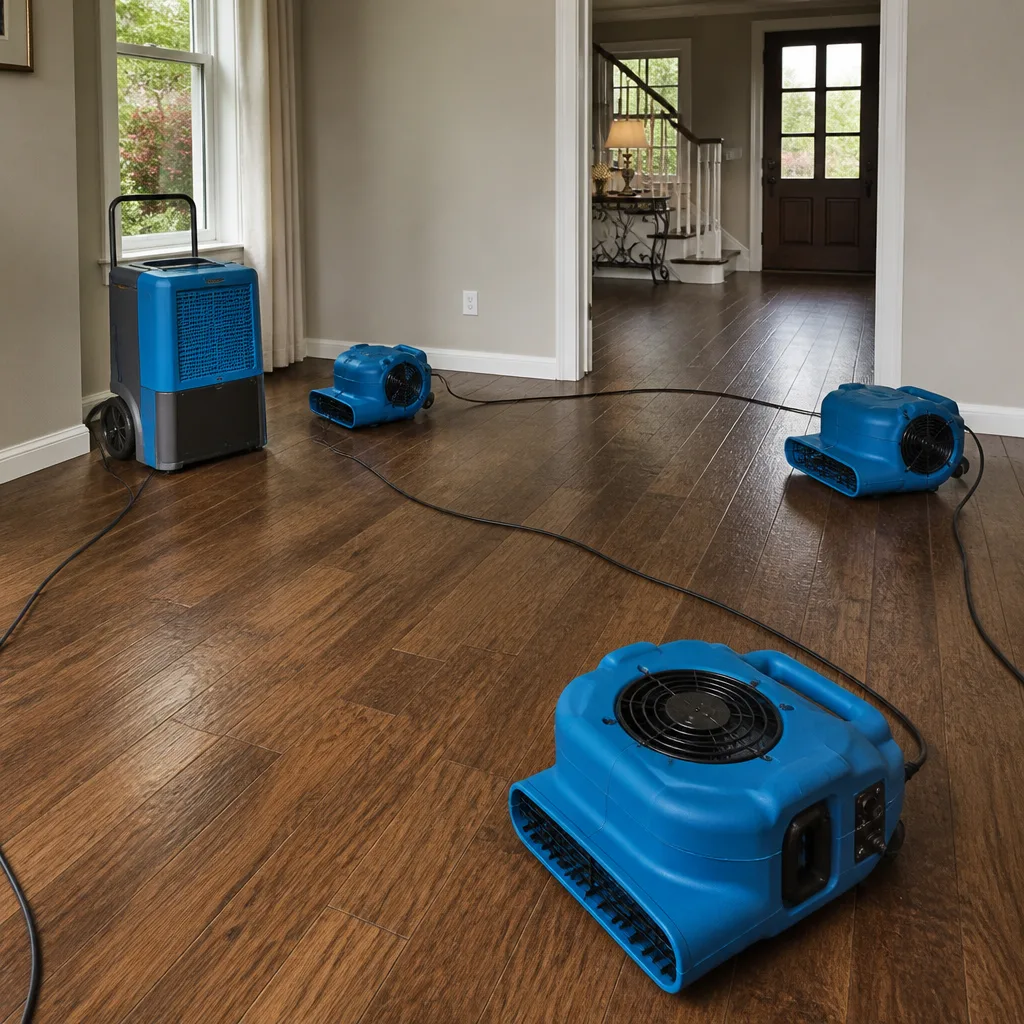
Here’s where pricing diverges wildly. Structural drying means placing commercial-grade air movers and dehumidifiers throughout the affected area and running them for days, sometimes a week or more, until moisture meters read acceptable levels. In Orange, contractors typically charge:
- Air movers: $25 to $45 per unit per day
- LGR dehumidifiers: $90 to $160 per unit per day
- Moisture monitoring visits: $75 to $150 per visit (usually every 24 to 48 hours)
A standard 300-square-foot water loss with moderate saturation might require 6 to 8 air movers and 2 dehumidifiers running for 4 to 6 days. That’s $1,400 to $2,900 in drying costs alone, before any repair work. This is the phase most homeowners underestimate because it’s invisible: equipment humming in an empty room doesn’t feel like $2,000 of value. But it’s the phase that prevents a $2,000 job from becoming a $25,000 mold remediation six months later.
What you’re paying for: equipment that costs $1,500 to $3,500 per unit to own, daily monitoring to confirm the drying curve is progressing, and the liability of guaranteeing the space is dry before anyone rebuilds it. Companies using professional-tier equipment like Dri-Eaz and Phoenix dehumidifiers are running the same machines used on commercial losses in Anaheim and Santa Ana, and the monitoring protocols come from IICRC S500 standards.
Phase 3: Demolition of Non-Salvageable Materials
Drywall that’s been saturated for more than 48 hours usually comes out. Insulation behind it, too. Vinyl plank flooring often survives; laminate and engineered hardwood often don’t. In Orange, demolition costs by material type run roughly:
- Drywall removal: $2.50 to $4.50 per square foot (including haul-away)
- Insulation removal: $1.50 to $3 per square foot
- Flooring removal: $1.50 to $4 per square foot depending on material and glue-down vs. floating installation
- Baseboard and trim removal: $1 to $2 per linear foot
- Cabinet removal (lower cabinets affected): $75 to $200 per cabinet box
A flooded bathroom that requires removal of drywall up to the 2-foot flood line, the vanity, and the flooring might generate $2,000 to $4,500 in demolition costs. If the contractor can save materials instead of demoing them, the savings compound: every square foot of drywall left in place is drywall you don’t have to replace.
This is where specialized drying technology changes the math. Injectidry wall-cavity drying systems force air into wall and subfloor cavities, drying the space between studs and joists without cutting out the finished surface. On jobs where the water is clean and caught early, this can reduce demolition by 50% or more in Orange homes with plaster walls, which are expensive to match and repair. Not every contractor owns Injectidry equipment or knows how to deploy it. The ones who do can quote a lower demolition line item honestly, not by cutting corners.
Phase 4: Reconstruction
Reconstruction is priced per trade, full stop. Anyone quoting reconstruction as a single per-square-foot number is guessing. In Orange’s 2026 market:
- Drywall installation and finishing: $3 to $6 per square foot
- Paint (walls and ceiling): $2 to $4 per square foot
- Trim and baseboard installation: $3 to $7 per linear foot
- Flooring installation: $4 to $12 per square foot depending on material
- Cabinet replacement (stock grade): $250 to $500 per linear foot
- Tile work (shower or floor): $12 to $30 per square foot
A full bathroom rebuild after a Category 3 sewage backup in Orange, including new subfloor, drywall, tile, vanity, and paint, typically lands between $15,000 and $35,000. That’s honest money for honest work. The problem arises when a contractor quotes a number in this range for a job that only needed extraction and drying. Browse our more guides & resources to stay informed on every phase of restoration. This is why the phase structure matters: if your quote has no line items for equipment days and monitoring visits, but it does have $9,000 for “general reconstruction,” you’re being sold a rebuild you may not need.
We handle all four phases under one contract because water damage restoration in Orange isn’t a series of disconnected trades. It’s one continuous process, and splitting it across multiple companies creates gaps where moisture hides and mold grows.
How IICRC Damage Categories Multiply Your Base Cost
The water that flooded your home isn’t all the same. The IICRC S500 standard, which governs professional water damage restoration, classifies water into three categories, and each category changes the scope, the equipment, the PPE, and the price. This is the single most important variable in understanding why two quotes for the “same” job can differ by a factor of three.
Category 1: Clean Water
This is water from a supply line, a faucet, a broken water heater, or rainwater that hasn’t touched contaminants. It’s the cheapest category to restore because materials can often be dried in place rather than demolished. In Orange, Category 1 jobs typically run $3.50 to $5 per square foot all-in for extraction and drying, with minimal demolition. A kitchen supply line burst that’s caught within hours is usually a Category 1 job, and the restoration path is straightforward: extract, dry, monitor, confirm dry, done.
Category 2: Gray Water
Gray water contains significant contamination: washing machine discharge, dishwasher overflow, sump pump failures, or clean water that sat for more than 48 hours. It requires antimicrobial application after extraction, more aggressive drying standards, and a lower threshold for demolition. Carpet pad is almost always removed in Category 2 jobs, even if the carpet itself is salvageable. Base pricing in Orange runs $5 to $8 per square foot, with demolition costs adding on top.
The 48-hour factor matters a lot in Orange’s climate. Indoor temperatures in the 70s and 80s, common in Orange homes even in winter, accelerate microbial growth. A Category 1 job left untouched over a weekend becomes a Category 2 job by Monday, and the restoration cost increases by 30 to 50% because of the additional biocide application and the higher demolition threshold.
Category 3: Black Water
Black water contains pathogenic agents: sewage backups, toilet overflows with solid waste, floodwater from the Santa Ana River, or standing water that has supported bacterial growth. These jobs require full PPE (respirators, protective suits, gloves), containment barriers to prevent cross-contamination, biocide application, and substantially more demolition because porous materials that absorbed black water cannot be sanitized reliably. Drywall, insulation, carpet, pad, and often lower cabinets come out. Base pricing in Orange starts at $8 to $12 per square foot before demolition, and total restoration costs for a Category 3 bathroom or laundry room routinely hit $10,000 to $25,000.
The honest pricing gap between Category 1 and Category 3 is not markup. It’s the difference between drying a wet room and safely removing a biohazard. Contractors who don’t use IICRC terminology on their bids are often doing Category 3 work with Category 1 pricing, which means they’re cutting PPE, containment, or demolition corners that will surface later as health problems or failed reconstruction.
Safety note: Category 3 water contains pathogens that can cause serious illness. If you suspect sewage or long-standing water is involved, stay out of the area, shut off HVAC systems that could circulate contaminated air, and call a certified restoration professional immediately. This is not a DIY scenario under any circumstances.
Hidden Cost Variables in Orange’s Housing Stock: Asbestos, Lead, and Permits
Orange is an old city. The Plaza Historic District has homes dating to the 1880s. Entire neighborhoods like the Presidential Streets and the area around Chapman Avenue were built out in the 1950s and 1960s. That housing stock creates cost variables that a generic national cost guide will never mention, but they show up on your bill.
Asbestos in Pre-1980 Construction
Homes built before 1980 in Orange frequently contain asbestos in drywall joint compound, popcorn ceilings, vinyl floor tiles, and HVAC duct wrap. If your restoration scope requires cutting into or removing these materials, state and federal regulations require asbestos testing before the work begins. Testing costs $250 to $500 per sample area. If asbestos is found, abatement by a licensed contractor adds $5 to $15 per square foot to the affected area, plus containment and air monitoring fees that can add $1,000 to $3,000 to the total job.
Here’s the kicker: demolition that would cost $3,000 in a 2005 home can cost $9,000 or more in a 1965 home in Orange, purely due to asbestos protocols. A contractor who doesn’t mention this when quoting a pre-1980 home is either doing the job illegally or planning to hit you with a change order when testing comes back positive. Neither is acceptable.
Lead Paint in Pre-1978 Construction
Homes built before 1978 in Orange may contain lead-based paint. Under EPA’s Renovation, Repair and Painting (RRP) rule, any contractor disturbing more than six square feet of painted surface in a pre-1978 home must be RRP-certified and follow containment and cleanup protocols. This adds $500 to $1,500 to a typical restoration job in labor and setup costs, mostly in plastic containment, HEPA vacuuming, and disposal documentation.
This is not optional. We’ve seen bids from non-certified contractors that undercut legitimate pricing by $1,000, and the homeowner doesn’t realize until later that the low number meant the crew was sanding lead paint without containment. The savings aren’t worth the exposure, especially for families with young children in Orange’s older neighborhoods.
Permit Fees for Exposed Structural Work
Any restoration work that exposes or alters structural framing, electrical wiring, or plumbing typically requires a permit from the City of Orange. Our Damage Restoration Permits, Codes & Inspections in CA: What You Need to Know explains the full compliance picture. Permit fees vary by scope but generally run $200 to $1,500 for the types of work restoration jobs involve: water heater replacements, re-piping, panel repairs, or structural sistering after fire damage.
The permit itself usually isn’t expensive. The cost comes in two other places: the inspection scheduling that adds days to your timeline, and the requirement that the work be brought up to current code. A 1960s Orange home with outdated electrical that needs a wall opened for drying may trigger a requirement to upgrade wiring in the exposed area, adding $1,000 to $5,000 that has nothing to do with water damage but everything to do with safety and compliance.
Legitimate restoration contractors include permit line items in their bids. Contractors who tell you permits “aren’t needed” for work that clearly requires them are pushing liability onto you, because we’ve seen unpermitted work surface during home sales and claim disputes as a mess that costs far more to untangle than the permit would have cost in the first place.
Xactimate Insurance Pricing vs. Open-Market Contractor Pricing in Orange
If your restoration is an insurance claim, your adjuster is almost certainly pricing the job in Xactimate, the industry-standard estimating software used by nearly every carrier in California. Xactimate generates line-item prices based on regional cost data, and its Orange County pricing is generally fair but, in specific categories, routinely lower than what Orange contractors charge on the open market.
Where Xactimate Prices Well
Xactimate is strong on standard items: extraction labor, air mover and dehumidifier rental equivalents, drywall demolition, standard-rate drywall installation, and basic painting. For these line items, an Xactimate estimate will typically align with a mid-market contractor bid in Orange, sometimes within 5 to 10%.
Where the Gap Creates Out-of-Pocket Exposure
The gaps show up in these specific areas:
- Content manipulation and pack-out: Xactimate prices for moving, inventorying, cleaning, and storing your belongings are often 30 to 50% below what specialized content-restoration companies charge in Orange. This line item gets cut or underfunded constantly.
- Specialty drying systems: Xactimate has line items for standard air movers and dehumidifiers, but specialized equipment like Injectidry wall-cavity drying systems or floor-mat systems often requires a manual estimate that adjusters resist approving unless the contractor documents the need with moisture readings.
- Hardwood floor drying and refinishing: Xactimate typically prices hardwood drying as a standard drying line item, but in Orange’s older homes with solid oak flooring, the real-world cost of drying, flattening, and refinishing run 20 to 40% higher than Xactimate allows.
- Tier-2 and Tier-3 finish materials: If your home has custom mouldings, period-appropriate tile, or non-standard door sizes common in Orange’s historic districts, Xactimate’s finish allowances will not cover the replacement cost.
- Access issues: Jobs on second floors with no elevator, tight crawl spaces under 1920s bungalows, or properties with restricted street parking in Old Towne often incur real labor costs that Xactimate doesn’t assign line items for.
This is where contractor expertise matters. A restoration company that understands both the Xactimate pricing structure and the Orange market cost realities can submit supplement requests with the documentation adjusters need to approve the additional funding. It’s rarely about fighting the adjuster. It’s about showing the work, the moisture readings, and the regional pricing data that justifies the supplement.
Our team has handled hundreds of insurance claims across Orange, and the pattern is consistent: claims where the contractor documented everything from day one with photos, moisture logs, and line-item justifications close with 15 to 30% less out-of-pocket exposure for the homeowner than claims where documentation was spotty. Insurance companies pay what’s justified. The burden is on the contractor to justify it.
Equipment Rental vs. Restoration Contractor Pricing: What the Gap Actually Buys You
A common cost-reduction question we hear from Orange homeowners is some version of, “Can I just rent the dehumidifiers myself and save the contractor markup?” It’s a fair question. Here’s the honest math.
What Equipment Actually Costs to Rent
Rental yards in Orange County, including the big-box equipment rental chains, price commercial-grade restoration equipment as follows:
- LGR dehumidifier: $45 to $75 per day
- Air mover: $18 to $28 per day
- Moisture meter: $30 to $50 per day
- HEPA air scrubber: $65 to $100 per day
For a 300-square-foot water loss, you’d need roughly two dehumidifiers, six air movers, and a moisture meter: about $250 to $350 per day in rental costs. Over five days, that’s $1,250 to $1,750.
What a Restoration Contractor Charges
A restoration contractor in Orange typically charges the numbers cited earlier: $90 to $160 per dehumidifier per day and $25 to $45 per air mover per day. For the same 300-square-foot job, the contractor’s equipment line items land around $1,800 to $2,900 over the same five-day period.
What the $550 to $1,150 Gap Actually Buys
The gap is real, and it is not pure markup. Here’s what it covers:
- Monitoring labor: Drying is not set-and-forget. A technician visits every 24 to 48 hours to take moisture readings at multiple points, adjust equipment placement, and document the drying curve. That’s three to five visits per job, each 30 to 60 minutes, plus drive time in Orange traffic.
- Liability for outcomes: When a contractor runs the drying equipment, the contractor owns the result. If the space isn’t dry and mold develops, that’s on the contractor’s insurance. When you rent the equipment, you own the result. If you misplace a dehumidifier so it doesn’t command the airflow needed, or you don’t run it long enough, or you miss a wall cavity that’s still wet, the mold remediation bill is yours.
- Equipment quality and placement expertise: The dehumidifiers at a rental yard may or may not be true LGR units. They may not have been serviced recently. And rental yards don’t tell you how many air movers to place and where to place them. A professional drying setup in a divided floor plan requires airflow calculations, not guesswork.
- Access to specialty systems: Rental yards don’t stock Injectidry wall-cavity drying systems or floor-mat drying systems. Those are specialty tools owned by restoration companies specifically because they reduce demolition and speed up drying in ways standard equipment cannot.
The honest way to think about it: if your water loss is small (a closet, a hallway, a single wall section), and you’re willing to learn moisture-reading basics and monitor daily, rental can work. If your loss involves multiple rooms, wall cavities, hardwood flooring, or any Category 2 or 3 water, the contractor route is not a markup decision. It’s the only route with a guaranteed dry result, and in our experience, the avoided cost of a failed DIY dry job buys the markup many times over.
Insurance, Adjusters, and Out-of-Pocket Exposure: The Questions to Ask Before Signing
Most Orange homeowners dealing with sudden water, mold, or fire damage will file an insurance claim, and most of them will learn the hard way that the policy they’ve been paying for covers less than they assumed. For Damage Restoration Emergency Preparedness Guide for Orange Homes on getting ahead of the next incident, review our planning resource. Here are the questions to ask your adjuster and your restoration contractor before any work begins.
Question 1: Is my policy ACV or RCV?
Actual Cash Value (ACV) pays for your damaged items at their depreciated value. A 15-year-old water heater that fails is worth almost nothing on an ACV basis. Replacement Cost Value (RCV) pays what it costs to replace with like kind and quality. If your policy is ACV, your out-of-pocket exposure on every line item increases dramatically, especially on finish materials that depreciate quickly.
Question 2: What is my deductible, and how is it applied?
Most Orange homeowners carry deductibles between $1,000 and $5,000. The deductible comes out of the claim total, which means a $6,000 restoration job on a $5,000 deductible policy leaves you with $1,000 from insurance and $5,000 out of pocket. Ask about your specific deductible before you commit to a scope.
Question 3: What are my policy limits for mold and water damage?
California policies vary widely. Many have sub-limits for mold remediation, often $5,000 or $10,000 total, regardless of the actual cost. If your mold problem requires $18,000 in remediation and your sub-limit is $10,000, the difference is yours. Knowing this number before demolition starts changes the scope conversation completely.
Question 4: Will the contractor coordinate directly with my adjuster?
This is the biggest hidden cost lever in the entire process. Contractors who submit photos, moisture readings, and Xactimate-format estimates directly to the adjuster, who respond to supplement requests promptly, and who document everything in the carrier’s preferred format get more claims approved at higher amounts than contractors who hand you an invoice and tell you to deal with the insurance company yourself. Ask about this specifically. It is the difference between a smooth claim for $22,000 and a denied supplement that costs you $8,000 out of pocket.
Question 5: Who signs the contract, and what does “work authorization” actually authorize?
Some restoration companies in Orange use dense work authorization forms that assign your insurance benefits to the contractor, which can get complicated if you disagree with the scope later. Read what you’re signing. Assignment of Benefits (AOB) arrangements are legal in California but change the dynamic: the contractor now deals with the carrier directly, and you may have less leverage in scope disputes. We don’t use AOB in our contracts in Orange, and we recommend homeowners ask about it specifically before signing anything.
How to Read a Restoration Bid Line by Line
At this point, you have the background to read a bid the way a restoration professional does. Here’s the process, step by step:
- Start with the summary page. Look for a total, a deductible note, and the estimated duration. If the total is a single number with no supporting detail, stop reading and ask for line items. A legitimate restoration bid in Orange runs 5 to 50 pages, depending on scope.
- Look for the four phases. Can you identify extraction, drying, demolition, and reconstruction on the bid? If any phase is missing, ask why. A bid with no drying line items on a water job is a bid that either assumes drying is included elsewhere or plans to skip it. Neither is acceptable.
- Check equipment line items. Drying line items should list the number of air movers, number of dehumidifiers, number of days, and a daily rate for each. If the bid says “drying: $3,000” with no equipment detail, ask for the breakdown. You have the right to know what you’re renting.
- Check demolition line items. Demolition should be itemized by material and by square footage. “Remove drywall: 240 sq ft at $3.50/sq ft” is what you want to see. “General demolition” with no quantities is an invitation for a change order later.
- Look for the moisture log commitment. The bid should state that drying progress will be documented with moisture readings, and that the equipment stays in place until readings confirm dry. If there’s no mention of how “dry” is defined, the contractor can pull equipment early and leave you with a hidden moisture problem.
- Identify permit and testing line items. For pre-1980 homes, asbestos testing should appear on the bid if the scope involves demolition. For pre-1978 homes, RRP lead-safe work practices should appear. If your home is old and these line items are missing, the contractor is planning to skip them or hit you with a supplement later.
- Question any “reconstruction” line item that has no trade detail. Reconstruction should list drywall, paint, trim, flooring, and any plumbing or electrical separately. A single “rebuild” line item of $12,000 with no breakdown means you cannot verify what you’re buying.
This process takes fifteen minutes, and it is the single highest-value thing you can do before signing a restoration contract in Orange. The contractors who can’t or won’t provide this breakdown will not do better work than the ones who can. They’ll just bill more hours while they figure out the scope on your timeline.
Common Mistakes to Avoid
- Choosing a contractor based on the lowest lump-sum bid. The low bid is almost always a scope difference, not a price difference. You’re comparing a Category 1 estimate to a Category 3 estimate, or a drying-only job to a drying-plus-rebuild job, not the same work at different prices.
- Waiting to call a professional because you assume it’s expensive. The cost curve for water damage in Orange climbs steeply after 48 hours. The Category 2 conversion, the mold risk, the demolition threshold, all of it gets more expensive the longer water sits. The phone call is free. The delay is not.
- Assuming insurance covers everything. Deductibles, sub-limits, ACV depreciation, and coverage exclusions create out-of-pocket exposure on nearly every claim. Know your policy numbers before you panic.
- Skipping the asbestos test on a pre-1980 Orange home because it adds cost and time. The test costs a few hundred dollars. The alternative, an unpermitted abatement or a change order that doubles your demolition cost mid-job, costs thousands. Test early, test every time.
- Allowing a contractor to start demolition before you’ve seen a written scope. Once the drywall is out, you cannot undo the demolition or un-commit the cost. A written, line-itemed scope before work starts is non-negotiable, and any contractor who resists providing one is telling you something useful.
- Using a general contractor for restoration work. Restoration is a specialized discipline with its own standards (IICRC S500 for water, S520 for mold, S700 for fire), its own equipment, and its own documentation burden for insurance claims. A general contractor who “does water damage too” is practicing on your house. Mold remediation in Orange, in particular, requires containment and air-scrubbing protocols that general contractors simply don’t carry.
- Trusting a verbal promise that the equipment will run “as long as it takes.” That phrasing sounds reassuring and means nothing. Get the drying protocol in writing: specific moisture-reading targets, monitoring frequency, and the conditions under which equipment gets removed. If it’s not written, it does not exist when the invoice arrives.
When to Call a Professional
Call a restoration professional immediately if you have standing water that has been present for more than a few hours, water that involves sewage or suspected contamination, water that has wicked into walls or under flooring, any visible mold growth larger than about ten square feet, or fire damage that includes smoke residue in the HVAC system. In each of these scenarios, the damage is actively worsening, and the cost to remediate climbs daily. Call if you’re reasonably certain the loss is covered by insurance and you want the claim handled with proper documentation from day one; carriers look more favorably on claims with professional moisture logs and photo records. Fire damage restoration in Orange is its own discipline, with smoke odor removal and structural cleaning protocols that require specialized equipment and S700-aligned methods. If you’re in Orange and dealing with any of these situations, Renew Water Damage offers free estimates. Call (833) 620-3891 and we’ll walk you through what you’re looking at, whether or not you hire us.
Frequently Asked Questions
Water damage restoration in Orange averages $3.50 to $7.50 per square foot for Categories 1 and 2 water when the scope is extraction and drying. Category 3 (black water) jobs run $8 to $12 per square foot before demolition, and full restoration including rebuild work often lands between $15 and $30 per square foot depending on the scope. The per-square-foot number is only useful for rough planning; your actual cost depends on water category, materials affected, and how quickly the drying process started. Call (833) 620-3891 for a free estimate on your specific loss.
Most established Orange restoration companies can have a crew on site within a few hours for active water events. The emergency response is the one phase where speed is non-negotiable, because standing water is actively migrating through building materials while you wait. Same-day response is standard for us on water losses, and we prioritize active events over scheduled rebuild work every time.
Most Orange homeowners’ policies cover sudden and accidental water damage from sources like supply-line bursts, water heater failures, and appliance overflows, subject to your deductible and any sub-limits. Coverage for long-standing leaks, mold, or flood damage from external water is often limited or excluded. The single best way to maximize coverage is to document everything from day one with photos, keep all receipts, and have your restoration contractor communicate directly with your adjuster in the carrier’s preferred format.
The answer depends on the water category and the materials affected. Clean water on tile floor that’s caught within hours may only need extraction and drying. Water that soaked into drywall, insulation, carpet pad, or wood flooring for more than 48 hours will need some demolition, because those materials harbor moisture and microbial growth even when the surface looks dry. A qualified contractor can tell you which phase applies by taking moisture readings and mapping the affected area. That assessment should be free, and it is the difference between a $2,000 cleanup and a $20,000 remediation. If you’re not sure which situation you have, that’s exactly what the initial evaluation is for.
The difference is almost always scope, not price. One contractor is bidding extraction and drying while another is bidding extraction, drying, demolition, and reconstruction for the same job title. The only way to compare bids accurately is to require line-item breakdowns from every contractor and compare phase by phase. A third variable, equipment quality, matters too: contractors running professional-tier Dri-Eaz and Phoenix dehumidifiers with monitoring protocols based on IICRC S500 are not comparable to a truck with two rental fans and a shop vac. The price difference reflects real differences in what’s being done.
Can I do the drying myself and save the equipment markup?
You can rent commercial-grade dehumidifiers and air movers in Orange for about half what a restoration contractor charges per day, but you lose three things: the monitoring expertise that confirms the space is actually dry, the liability transfer if it isn’t, and access to specialty drying systems like Injectidry that
See the difference
 Before
 After
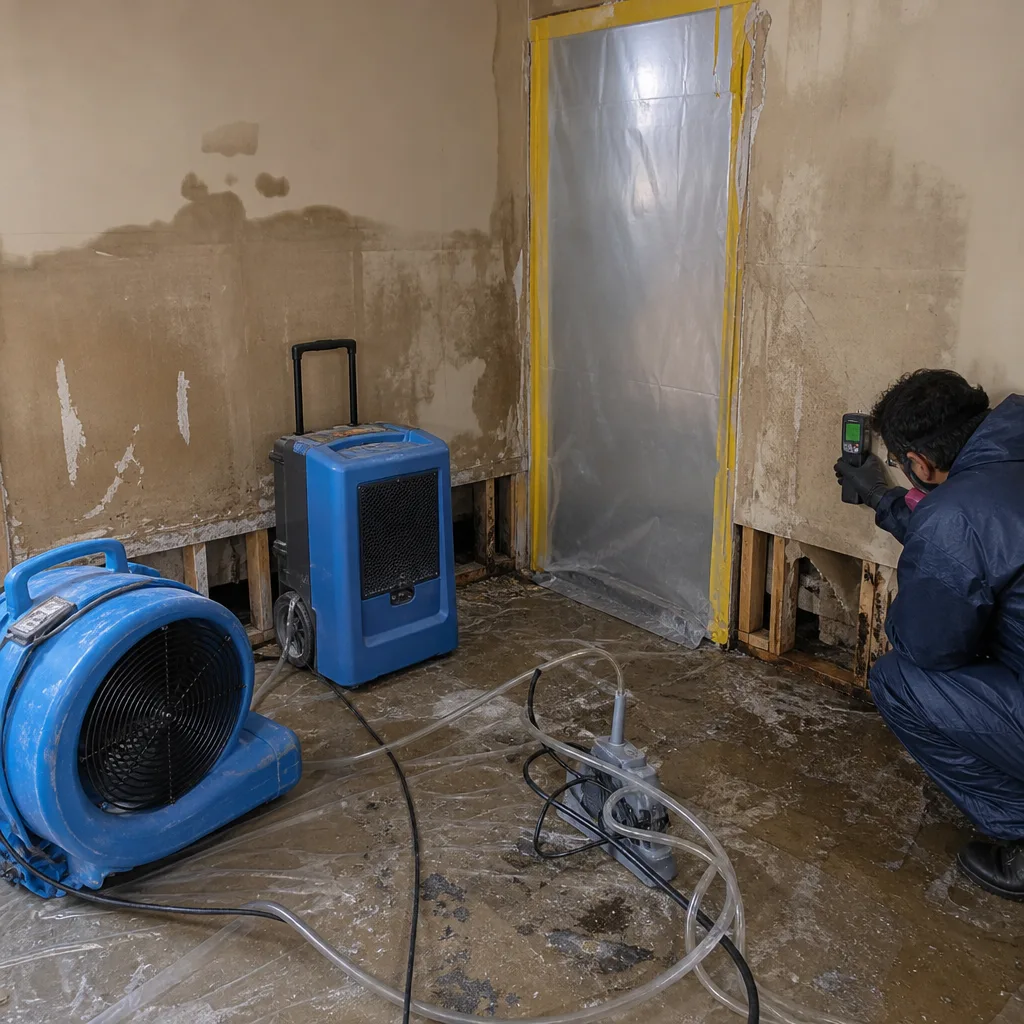 Before
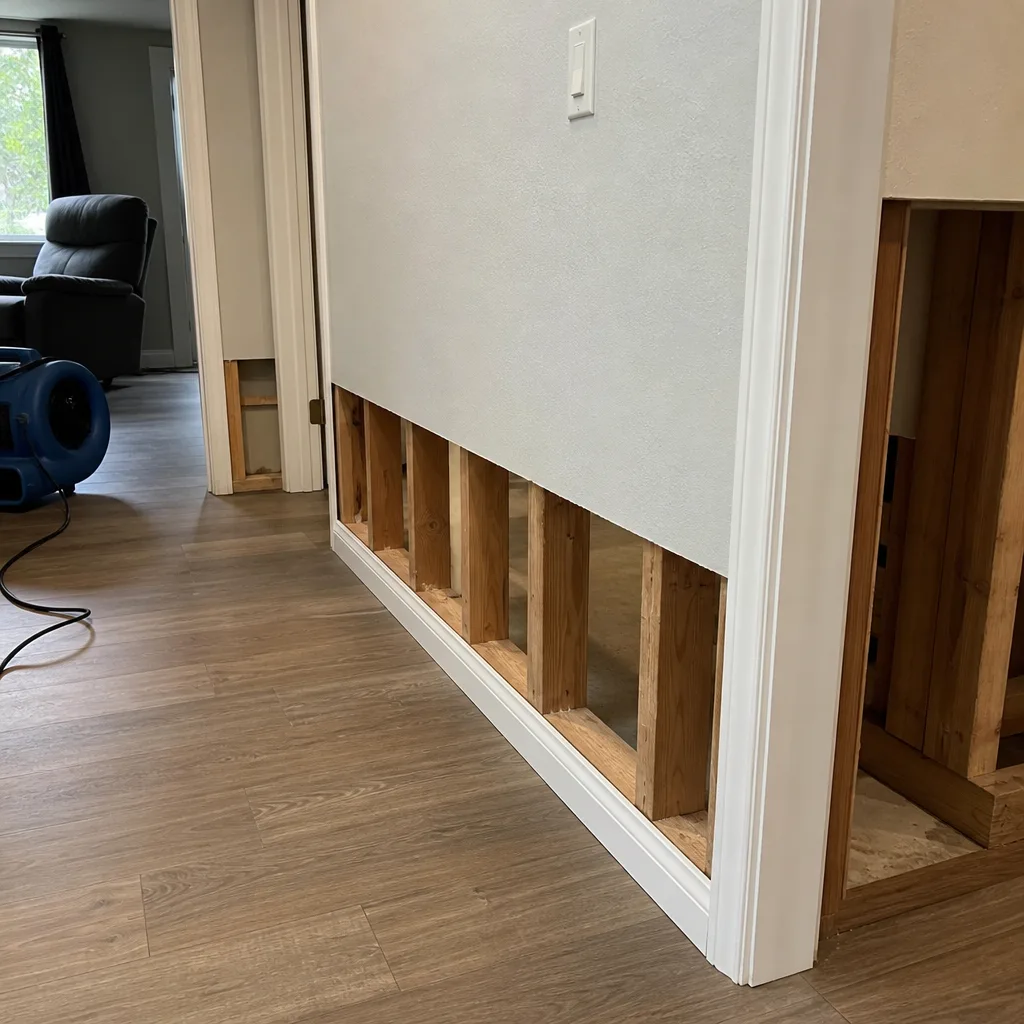 After
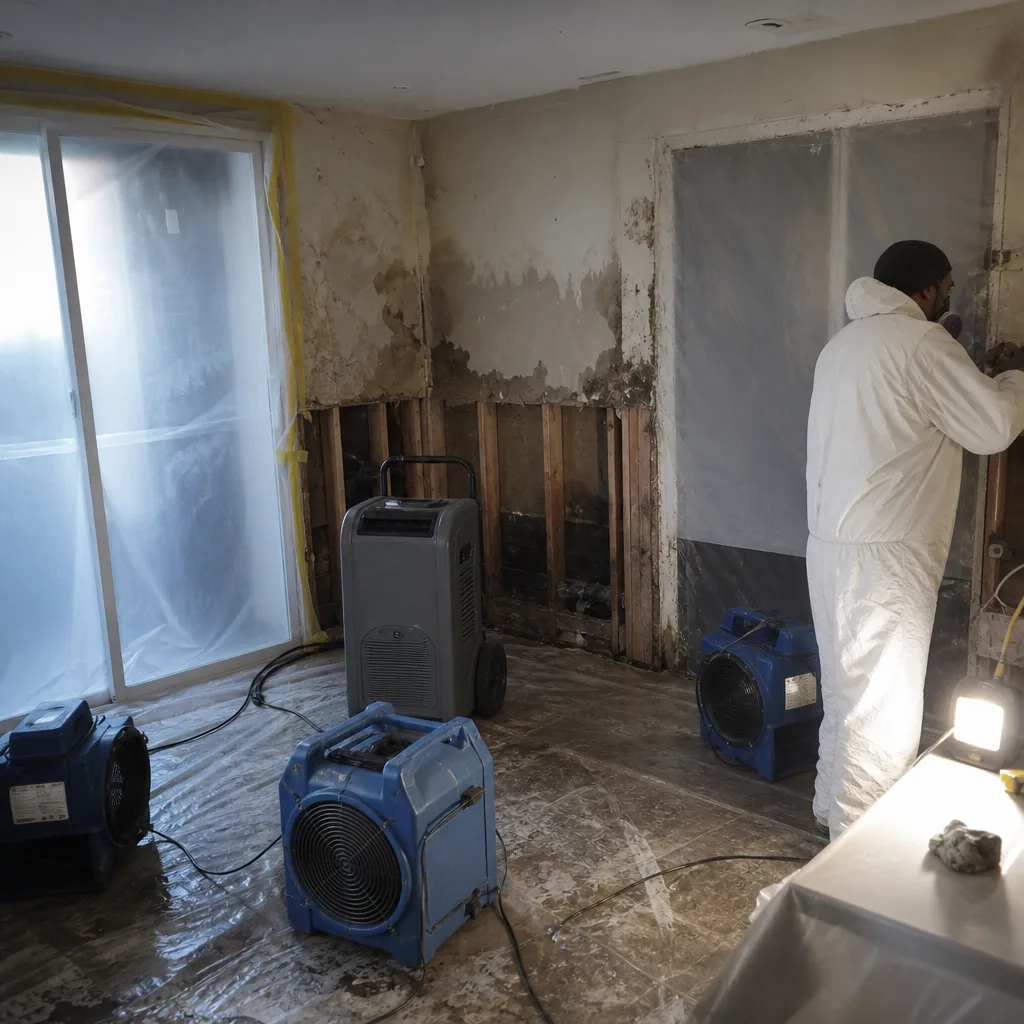 Before
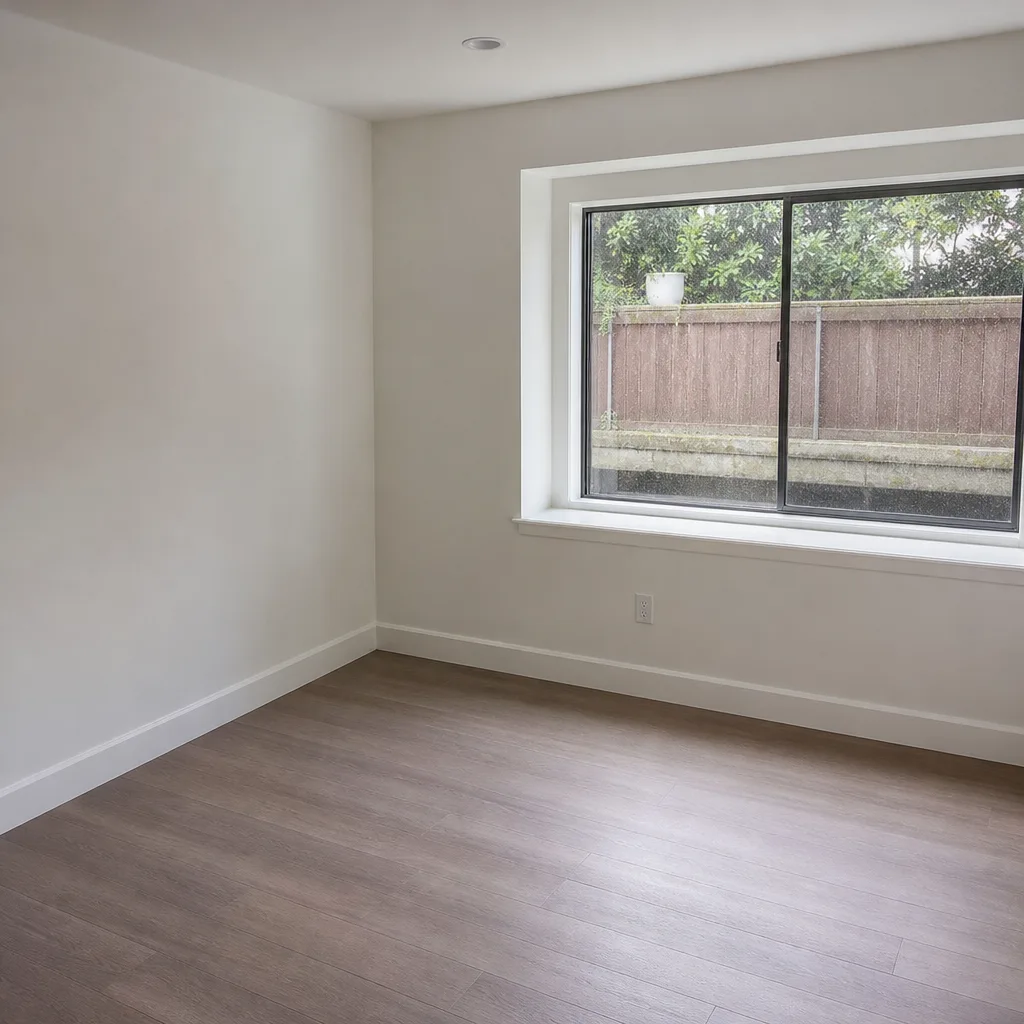 After