
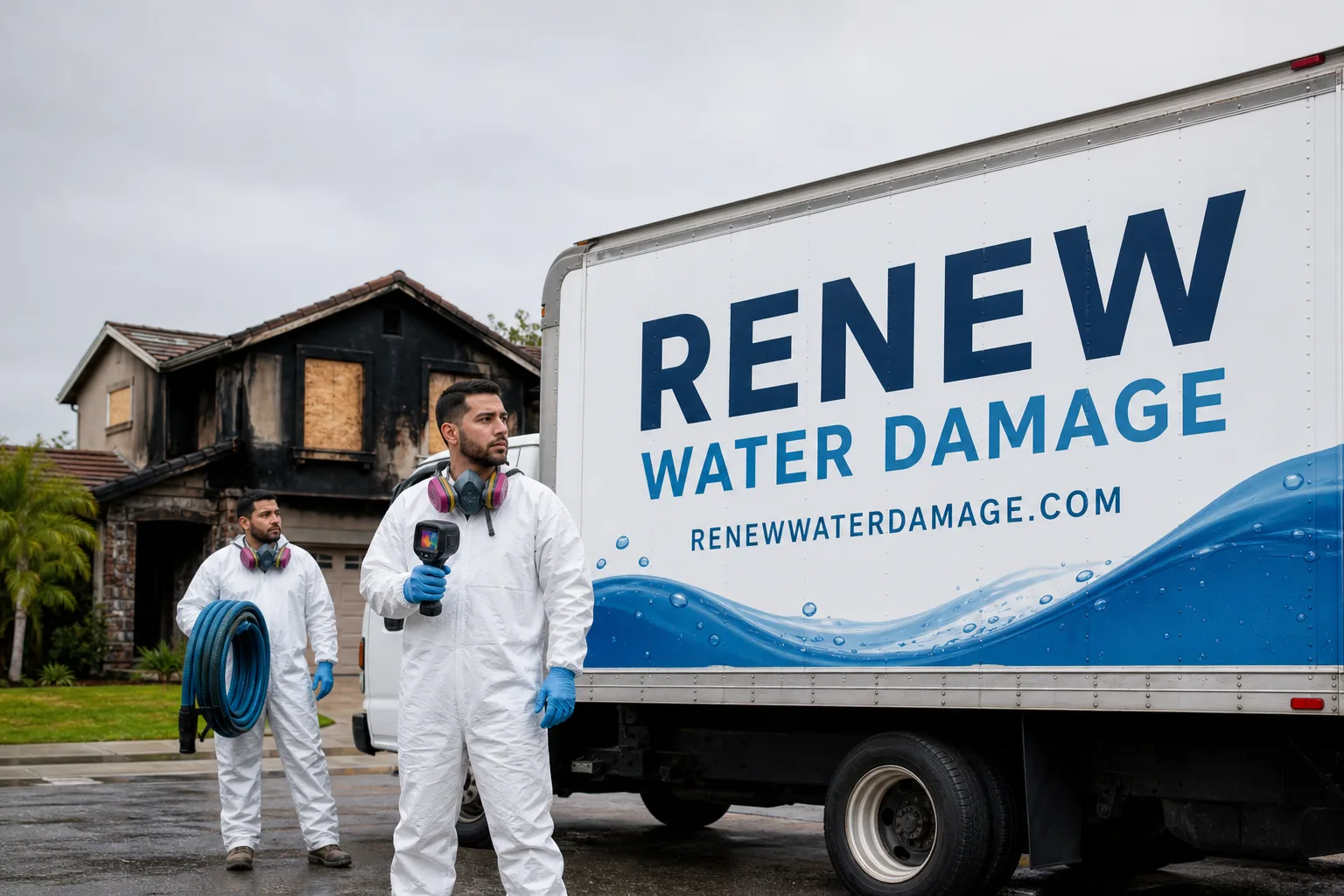
 Water damage drying
 Fire & smoke cleanup
 Mold remediation
 Storm response
 Sewage cleanup
 Reconstruction
Free visual inspection and a written scope of work before any mitigation begins - photos, moisture readings, and drying logs go in your claim file
The scope we write is the scope we bill. Anything new gets shown to you, in writing, before we touch it.
Get your free estimateFast, Reliable Water Damage Restoration Across Stanton
Water damage restoration in Stanton typically runs $1,800 to $6,500 depending on how far the water traveled and how long it sat before extraction began. Most Stanton jobs we handle are fully extracted and dried within 3 to 5 days. If you’re standing in a puddle off Beach Boulevard or watching a ceiling bubble on Katella Avenue right now, call (833) 620-3891. Our IICRC-certified crews reach Stanton within the hour most days, and we bring commercial-grade drying equipment on every truck, not just a shop vac and a fan.
Stanton’s housing stock creates water damage scenarios you won’t find in Cypress or Westminster. The 1950s and 1960s slab-on-grade tract homes concentrated along Orangewood, Katella, and the streets feeding into Beach Blvd sit on concrete slabs with original galvanized supply lines running underneath. When those pipes fail, water doesn’t pool visibly. It wicks up through the slab, into flooring, baseboards, and wall cavities. By the time you see the damage, it’s been spreading for days or weeks. That’s why our approach in Stanton starts with moisture mapping, not line-of-sight guessing.
Noel Carbajal leads our restoration team, and the standards we work to come from the IICRC S500 water damage restoration protocol, the same reference used by insurance carriers and commercial loss consultants. We’re not a generalist handyman service that also dries things. This is all we do.
Why Renew Water Damage Is Stanton’s Preferred Water Damage Restoration Company
Stanton is a small, tight-knit city. Our reputation here gets passed between neighbors. We’ve worked slab leaks on Orangewood, storm-driven roof intrusions near the 90680 corridor, and commercial water losses along Beach Blvd strip retail. Homeowners here know the difference between a contractor that shows up with a wet vac and a restoration team that sets up containment, logs moisture readings, and hands you documentation for your adjuster.
Our IICRC-certified technicians train to the S500 standard for water restoration and the S520 standard for mold contamination that follows water intrusion. Certification matters because Stanton’s homes hide damage in places you can’t see. Galvanized pipes embedded in concrete don’t announce themselves when they start pinhole leaking. Moisture mapping with penetrating and non-penetrating meters finds what eyes can’t.
Response time to Stanton from our Orange County base runs 45 to 75 minutes during normal conditions. That matters when a supply line bursts at 2 a.m. and water is running through a 1958 living room while you wait for someone to answer the phone. We answer. Direct line, no national call center. (833) 620-3891 connects you to dispatch, not a menu tree.
Restoration work we handle
Water Extraction in Stanton
Water extraction in Stanton homes usually costs $1,200 to $3,800 as a standalone phase, depending on square footage affected, flooring type, and whether water has penetrated wall cavities. The goal is removing standing water before it migrates further. In Stanton’s slab-on-grade tract homes, extraction isn’t just about carpets. Water runs along the slab, under base plates, into adjoining rooms you thought were dry.
We use truck-mounted and portable extraction systems matched to the situation. A single-story 1,200-square-foot tract home with water in the hallway, living room, and one bedroom takes our crews roughly 2 to 4 hours to extract thoroughly. That includes lifting saturated carpet, extracting the pad, and pulling water from hard surfaces before drying equipment even gets set up.
Slab Leak Extraction on Concrete Foundations
Stanton’s slab-on-grade homes mean water from a slab leak doesn’t have a crawlspace to drain into. It sits against the concrete and migrates upward through flooring adhesive, engineered wood, tile grout, and drywall. Our crews use weighted extraction systems on hard surfaces and subsurface water removal techniques to pull trapped moisture before it delaminates flooring or wicks into framing.
Cross-Property Extraction Scenarios
Stanton’s dense post-war tract layout and older Beach Blvd strip retail buildings share utility trenches and wall lines in some cases. A leak in a commercial unit can travel into adjacent residential space. We’ve handled extractions where the source property was one address and the affected property another. Coordination with both owners, containment on both sides, and documentation for two insurance claims isn’t something every restoration company is set up to do. We are.
Emergency Water Removal in Stanton
Emergency water removal in Stanton runs $900 to $3,500 for the initial response and extraction phase, before structural drying begins. This covers the call-out, containment, standing water removal, and moisture mapping to establish the affected zone. When a supply line bursts in a Stanton home, the clock starts immediately. Galvanized or copper lines under 1950s slabs fail suddenly, and within 30 minutes water has moved through hundreds of square feet.
Our crews reach Stanton neighborhoods including the areas around Katella Avenue, Orangewood Avenue, and the residential blocks east of Beach Blvd within an hour in most cases. We carry extraction equipment, air movers, and dehumidifiers on the truck so the first visit is also the start of drying. Nobody wants to watch a crew show up, look around, and say they’ll be back tomorrow with equipment. Our trucks roll stocked.
Hidden Water and Secondary Damage Control
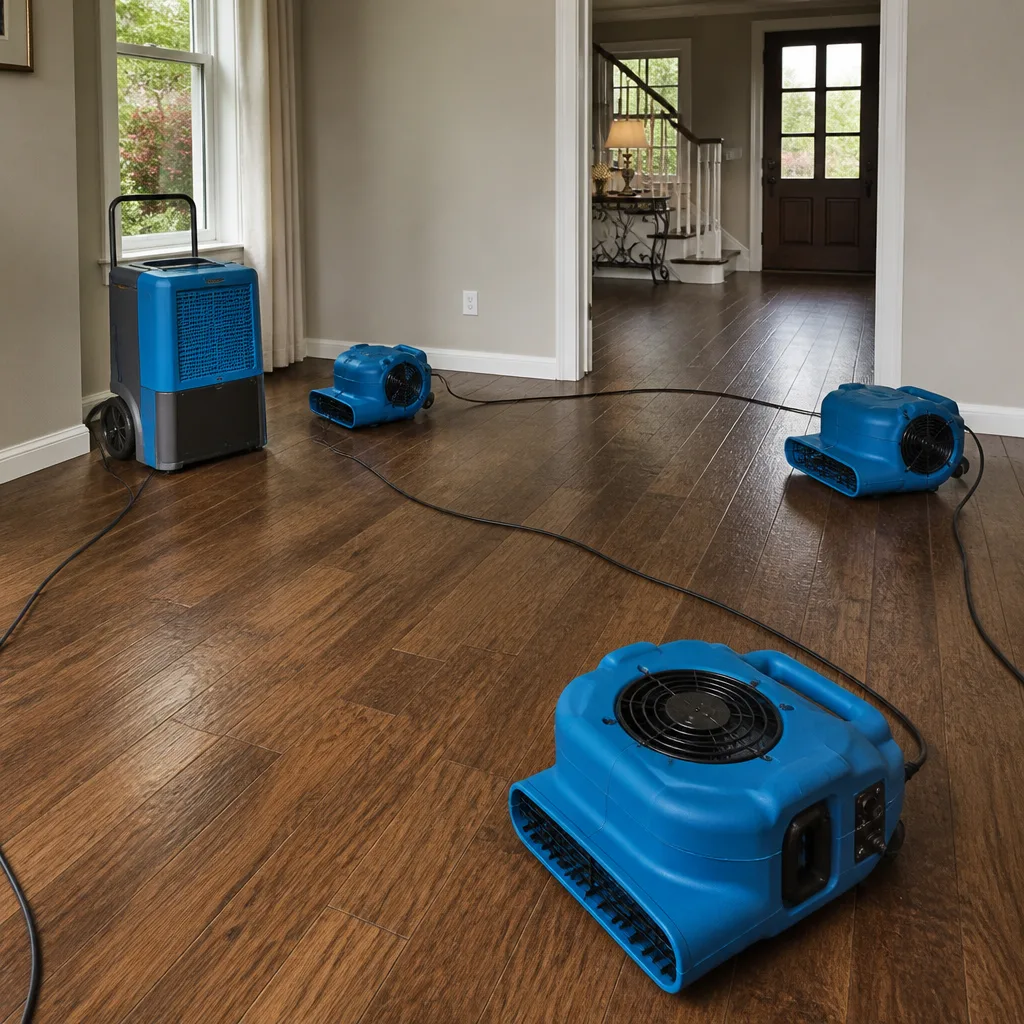
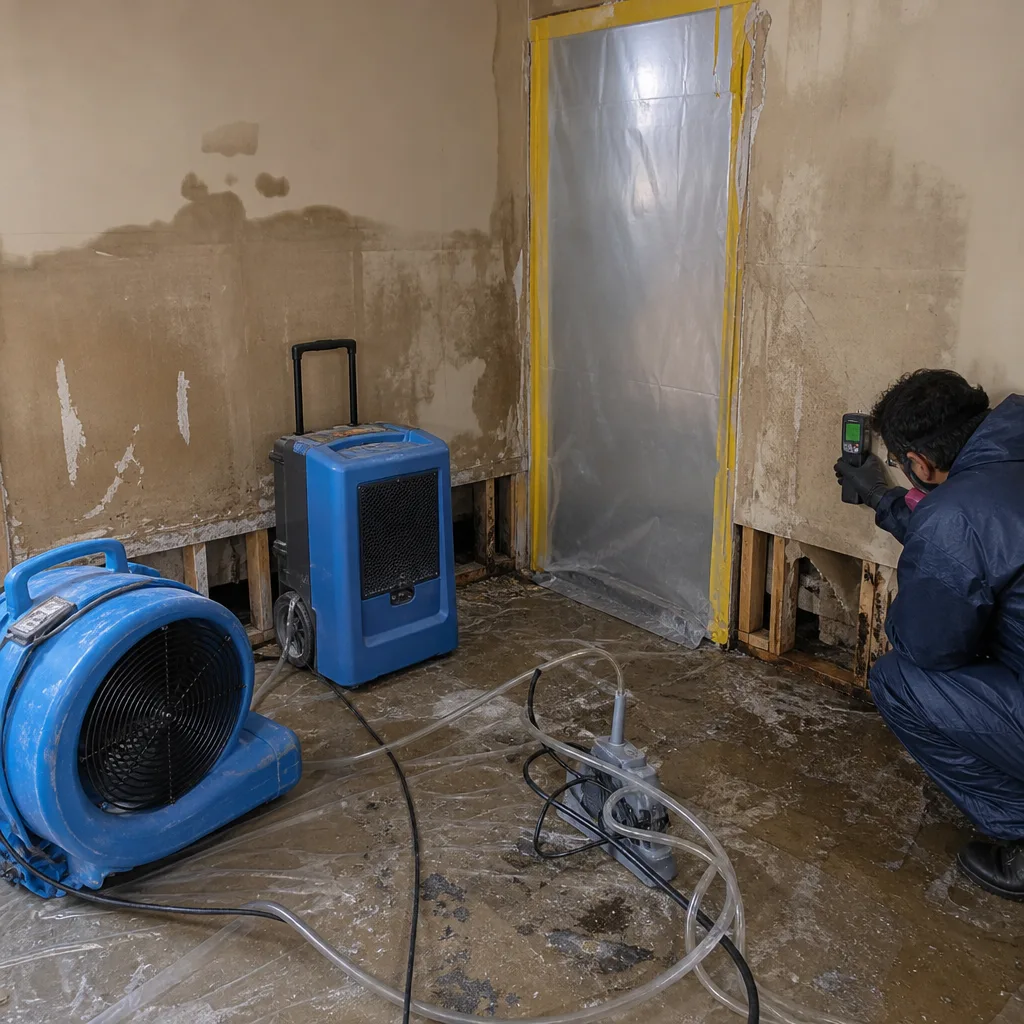
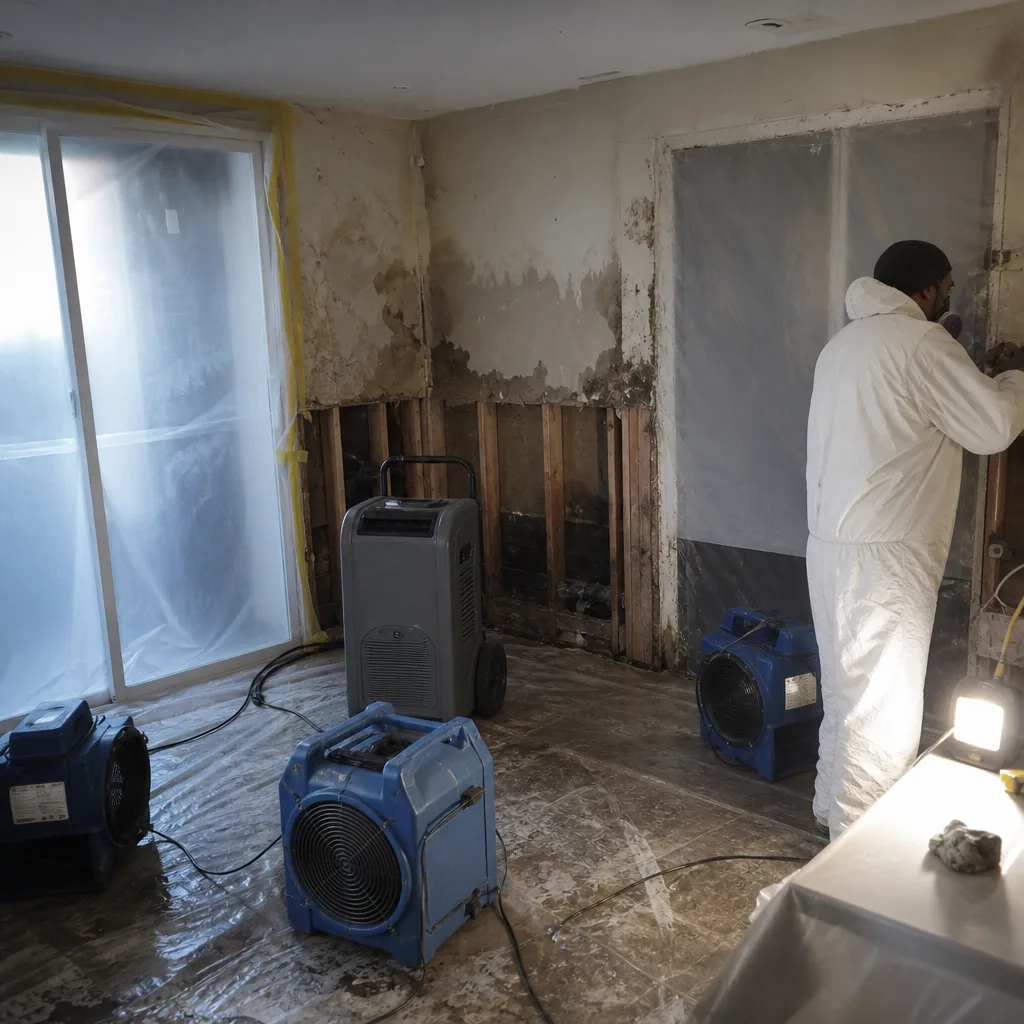
The water you can’t see is what keeps us on site. Stanton’s humid coastal-adjacent air combined with water trapped in wall cavities can push relative humidity into the 70s and 80s inside a wet structure. That’s mold territory in 24 to 48 hours, not weeks. We set commercial dehumidifiers, including Dri-Eaz and Phoenix units, to pull the structure down to dry standards before microbial growth can take hold.
Documentation for Insurance from the First Hour
We photograph everything before, during, and after extraction. Moisture readings get logged in writing. Your adjuster gets a clear record of what we found and what we did. Noel Carbajal’s approach is simple: document the loss accurately so the claim isn’t a fight. Stanton homeowners regularly tell us their adjuster commented on the completeness of our logs. That’s not luck.
Trusted Brands We Service in Stanton
Stanton homes built in the 1950s and 1960s don’t use modern piping materials. Most have original galvanized steel supply lines, some with sections of copper that were patched in over the decades. We service all of it. Galvanized pinholes, copper pitting from Stanton’s moderately hard water, failed angle stops, corroded stub-outs, and the damage each of these leaves behind. Our team also handles water damage originating from appliance failures: washing machine supply lines, water heater ruptures, and refrigerator ice maker lines, all common in older Stanton kitchens and utility closets. We stock the restoration materials needed for fast mitigation on 1950s construction details like plaster walls, oak strip flooring, and original wood subfloors that newer crews don’t always know how to dry properly. The brands we run include commercial dehumidifiers and air movers from Dri-Eaz and Phoenix, the same units used on large commercial losses, deployed on Stanton residential jobs because that’s the standard we hold ourselves to.
Common Water Damage Restoration Problems We See in Stanton Homes
- Slab leaks from original galvanized pipes. Stanton’s 1950s homes have iron and galvanized supply lines embedded in concrete. Moderately hard water eats at the pipe walls from the inside, pinholes form, and water seeps through the slab for weeks before anyone notices. The first sign is usually warped flooring or a musty smell, not visible water.
- Storm-driven roof leaks during winter rain events. Stanton’s typical weather is dry, so when heavy rain does come, aging roof flashings, old gutters, and original underlayment get overwhelmed fast. Water enters at the roofline and migrates down wall cavities, soaking insulation and drywall before you see a ceiling stain.
- Cross-property water migration along Beach Blvd commercial corridors. Older strip retail buildings share walls or utility trenches with adjacent structures. A slab leak or supply line failure in one unit sends water under shared walls into neighboring spaces, residential or commercial. Containment and documentation have to account for multiple property owners.
- Washing machine and water heater failures in original utility spaces. The indoor utility closets and laundry alcoves built into 1950s tract floor plans put a lot of water in a small space. When a supply hose bursts or a water heater tank splits, the damage is concentrated but deep, with water running along the slab into bedrooms and hallways.
See the difference
 Before
 After
 Before
 After
 Before
 After
Pricing for Water Damage Restoration in Stanton, CA
You need straight numbers, so here they are. Structural drying and dehumidification in Stanton runs $1,400 to $4,200, covering air movers, dehumidifiers, daily monitoring, and drying logs until materials reach dry standard. Full rehabilitation including drywall removal, antimicrobial treatment, reinstallation, and finish can add $2,500 to $12,000 depending on the floor plan and materials involved. Wood flooring replacement in a typical Stanton tract home living room and hallway adds $1,800 to $5,000. The size of the affected area, the water category, and how long the water sat before we arrived are what move the final number. We provide a written scope of work with line-item pricing before any non-emergency work starts. Call (833) 620-3891 for a free estimate, no charge for walking the loss in Stanton.
We Also Serve Cities Near Stanton
Our Water Damage Restoration team works throughout northwest Orange County from our base in Orange, CA. Along with Stanton, we handle emergency water extraction, structural drying, and full restoration in Garden Grove, Cypress, Westminster, and Midway City. Neighbors refer us across city lines because the equipment, certifications, and documentation standards don’t drop when we cross Beach Blvd.
Serving Stanton, CA — Our Local Coverage Area
We’re based in the Stanton area and know this community well. Use the map below to see our service coverage — if you’re nearby, we can almost certainly help.
FAQs About Water Damage Restoration in Stanton
Stanton’s water supply carries moderate mineral content that accelerates internal corrosion in original galvanized and copper supply pipes. Over 60-plus years, the inside of a galvanized pipe narrows and develops pinhole leaks, especially at joints and under concrete slabs. Those leaks go unnoticed because the slab absorbs and disperses the water. By the time Stanton homeowners see warped baseboards or buckled flooring, the leak has often been active for weeks. Call (833) 620-3891 for moisture mapping and a precise diagnosis, free of charge.
Yes. Older Beach Blvd commercial buildings in Stanton sometimes share walls, utility trenches, or are built close enough to residential structures that water migrates underground or through shared wall assemblies. A slab leak under a retail unit can push water toward an adjacent home, complicating containment and requiring coordinated mitigation across two properties and potentially two insurance claims. We’ve handled those exact situations in Stanton. Our documentation identifies the source property and affected property separately, which adjusters need.
Most storm-driven roof leaks in Stanton start as Category 1 water, meaning it originated from rain before contacting building materials. Once that water runs through old roof decking, insulation, and wall cavities, it picks up contaminants and degrades to Category 2 quickly. If the roof leak has been ongoing, or if it sat in a warm wall cavity for more than 48 hours, we treat it as a potential Category 3 situation and adjust containment and antimicrobial protocols accordingly. Our crews classify the water on arrival and document the category in the drying log.
Mold can begin colonizing wet drywall, baseboard, and insulation within 24 to 48 hours when temperatures and humidity support it. Stanton’s relatively warm, dry climate actually works against you here because a wet interior dries slowly on its own when exterior air is dry but interior cavities stay damp. Without commercial dehumidification, a wall cavity can stay wet for weeks. We set Phoenix and Dri-Eaz dehumidifiers to pull the structure down to drying standard, then verify with penetrating moisture meters. That’s how we prevent mold rather than chasing it later.
Yes, every water damage job we run in Stanton comes with a complete drying log: initial moisture readings, daily readings during drying, equipment inventory, humidity and temperature readings, and final verification measurements once the structure reaches dry standard. We photograph everything and provide the file to your adjuster on request. If you need pre-loss condition documentation, we can help with that as well. Call (833) 620-3891 to talk through your claim before work starts.
Get Help Now
If you’re in Stanton and water is rising, spreading, or hiding behind a wall you can’t see, call (833) 620-3891. Our crews reach Stanton fast, with IICRC-certified technicians, commercial drying equipment, and a written scope before any big work starts. You don’t have to manage the water, the damage, and the insurance claim alone. That’s what we’re here for.
Written by Noel Carbajal, Owner at Renew Water Damage, serving Stanton, CA.