
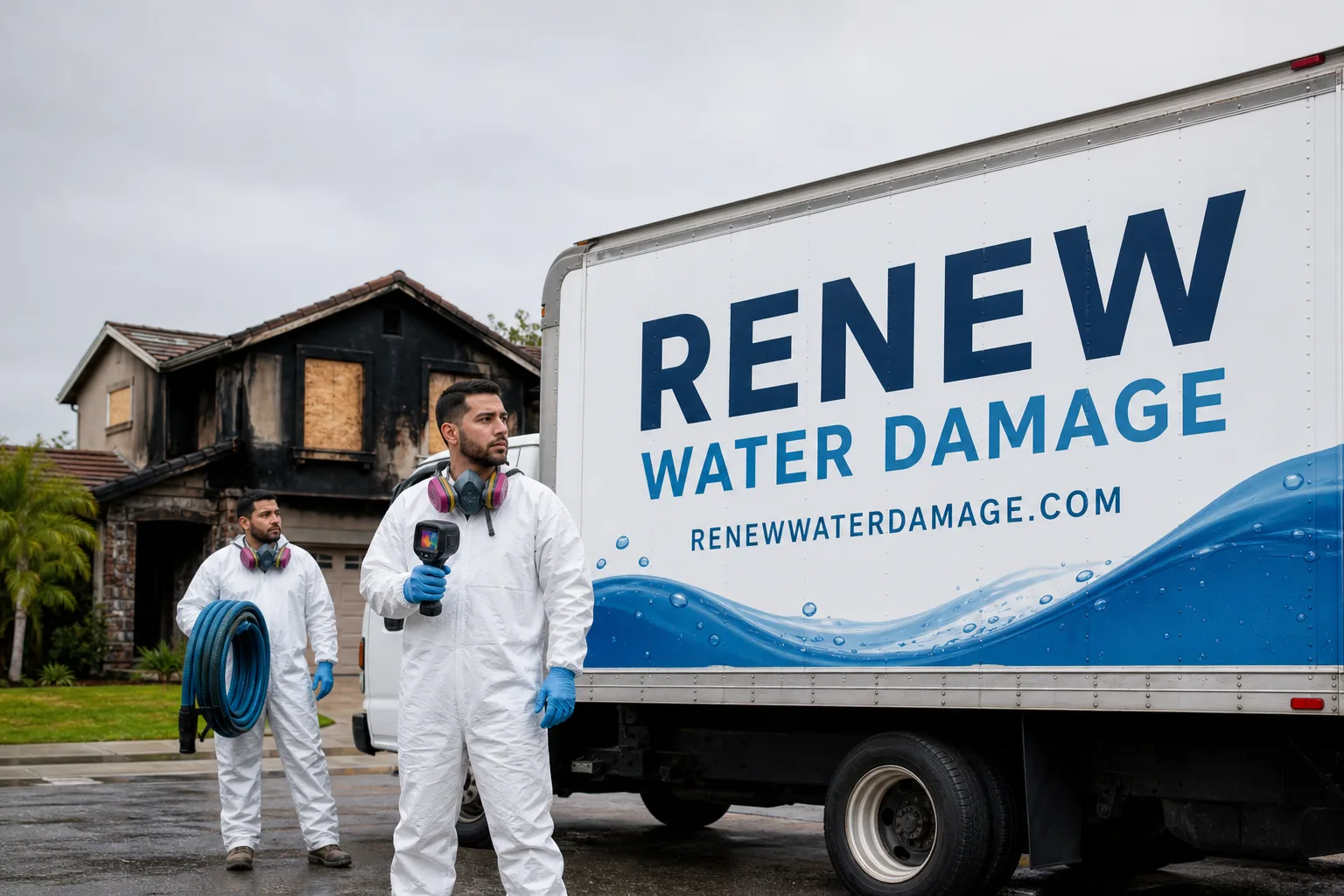
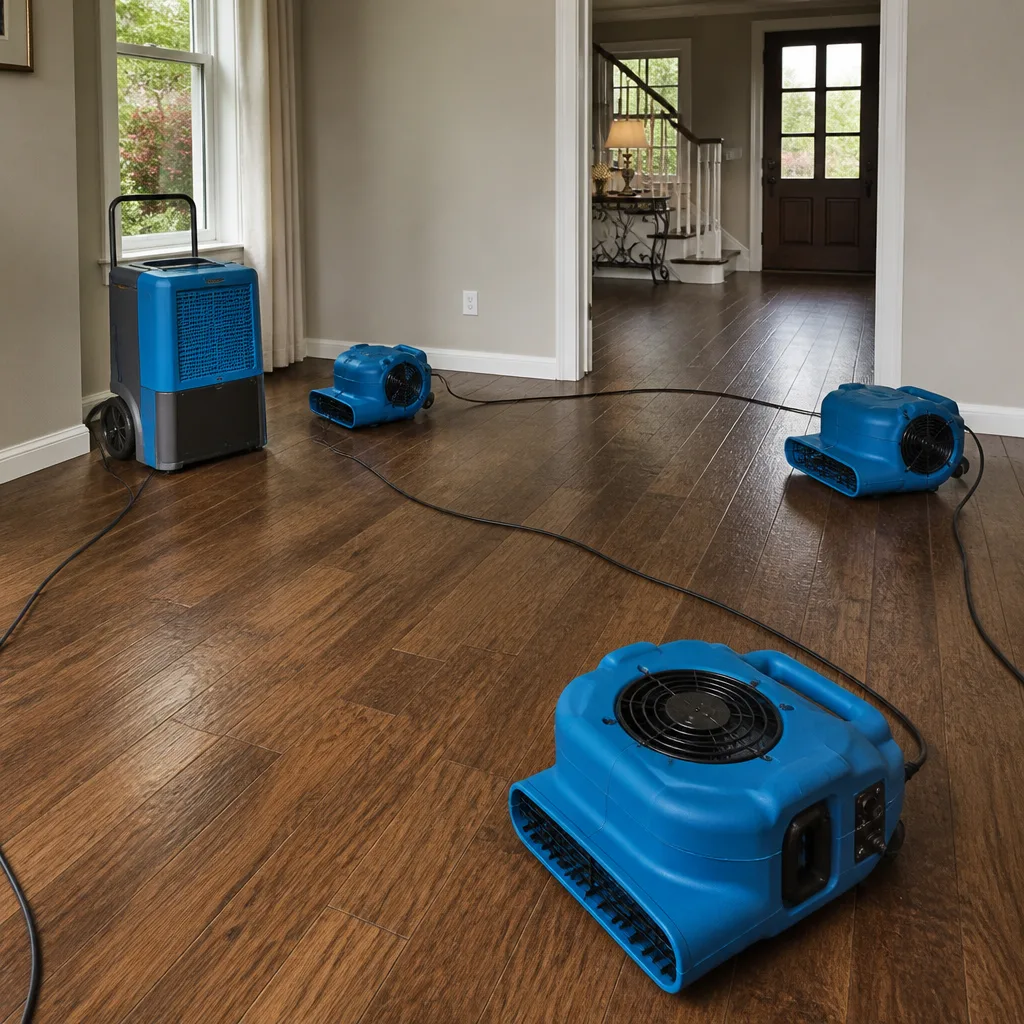
 Water damage drying
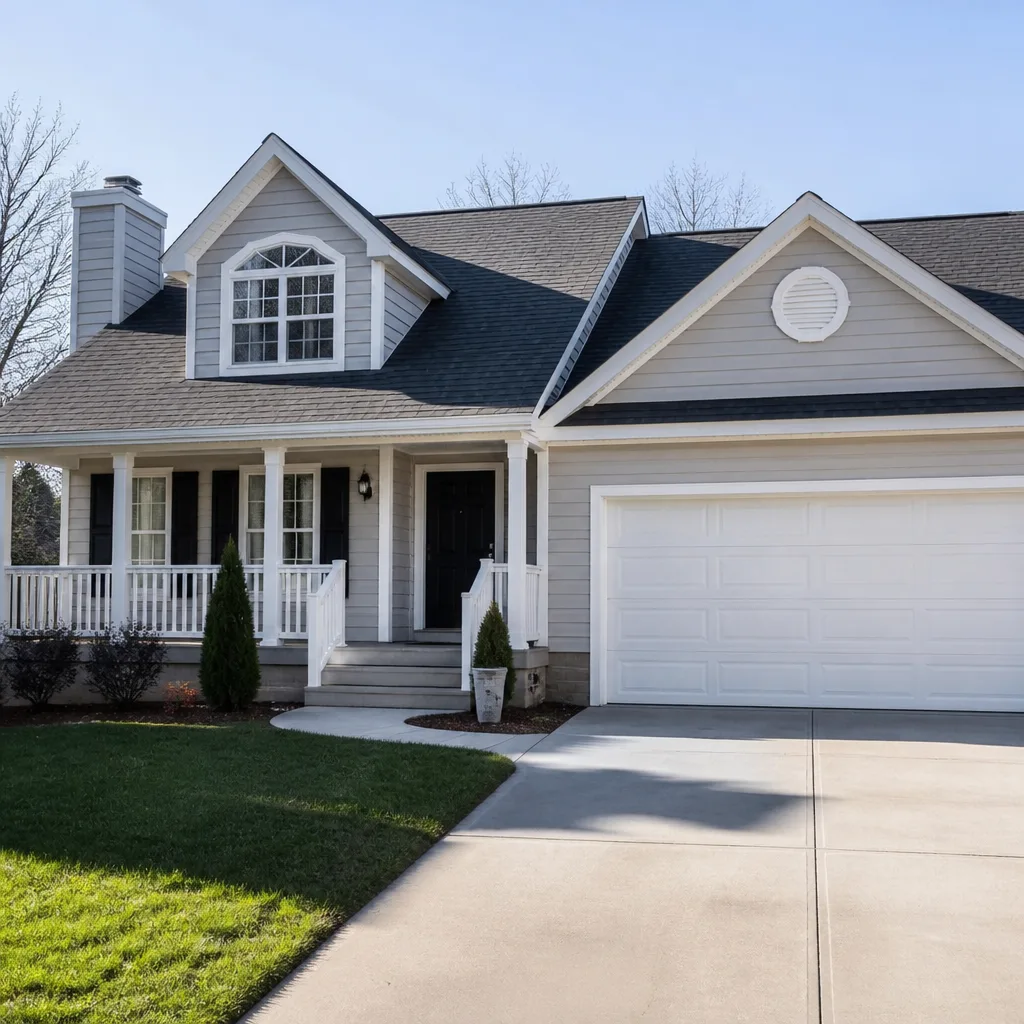 Fire & smoke cleanup
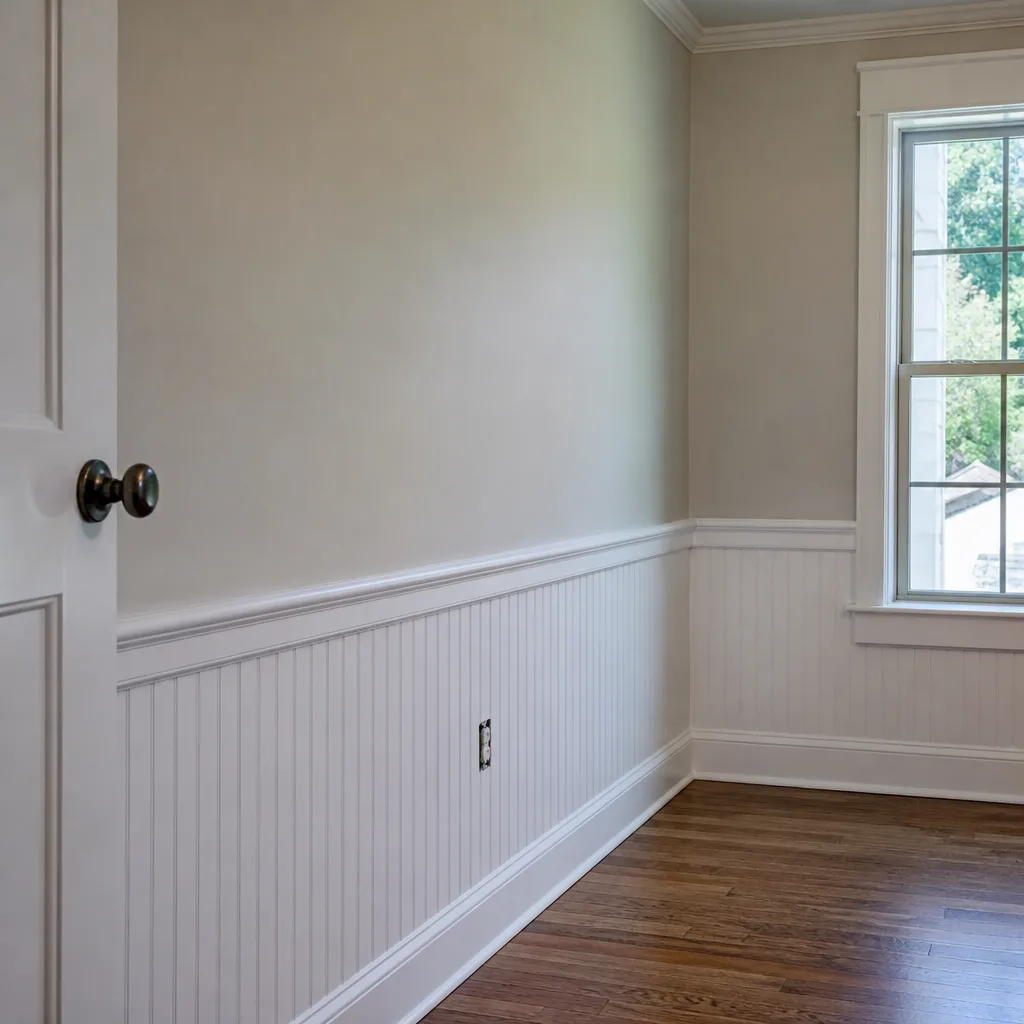 Mold remediation
 Storm response
 Sewage cleanup
 Reconstruction
Free visual inspection and a written scope of work before any mitigation begins - photos, moisture readings, and drying logs go in your claim file
The scope we write is the scope we bill. Anything new gets shown to you, in writing, before we touch it.
Get your free estimateFast, Reliable Water Damage Restoration Across Aliso Viejo
Water damage restoration in Aliso Viejo typically runs $1,200 – $4,800 for a standard residential loss, with emergency extraction alone between $400 – $900 and full structural drying adding $800 – $2,400 depending on square footage and how far moisture has traveled through framing. Most jobs on these hillside tracts require 3 – 5 days of active drying equipment before rebuild can start. If you’ve got water moving through walls, ceilings, or across a slab right now, call (833) 620-3891. Our IICRC-certified crews know the Aliso Viejo building stock well because it’s almost all from one era, and that changes how we find and trace the water.
Why Renew Water Damage Is Aliso Viejo’s Preferred Water Damage Restoration Company
We’ve spent years working the single-era tract housing south of the 73 and along the 133 corridor, so when we pull up to an attached townhome in 92656 or a stucco tract house in 92698, we’re not guessing where the water went. We know the rooflines, the shared-wall assemblies, and the slope dynamics. Our crews have handled hundreds of losses on these Mediterranean-style stucco-and-tile homes that were all built from the late 1980s through the 2000s, which means we’ve seen the same failure patterns repeated enough to diagnose them fast. That speed matters when category 1 water is turning into category 2 or 3 as it crosses HOA common areas and saturates a neighbor’s framing.
Noel Carbajal built Renew Water Damage around a simple position: restoration is a discipline, not an add-on. Our technicians hold IICRC certification and our methods align with IICRC S500, S520, and S700 standards. We’re members of the Restoration Industry Association and the IFA, which keeps us accountable to ongoing professional standards beyond the initial credential. Aliso Viejo homeowners and property managers consistently tell us the same thing: they wanted a crew that could document the loss, separate unit damage from HOA-owned slope and roof problems, and dry the structure without tearing out everything in sight. That’s the work we do daily.
Restoration work we handle
Water Mitigation in Aliso Viejo
Water Mitigation in Aliso Viejo almost always starts with a question of where the water started versus where it has ended up, because on these sloped, shared-wall tracts the two are rarely the same. The job involves extraction first, then structural drying with commercial equipment, plus documentation of every step so the scope of work can be separated between a homeowner’s policy and an HOA’s common-area coverage. You need mitigation the moment you see or suspect water inside a wall cavity, under baseboards, or staining a ceiling in a shared building, because moisture trapped in Aliso Viejo’s wood-frame stucco assemblies feeds mold and weakens sheathing within 48 – 72 hours. Most mitigation jobs here run $1,200 – $3,800 depending on how many units and wall assemblies are involved.
Tracing the Loss Before Drying
Because Aliso Viejo’s hillside tracts were built on shared, HOA-owned slopes from the late 1980s through the 2000s, a single failed roof or stucco crack on an upslope unit can migrate along sloped lots and shared walls into neighboring condos. So our first task is often tracing the loss across property lines and multiple HOA policies before any drying equipment goes in. Moisture mapping with thermal imaging and penetrating meters tells us how far the water traveled, and that data becomes the foundation for a defensible scope of work.
Wall-Cavity Drying Without Unnecessary Demo
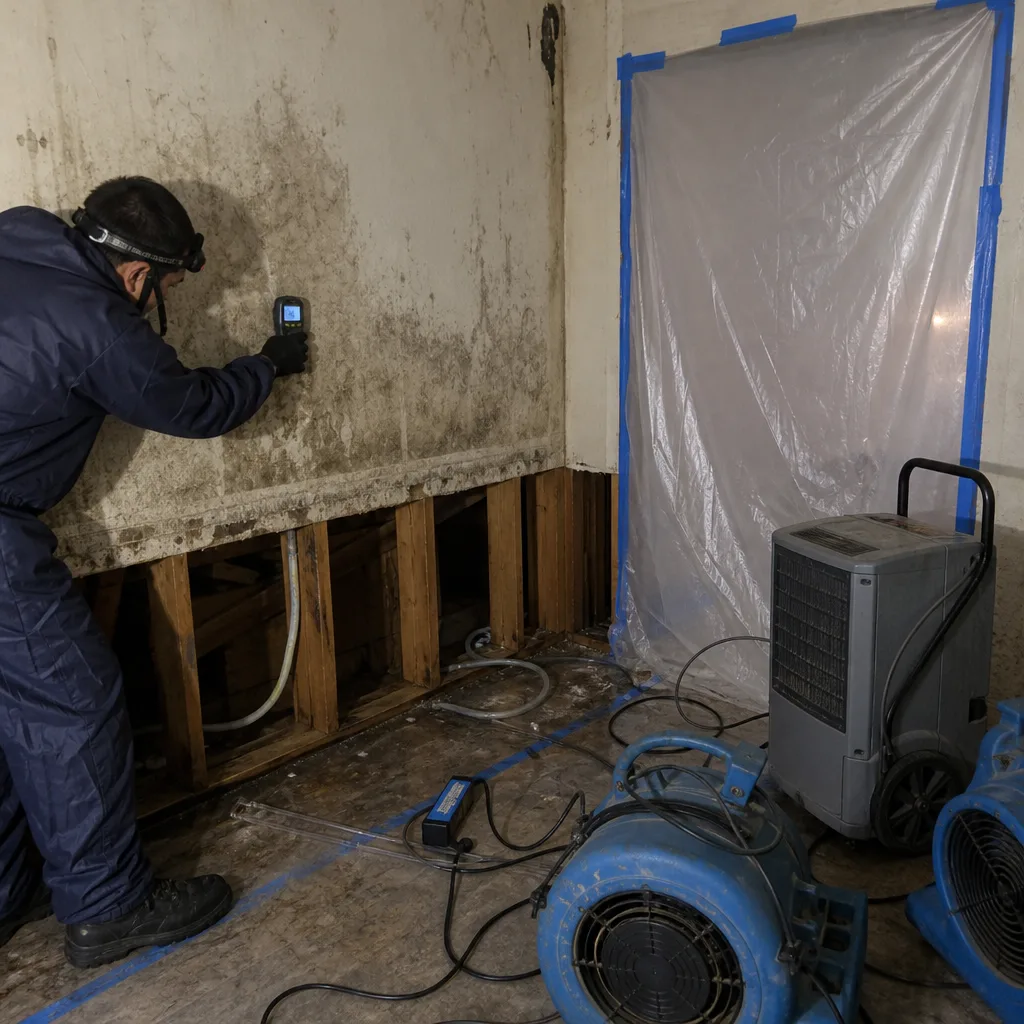
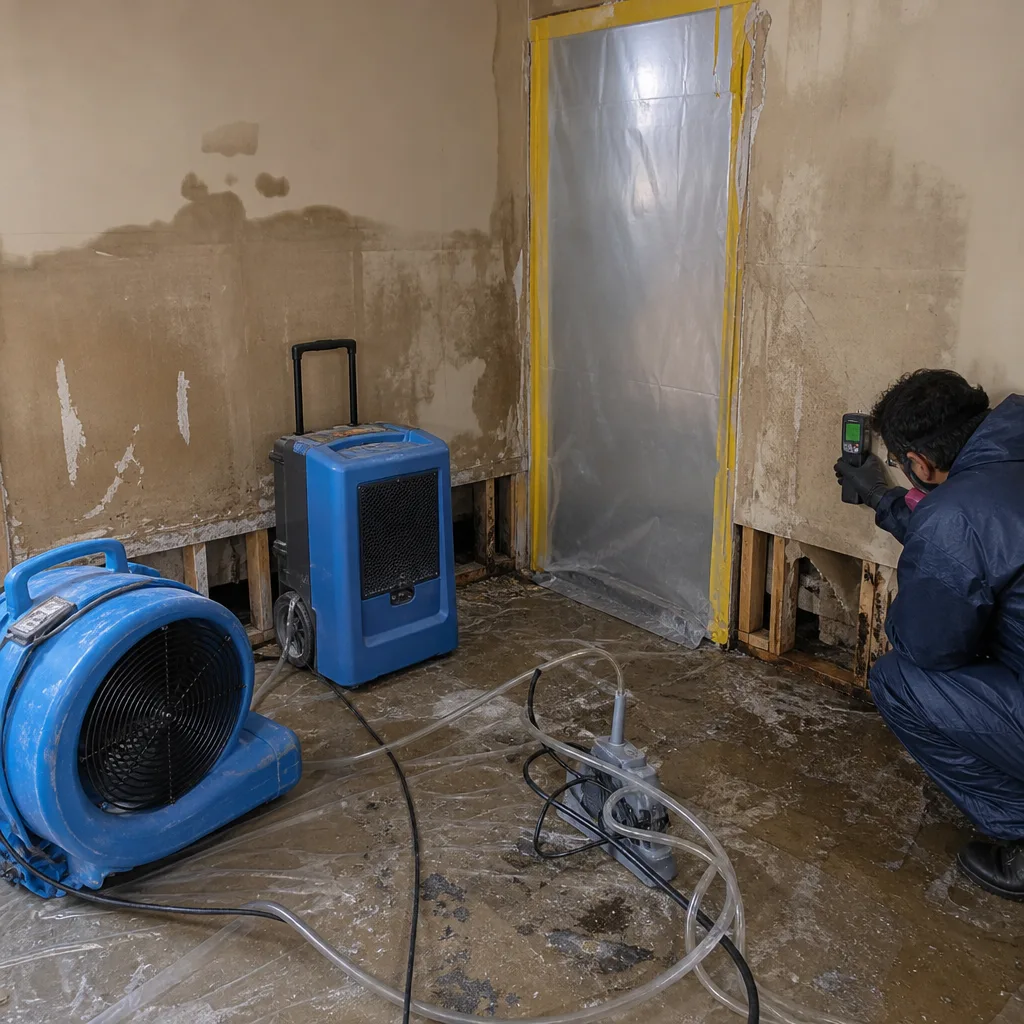
We run Injectidry panel drying systems on shared-wall losses to pull moisture from inside wall and subfloor cavities without cutting open every affected surface. Paired with Dri-Eaz dehumidifiers and XPOWER air movers, this approach stabilizes the assembly and often lets us keep original finishes in place. That reduces repair costs and gets Aliso Viejo units back to pre-loss condition faster.
Flooded Basement in Aliso Viejo
A Flooded Basement in Aliso Viejo is less common than in older Orange County cities, but when it happens on these hillside lots, it’s usually stormwater or a slab leak, not a traditional below-grade basement. Many lower-level rooms in these tract homes are partial basements or walk-out daylight spaces cut into slopes, and water collects there after intense atmospheric-river storms push runoff against foundations and window wells. Extraction on a flooded lower level typically runs $600 – $1,400, with drying and dehumidification adding $700 – $2,000 depending on how much framing and drywall soaked. Shared-wall units complicate the math, so we inspect the adjacent unit before quoting.
Slope and Runoff Considerations
Aliso Viejo sits on dry, rolling coastal foothills where multi-year drought is punctuated by intense atmospheric-river storms, and the biggest restoration driver we see is storm-and-water intrusion rather than earthquakes or heat. Wind-driven rain forces through stucco cracks and roof-wall junctions long before a stain shows inside. On the hillside tracts, water from a single failed roof section can travel along sloped lots and behind shared walls into multiple units before anyone notices.
Shared-Wall Drying and Containment
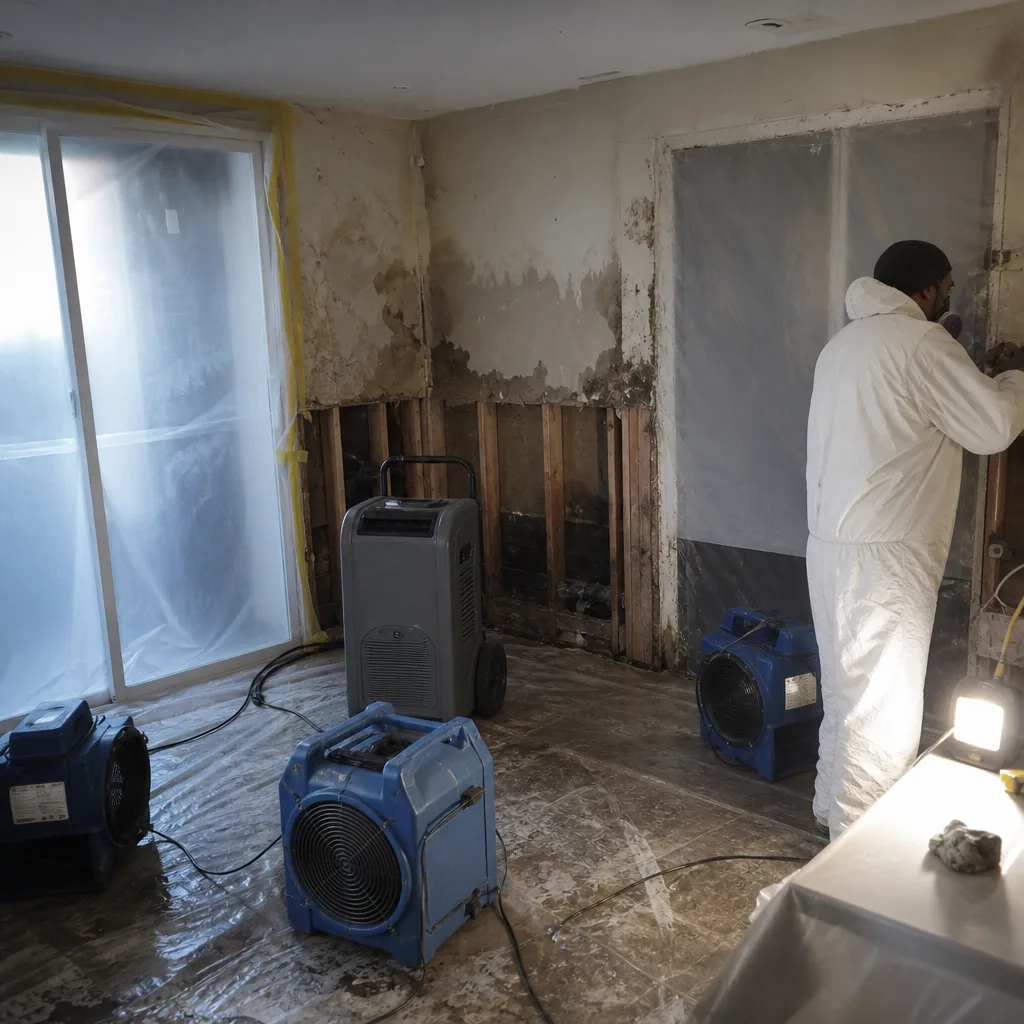
On attached townhomes and condos, we set containment on both sides of a shared wall before starting structural drying. That protects the unaffected neighbor’s space and isolates airflow so the dehumidifiers work efficiently. The dried assembly is then monitored with daily moisture readings, and we hand the property owner a drying log at the end, not just a verbal summary.
Trusted Brands We Service in Aliso Viejo
We work on the original-era plumbing fixtures and stucco-and-tile assemblies that dominate Aliso Viejo’s late-1980s-to-2000s housing stock, and we run the equipment brands property managers in 92656 and 92698 recognize: Dri-Eaz and Phoenix dehumidifiers, XPOWER air movers, and Injectidry cavity-drying systems. That matters because when an HOA board or an adjuster wants to know what equipment was used, we hand them model-level documentation. We keep local parts and materials access points mapped across south Orange County, which helps us get Aliso Viejo jobs dried and through the paperwork without unnecessary delays.
See the difference
 Before
 After
 Before
 After
 Before
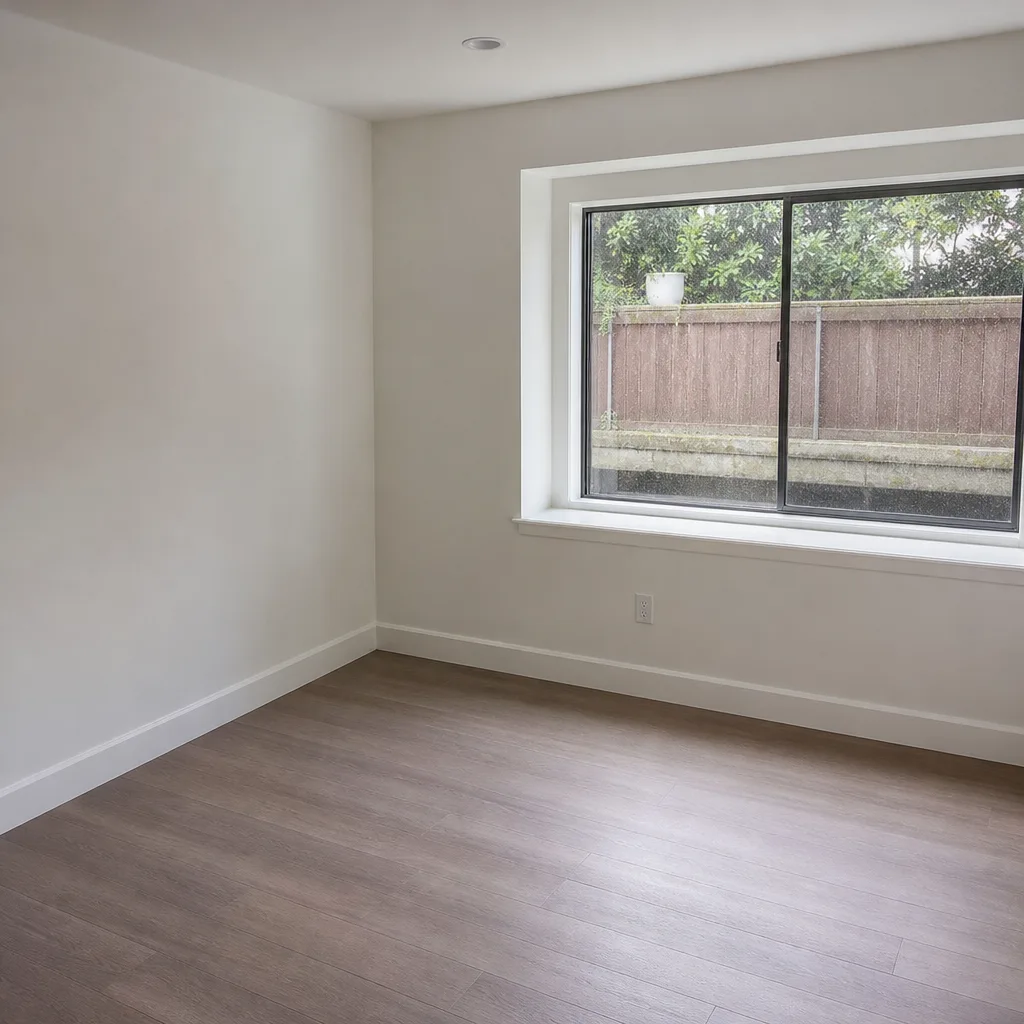 After
Common Water Damage Restoration Problems We See in Aliso Viejo Homes
- Wall-roof junction leaks on Mediterranean-style stucco and tile. The late-80s-to-2000s tracts shed wind-driven rain poorly at these junctions, and water enters the wood frame behind the stucco long before a stain appears on the interior ceiling. By the time you see it, the sheathing has often been wet for weeks.
- Sloped, shared-wall layouts turning a unit loss into a multi-unit loss. Category 1 water from a clean supply line quickly becomes category 2 or 3 as it crosses HOA common areas, picks up contaminants, and saturates adjacent units’ framing. We trace the migration path and document it before drying.
- Original-era plumbing failing behind shared walls. Densely clustered condos from this building era run original copper supply lines and cast-iron drains in chases behind shared walls, so leaks surface in a neighboring unit and complicate HOA liability tracking. The visible damage is often not where the pipe failed.
- HOA policy overlap on roof, slope, and drainage losses. We regularly see water originating in an HOA-owned roof or slope drain that damages an individual unit’s interior. The remediation scope has to separate common-area liability from unit-owner liability, or the owner gets stuck with the wrong bill.
Pricing for Water Damage Restoration in Aliso Viejo, CA
Aliso Viejo pricing runs slightly above county averages because of the HOA documentation overhead and multi-unit coordination these hillside tracts require. Expect emergency water extraction at $400 – $900 for a single-unit response, full structural drying at $800 – $2,400 for standard square footage, and wall-cavity drying with Injectidry systems at $1,200 – $3,800 when shared walls and subfloors are involved. A multi-unit, multi-policy loss where water crossed into a neighboring condo typically lands between $4,000 – $9,000 once documentation, extraction, drying, and minimal rebuild are accounted for. We don’t pad scopes, and we hand owners a written scope of work before equipment goes in so adjusters can see exactly what was necessary. Estimates are free. Call (833) 620-3891 and we’ll give you a straight number.
We Also Serve Cities Near Aliso Viejo
Our crews cover the south Orange County corridor beyond Aliso Viejo’s 92656 and 92698 zip codes, including Laguna Woods, San Joaquin Hills, Laguna Hills, and Irvine. If your property sits anywhere in that stretch, the same certified team responds. For details on our full water damage restoration process, see our Water Damage Restoration service page, or read more about how we serve this area specifically on our Water Damage Restoration in Aliso Viejo page.
Serving Aliso Viejo, CA — Our Local Coverage Area
We’re based in the Aliso Viejo area and know this community well. Use the map below to see our service coverage — if you’re nearby, we can almost certainly help.
FAQs About Water Damage Restoration in Aliso Viejo
Aliso Viejo’s hillside tracts were built with shared, HOA-owned slopes and attached walls, so water from a single failed roof or stucco crack on an upslope unit migrates downhill and through shared wall assemblies into neighboring condos. That means a technician has to trace the loss across property lines and determine where HOA common-area liability ends and unit-owner liability begins, often before any drying equipment goes in. Call (833) 620-3891 if a neighboring unit or HOA common area is involved, and we’ll document the full path.
Wind-driven rain entering at wall-roof junctions on Mediterranean-style stucco and tile homes is the most common intrusion we see, followed closely by original-era plumbing leaks behind shared walls. Both failure modes let water travel along sloped lots and shared assemblies before showing on an interior surface. After an atmospheric-river storm, we prioritize these assemblies first because they have the longest hidden migration potential.
You need to start drying within 24 – 48 hours to keep category 1 water from degrading to category 2 or 3 as it crosses HOA common areas and porous framing, and Aliso Viejo’s tightly clustered shared-wall layouts accelerate that degradation. We respond same-day on most Aliso Viejo calls because the window for drying in place before remove-and-replace becomes necessary is short. Ring (833) 620-3891 and we’ll get equipment staged quickly.
Yes, the water category determines whether porous materials can be dried in place or must be removed and replaced, and on Aliso Viejo’s sloped, shared-wall tracts, water that starts as clean category 1 often picks up contaminants from HOA drainage paths and becomes category 2 or 3. We test and classify the water before quoting so you’re not paying to dry what should have been cut out. That classification is part of the written scope we hand you before work starts.
Our scope of work on a shared-wall loss includes moisture mapping, photographic documentation of pre-loss condition, containment on both sides of the affected wall, structural drying with Injectidry and Dri-Eaz equipment, daily moisture logs, and a line-item breakdown that separates unit-owner damage from HOA common-area liability. That separation is what keeps an owner from being billed for the HOA’s failed slope drainage or roof membrane. Call (833) 620-3891 and we’ll walk you through an example from a similar 92656 or 92698 loss.
Written by Noel Carbajal, Owner at Renew Water Damage, serving Aliso Viejo and south Orange County with IICRC-certified restoration since 2007.