
 Water damage drying
 Fire & smoke cleanup
 Mold remediation
 Storm response
 Sewage cleanup
 Reconstruction
Free visual inspection and a written scope of work before any mitigation begins - photos, moisture readings, and drying logs go in your claim file
The scope we write is the scope we bill. Anything new gets shown to you, in writing, before we touch it.
Get your free estimateFast, Reliable Water Damage Restoration Across Running Springs
Water damage restoration in Running Springs typically costs $1,200 – $4,800 depending on the scope, and most jobs can be started same-day after our crew reaches your property. The problem at this elevation is rarely a single visible incident. It’s the hidden water moving through crawlspaces, wall cavities, and pier-and-beam framing long after the snow stops falling. Call (833) 620-3891 and we’ll send an IICRC-certified crew up the hill to Running Springs from Orange, with commercial drying equipment already loaded on the truck.
We’ve worked enough water losses on the 330 and 18 corridors to know that a mountain cabin doesn’t fail the way a valley house does. The leak source might be a frozen supply line in an unheated utility room, or meltwater wicking through foundation vents nobody’s looked at since November. Getting an extraction team to Running Springs fast matters, but so does knowing where to look after the visible water is gone. That’s the part generalist contractors miss.
Why Renew Water Damage Is Running Springs’s Preferred Water Damage Restoration Company
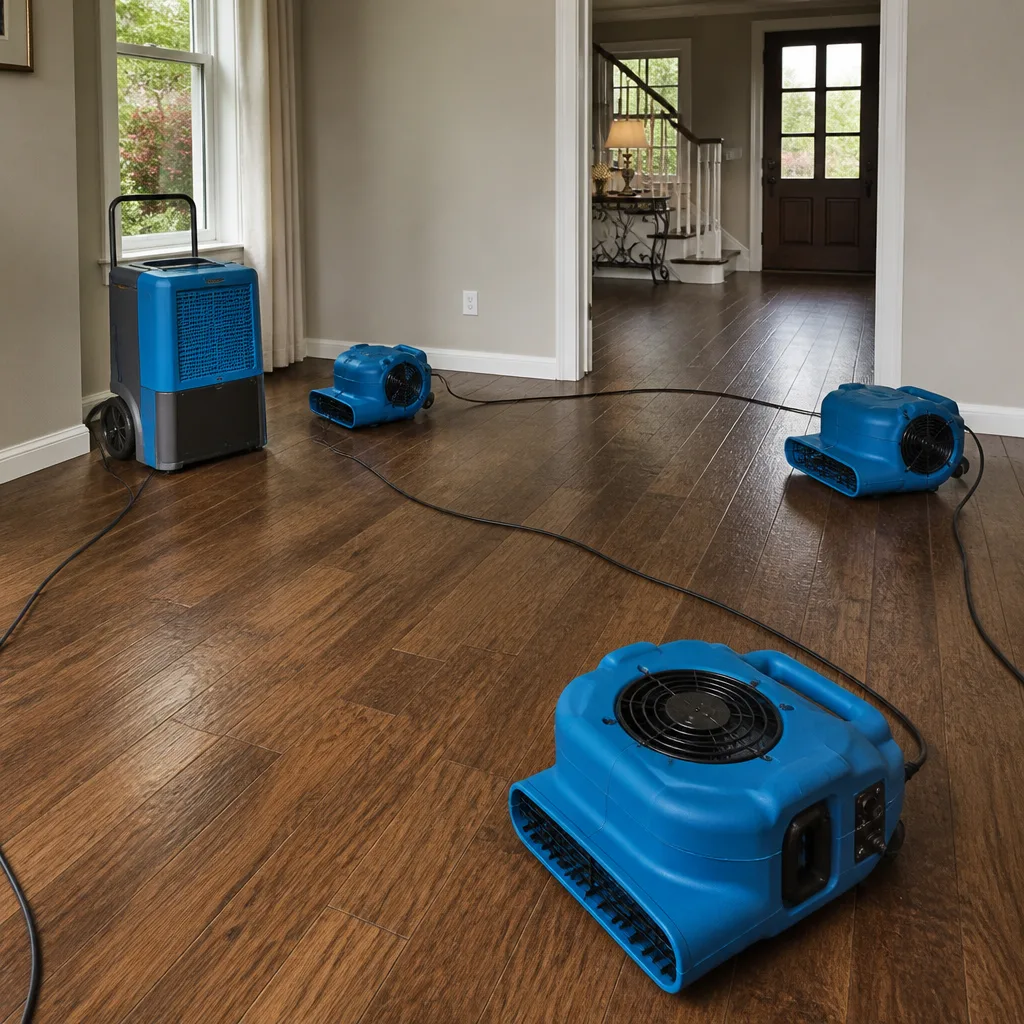
Running Springs homeowners keep calling us back because we treat the whole damage chain, not just the puddle in the hallway. Our crews hold IICRC certification, which means they work from documented drying standards under the S500 water damage protocol rather than guesswork. When we set up air movers and dehumidifiers in a Running Springs A-frame, we’re targeting specific moisture readings in specific framing members. We’re not blowing air around and hoping for the best.
The restoration work in Running Springs has a rhythm to it. Most of the serious calls come in two waves: during the winter storms when pipes freeze and burst, and in spring when the snowpack melt finds every unsealed crawlspace vent on the mountain. We preposition our understanding of those patterns. Noel Carbajal, who leads our restoration operations, has built the company around one principle: drying decisions follow moisture data, not convenience. That’s why our scopes hold up to adjuster review, and why homeowners in Running Springs don’t get surprise re-damage a month after we leave.
We also handle the full Water Damage Restoration sequence in-house, from emergency extraction through structural drying to any mold remediation the loss triggered. You’re not coordinating three different vendors while snow is melting through your ceiling. One accountable team, one written scope, one person who can answer for the whole job.
Restoration work we handle
Water Extraction in Running Springs
Water extraction in Running Springs is the first hour of a water loss, and it’s the step that determines whether you’re looking at a week of drying or a full tear-out. The goal is to remove standing water and pull the bulk moisture from saturated materials before it migrates into framing, subfloor, and drywall. At 6,000 feet, extraction here often means dealing with water that’s been sitting in a cold, unheated structure.
A typical emergency water extraction in Running Springs runs $400 – $1,200 for a single room or utility space, with whole-cabin extraction starting around $1,800. The cost climbs when water has moved under flooring or into wall cavities, because we’re now extracting from spaces you can’t see. We use truck-mounted extraction where access allows, and portable extractors for the steep driveways and tight crawlspace entries common across the mountain.
Meltwater and Crawlspace Extraction
When snowpack melt drains through foundation vents into a pier-and-beam crawlspace, you often don’t see standing water at all. What we find is saturated soil, wet sill plates, and insulation hanging down like a sponge. Extraction here is about pumping what we can reach and then immediately moving to high-volume dehumidification to stop the vapor from wicking up into the floor assembly.
Hidden Water Behind Walls
Frozen supply lines in unheated utility spaces can run for days before anyone notices. We use thermal imaging and moisture meters to map the actual water path through wall cavities, then drill small extraction and drying ports rather than cutting open entire wall sections. You’d be surprised how often a Running Springs cabin has two or three separate leak areas feeding one visible puddle.
Emergency Water Removal in Running Springs
Emergency water removal in Running Springs means getting water out of your cabin before it freezes again, before it soaks into the subfloor, and before mold gets the two to three days it needs to establish. When a supply line lets go in a mountain home, there’s no “wait and see” window. Call us at (833) 620-3891 and we’ll walk you through shutting off the water while our crew is already heading up the hill.
Emergency water removal for a burst pipe in Running Springs typically runs $600 – $1,500 for the initial extraction and temporary drying setup, with full structural drying added on top. The sharp end is when the leak is in a finished living space with soaked carpet, pad, and drywall. The lower end is a utility-space blowout where water is mostly on concrete or dirt. We’ll give you a written number before we start pulling water, because you deserve to know the scope before the equipment comes off the truck.
Ice Dam Water in Walls
Snow-loaded roofs on older Running Springs homes create ice dams at the eave line, and the meltwater behind them doesn’t always show up as a ceiling stain. It can run down inside a wall cavity for days, saturating insulation and feeding into wall plates. We contain the area, extract what’s reachable, and set cavity-drying equipment immediately. The framing won’t dry on its own at 40 degrees.
Winter Storm Response
When an atmospheric river hits the San Bernardino Mountains, the calls come fast. We prioritize Running Springs jobs by water category and structural risk, not by who called first. If your cabin has water running through it, you’re at the front of the line. The extraction setup we deploy is the same class of equipment we’d use on a commercial loss, just scaled to a mountain home’s footprint.
Trusted Brands We Service in Running Springs
We don’t run a generic drying fleet. The dehumidifiers and air movers in our Running Springs response are Dri-Eaz and Phoenix units, the same low-grain refrigerant and desiccant technology used in large commercial water losses. For wall cavities and underfloor spaces, we use Injectidry systems that pull moisture from inside wall assemblies without tearing out drywall or flooring. If your cabin has original copper plumbing that’s already sprung its first leak, plan on the fact that we’re drying the framing correctly the first time, not just the surface. We carry common replacement fittings and supply-line materials for older mountain plumbing on the truck, which saves a trip down the hill when a galvanized fitting crumbles during extraction.
Common Water Damage Restoration Problems We See in Running Springs Homes
- Spring meltwater intrusion through crawlspaces: Heavy snowpack melts over weeks, and the water finds every foundation vent, unsealed pier opening, and cracked stem wall on the property. Hidden rot and mold under pier-and-beam floors is the most common spring discovery in Running Springs, often found only because someone finally crawls under the cabin to check.
- Frozen and burst pipes in unheated spaces: Original plumbing in 1940s – 1970s cabins was never designed for long freeze cycles. Supply lines running through unheated utility rooms, crawlspaces, and exterior wall chases fail quietly, then run for days because nobody’s living there full-time to notice.
- Ice dam water pushing behind wall finishes: Older roofs with minimal insulation let heat escape, melt the snowpack, and refreeze it at the eave. The dammed water works back under shingles and down inside walls. This is Category 2 or 3 water by the time it’s trapped in a wall cavity, and it needs antimicrobial treatment after drying, not just a coat of paint.
- Hidden rot in pier-and-beam framing: When meltwater saturates a crawlspace and the vapor stays trapped, sill plates and floor joists stay wet for months. By the time a homeowner notices a soft spot in the floor, the rot has often spread to load-bearing framing members, and the repair scope expands from drying to structural replacement.
See the difference
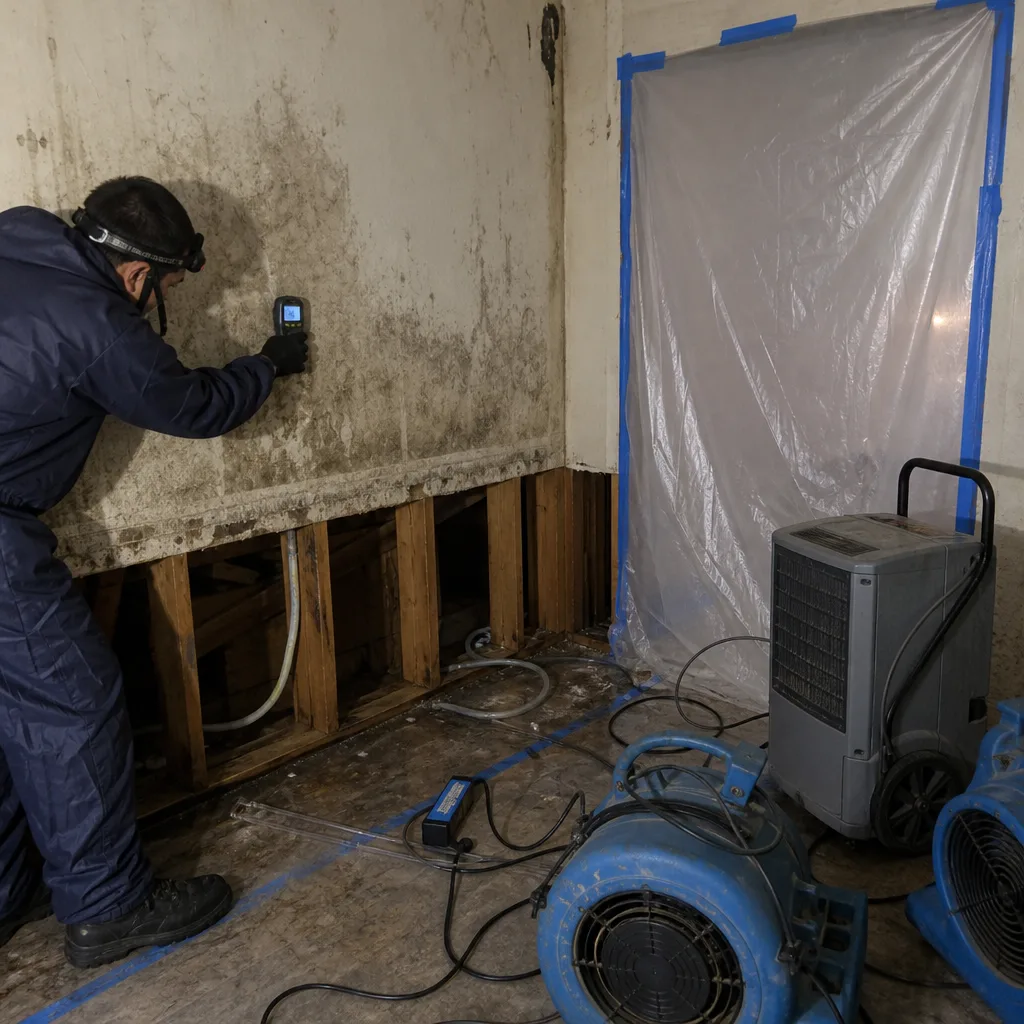 Before
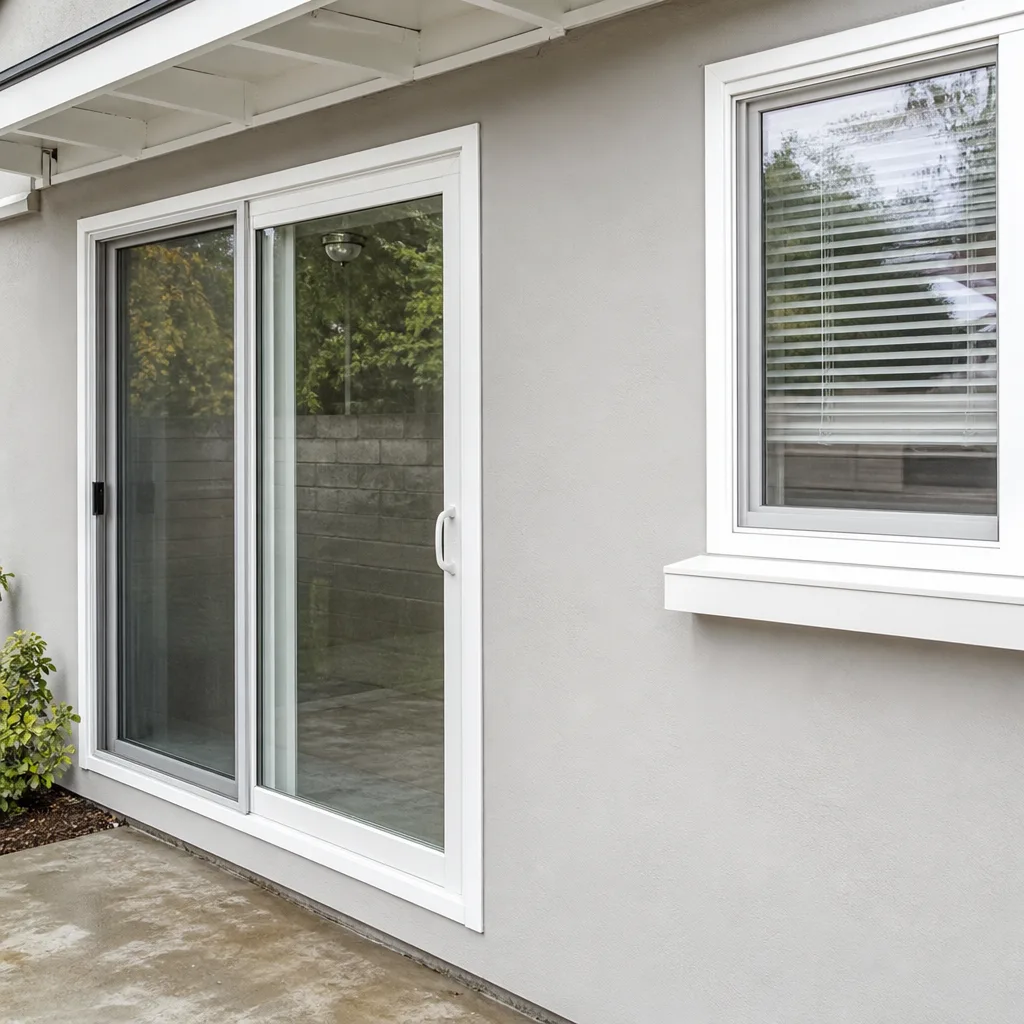 After
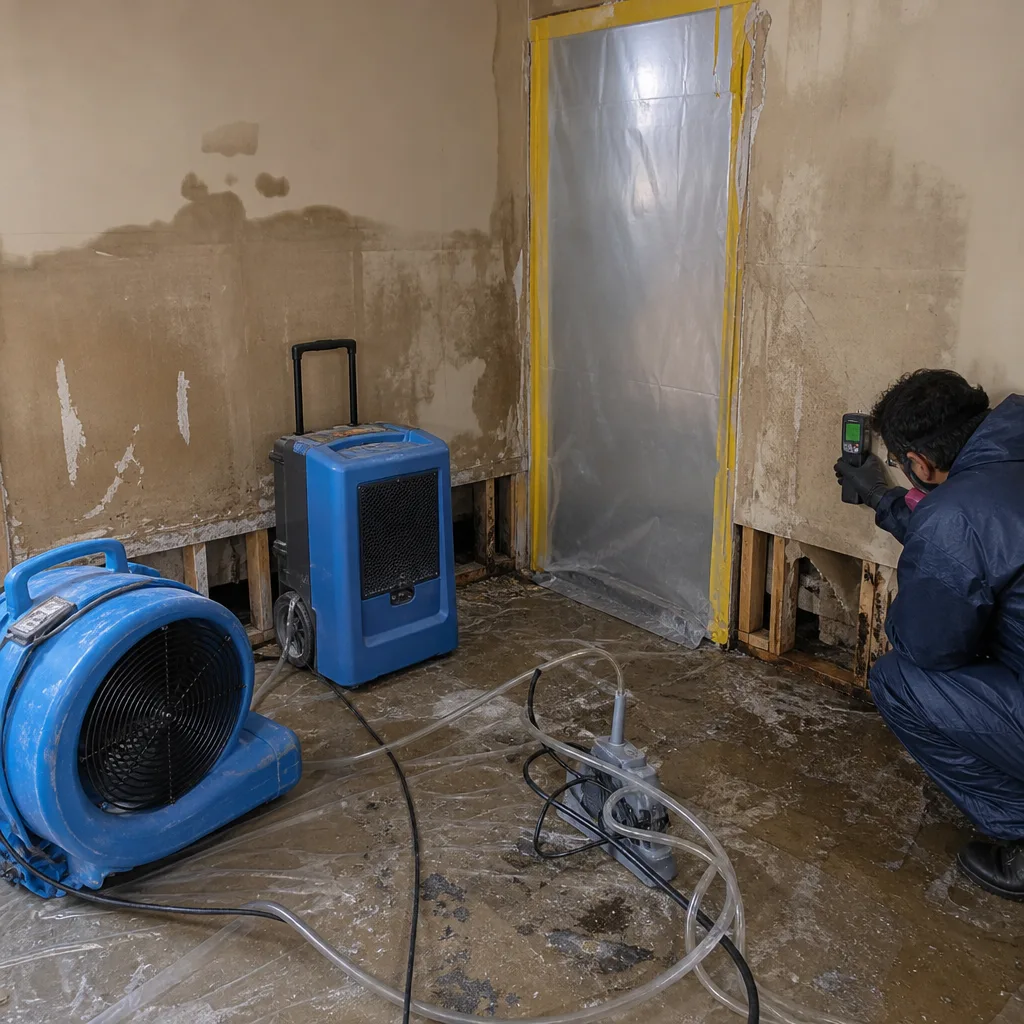 Before
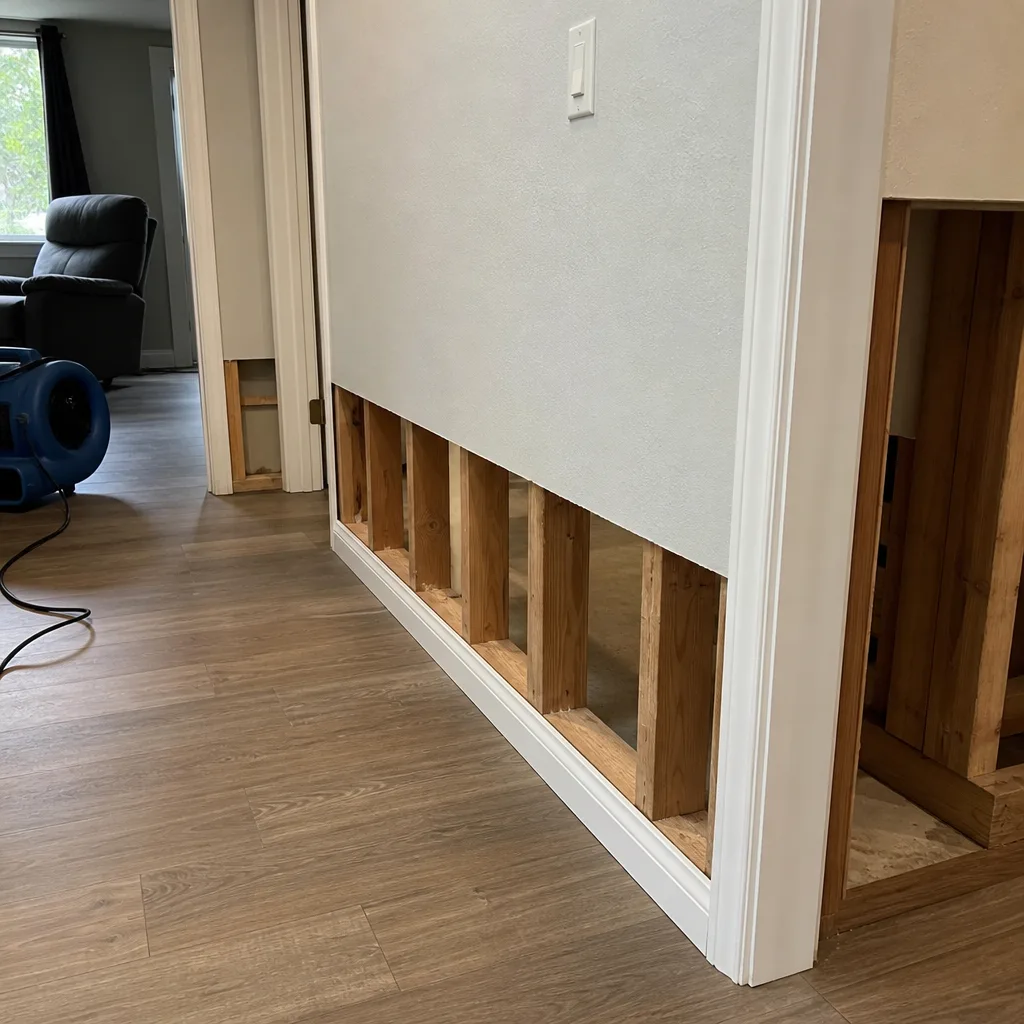 After
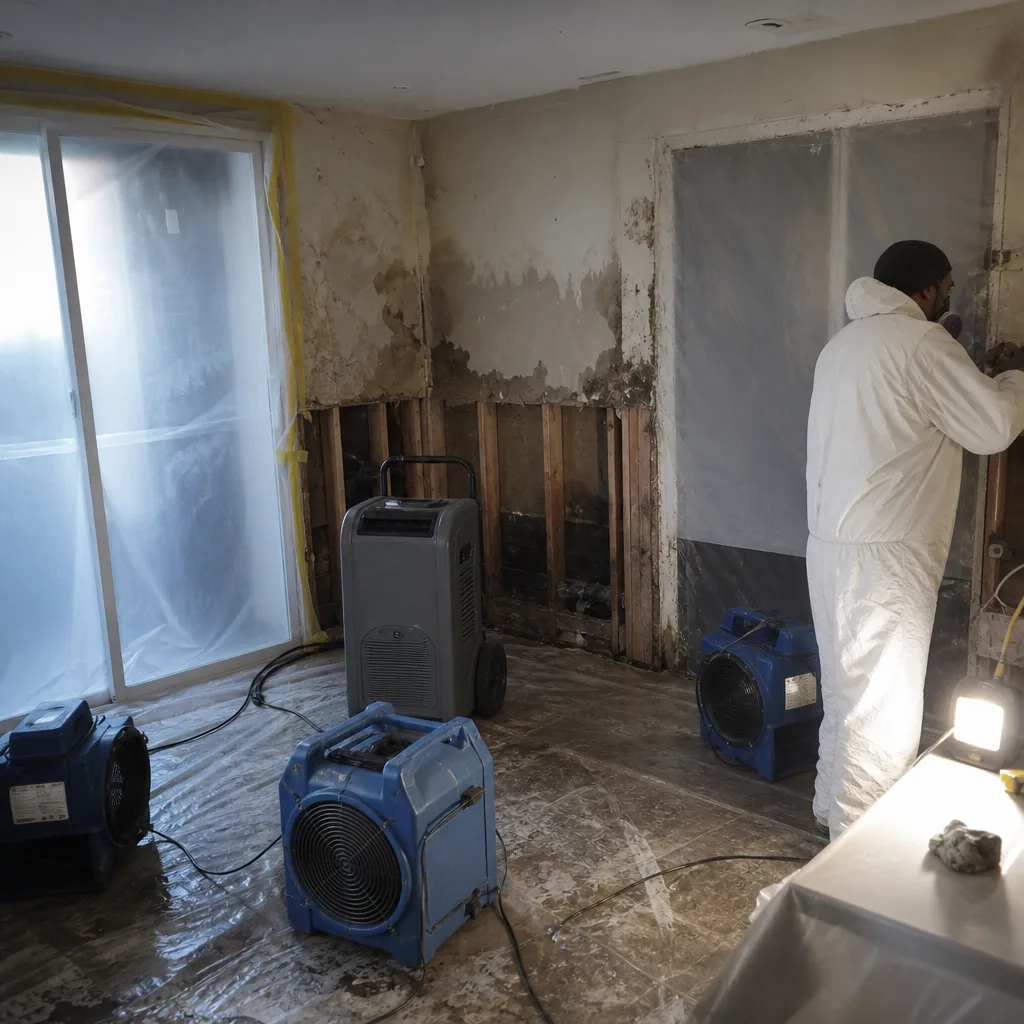 Before
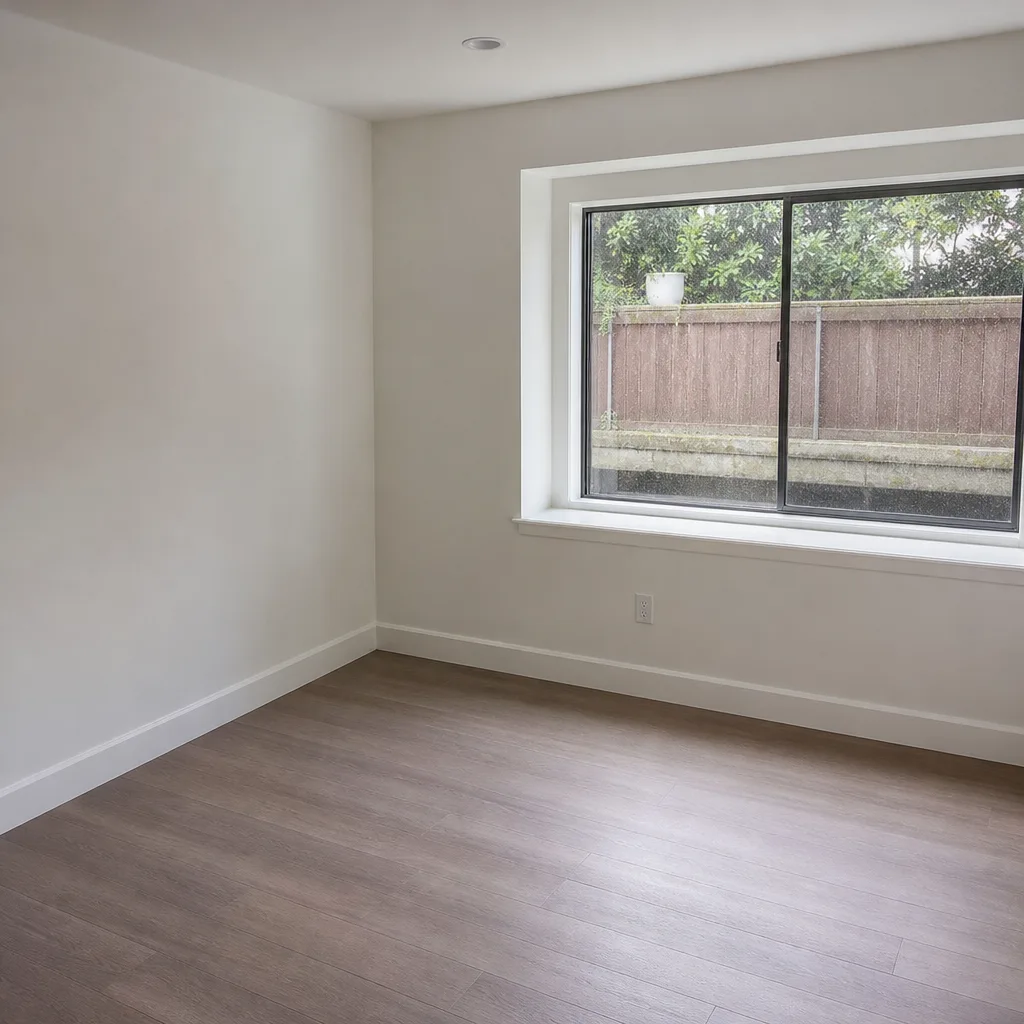 After
Pricing for Water Damage Restoration in Running Springs, CA
Here are the ranges we quote most often for Running Springs jobs:
- Emergency water extraction (single room or utility space): $400 – $1,200
- Whole-cabin extraction with structural drying setup: $1,800 – $3,500
- Full structural drying with Injectidry cavity systems: $1,200 – $2,800
- Crawlspace water removal and drying (pier-and-beam): $900 – $2,400
- Burst pipe restoration including drywall removal and drying: $1,500 – $4,800
What moves the number is water category, square footage of affected material, and whether water is trapped in wall cavities or underfloor spaces that need specialized drying. A straight extraction with no hidden water is always cheaper than a restoration that requires demolition and rebuild. We give you a written scope before work starts, and we’ll coordinate directly with your insurance adjuster so nothing gets lost between our moisture map and their estimate.
We Also Serve Cities Near Running Springs
Our crews regularly work the whole Highway 330 and Highway 18 corridor. If your property is in Lake Arrowhead, Highland, Mentone, or Crestline, we bring the same IICRC-certified process and commercial drying equipment to your door. The mountain response patterns are similar across the range, but each community has its own housing quirks. We carry that local knowledge with us on every run.
Serving Running Springs, CA — Our Local Coverage Area
We’re based in the Running Springs area and know this community well. Use the map below to see our service coverage — if you’re nearby, we can almost certainly help.
FAQs About Water Damage Restoration in Running Springs
The damage was happening all winter, just underground. Snowpack meltwater drains into foundation vents and unsealed crawlspaces, saturating the soil and wicking into sill plates and floor joists. It stays hidden under pier-and-beam floors until the wood rots enough to show. We find this pattern on Running Springs cabins every spring, and it’s why we always moisture-map the crawlspace even when the visible leak is somewhere else entirely.
Within hours, not days. At mountain temperatures, water moves slower but mold still establishes in 48 – 72 hours in wall cavities and underfloor spaces. More importantly, a burst supply line in an unheated cabin can feed water into framing for days before detection, so the damage clock has already been running. Call (833) 620-3891 and we’ll dispatch immediately.
Yes, and it determines whether we’re drying or removing material. Category 1 water from a clean supply line can often be extracted and dried in place. Category 2 water, like ice dam meltwater that’s picked up contaminants from a roof or crawlspace, requires more aggressive drying and often antimicrobial treatment. Category 3 water, like sewage or flood water that entered from outside, means affected porous materials get cut out, not dried. We classify the water before we write the scope, and that classification holds up to insurance review.
It means the drying plan follows documented S500 protocols: specific moisture targets, daily readings, and equipment sized to the actual water load. Insurance adjusters recognize IICRC-certified restoration because the methodology is peer-reviewed and reproducible. That documentation can be the difference between a claim that gets paid and one that gets picked apart. We log every reading and release the structure only when it meets the standard, not when the calendar says we’re done.
Start with proper extraction and drying of the current loss, then make the call based on what we find. If the crawlspace has been wet repeatedly, retrofitting with sealed vents, a vapor barrier, and proper drainage may prevent the next loss from the same source. If the damage is a one-time burst pipe, a targeted repair is usually enough. We’ll give you a straight assessment either way, and we’ll tell you if the retrofit is worth the money or if you’re throwing cash at a problem that won’t recur.
Contact Renew Water Damage for Water Damage Restoration in Running Springs
If you’re looking at water where it shouldn’t be in Running Springs, call (833) 620-3891. We’ll answer, ask the right questions, and get a certified crew moving toward your property. Estimates are free, the scope is written before work starts, and the drying is done to IICRC standards with commercial equipment, not rental fans from the hardware store.
Written by Noel Carbajal, Owner at Renew Water Damage, serving Running Springs and the San Bernardino Mountains.