 Water damage drying
 Fire & smoke cleanup
 Mold remediation
 Storm response
 Sewage cleanup
 Reconstruction
Free visual inspection and a written scope of work before any mitigation begins - photos, moisture readings, and drying logs go in your claim file
The scope we write is the scope we bill. Anything new gets shown to you, in writing, before we touch it.
Get your free estimateFast, Reliable Water Damage Restoration Across March Air Force Base
Water damage restoration in March Air Force Base typically runs $2,800 – $7,500 for a full structural dry-out, with emergency extraction starting around $800 – $1,500. When a supply line lets go in a 1950s base-housing unit near the March Inland Port, every hour the water sits means more drywall to replace and more flooring to pull. We dispatch IICRC-certified crews into the 92551 ZIP and start extraction the same day, because we know the housing stock here, the plumbing systems that fail here, and the drying challenges specific to slab-on-grade construction. Call us at (833) 620-3891 and we’ll have a certified technician on site to map the moisture and get drying started before secondary damage takes hold.
Why Renew Water Damage Is March Air Force Base’s Preferred Water Damage Restoration Company
Most restoration companies in the Inland Empire treat March Air Force Base as just another stop on a Riverside route. We don’t. Noel Carbajal and our crews have spent enough time inside these mid-century ranch homes and base-housing units to know what we’ll find before we open a wall: galvanized lines past their service life, slab-on-grade floors hiding moisture under vinyl, and shared infrastructure that turns one unit’s slab leak into a block-wide concern.
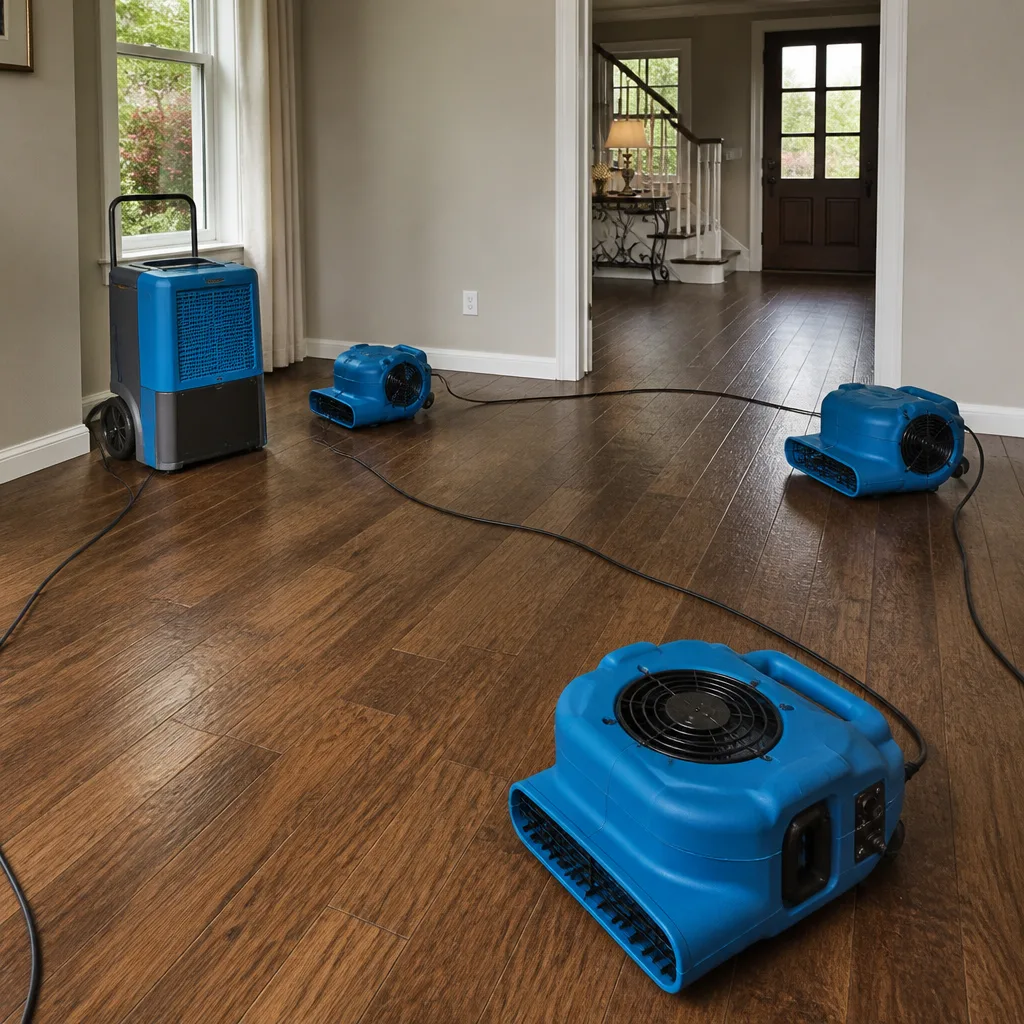
Our Water Damage Restoration team carries Dri-Eaz and Phoenix drying systems into every job, because these older homes don’t respond well to the homeowner-grade equipment a generalist contractor might bring. We log moisture readings daily, we document everything for insurance, and we don’t call a job done until readings confirm it, not when the air “feels dry.” That’s the standard IICRC certification demands, and it’s the standard we hold ourselves to on every single job in March Air Force Base.
Restoration work we handle
Flood Damage Restoration in March Air Force Base
Flood Damage Restoration in March Air Force Base almost always means one of two things in 92551: a failed galvanized supply line that’s been corroding beneath a slab for years, or a washing-machine or water-heater failure that dumps dozens of gallons onto flooring built before modern moisture barriers existed. In either case, the work starts with emergency extraction, then moves into moisture mapping, containment, aggressive structural drying, and antimicrobial treatment. A typical flood job in these mid-century homes runs $3,000 – $8,000 depending on how far the water traveled and whether flooring has to come out.
Slab Leak Response: 1950s Base Housing Requires Whole-Block Thinking
When the original galvanized line under a base-housing unit finally fails, the water doesn’t just affect that unit. Plumbing in these tracts was installed uniformly across dozens of neighboring homes, and we routinely perform whole-block moisture mapping in 92551 to catch the next failure before it becomes an emergency for someone two doors down. That’s not a service you’ll get from a franchised restoration company.
Category 2 and 3 Floodwater in Older Homes
We don’t assume that clear water is clean water. In a 1962 ranch with original plumbing, water that started as a clean supply line break can pick up contaminants from aged pipe interiors, soil under the slab, or deteriorated building materials and become Category 2 or 3 within hours. Our techs classify the water correctly before treatment begins, which changes everything about what gets torn out and what can be saved.
Water Damage Cleanup in March Air Force Base
Water Damage Cleanup in March Air Force Base means more than vacuuming up standing water. In these slab-on-grade, wood-frame, stucco-exterior homes, water hides where you can’t see it: under vinyl and tile flooring, inside wall cavities where the Injectidry system pulls moisture from enclosed spaces, and beneath baseboards that look dry on the surface. Cleanup costs for a contained incident like a sink overflow run $1,200 – $3,000, while water that’s traveled through multiple rooms pushes into the $4,000 – $7,000 range with full drying and antimicrobial treatment.
Trapped Moisture Under Mid-Century Flooring
We responded to a slab leak in a 1950s base-housing unit near the March Inland Port where the original galvanized line had corroded through beneath the slab. After water extraction and moisture mapping, we set up containment and used Dri-Eaz air movers and a Phoenix dehumidifier for structural drying, logging moisture readings daily to document the drying logs. The category 1 water had wicked into adjacent rooms, but our antimicrobial treatment and precise drying saved the original oak flooring. It was a win for a home where parts for legacy plumbing are increasingly unavailable.
Antimicrobial Treatment and Odor Control for High Heat
March Air Force Base’s summer heat accelerates mold growth and drives moisture into wall cavities faster than most people expect. That’s why our cleanup protocol includes antimicrobial application as a standard part of the job, not an upsell we pitch at the end. In hot, dry inland conditions, stalled drying creates a musty odor problem that’s harder to reverse than the water damage itself.
Trusted Brands We Service in March Air Force Base
Because March Air Force Base residential properties rely on standardized plumbing and appliance installations from their original construction era, we’re familiar with the makes and models that fail most often here: original water heaters, 40-year-old washing machine supply lines, and standard 1950s galvanized distribution systems. We carry the professional equipment to handle all of it: Dri-Eaz and Phoenix dehumidifiers, XPOWER air movers, and the Injectidry wall-cavity drying system that gets moisture out of enclosed spaces without gutting walls. For property managers and landlords in the 92551 ZIP, that means one call, one crew, and no delays waiting on equipment rentals.
See the difference
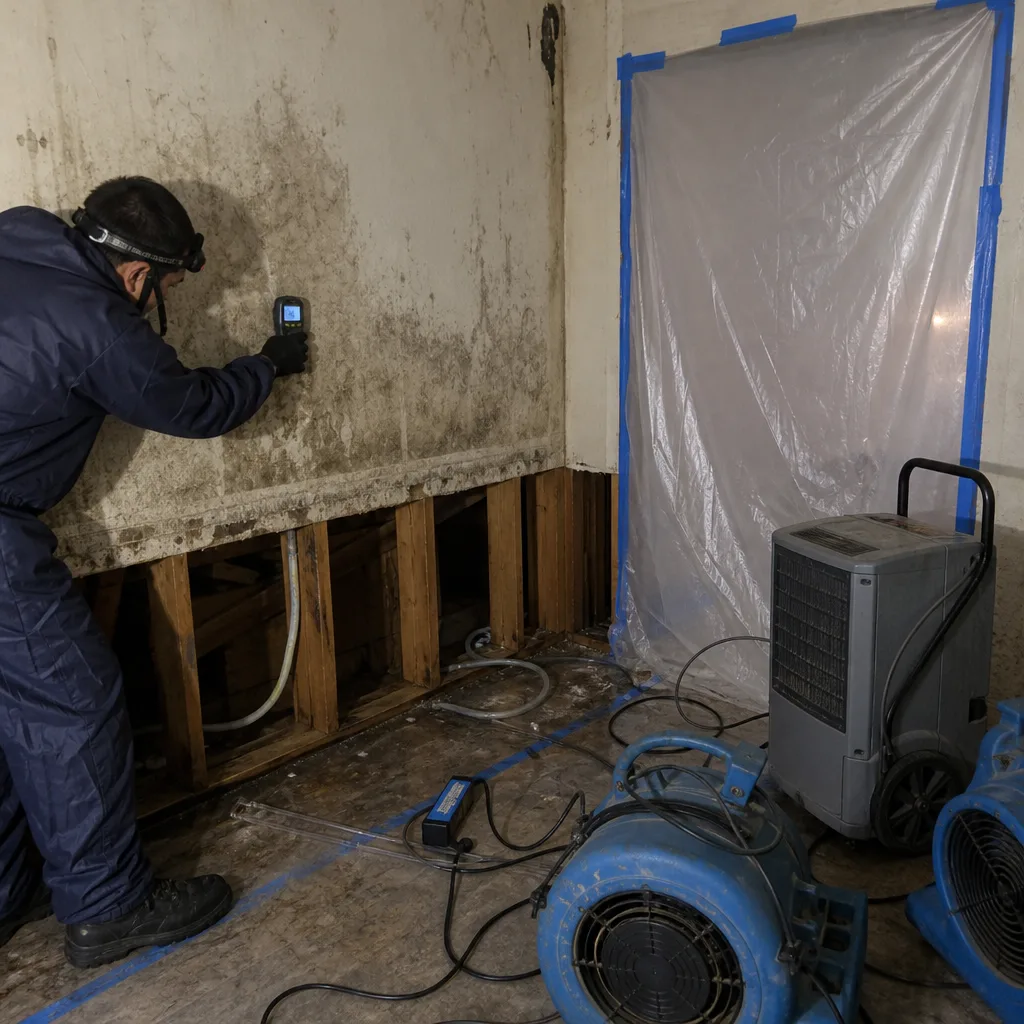 Before
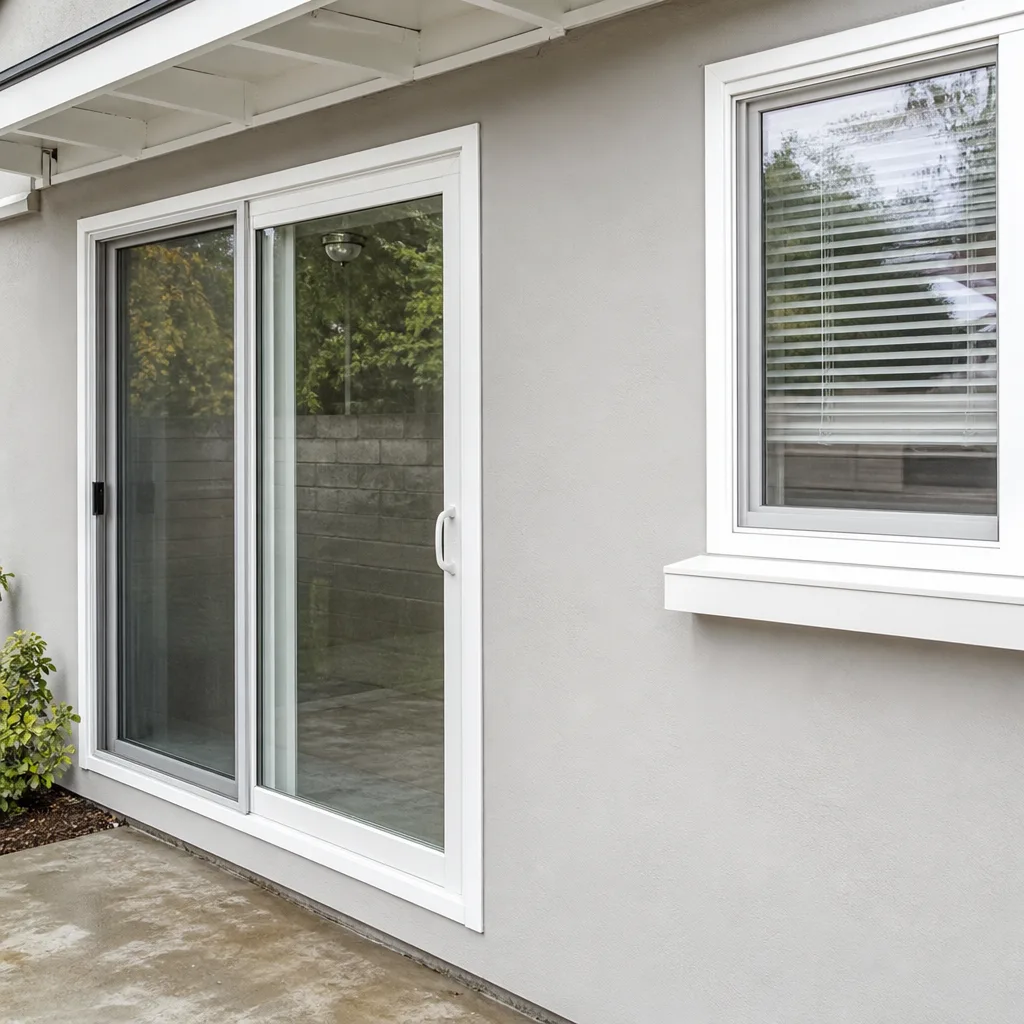 After
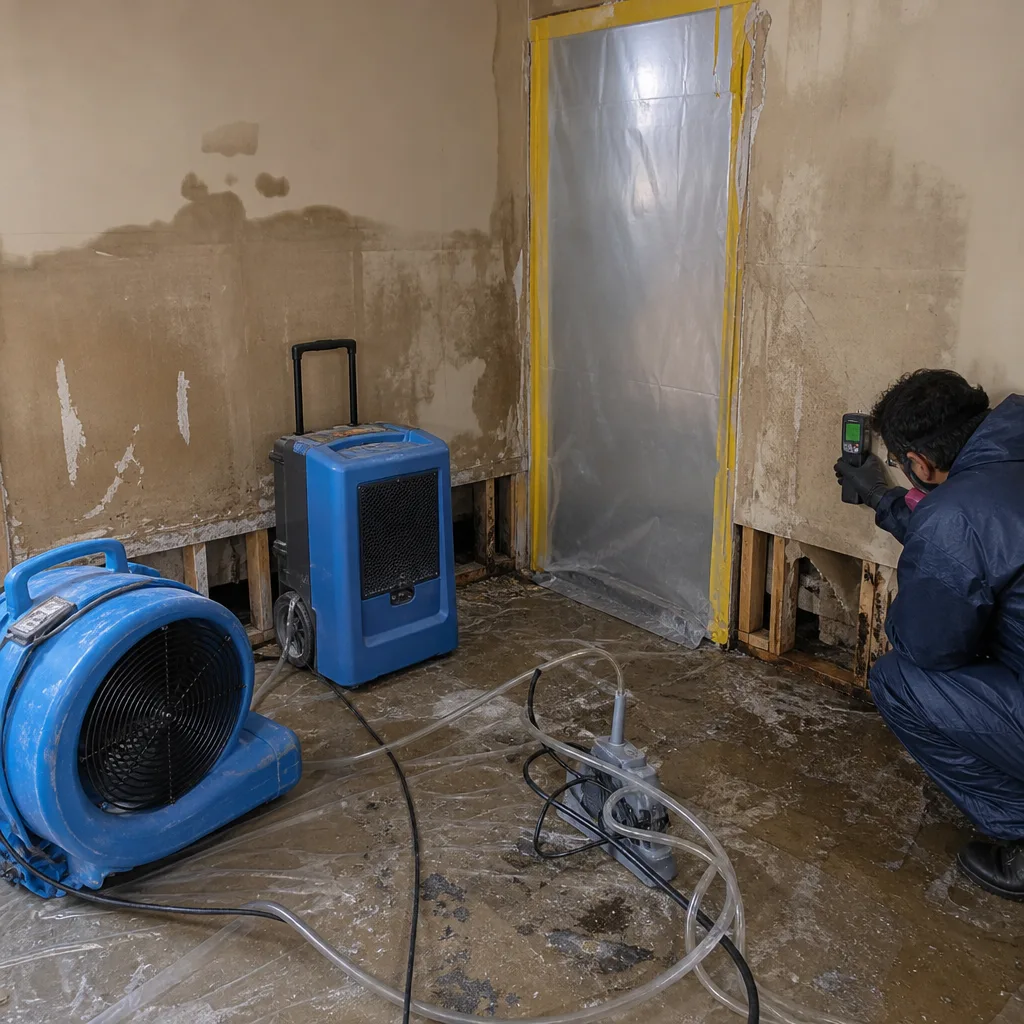 Before
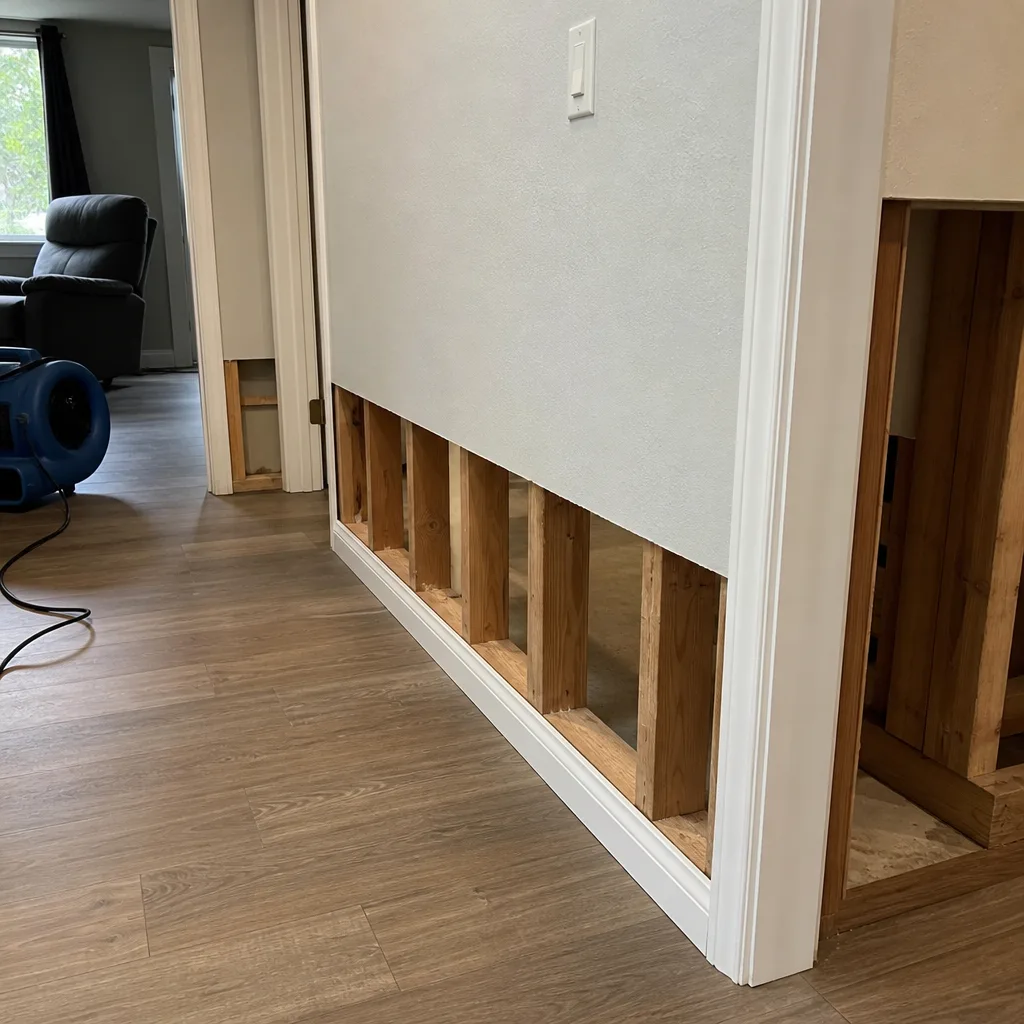 After
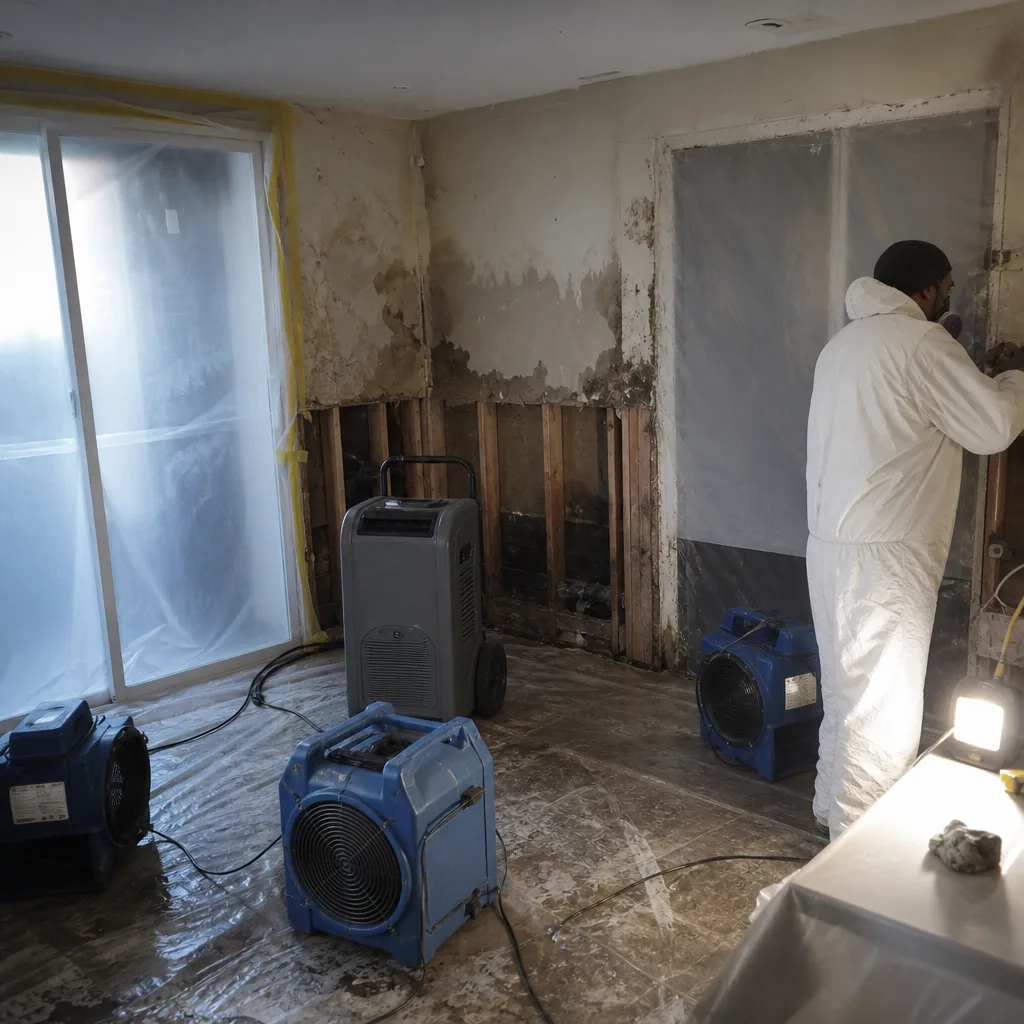 Before
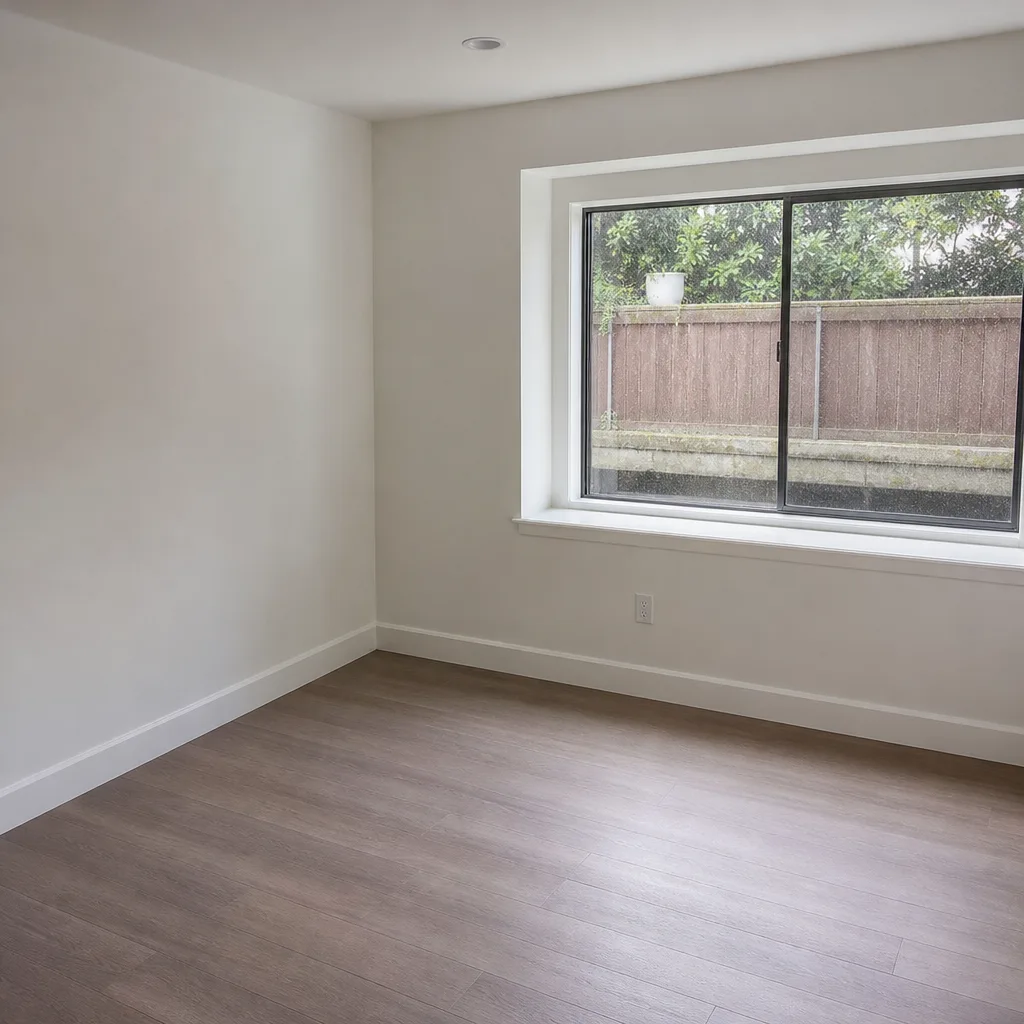 After
Common Water Damage Restoration Problems We See in March Air Force Base Homes
- Galvanized supply line failures treated as isolated incidents. In 1950s base tracts, a single slab leak almost never stands alone. When one line corrodes through, neighboring units with identical plumbing are weeks or months from the same event. We check the block, not just the unit.
- Water category misclassification in older construction. Supply line breaks in aged pipes often pick up rust, sediment, or soil contact and become Category 2 water faster than most techs would assume. Wrong classification means wrong cleanup, and wrong cleanup means mold inside walls.
- Incomplete drying under slab-on-grade floors. Moisture trapped between the slab and vinyl, tile, or original hardwood won’t show on the surface. Without penetrating moisture meters and daily drying logs, hidden moisture turns into hidden mold 24 to 48 hours later.
- Santa Ana wind and dust mitigation during restoration. Open windows and doors during a dry-out invite wind-driven dust and grit from surrounding foothills into vulnerable structure cavities. We set up containment and dust control as standard practice, not an add-on.
Pricing for Water Damage Restoration in March Air Force Base, CA
Here’s what you can expect to pay in the March Air Force Base market. Emergency water extraction alone: $800 – $1,500 for a contained single-room event. Full structural drying with containment, air movers, dehumidifiers, and daily monitoring: $2,800 – $5,000 for average jobs. Water that has flooded multiple rooms, soaked insulation, or compromised flooring: $5,000 – $8,500, with on-site antimicrobial treatment and selective demolition included. Slab leaks in 1950s construction that require injectidry wall-cavity drying can push toward the upper end. Every job starts with a free estimate and a written scope before any work begins. Call (833) 620-3891 for an exact number.
We Also Serve Cities Near March Air Force Base
Our crews cover March Air Force Base and the surrounding Inland Empire communities, including Moreno Valley, Woodcrest, Perris, and Good Hope. If you manage a property anywhere in the 92551 ZIP or adjacent neighborhoods, we’re already familiar with the construction era and failure patterns. One call to (833) 620-3891 gets a local, certified crew headed your way.
Serving March Air Force Base, CA — Our Local Coverage Area
We’re based in the March Air Force Base area and know this community well. Use the map below to see our service coverage — if you’re nearby, we can almost certainly help.
FAQs About Water Damage Restoration in March Air Force Base
Because the base-adjacent housing stock was built in the 1950s through early 1970s with galvanized steel supply lines that carry a 40-to-50-year service life, and that clock ran out years ago. The water supply pipes in these homes were installed beneath concrete slabs, and decades of interior corrosion lead to pinhole leaks that eventually become full breaks. When one home on a tract fails, the neighboring units with identical plumbing are not far behind. Call (833) 620-3891 if you suspect a slab leak; our moisture mapping can confirm it before it becomes a flood.
The aridity helps in one way: lower ambient humidity supports faster drying once equipment is running. But the same dry climate masks water that has moved through walls and saturated building materials. Surface water evaporates quickly here, leaving moisture behind inside cavities where it feasts on paper-faced drywall and wood framing. We use penetrating moisture meters and controlled drying chambers to verify the structural materials are actually dry before we pack up.
Category 1 water is clean water from a supply line or faucet and poses no health risk at point of release. Category 2 water has been contaminated by contact with soil, aged piping, or building materials and requires antimicrobial treatment. Category 3 water is grossly contaminated, such as sewage or floodwater, and demands aggressive removal, full containment, and selective demolition. In an older March Air Force Base home, we classify after inspecting the full path the water traveled, not just the source. An estimate is free; call (833) 620-3891 for an assessment.
Yes. We work with property managers and landlords throughout the 92551 ZIP on rental units in original base housing and mid-century ranch homes. For rental properties, we coordinate directly with the property owner or manager, document conditions with photos and drying logs for insurance files, and keep the workflow moving so tenants can return safely and quickly. Photographic documentation of all stages is included.
We run Dri-Eaz and Phoenix dehumidifiers with XPOWER air movers and Injectidry wall-cavity drying systems. These are the same commercial-grade machines used on large institutional losses, not rental-grade homeowner equipment. The Injectidry system in particular matters in March Air Force Base where slab-on-grade construction and mid-century wall framing trap moisture in enclosed cavities that standard air movement never touches.
If you’re dealing with water in a March Air Force Base home, don’t wait for the damage to spread through a house full of original materials that are hard to replace. Call (833) 620-3891 for a free estimate and have a certified crew on the way.
Written by Noel Carbajal, Owner at Renew Water Damage, serving March Air Force Base and the surrounding Inland Empire since day one.