 Water damage drying
 Fire & smoke cleanup
 Mold remediation
 Storm response
 Sewage cleanup
 Reconstruction
Free visual inspection and a written scope of work before any mitigation begins - photos, moisture readings, and drying logs go in your claim file
The scope we write is the scope we bill. Anything new gets shown to you, in writing, before we touch it.
Get your free estimateFast, Reliable Mold Remediation Across Mead Valley
Mold remediation in Mead Valley typically costs between $1,800 and $6,500 depending on how far the growth has spread, and most jobs can be scheduled within 24 to 48 hours of your call. We’re the team that shows up with commercial dehumidifiers and containment set up the same day, because we know that on a rural Mead Valley lot, a monsoon leak or a failed window seal doesn’t wait. Call (833) 620-3891 to have a certified technician walk your property and give you a written scope before any work starts.
Our crews drive these roads daily, from the parcels off Cajalco Expressway to the acreage near Brown Street. We know how quickly moisture crawls through slab-on-grade manufactured homes, and we know that a detached workshop sealed up after a Santa Ana dust event becomes a mold incubator within days. That local knowledge shapes how we contain, dry, and remediate every job in Mead Valley.
Why Renew Water Damage Is Mead Valley’s Preferred Mold Remediation Company
Homeowners in Mead Valley call us because we treat restoration as a discipline, not an add-on. Our IICRC-certified technicians follow documented drying and remediation protocols aligned with S520 and S500 standards. That means moisture mapping before tear-out, negative air containment during remediation, and drying logs you can hand to your adjuster.
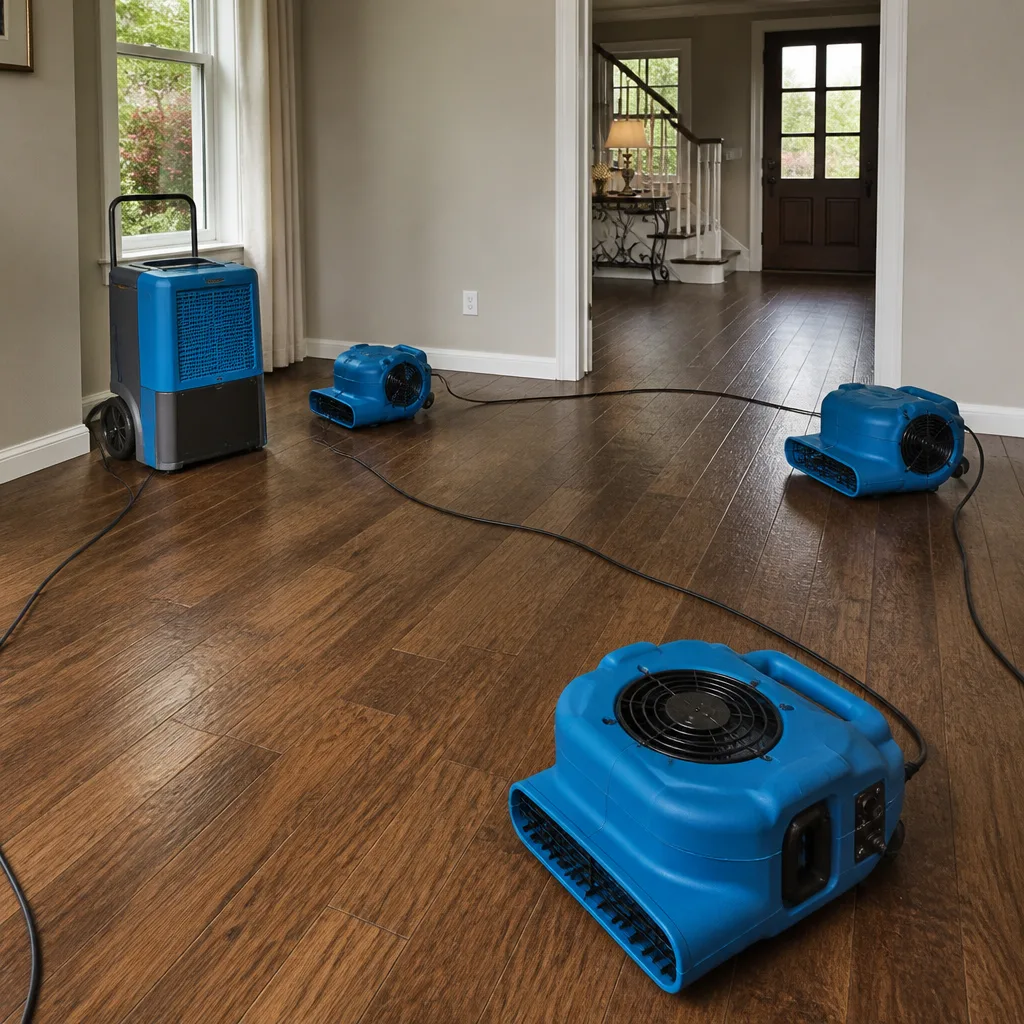
Noel Carbajal built this company around the principle that rural properties deserve the same rigor as commercial losses. We bring Dri-Eaz and Phoenix dehumidifiers onto Mead Valley jobs, plus XPOWER air movers for circulation, and we don’t leave until moisture readings in wall cavities and subfloors are back to pre-loss levels. The Mold Remediation team operates with a written scope agreed before work begins, so you know exactly what gets removed, what gets dried, and what gets treated. That matters when you’re on a well and septic system and every water event carries a Category 3 risk until lab results prove otherwise.
Our response time to Mead Valley comes from running crews out of Orange with equipment staged and ready. We’re members of the Restoration Industry Association and IFA, and that dual accountability means ongoing standards, not a one-time certification that sits in a drawer. When a homeowner near Mead Valley High School calls mid-monsoon, we route a team that same day.
Restoration work we handle
Mold Remediation Services in Mead Valley
Mold Remediation Services in Mead Valley start with a question most contractors don’t ask here: does this property run on a private well and septic system? Because if it does, we treat every water loss as potentially Category 3 until testing clears it. That one protocol change alters the entire job: antimicrobial treatment becomes standard, containment gets tighter, and drying logs get more detailed for insurance documentation.
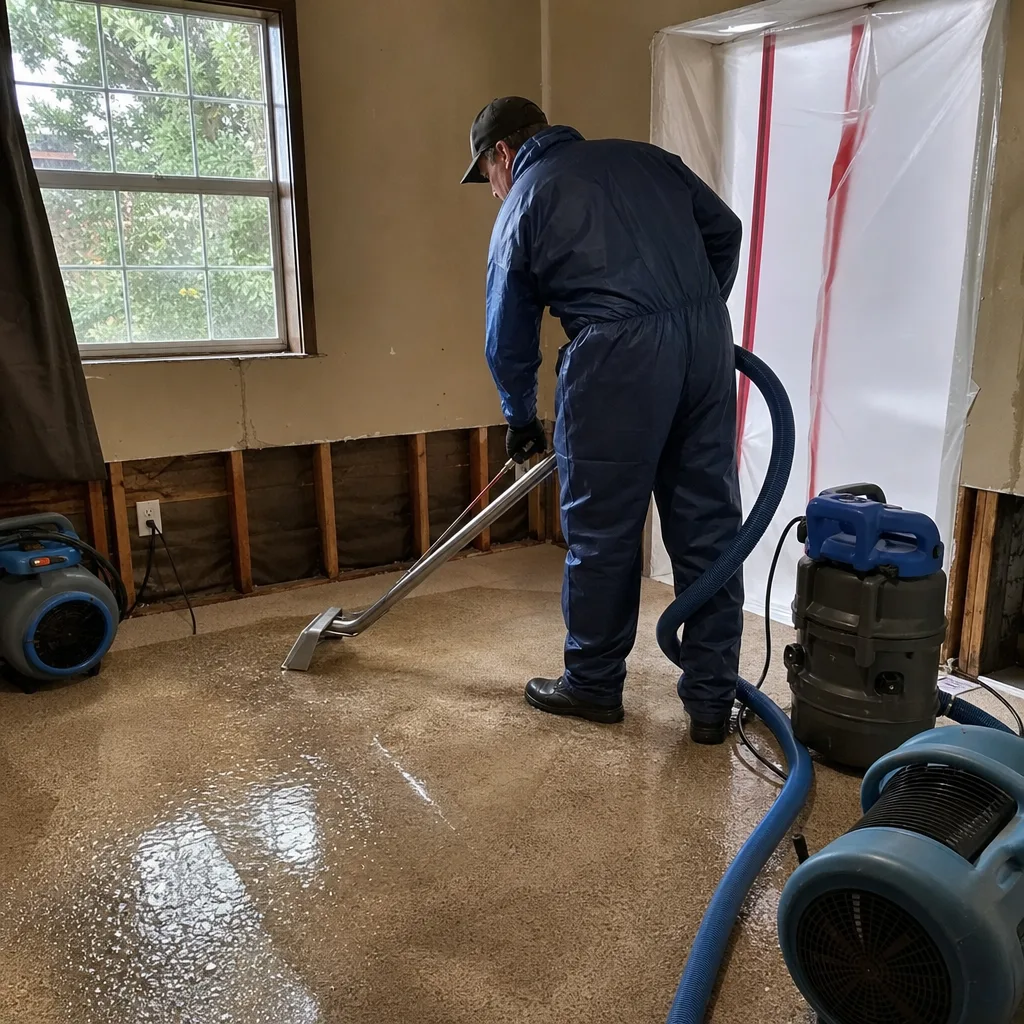
In Mead Valley, remediation usually means finding moisture in places you wouldn’t expect. The wind-driven dust that settles into attics and window tracks after Santa Ana events traps humidity against framing. Monsoon sheet water pools against slab edges and creeps under carpet and laminate. Our techs map all of it before removing anything.
Containment and Air Quality Restoration
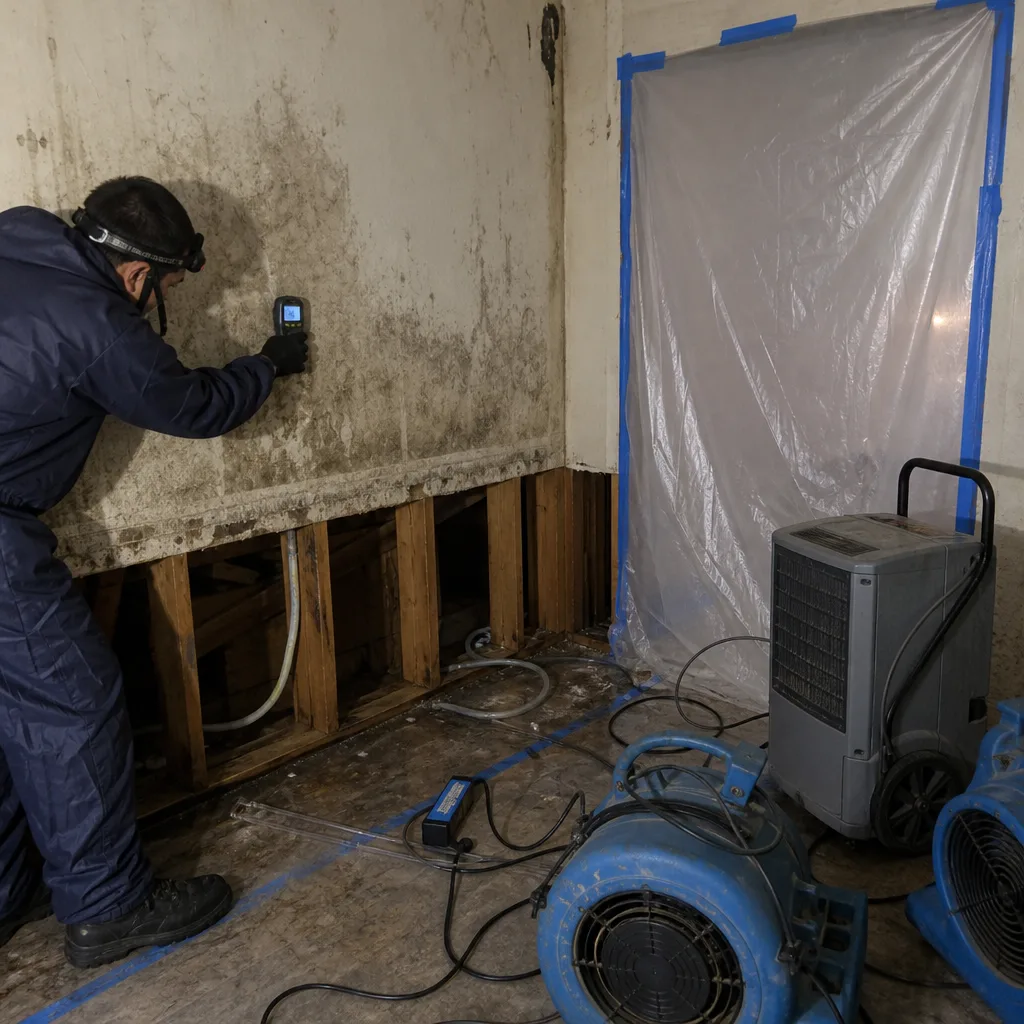
We build containment barriers with negative air pressure so spores don’t migrate from the affected room into the rest of your house while we work. Air scrubbers then run continuously to capture airborne particulates. On rural Mead Valley lots, this matters more than in dense neighborhoods, because wind carries disturbed spores across open acreage and into detached structures.
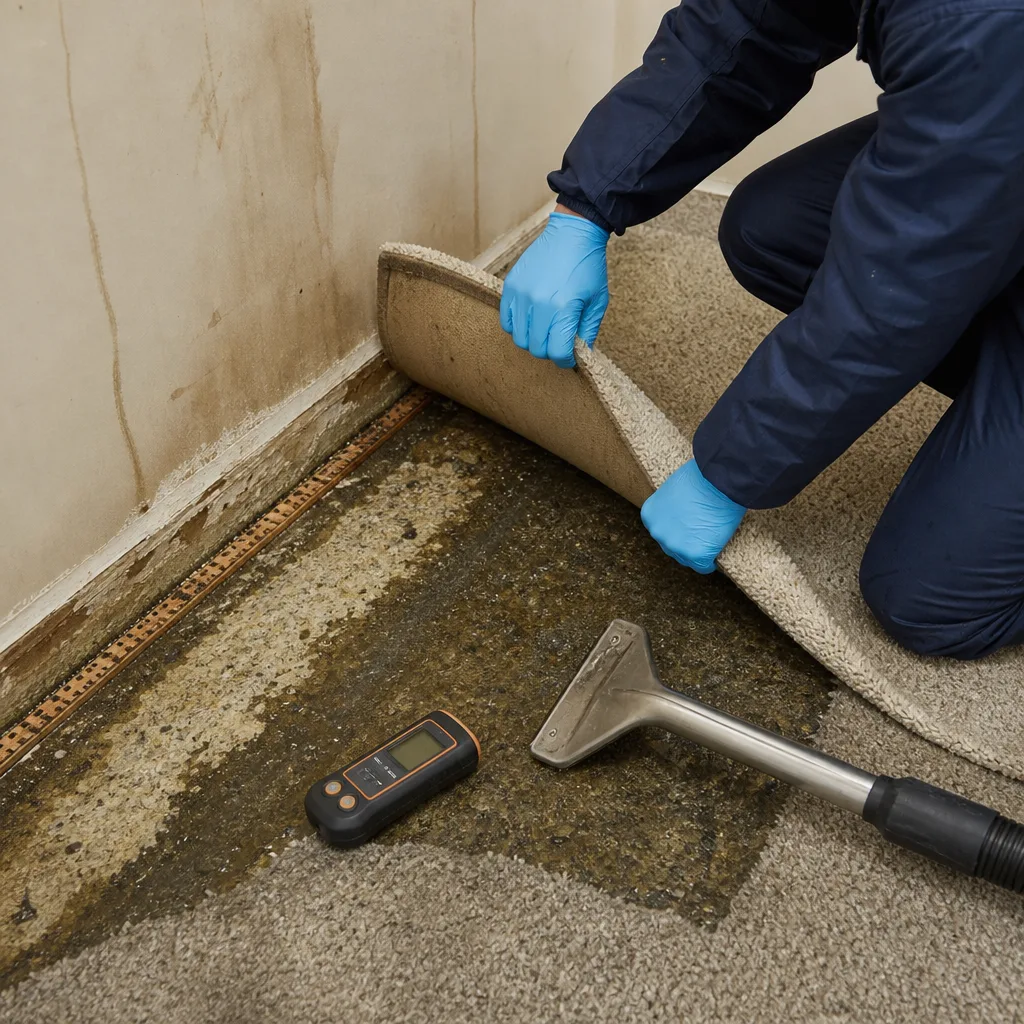
Crawl Space and Under-Floor Treatment
Manufactured homes and older single-family homes in Mead Valley often sit over crawl spaces that collect monsoon moisture. We treat the framing, dry the soil contact areas, and install moisture barriers where needed. For wall cavities where moisture hides, the Injectidry system pulls water from inside walls and subfloors without unnecessary demolition, which reduces repair costs and shortens your timeline.
What happens when you call
- 1
A real person answersNo phone trees — you reach a local pro.
- 2
You get an upfront price rangeHonest numbers before anyone is dispatched.
- 3
A background-checked tech heads outLicensed & insured, dispatched right away.
- 4
You approve before work beginsNothing starts until you say go.
Professional Mold Removal in Mead Valley
Professional Mold Removal in Mead Valley is where the heavy work happens. Once containment is set and moisture sources are identified, our team removes affected drywall, insulation, and flooring using HEPA-filtered methods that keep spore counts down during the tear-out. We’re not a general contractor who happens to own a dehumidifier. We’re a restoration company that owns the removal, the drying, and the reconstruction coordination.
A typical removal on a single-room Mead Valley job runs $1,800 to $3,400. If the growth has reached multiple rooms or a detached workshop, expect $4,000 to $6,500. These are the ranges we quote before we start, in writing, so you’re not hearing a new number halfway through the job. For black mold specifically, the price sits at the upper end because of stricter containment and disposal requirements.
Detached Workshop and Outbuilding Removal
Mead Valley’s detached workshops are the quiet failure mode on most properties. A roof leak goes unnoticed for a month, or a homeowner seals the building after dust intrusion and traps humidity inside. By the time we’re called, the drywall is blooming. We treat these structures as separate containment zones, often running independent drying setups so mold doesn’t cross-contaminate the main house.
Black Mold Remediation
When Stachybotrys or other toxigenic species are confirmed, our protocols escalate. Full PPE, sealed containment, HEPA vacuuming of all surfaces, and disposal of affected materials through certified channels. We document everything photographically and in drying logs, because on a well and septic property, your insurer will want to see that testing was done and protocols followed from day one.
Trusted Brands We Service in Mead Valley
We deploy the equipment that matches the job, not whatever fits in the truck. Dri-Eaz dehumidifiers pull moisture from the air in large open rooms. Phoenix units handle tight, humid spaces like crawl spaces and wall cavities when paired with Injectidry mats. XPOWER air movers push air across slab floors and behind baseboards where mold loves to hide. Mead Valley homeowners call us because commercial-grade equipment on a residential job isn’t standard around here. It’s how we dry what other crews miss.
See the difference
 Before
 After
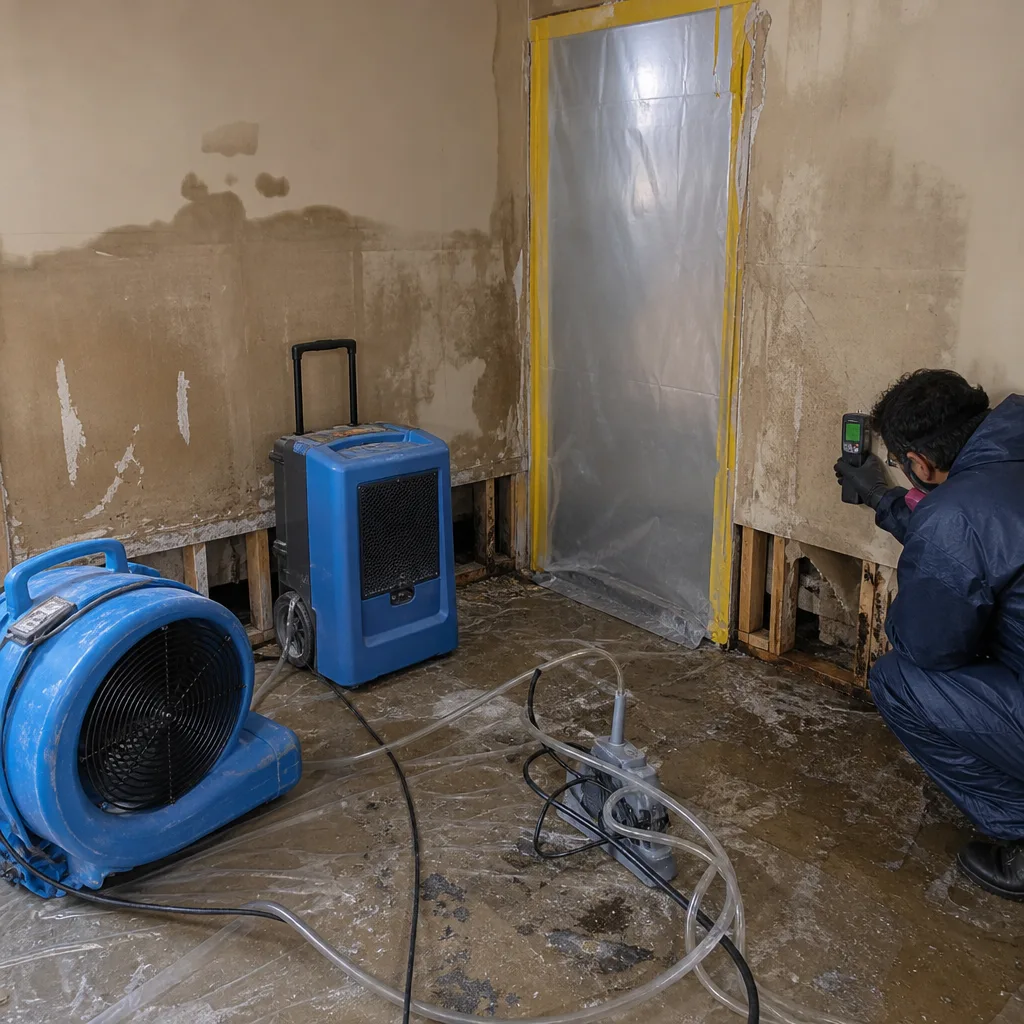 Before
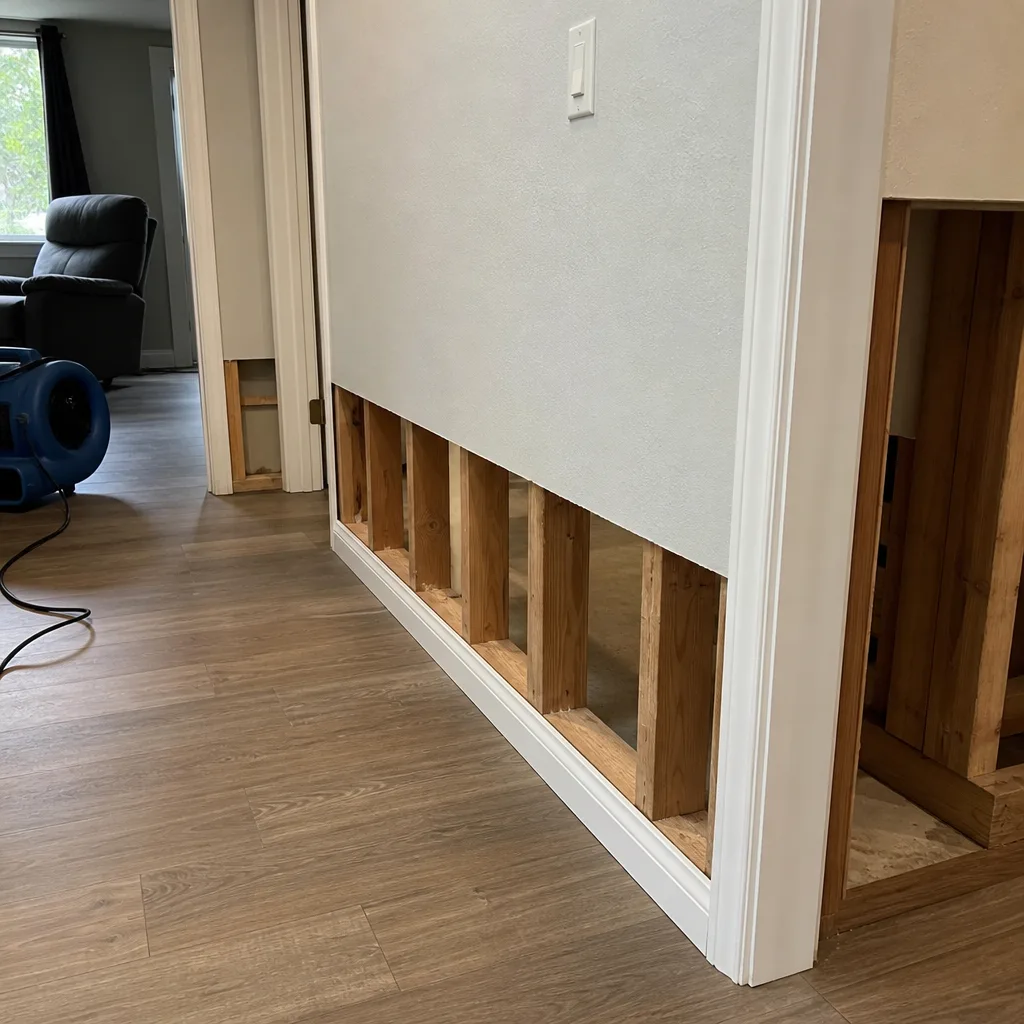 After
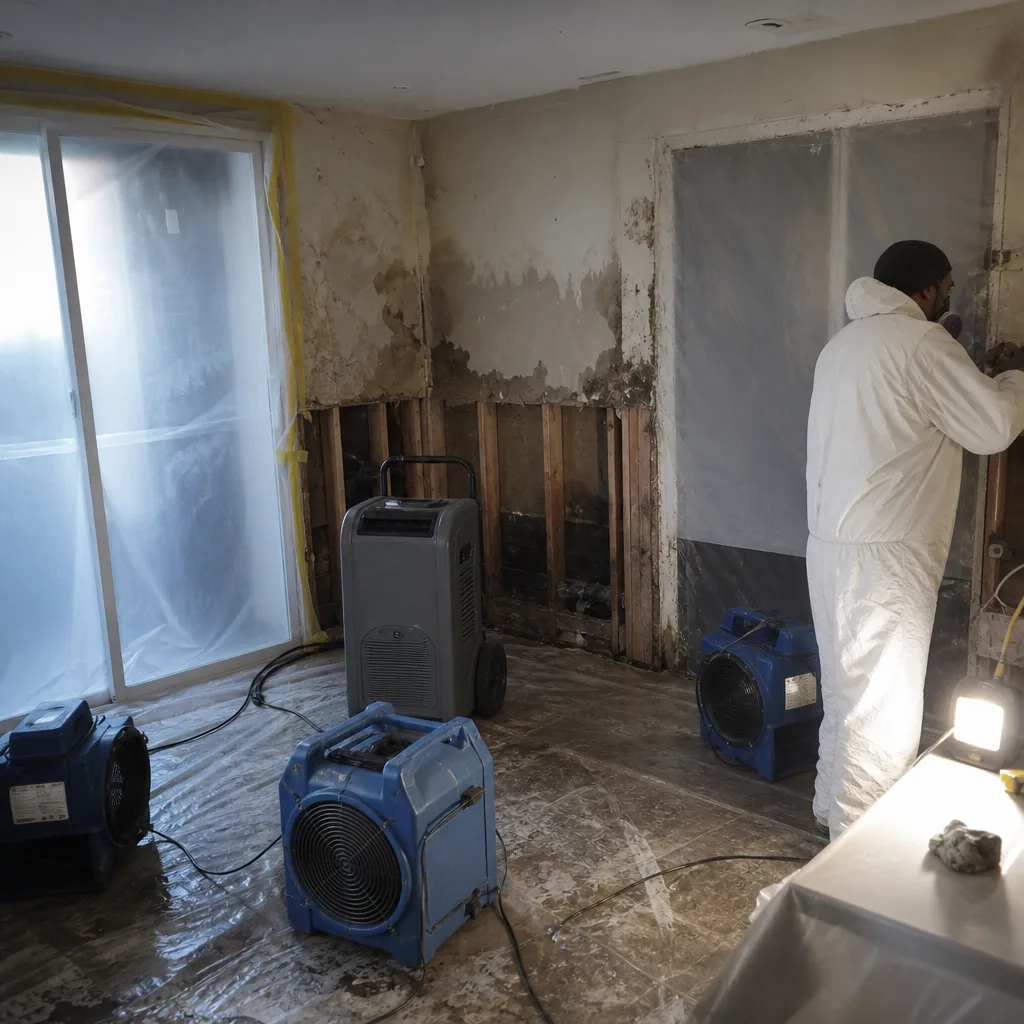 Before
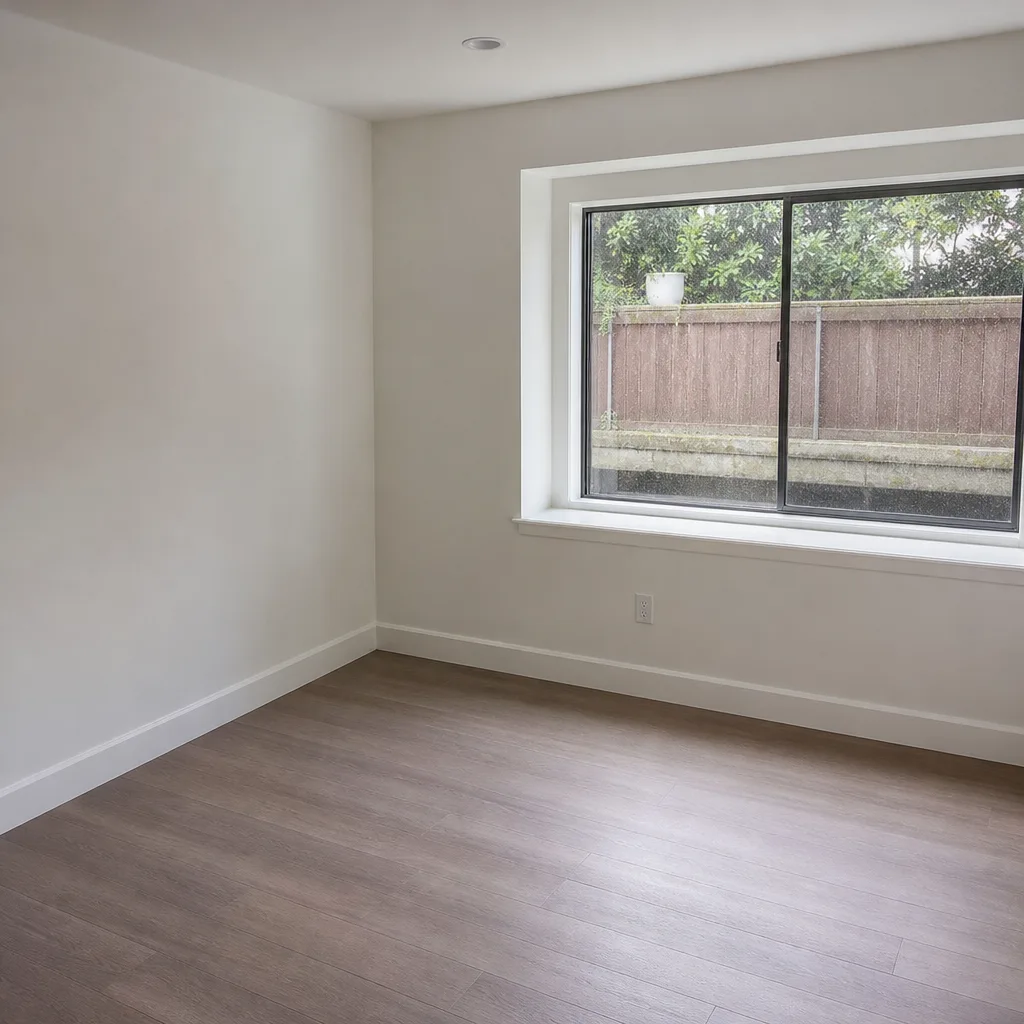 After
Common Mold Remediation Problems We See in Mead Valley Homes
- Detached workshops sealing in wind-driven dust. After a Santa Ana event, dust and fine grit settle into wall cavities and attics. Homeowners seal the building up, and within weeks the trapped humidity feeds mold growth behind drywall that nobody sees until it smells.
- Category 3 misclassification on well and septic properties. Some contractors skip the testing and treat a sewage-adjacent water loss as clean water. On a Mead Valley parcel with a private septic system, that mistake leads to incomplete antimicrobial treatment and recurring mold blooms behind the walls.
- Late arrival on rural service drives. The separation between Mead Valley’s acreage and the nearest urban contractor means water losses often sit past the 24 to 48 hour drying window. By the time a generalist arrives, a dryable Category 1 loss has become a Category 3 tear-out.
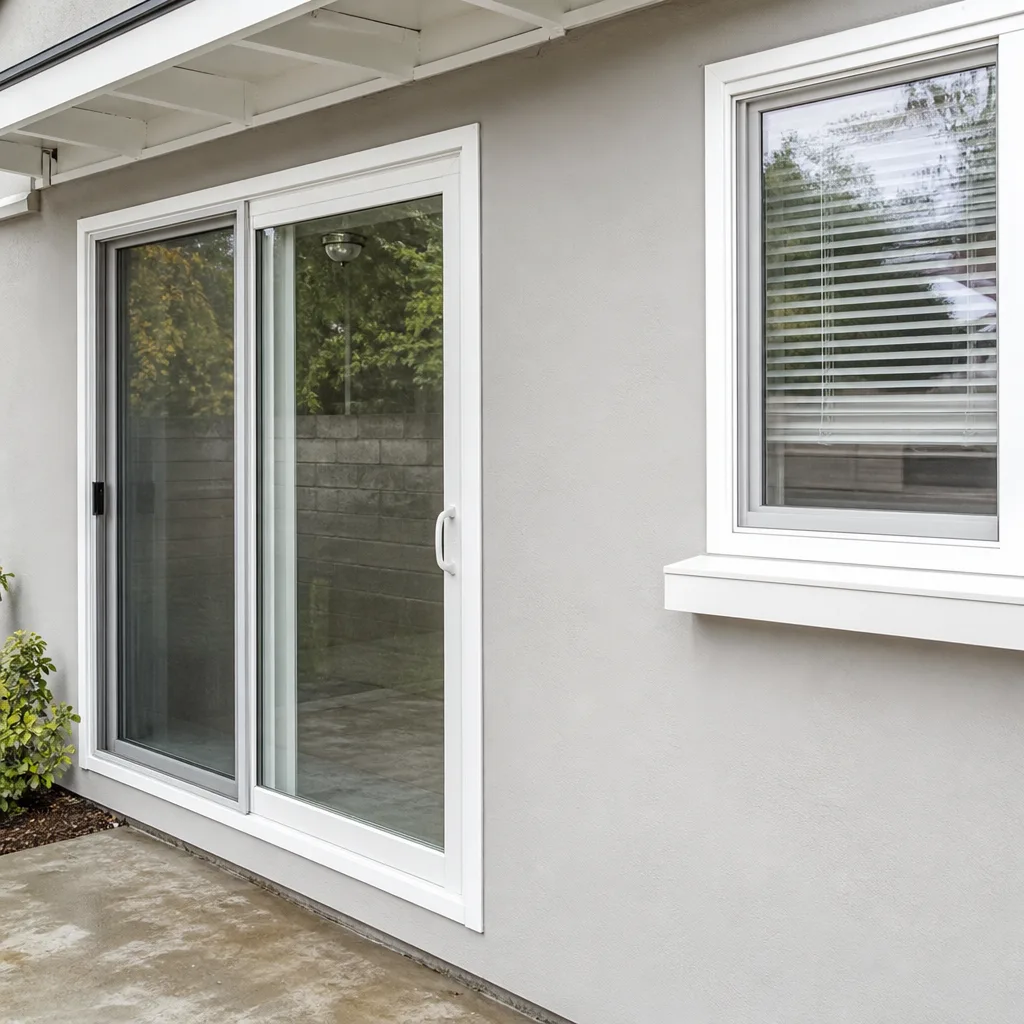
- Monsoon sheet water against slab-on-grade foundations. Window seals and aging shingle roofs fail in the first downpour after months of dry heat. Water sheets across the slab, wicks into drywall, and feeds mold in the wall cavities that standard air movers alone won’t reach.
Pricing for Mold Remediation in Mead Valley, CA
Mold remediation in Mead Valley runs from about $1,800 for a contained single-room job to $6,500 or more for multi-room or detached structure remediation affecting a private well or septic property. Mold inspection and testing alone typically runs $350 to $650. Crawl space treatment adds $1,200 to $2,800 depending on square footage and moisture barrier needs. Black mold remediation adds 20 to 30 percent over standard removal because of the containment and disposal protocols. The biggest cost drivers in Mead Valley are the rural service drive, the need to test water as Category 3 on well/septic lots, and whether a detached workshop needs its own containment zone. Call (833) 620-3891 for a free estimate, and we’ll put the scope in writing before any work begins.
We Also Serve Cities Near Mead Valley
Our crews regularly run to Perris, Good Hope, Canyon Lake, and Meadowbrook, but Mead Valley gets the full commercial-grade setup every time. If you’re on the edge of the 92570 ZIP or just outside it, call (833) 620-3891 and we’ll confirm coverage on the phone.
Serving Mead Valley, CA — Our Local Coverage Area
We’re based in the Mead Valley area and know this community well. Use the map below to see our service coverage — if you’re nearby, we can almost certainly help.
FAQs About Mold Remediation in Mead Valley
Mold can begin growing within 24 to 48 hours of a monsoon-driven water intrusion, and in Mead Valley’s hot summer conditions, growth accelerates faster than coastal areas because interior temperatures stay in the 70s and 80s even overnight. If water has reached drywall or insulation, call (833) 620-3891 immediately. The longer the moisture sits, the more likely a simple drying job becomes a tear-out.
Because much of Mead Valley’s housing runs on private wells and septic systems, water from a sewage-adjacent backup or a failed septic line carries contamination risk that city-sewer homes in Riverside don’t face. We treat the water as Category 3 meaning contaminated and requiring antimicrobial treatment and full containment until lab results confirm otherwise. It’s a conservative protocol that prevents recurring mold blooms and protects your insurance claim.
Yes, when the mold is limited to surface growth or the framing is still structurally sound. We use Injectidry wall-cavity drying systems to pull moisture from inside the walls of detached workshops without demolishing them. If the drywall is already softened or the mold has penetrated the paper layer, we’ll recommend targeted removal instead. We were called to a manufactured home off Lester Avenue after a monsoon downpour overwhelmed a window seal, and because the property runs on a well and septic, we treated the moisture as Category 3 until lab results cleared it. The one-trip setup included running Injectidry in the detached workshop wall cavities, so the homeowner didn’t face a second visit for missed moisture mapping.
A persistent musty smell in rooms or wall cavities, often within two to four weeks after a Santa Ana wind event. The fine dust and grit that blows into attics and window tracks traps moisture against framing. If you smell something that wasn’t there before and you live on a rural Mead Valley parcel, check the walls facing the prevailing wind first. Then call us for an inspection.
Yes, every Mead Valley job includes daily moisture readings, photo documentation, and drying logs that show pre-loss and post-remediation moisture levels. These logs are written to align with IICRC S520 standards and are formatted so your adjuster can review containment, antimicrobial treatment, and drying progression without follow-up calls. We also coordinate directly with your adjuster when needed.
If you’ve got mold in a Mead Valley home, a detached workshop, or a manufactured home on septic, call (833) 620-3891 today. We’ll send a certified technician, map the moisture, and put the scope in writing before any work starts.
Written by Noel Carbajal, Owner at Renew Water Damage, serving Mead Valley and the surrounding Inland Empire from our base in Orange, CA.