

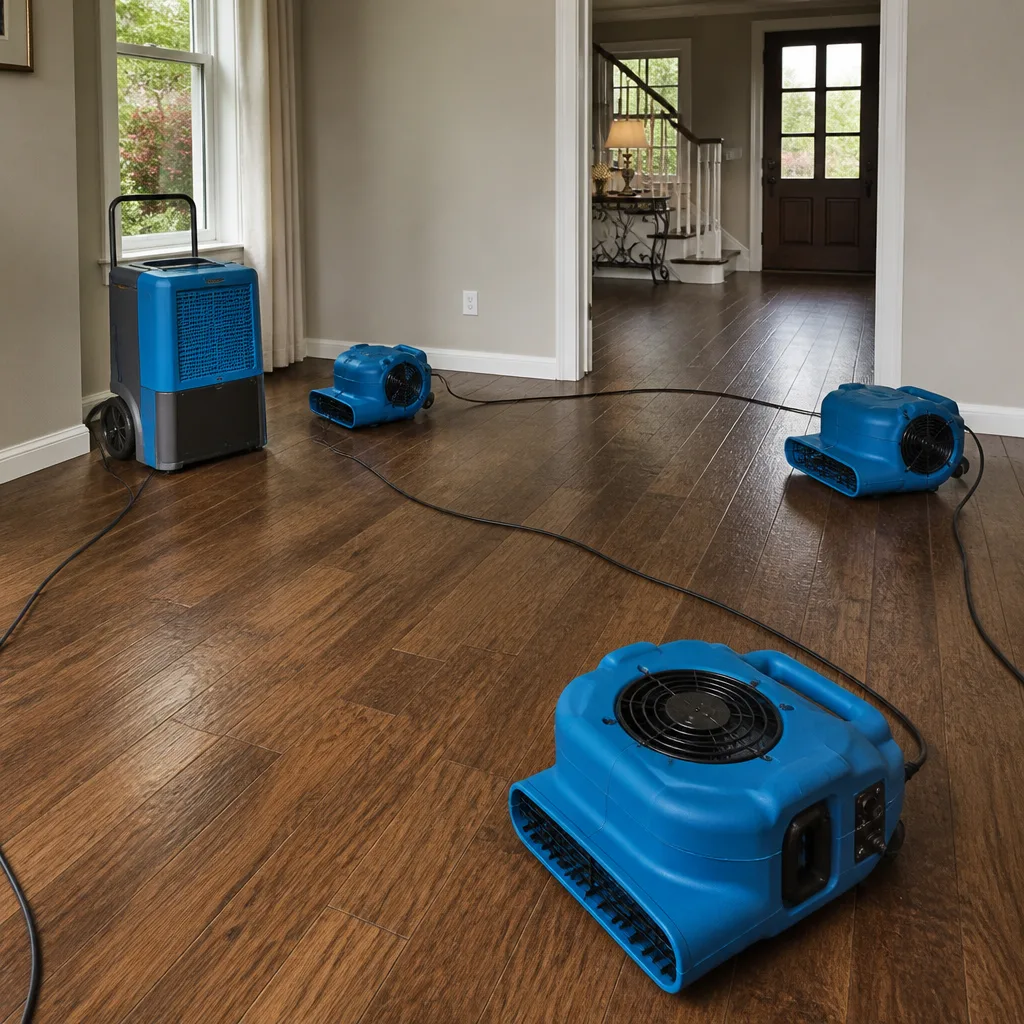
 Water damage drying
 Fire & smoke cleanup
 Mold remediation
 Storm response
 Sewage cleanup
 Reconstruction
Free visual inspection and a written scope of work before any mitigation begins - photos, moisture readings, and drying logs go in your claim file
The scope we write is the scope we bill. Anything new gets shown to you, in writing, before we touch it.
Get your free estimateFast, Reliable Mold Remediation Across Highland
Mold remediation in Highland costs $1,800 – $6,500 for a typical single-family home, with attic-focused smoke-and-moisture jobs running $2,200 – $4,800, and full black mold containment projects starting at $3,500. We’re on site in Highland usually within hours, not days. Call (833) 620-3891 and you’ll speak directly to a restoration coordinator who knows this ZIP code, knows how Santa Ana wind events play out here, and knows what to check before the rain even arrives.
What we see in Highland most weeks: smoke and ash forced into attic spaces during wind events, followed by moisture from winter storms, then mold colonies nobody notices until the musty smell starts drifting downstairs. We’ve walked enough foothill properties between Greenspot Road and the 330 corridor to know where the trouble hides. Same crew from the first HEPA vacuuming pass through the final air-quality reading.
Why Renew Water Damage Is Highland’s Preferred Mold Remediation Company
Highland homeowners call us because we treat mold as a structural event, not a surface cleaning. Our IICRC-certified technicians work to S520 standards for mold remediation and S500 for water damage, which matters when you’re dealing with hidden colonies inside wall cavities and attic insulation. Noel Carbajal built Renew Water Damage around one principle: restoration is a discipline, not an add-on service. That’s why our trucks run Dri-Eaz dehumidifiers, Phoenix axial air movers, and XPOWER air scrubbers on residential jobs throughout 92346.
Highland’s housing stock shapes what we do. The mid-century tract homes east of Victoria Avenue and the foothill streets below the wash still carry original stucco-over-wood-frame construction, galvanized supply lines, and attic venting that was never designed for ash intrusion. Local customers tell us the same thing: a generalist contractor showed up, sprayed some bleach, and left. We don’t do that. We document moisture readings, set containment, and dry the structural framing with Injectidry cavity systems. Membership in the Restoration Industry Association and IFA keeps us accountable to standards that go beyond a single certification. We serve both homeowners and property managers in Highland, and we know which streets see wind-driven ash first.
Restoration work we handle
Mold Removal Specialist in Highland
A Mold Removal Specialist in Highland does more than cut out drywall and spray fungicide; they map the moisture source, remove affected material under containment, and dry the structure to a level where regrowth won’t come back. In this ZIP code, that usually means working in attics after wind-driven ash has settled into insulation, or opening walls where galvanized plumbing has been leaking slowly for months.
Moisture Mapping and Containment
Before we remove anything, we trace where the water came from using moisture meters and thermal imaging. In Highland’s older homes, the source is often a pinhole leak in original supply lines, hidden inside a wall cavity. We set up full containment with negative air pressure before disturbing any mold, because airborne spores are the real hazard during removal.
Attic and Insulation Removal
Highland attics collect ash from Santa Ana winds. When rain follows, that ash holds moisture against the insulation and framing. We HEPA vacuum the affected insulation, bag and dispose of contaminated material, and apply EPA-registered antimicrobial to the framing. Expect $2,200 – $4,800 for a typical Highland attic remediation, depending on square footage and how deep the contamination goes.
Black Mold Removal in Highland
Black Mold Removal in Highland means full containment, air scrubbing, and controlled demolition of affected material, not just a surface cleanup. When our team finds stachybotrys chartarum in a Highland home, it’s usually in one of two places: attic sheathing after repeated smoke-and-moisture cycles, or crawl spaces where atmospheric-river runoff pushed muddy water under the subfloor.
Containment and HEPA Air Scrubbing
We establish negative air pressure in the affected zone and run HEPA-filtered air scrubbers continuously during removal. This keeps spores from spreading through the rest of the house, which matters in Highland’s tighter mid-century floor plans where the HVAC system shares air between rooms.
Structural Drying After Removal
Removing black mold is only half the job. The framing behind it has to be dried to below fungal-growth threshold. We use Injectidry wall-cavity systems and Dri-Eaz dehumidifiers to dry stud cavities and attic framing without unnecessary demolition. Black mold removal in Highland typically runs $3,500 – $6,500 because the contamination is usually structural by the time it’s discovered.
Trusted Brands We Service in Highland
Our crews in Highland work with Dri-Eaz dehumidifiers, Phoenix high-velocity air movers, and XPOWER air scrubbers because these brands hold up under sustained use and produce documented drying logs that insurance adjusters recognize. We stock the supplies and replacement parts needed for Highland’s most common jobs, so we don’t have to leave town when a mid-century attic needs HEPA vacuuming and containment on short notice. The equipment matters because the outcome matters. A restoration company that shows up with rental equipment from a hardware store isn’t going to dry a wall cavity correctly, and we won’t pretend otherwise. For any mold work, our Mold Remediation team arrives with commercial-grade gear sized for the job.
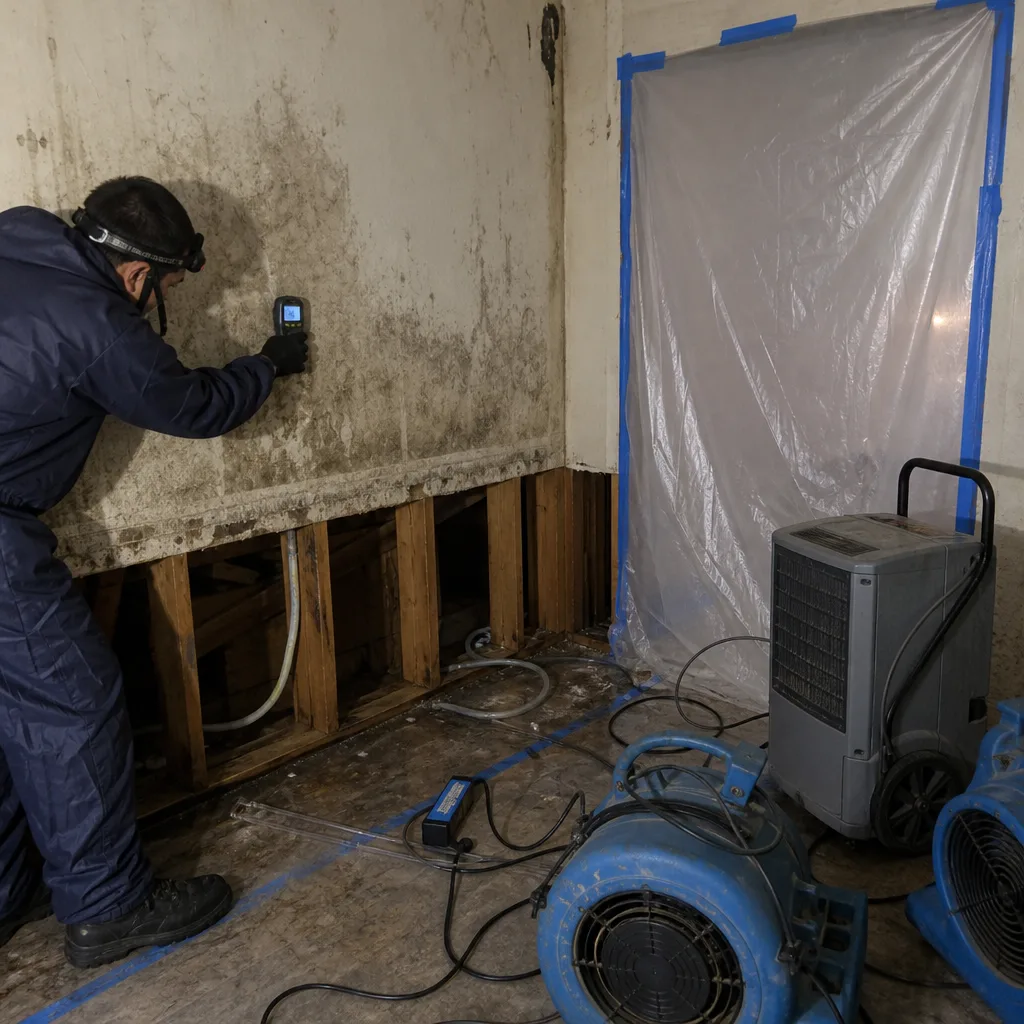
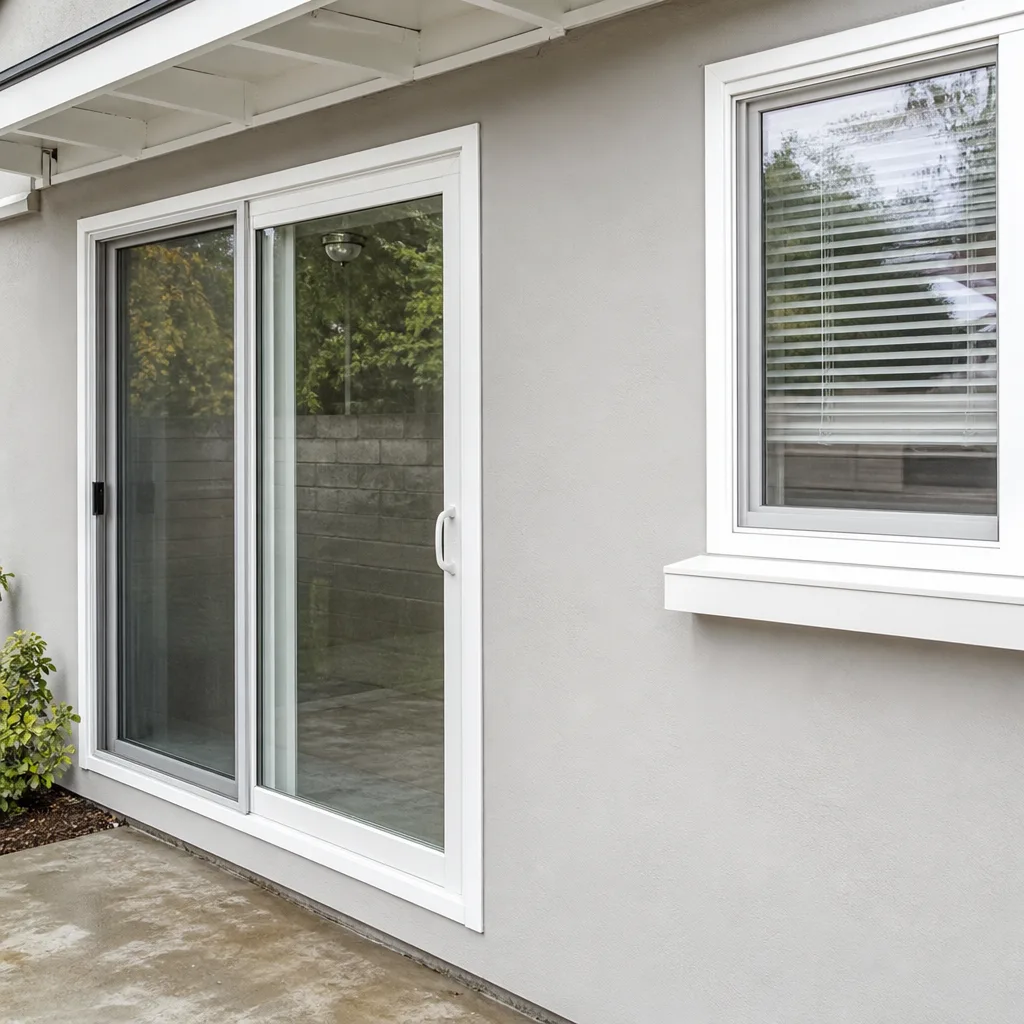
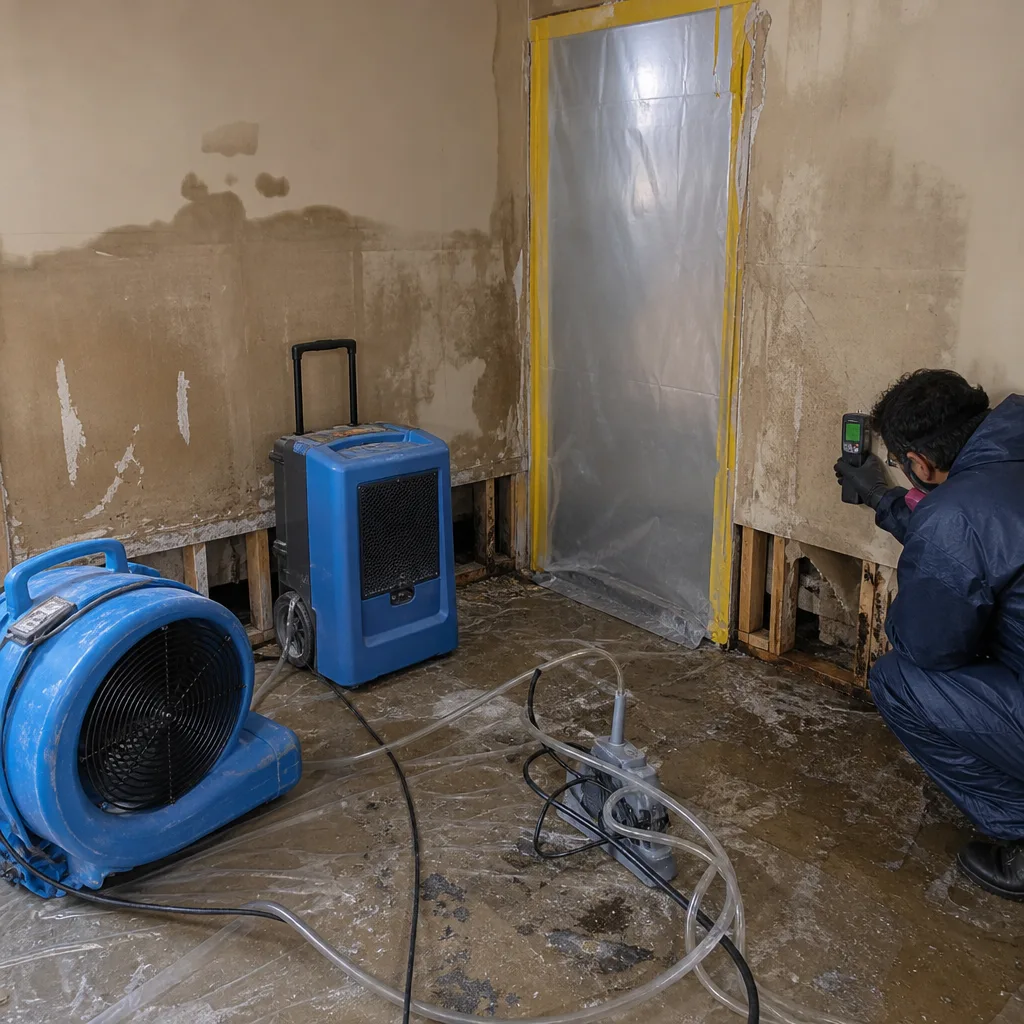
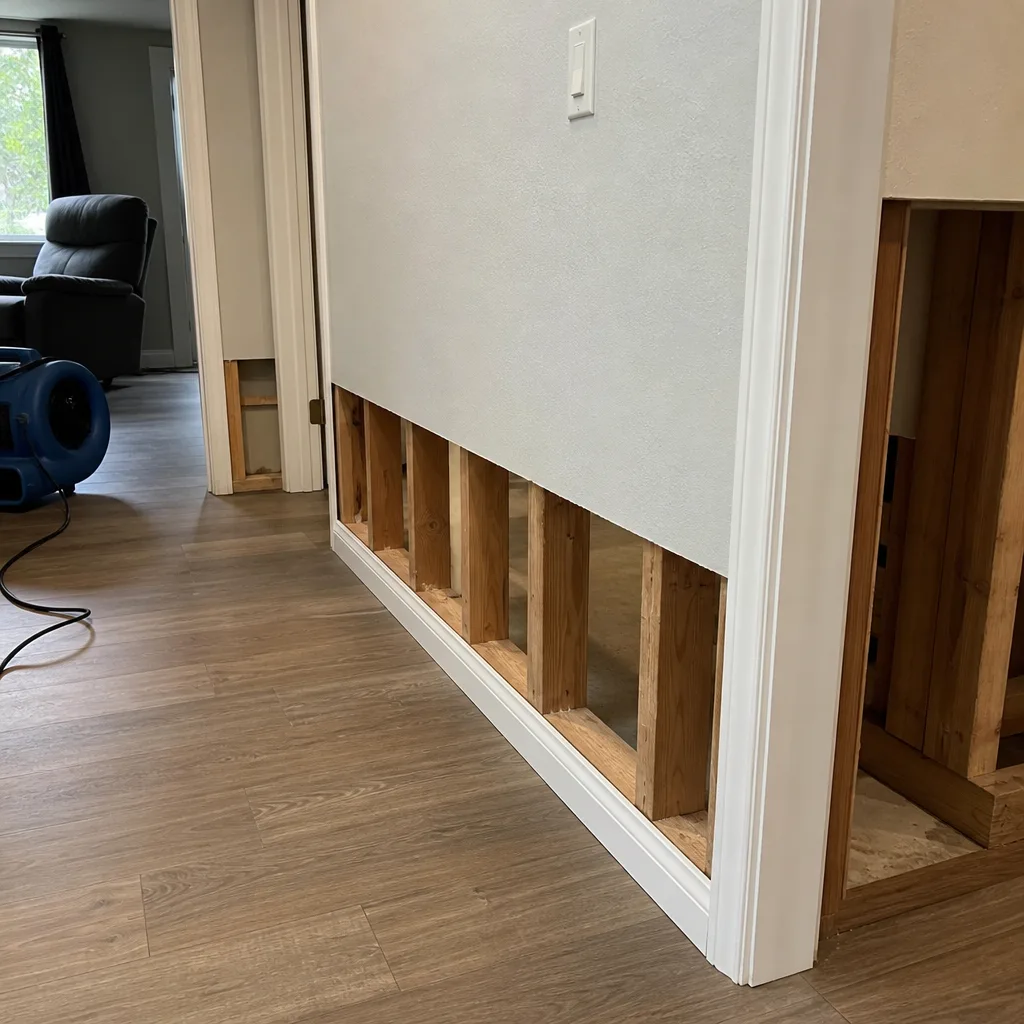
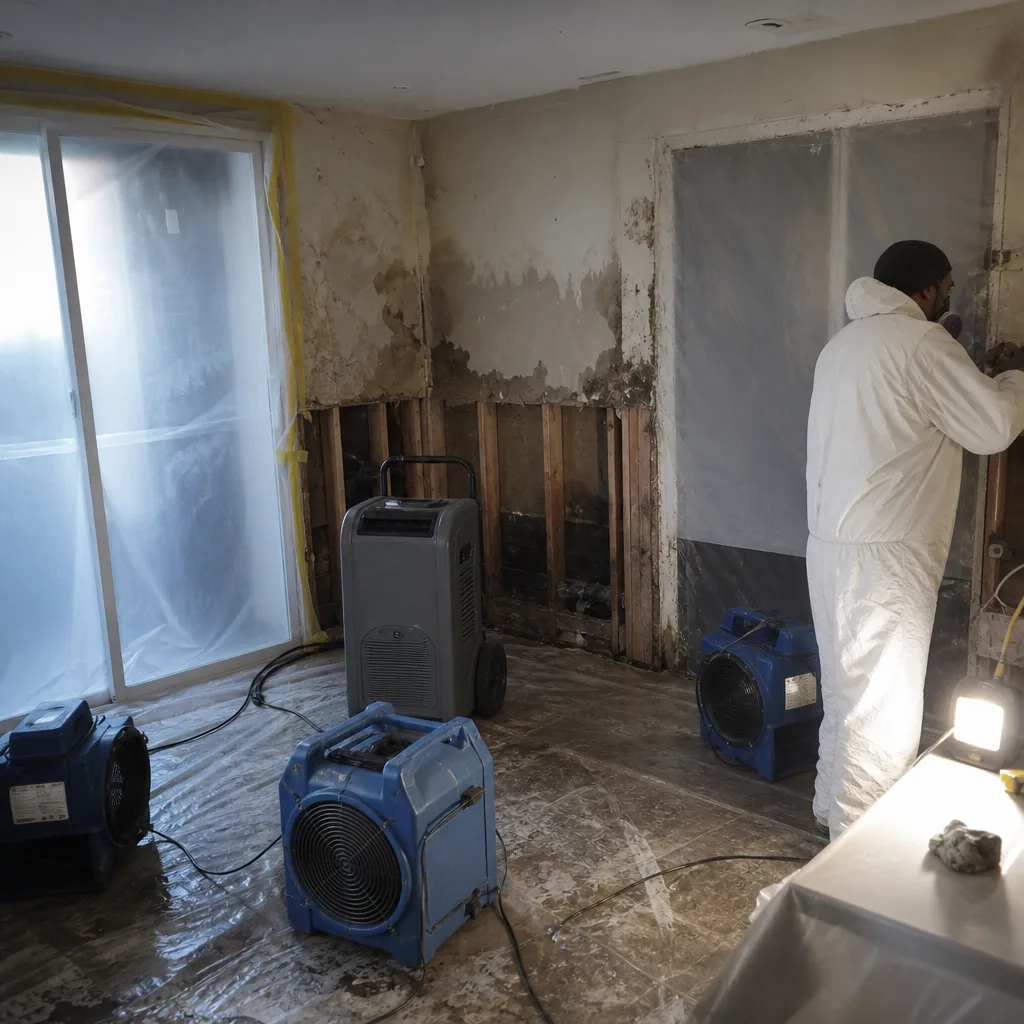
See the difference
 Before
 After
 Before
 After
 Before
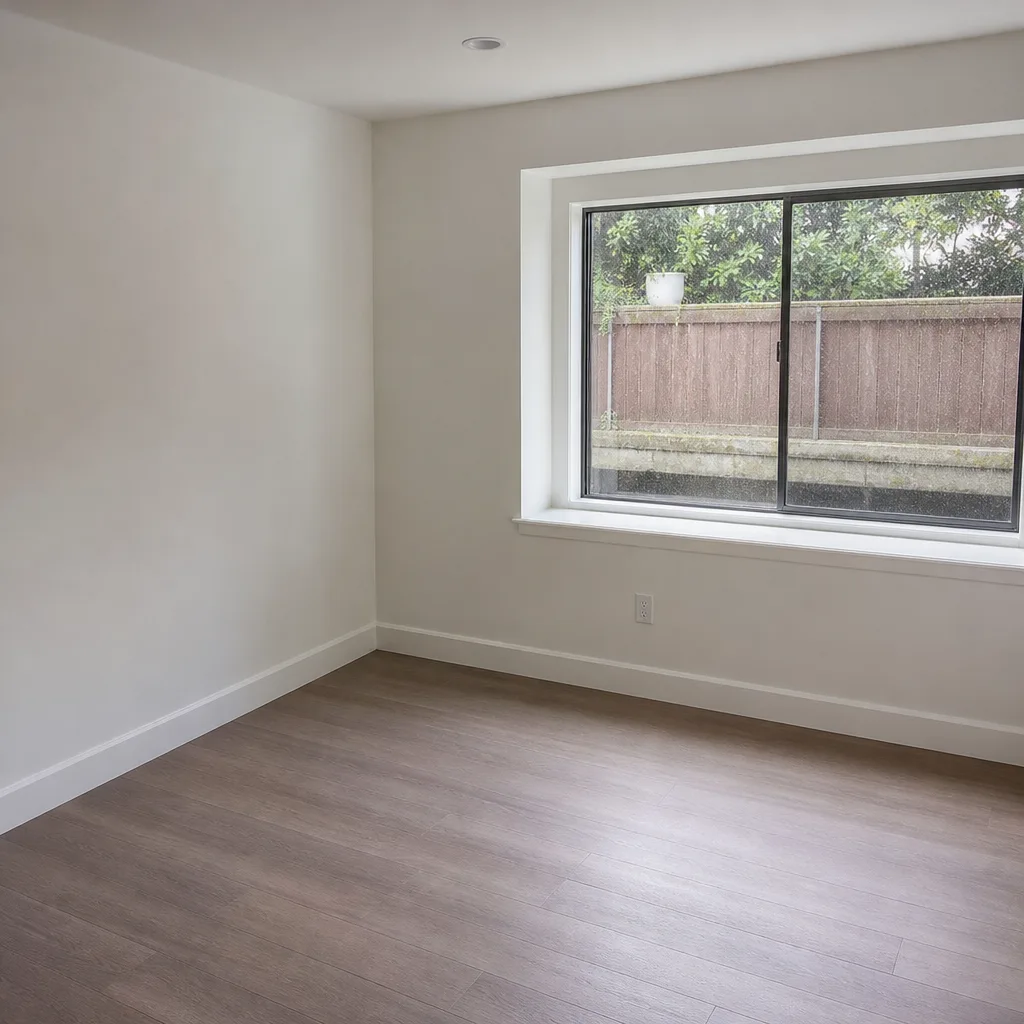 After
Common Mold Remediation Problems We See in Highland Homes
- Ash-soaked attic insulation after Santa Ana events. Wind forces smoke and ash through soffit vents into attic insulation across whole foothill tracts. When winter rains follow, the damp insulation becomes a breeding ground for mold that goes undetected until odors appear indoors.
- Slow pinhole leaks from original galvanized plumbing. Highland’s mid-century tract homes still carry original supply lines in many cases. These leak inside wall cavities without visible water stains, and mold grows for months before discovery.
- Muddy runoff in foothill crawl spaces. Atmospheric-river rain on nearby fire-scarred hillsides sends debris and Category 3 water into crawl spaces below the foothill streets. Left unextracted, that contamination wicks into subfloor and joists, requiring full containment and removal.
- HVAC systems spreading spores between rooms. In Highland’s compact single-level floor plans, mold in one room often migrates through the ductwork. We inspect the system and seal return grilles during containment to stop cross-contamination.
Pricing for Mold Remediation in Highland, CA
We Also Serve Cities Near Highland
Beyond Highland, we run full mold remediation crews in San Bernardino, Muscoy, Redlands, and Loma Linda. If you’re a property manager handling units across multiple Inland Empire cities, one call covers it. Read more about how we serve the area on our Mold Remediation in Highland page, or call (833) 620-3891 to schedule an inspection anywhere in the eastern valley.
Serving Highland, CA — Our Local Coverage Area
We’re based in the Highland area and know this community well. Use the map below to see our service coverage — if you’re nearby, we can almost certainly help.
FAQs About Mold Remediation in Highland
Mold can begin growing within 24 to 48 hours once ash and insulation become wet. After a Santa Ana event that forces ash through soffit vents, the insulation acts like a sponge when winter rain adds moisture, and you’ll often smell it before you see it. Call (833) 620-3891 as soon as you notice a musty odor after wind and rain.
Highland sits in the wind-and-fire corridor below the San Bernardino Mountains, so the damage sequence is different. Santa Ana winds drive smoke and ash into attic spaces, then atmospheric-river rain hits fire-scarred hillsides and pushes water into foothill crawl spaces. Mold remediation here usually means dealing with attic insulation contamination and crawl space water in the same season, often in the same home.
We remove the contaminated insulation under containment, HEPA vacuum the framing, apply EPA-registered antimicrobial, and dry the structural wood with Injectidry systems before any new insulation goes in. Moisture readings are logged throughout, and you get the documentation at the end of the job. Call (833) 620-3891 for an attic assessment; we’ll tell you if the insulation can be saved or if full removal is the right call.
Category 3 water, which contains contaminants from outside sources, is the most common cause of severe mold in Highland homes. This is the muddy runoff that enters foothill crawl spaces during atmospheric-river rain, and it requires full containment, removal of affected material, and professional drying. A leak from a galvanized supply line is usually Category 1, but it becomes a mold risk when it runs undetected for weeks or months.
Yes, we handle black mold removal throughout Highland and the 92346 ZIP code. Our team sets containment, runs HEPA air scrubbers, removes affected drywall and insulation, and dries the structure to prevent recurrence. Call (833) 620-3891 for a free estimate; we’ll tell you what you’re actually dealing with and what it’ll take to fix it.
Written by Noel Carbajal, Owner at Renew Water Damage, serving Highland and the Inland Empire since 2018.