
 Water damage drying
 Fire & smoke cleanup
 Mold remediation
 Storm response
 Sewage cleanup
 Reconstruction
Free visual inspection and a written scope of work before any mitigation begins - photos, moisture readings, and drying logs go in your claim file
The scope we write is the scope we bill. Anything new gets shown to you, in writing, before we touch it.
Get your free estimateFast, Reliable Water Damage Restoration Across Wrightwood
Water damage restoration in Wrightwood typically runs $1,800 to $6,500 depending on how far water has traveled through cabin framing, subfloors, and wall cavities. Most jobs we handle here start with a same-day or next-morning dispatch from Orange, and we’ve learned the CA-2 drive patterns well enough to plan around snow-chain controls and late-winter thaw cycles. When a frozen supply line splits in an unoccupied A-frame off Lone Pine Canyon Road, the damage is rarely just water. It’s moisture, mold pressure, and structural saturation all at once – which is why our crews arrive with commercial-grade drying equipment and a documented plan, not just a shop vac and a promise. Call (833) 620-3891 for a free estimate and a straight answer about what you’re actually dealing with.
- Key Takeaways for Wrightwood: Burst-pipe losses in unoccupied cabins often sit for weeks or months before discovery.
- Our IICRC-certified crews run full moisture mapping before any drying equipment goes in.
- Injectidry cavity drying systems pull water from inside cabin walls without tearing out every sheet of drywall.
- Pricing reflects the mountain-access reality, not a generic per-room formula.
Why Renew Water Damage Is Wrightwood’s Preferred Water Damage Restoration Company
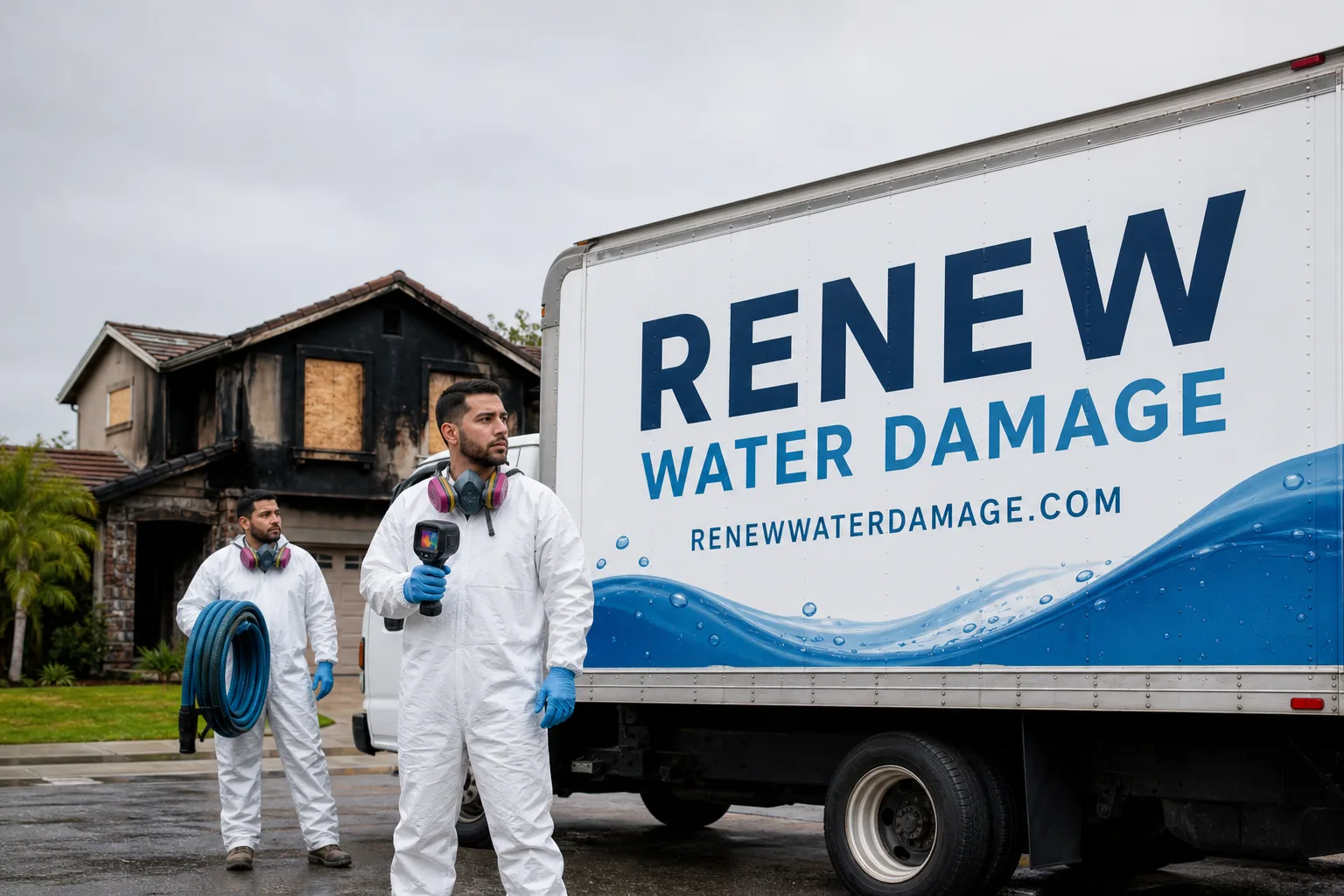
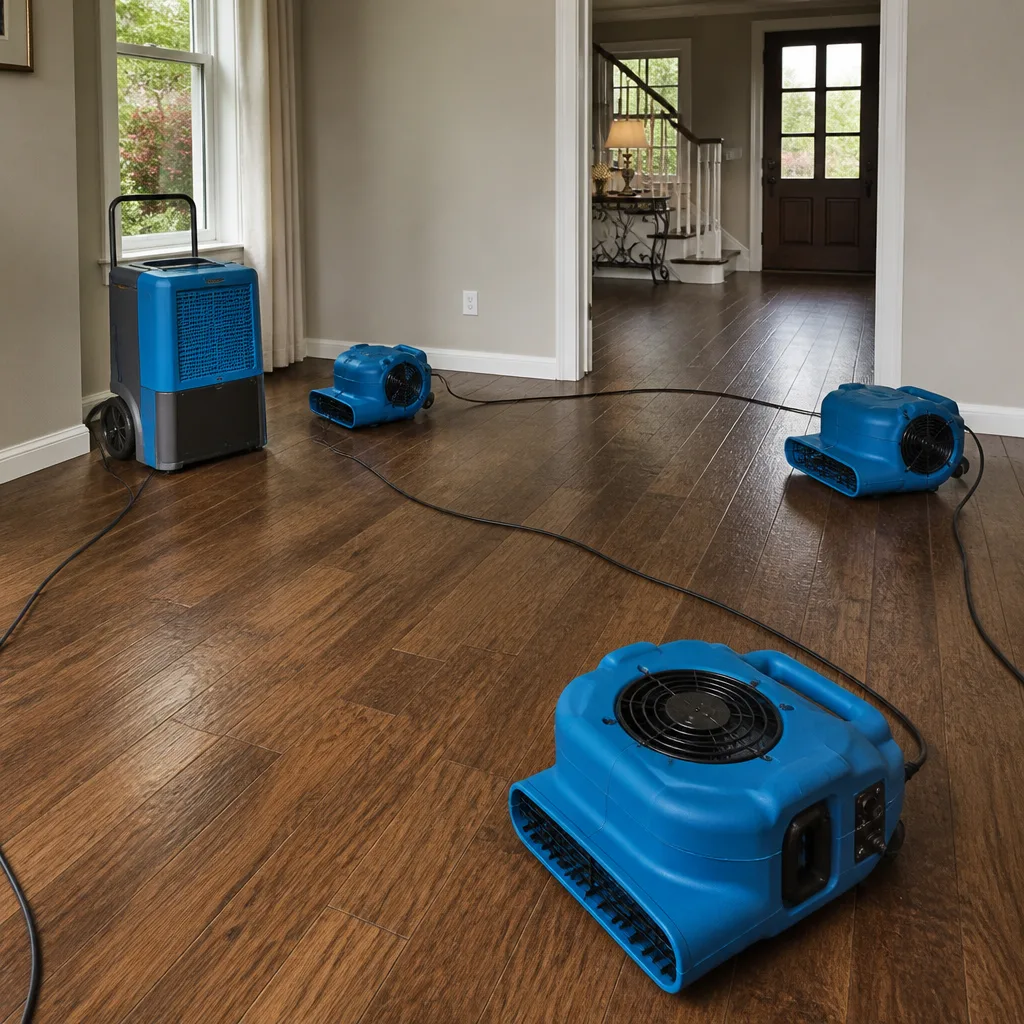
We’re not the crew that shows up late without chains for the last stretch of CA-2. Renew Water Damage is led by Noel Carbajal, and the company’s approach to Water Damage Restoration is built on IICRC-certified training and years of working losses in mountain communities where access, construction type, and weather all stack against a fast dry-out. Wrightwood homeowners and property managers call us because we stock the equipment that actually works in tight A-frame and pier-and-beam layouts: Dri-Eaz and Phoenix dehumidifiers, XPOWER air movers, and Injectidry in-wall drying panels.
We hold active RIA and IFA memberships, which means our procedures get reviewed against industry standards, not just our own habits. The feedback we get from Wrightwood customers is consistent: crews show up on time, speak plainly about what’s wet and what isn’t, and document every drying day with moisture logs and photos. That documentation matters when the cabin is a mid-century second home and the insurance adjuster wants proof of pre-loss condition before approving a pack-out. We know the difference between a 92397 cabin with original early Romex and one that’s been rewired in the last decade – and we dry accordingly.
Restoration work we handle
Flooded Basement in Wrightwood
A flooded basement in Wrightwood costs between $2,200 and $6,500 on average, with the price driven by whether water pooled on a concrete slab or saturated the pier-and-beam subfloor common in older mountain cabins. When snow melt or a failed sump lets water into a basement, you’re not dealing with a shallow puddle. You’re dealing with wicking into floor joists, sill plates, and the bottom few feet of wood-framed walls.
Pier-and-Beam Saturation
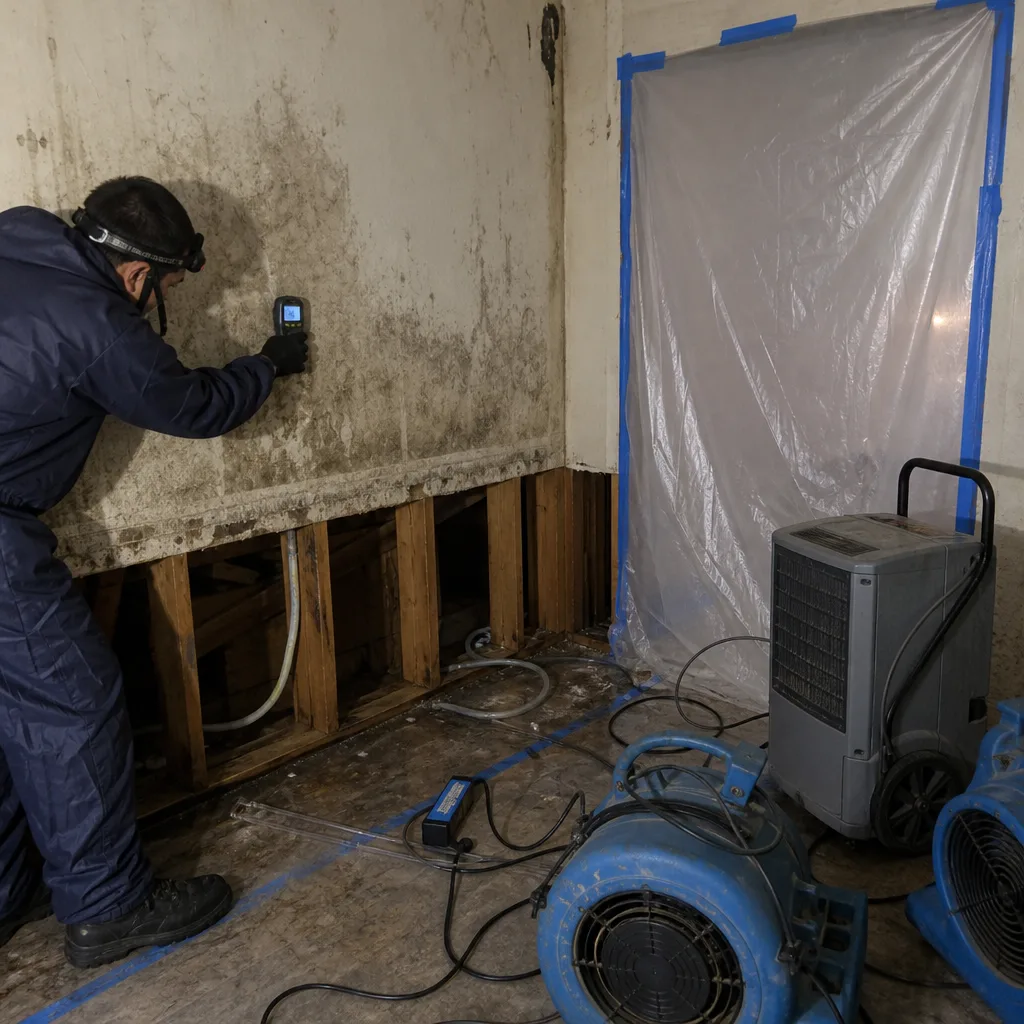
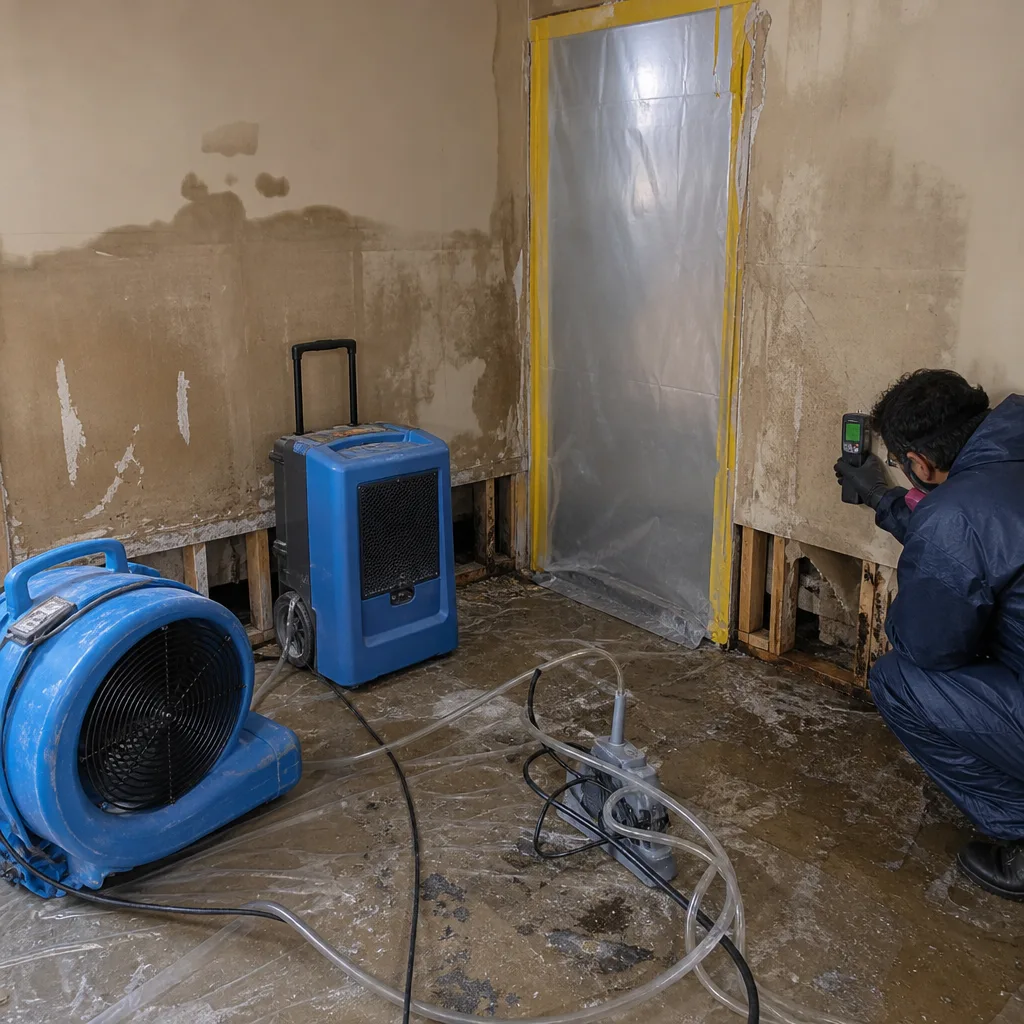
Many Wrightwood cabins built between the 1940s and 1970s sit on pier-and-beam foundations with short crawlspaces. Water that spills into the basement travels along the beams and wicks upward into flooring before you ever see standing water. Our techs run pin-type moisture meters across floor joists and rim boards to map the wet perimeter, then set containment and low-grain refrigerant dehumidifiers below the home to dry the cavity from underneath.
Slab-Floor Basements
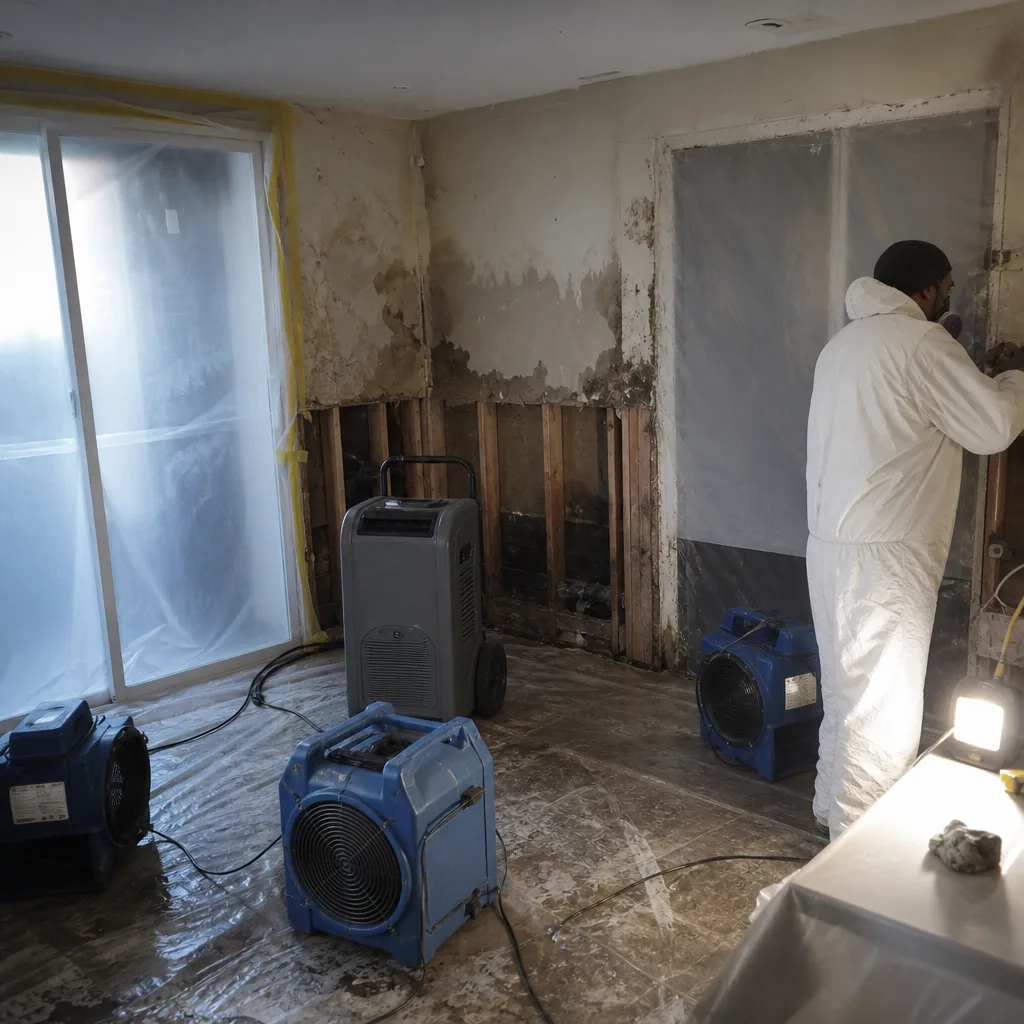
Newer Wrightwood builds sometimes have slab basements, and those are a different problem. Water pools, saturates drywall, and seeps under vinyl or laminate. We extract with truck-mounted and portable units, then open up baseboards and set air movers angled to push air across the concrete surface – which is where evaporation actually happens. Skipping that air movement step leaves a damp slab that keeps feeding humidity into the room for weeks.
Water Extraction in Wrightwood
Water extraction in Wrightwood runs $1,800 to $4,200 for a standard room-and-cabinet loss, with larger whole-cabin jobs hitting the $6,500 range. The first hour after a supply line bursts matters more than most people realize. Gravity pulls water down through flooring, into wall cavities, and under cabinets. Fast extraction stops the spread before drying even begins.
Cabinet and Wall-Cavity Extraction
When water leaks under a kitchen or bath vanity in a Wrightwood cabin, the visible puddle is only a fraction of the problem. The real moisture sits under the cabinet toe-kick and behind the baseboard, trapped against wood framing. Our crews pull the toe-kicks, drill small access ports behind baseboards, and use Injectidry panels to apply negative pressure inside the cavity – drawing water out without removing the entire cabinet run.
Subfloor and Carpet Pad Pulling
Carpet pad acts like a sponge. You can extract the carpet surface for an hour and still leave a saturated pad beneath it. We cut and pull the pad in affected areas, dispose of it properly, and set the carpet up on blocks with air movers running underneath. On hard-surface floors, we check the subfloor moisture content every 12 hours until readings drop into a safe range – then we log that data for the claim.
Trusted Brands We Service in Wrightwood
We maintain service parts and replacement components for the equipment brands most common in Wrightwood cabins and second homes. That includes Dri-Eaz and Phoenix dehumidifiers, XPOWER air movers, and Injectidry panel systems – the same commercial-grade machines we deploy on every job. When a Wrightwood customer calls with a burst pipe inside a finished basement, we’re not renting whatever’s available at the nearest big-box store. We’re pulling from a fleet we maintain, calibrate, and test before it goes up the mountain. That speeds up drying cycles and reduces the chance of a mid-job equipment failure that drags the restoration out another week.
See the difference
 Before
 After
 Before
 After
 Before
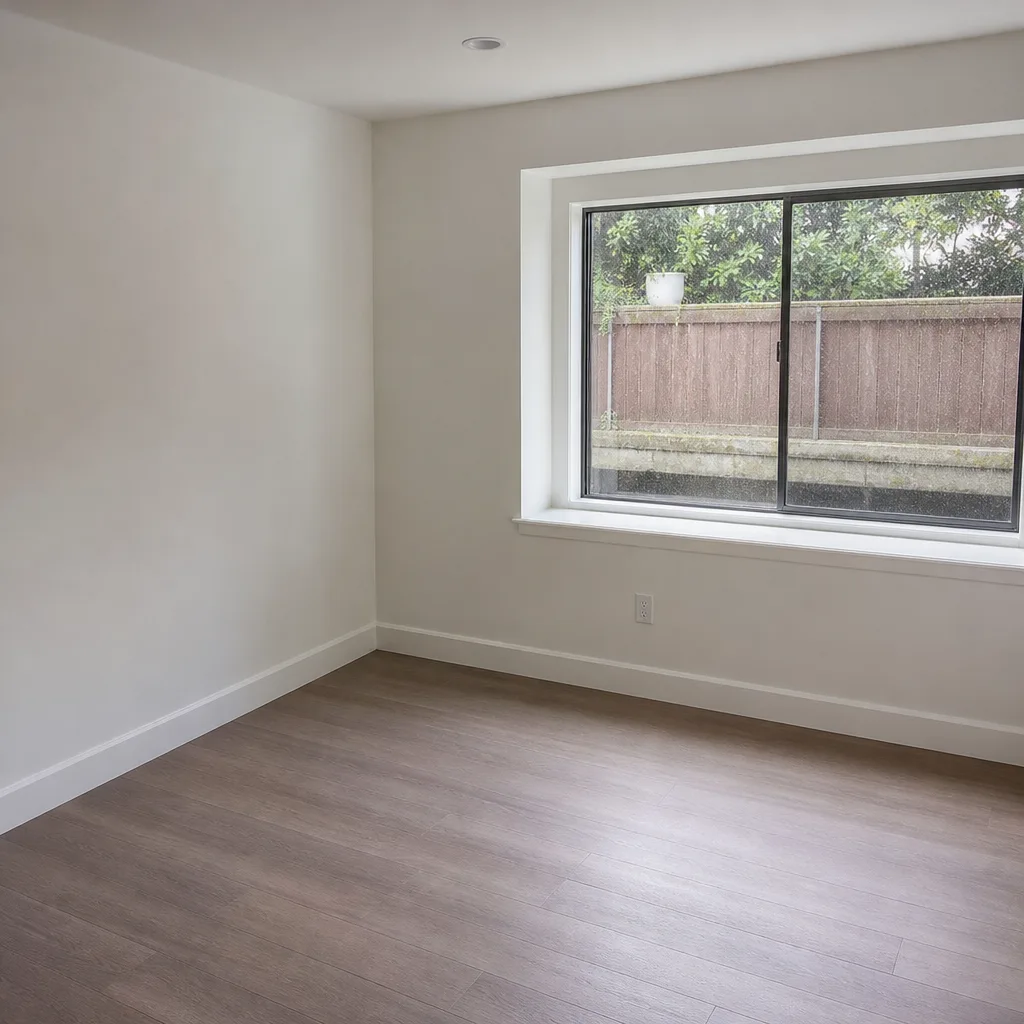 After
Common Water Damage Restoration Problems We See in Wrightwood Homes
- Frozen supply lines inside unheated utility closets. Wrightwood’s winter nights drop well below freezing, and cabins shut down between visits often have water lines routed through exterior-adjacent walls or crawlspaces. A split forms, water flows, and nobody knows until someone opens the front door weeks later.
- Ice dams backing melt water under roof decking. The heavy snow that piles up on A-frame roofs melts from below, refreezes at the eaves, and forces water up under shingles and into wall cavities. We regularly find wet insulation and stained ceiling drywall in the upper corners of Wrightwood cabins after a thaw week.
- Older knob-and-tube and early Romex run through saturated framing. Drying crews without mountain experience don’t always check electrical routing before setting equipment. We map wiring runs during initial inspection and adjust containment boundaries so air movement doesn’t push moisture toward compromised electrical lines.
- Wildland-interface soot and ash combining with water damage. Wrightwood sits in a fire-prone mountain zone, and wind-driven ember events leave ash residue that turns into an acidic slurry when water is introduced. A pipe burst in a cabin with attic ash residue requires cleaning protocols beyond simple extraction.
Pricing for Water Damage Restoration in Wrightwood, CA
Expect to pay $1,800 to $6,500 for water damage restoration in Wrightwood, with most single-room losses landing between $2,000 and $3,800. Whole-cabin burst-pipe jobs that involve subfloor drying, wall cavity extraction, and pack-out of contents reach the top of that range. A flooded basement in Wrightwood with saturated pier-and-beam framing typically starts at $2,200 and can go up to $6,500 depending on square footage and whether floor joists are wet. Water extraction alone runs $1,800 to $4,200 when it includes carpet pad pulling and Injectidry panel setup. Every estimate includes a written scope of work before we start, and our phone line at (833) 620-3891 is open for free quotes. We’ll tell you what category of water you’re dealing with, what’s locked into the materials, and what the drying math actually looks like.
We Also Serve Cities Near Wrightwood
If your property sits just outside the 92397 boundary or you manage multiple mountain homes, we cover the surrounding communities too. Our crews respond to Piñon Hills, Phelan, Oak Hills, and San Antonio Heights with the same certified process and documented drying strategy. Use our Wrightwood page to see how our local response works for the mountain corridor, then call for specific timing to your property.
Serving Wrightwood, CA — Our Local Coverage Area
We’re based in the Wrightwood area and know this community well. Use the map below to see our service coverage — if you’re nearby, we can almost certainly help.
FAQs About Water Damage Restoration in Wrightwood
Because the water sits for weeks or months inside unoccupied cabins before anyone discovers the loss. Wrightwood’s winter outages and snow-blocked driveways mean second-home owners often don’t return until spring, and by then the moisture has been feeding fungal growth behind walls and under cabinetry. What starts as a frozen supply line is now a Class 3 water loss with active mold pressure, which is exactly why our initial inspection in Wrightwood always includes a mold assessment alongside water extraction. Call (833) 620-3891 if you suspect a cabin has been leaking – we can test and scope it before the damage compounds.
CA-2 is the only paved route into Wrightwood, and during snow season it can require chains or even close temporarily, which directly affects how fast equipment gets to your property. Our crews check Caltrans road conditions before dispatch, and we log any delay in our drying plan so the claim record stays honest. If a storm blocks access for a day, we note it, we communicate it, and we adjust the drying cycle without cutting corners on moisture documentation.
Yes. Many Wrightwood cabins still have original knob-and-tube or early Romex running through wall cavities and attic spaces, and older insulation on that wiring degrades faster when wet. We map electrical runs during initial inspection and set containment boundaries so air movement doesn’t push moisture toward compromised lines, and we coordinate with a licensed electrician when anything looks unsafe. Drying a home with vintage wiring demands a slower, more deliberate equipment layout.
In Wrightwood, the most common category issue we see is a clean-water pipe burst that gets downgraded to Category 2 or 3 because it sat long enough to pick up soil, insulation, or rodent waste from pier-and-beam crawlspaces. Clean water from a supply line is Category 1 only if addressed quickly. Once it wicks through older insulation and subfloor debris in a cabin that’s been closed up for months, the contamination level changes and so does the protocol – that’s why our techs test water class and category before deciding what gets torn out and what stays.
We document every room, every moisture reading, and every piece of pre-loss condition before we start work, so the claim has a defensible record. That includes labeled photos of the flooded area, pin-type moisture meter readings logged at set intervals, and a written scope of work that matches IICRC S500 standards. For a mid-century cabin with older finishes, that documentation is what protects you when the adjuster asks why a wall was opened or a pack-out was necessary. Call (833) 620-3891 for a free estimate and documentation review.
Written by Noel Carbajal, Owner at Renew Water Damage, serving Wrightwood and the surrounding mountain communities since company founding.