
 Water damage drying
 Fire & smoke cleanup
 Mold remediation
 Storm response
 Sewage cleanup
 Reconstruction
Free visual inspection and a written scope of work before any mitigation begins - photos, moisture readings, and drying logs go in your claim file
The scope we write is the scope we bill. Anything new gets shown to you, in writing, before we touch it.
Get your free estimateFast, Reliable Water Damage Restoration Across Lakeview
A burst supply line or a roof that gives way during the first hard rain doesn’t wait for business hours, and neither do we. Water damage restoration in Lakeview means responding to hillside lots, steep driveways, and semi-rural homes where water moves differently than it does on flat Riverside subdivisions. If water is spreading through your Lakeview home right now, call (833) 620-3891. We’ll walk you through immediate steps and get a certified crew headed your way.
Lakeview isn’t a flat grid. The terrain puts water where gravity wants it, which is often against a downhill wall, under a manufactured-home belly board, or through a stucco seam that looked fine in September. Our technicians know this because we’ve worked these streets and these slopes. Noel Carbajal built Renew Water Damage around a simple principle: certified methods and commercial equipment belong on every job, from a small ceiling leak off Davis Road to a full flood cleanup near the 92567 corridor.
Why Renew Water Damage Is Lakeview’s Preferred Water Damage Restoration Company
Most restoration companies in the Inland Empire treat Lakeview as an afterthought, a far corner of the service map. We treat it as its own job site with its own failure patterns. The difference shows up in how we scope the work. A hillside ranch on a steep lot doesn’t dry the same way a Canyon Lake tract home does. A manufactured home with a belly-board vapor barrier doesn’t get the same extraction plan as a slab-on-grade house in Perris.
Our Water Damage Restoration crews carry IICRC certification, which means they work to documented drying standards, not guesswork. That matters when you’re looking at a wet wall and the real question is what’s happening behind it. We run moisture mapping, track daily drying logs against pre-loss readings, and photograph everything for your adjuster. Homeowners in Lakeview who’ve dealt with us before know the drill: a written scope before work starts, and no surprises after.
Restoration work we handle
Emergency Water Removal in Lakeview
Emergency Water Removal in Lakeview usually starts with a call from a homeowner watching water run across a floor after a supply line fails or a hillside drain backs up during a winter storm. The first 24 hours decide whether you’re looking at a drying job or a tear-out-and-replace job. Our crews arrive with truck-mounted extraction and satellite staging so the water doesn’t sit while equipment gets unloaded. Typical emergency extraction on a Lakeview home runs $1,200 to $3,800 depending on how far the water traveled and what it soaked into.
Slope and Drainage Staging
On hillside lots, we stage equipment from the uphill side when we can. It keeps hoses out of the living space and lets us drain the grade before we commit to interior drying. If runoff is still feeding the wall from outside, no amount of interior air movement fixes it.
Belly-Board and Crawlspace Checks
For manufactured and mobile homes in Lakeview, extraction includes checking the underbelly vapor barrier. A supply-line leak that runs under the floor will fill the belly board, and pulling the carpet dry while water sits below is a waste of a day. We scope it, cut access where needed, and remove standing water from the cavity before structural drying begins.
Lakeview is one of the few areas we work where this step is routine, not rare.
Flood Damage Restoration in Lakeview
Flood Damage Restoration in Lakeview is different from a plumbing leak. The water is typically category 2 or 3, carrying silt, runoff, or septic-area contamination, and the source is often the same storm that sent water down Camp Evans Road and across low-lying lots. Flood jobs on Lakeview’s sloped terrain run $3,500 to $9,000 on average, with the higher end covering contaminated-water removal, antimicrobial treatment, and structural drying across multiple rooms. The price reflects containment, not just extraction.
Containment and Contamination Control
We set containment on flood jobs because the water isn’t clean. Category 2 and 3 water needs antimicrobial treatment on affected framing and controlled drying so moisture doesn’t carry contaminants into air-circulated spaces. Judging a flood by water color is a mistake some contractors make. We judge it by source and treat it accordingly.
Post-Storm Runoff Work
When winter rain hits after a fire season, the runoff carries ash, debris, and mud into homes that sat dry all year. We’ve seen water enter through garage door thresholds and stucco cracks above grade. We clear the slope drainage before finalizing drying logs, because the wall that dried on Tuesday can get re-wet on Wednesday if the outside problem isn’t handled.
Trusted Brands We Service in Lakeview
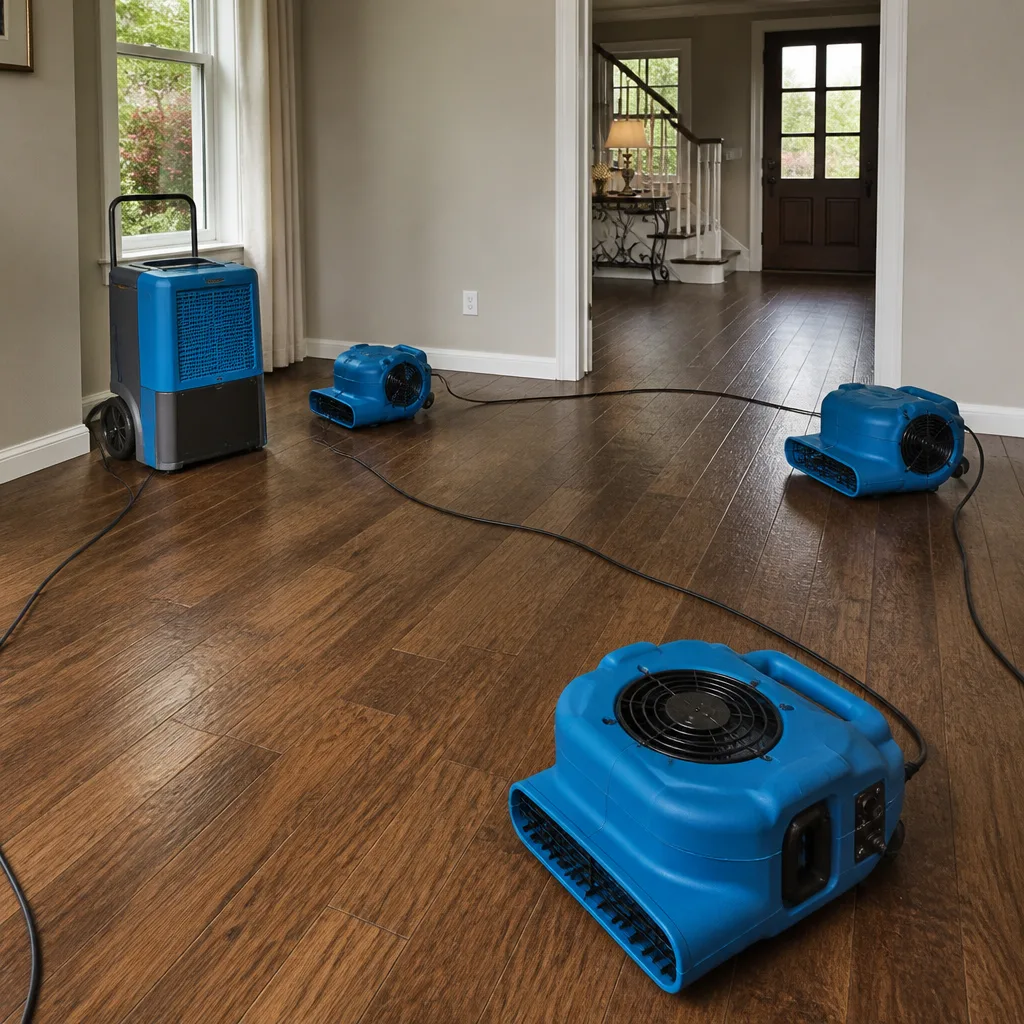
We service and deploy equipment from Dri-Eaz, Phoenix, and XPOWER on Lakeview jobs, and we stock the common replacement parts for these units in our local inventory. That means when a dehumidifier sensor fails mid-job or an air mover’s capacitor goes out on a run down Canyon Lake Drive, we aren’t waiting on a parts shipment from out of state. We swap it and keep drying. The equipment matters because the drying curve matters. Dri-Eaz dehumidifiers and Phoenix units pull moisture at different rates, and XPOWER air movers give us the turbulence we need to dry cavities and tight corners efficiently. This is the same equipment used on commercial losses, running in residential Lakeview living rooms.
See the difference
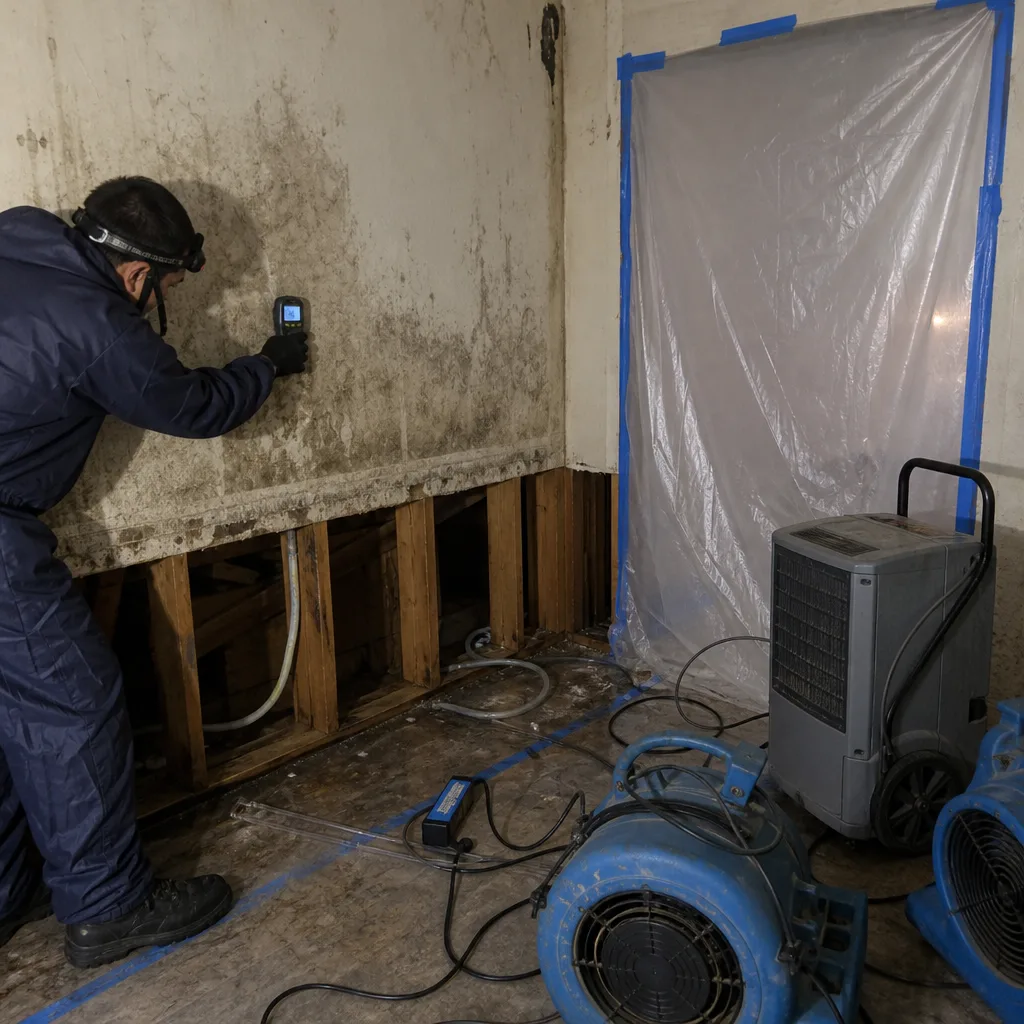 Before
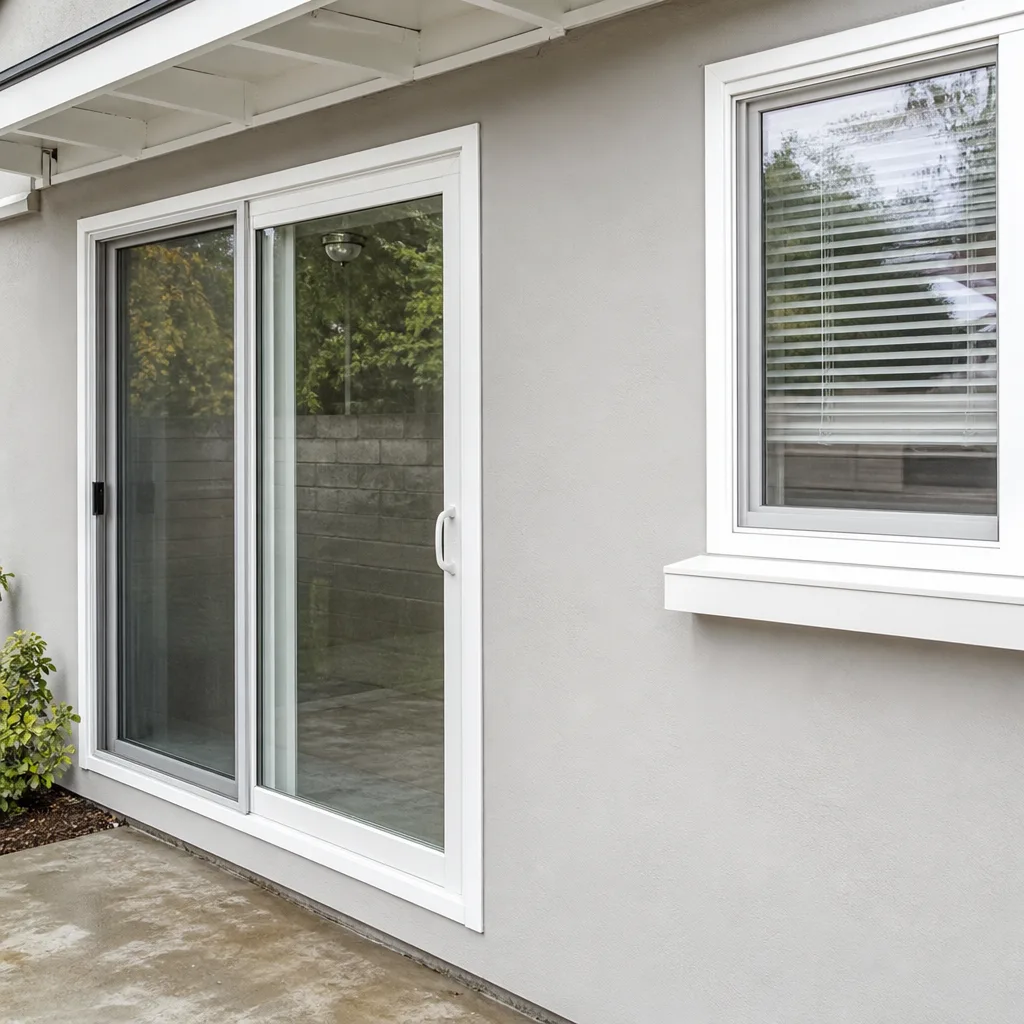 After
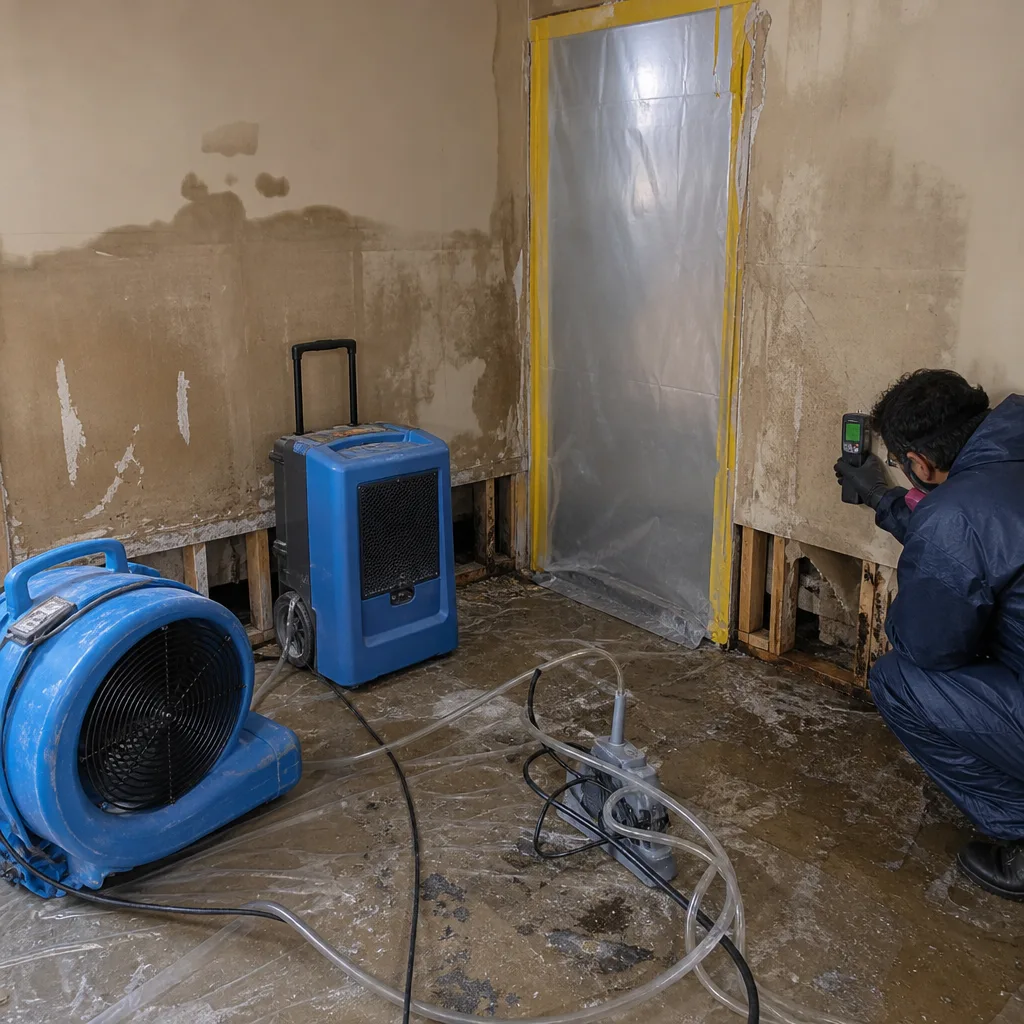 Before
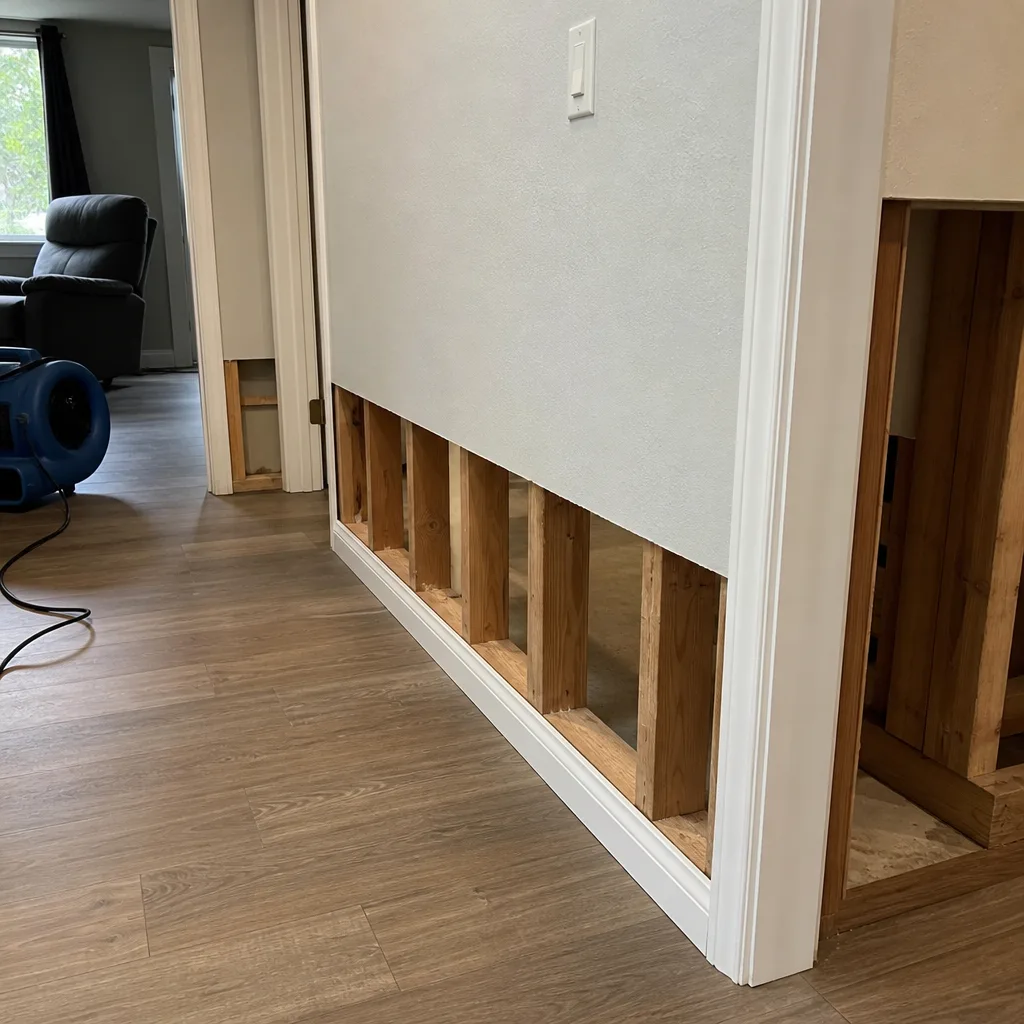 After
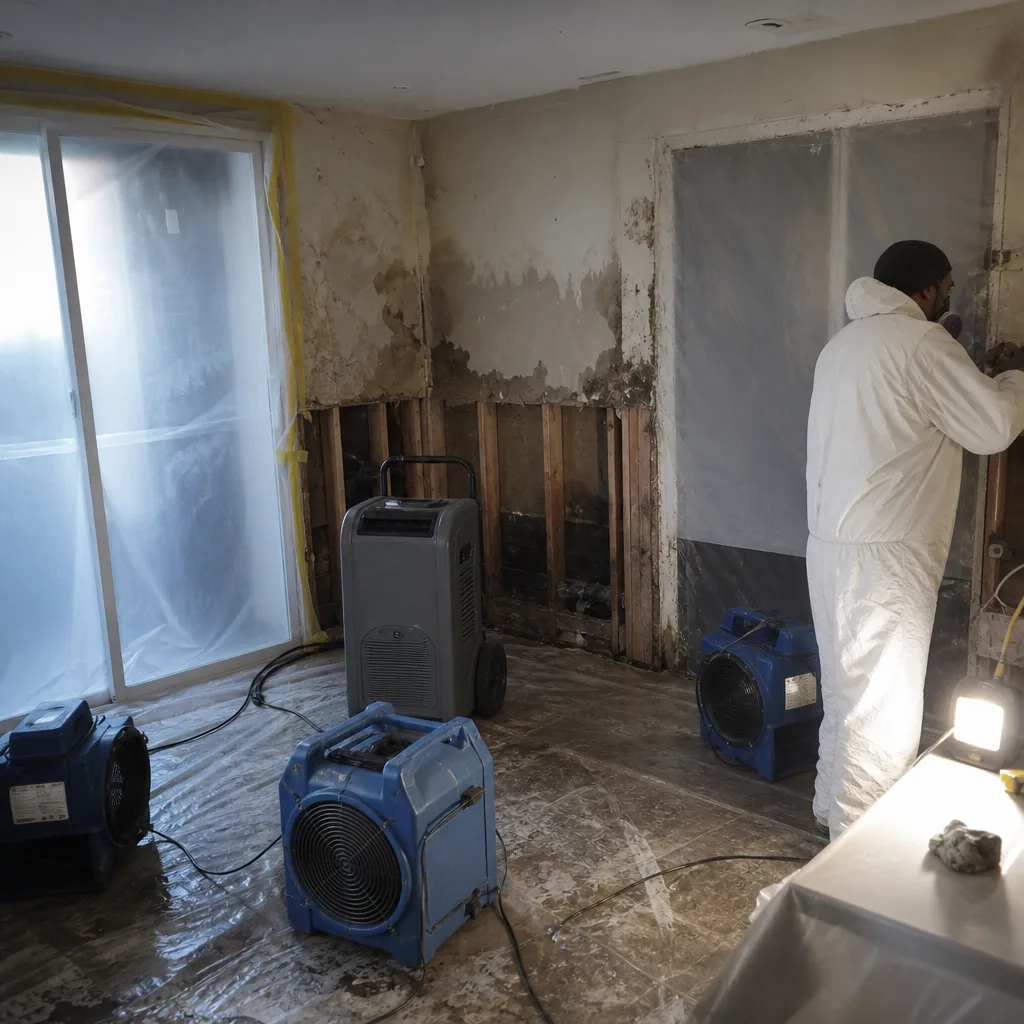 Before
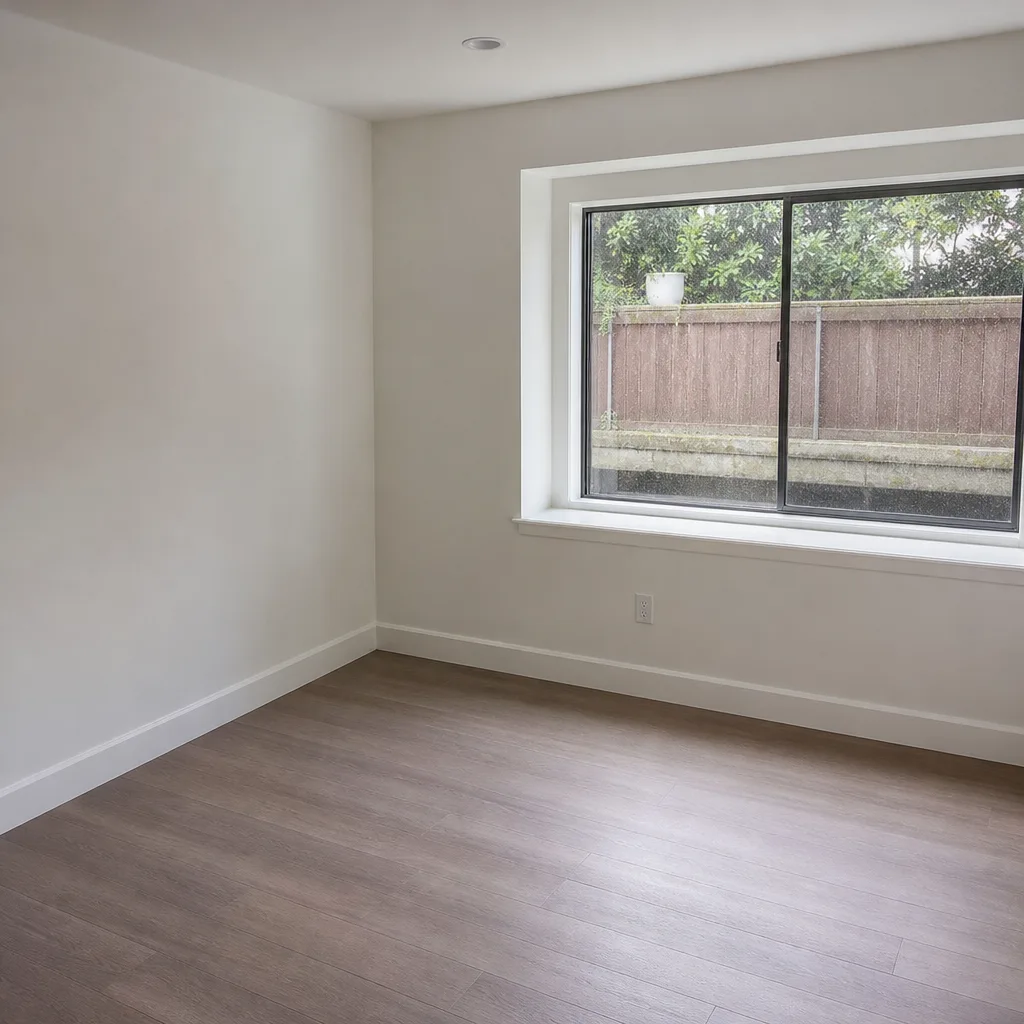 After
Common Water Damage Restoration Problems We See in Lakeview Homes
– Steep-lot runoff re-wetting a wall from the outside. A contractor who doesn’t know the grade dries the inside, packs up, and the wall gets wet again from the hillside. We clear slope drainage as part of the drying plan, not as an afterthought.
– Manufactured-home belly board and underbelly vapor barrier failures. Water travels down and pools below the floor, not into a slab or basement. If your restoration tech doesn’t check the underbelly, the job isn’t scoped correctly.
– Older wood-frame and stucco homes with failing roof underlayment. Many Lakeview homes were built mid-20th century. The shingles look okay until a Santa Ana wind event lifts the edges, and the next storm pushes water into the ceiling cavity.
– Category misjudgment in post-fire seasons. When ash and smoke are already in the air, a contractor may write off discolored water as “just dirt” rather than testing and treating it. We treat by source, not by sight.
Pricing for Water Damage Restoration in Lakeview, CA
We Also Serve Cities Near Lakeview
Our crews work Lakeview and the surrounding communities, including Water Damage Restoration in Lakeview page for more on our local service area. For nearby jobs, we regularly respond to Nuevo, Romoland, Good Hope, and Perris. If you’re on the edge of the 92567 boundary or just outside it, call us and we’ll confirm coverage. Most of these areas are within our standard response window.
Serving Lakeview, CA — Our Local Coverage Area
We’re based in the Lakeview area and know this community well. Use the map below to see our service coverage — if you’re nearby, we can almost certainly help.
FAQs About Water Damage Restoration in Lakeview
Why does water damage work on Lakeview’s sloped lots take extra steps?
Because water doesn’t behave the same on a grade as it does on flat ground. We have to account for runoff direction, downhill wall saturation, and whether exterior drainage is still feeding moisture into the structure after the interior source is stopped. On a flat Riverside lot, drying the interior usually solves the problem. On a Lakeview hillside, we clear slope drainage and check the grade before we close out drying logs.
Can you reach a steep-driveway or tight-access Lakeview property with drying equipment?
Yes. Our technicians carry equipment in smaller staging loads and have worked driveways off Canyon Lake Drive that most box trucks can’t back up. We stage extraction and drying units at the nearest stable access point and run hose or ducting up to the structure. It’s slower than a pull-up-to-the-garage job, but the drying doesn’t suffer for it.
A wet drywall area looks minor – how fast do we need to act?
Within 24 to 48 hours. A small wet patch on the surface can mean a much larger wet cavity behind it. Water wicks through drywall and into wall cavities, and the clock on microbial growth starts when the material stays wet. The faster we get air movement and dehumidification in place, the less gets torn out and replaced. Call (833) 620-3891 as soon as you see it, even if it looks small.
How do you handle water in a manufactured home on a Lakeview lot?
We check the belly board and underbelly vapor barrier first, because that’s where water pools in a manufactured home. The visible floor wetness is usually only part of the problem. We extract from the floor, cut access to the underbelly where needed, remove standing water from the cavity, and dry both the interior space and the below-floor void. Standard stick-frame protocols miss this step.
Does Lakeview’s wildfire season affect a water damage job?
It does. After the first big Santa Ana wind event, ash and debris collect in drains and around rooflines. Then winter rains push that into homes and drainage systems. Floodwater in a post-fire season carries more contamination, which means stricter containment and more thorough antimicrobial treatment. We scope for that before we start drying.
When you’re ready for an estimate that reflects Lakeview’s actual conditions, call (833) 620-3891. Free estimates, written scopes, and a crew that knows the hills.
Written by Noel Carbajal, Owner at Renew Water Damage, serving Lakeview and the Inland Empire since the company’s founding.