

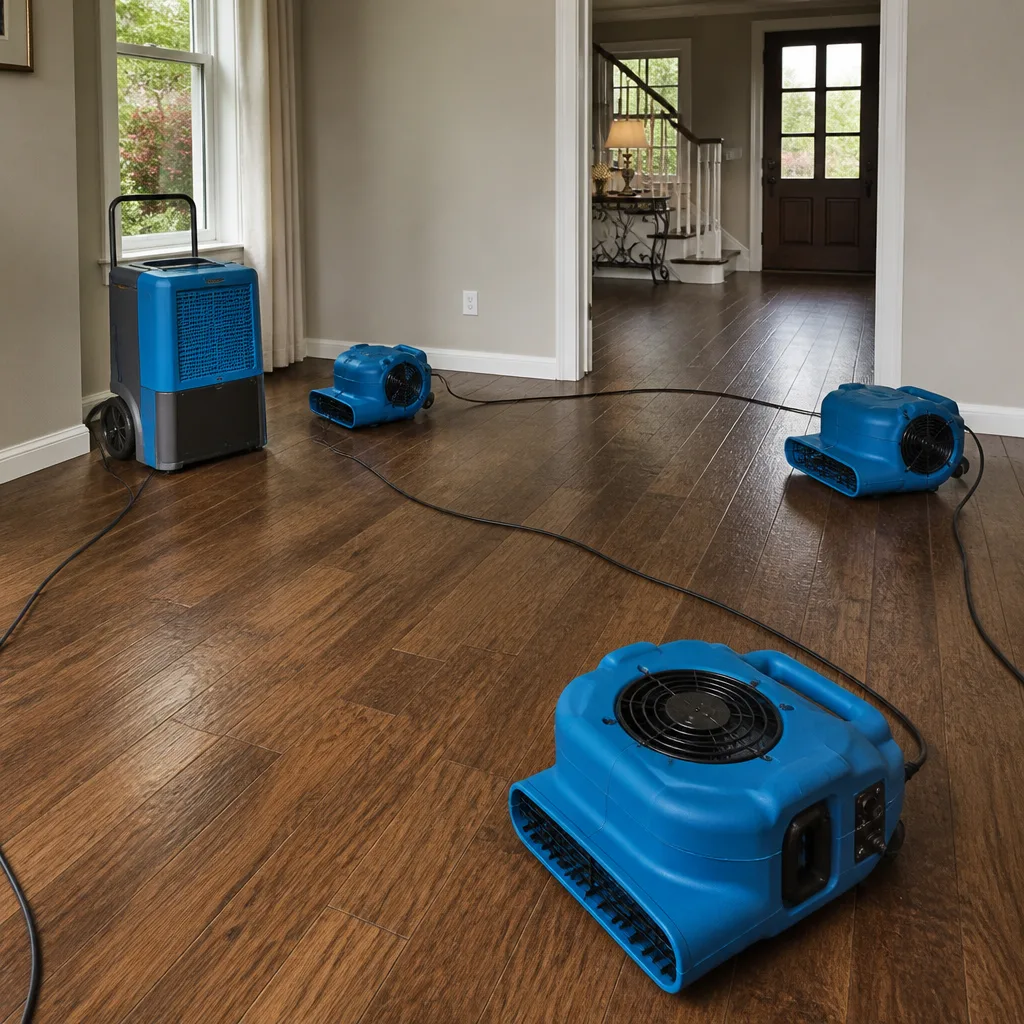
 Water damage drying
 Fire & smoke cleanup
 Mold remediation
 Storm response
 Sewage cleanup
 Reconstruction
Free visual inspection and a written scope of work before any mitigation begins - photos, moisture readings, and drying logs go in your claim file
The scope we write is the scope we bill. Anything new gets shown to you, in writing, before we touch it.
Get your free estimateFast, Reliable Water Damage Restoration Across Ladera Ranch
Water damage in Ladera Ranch moves fast, and so do we. A supply-line failure or roof leak in a 92694 townhome can wick into a shared wall within hours, which means the difference between a $900 dry-out and a $9,000 rebuild often comes down to who answers the phone. Renew Water Damage runs IICRC-certified crews into Ladera Ranch from our Orange County base, with commercial-grade drying equipment on the truck from the first visit. Call (833) 620-3891 the moment you see water, and we’ll have a technician walking your property while most generalists are still scheduling a “maybe next week” appointment.
Why Renew Water Damage Is Ladera Ranch’s Preferred Water Damage Restoration Company
Ladera Ranch isn’t a one-off house-per-acre kind of town. It’s a dense, HOA-governed master-planned community built almost entirely between 1999 and the mid-2000s, where townhomes, condos, and zero-lot-line single-family houses share walls, roofs, and landscaping infrastructure. That changes how water damage works here, and we’ve learned it the hard way by responding to hundreds of these jobs. A leak in one unit doesn’t stay in that unit. Moisture follows framing, drywall seams, and subfloor channels across property lines, and the restoration scope has to account for the neighbor’s side of the wall before it’s finished.
We’re the Water Damage Restoration team that property managers and Ladera Ranch homeowners call when they want one certified crew handling extraction, drying, and reconstruction without finger-pointing between subs. Our technicians carry IICRC credentials and follow the S500 standard for water damage, not a generic “suck it up and set a fan” playbook. We document moisture levels with meters and thermal imaging before, during, and after drying, so when your HOA or insurance adjuster asks what was done, you have a paper trail, not a shrug.
Led by Noel Carbajal, our crews know the difference between a Mission-style clay tile roof in Flintridge Village and a flat-roll roof over a condo garages in Terramor. That local fluency means we spot the failure mode faster and don’t waste your deductible on exploratory demolition that a less experienced outfit would bill you for.
Restoration work we handle
Water Mitigation in Ladera Ranch
Water Mitigation in Ladera Ranch is the first 48 to 72 hours of work: stop the source, extract standing water, remove wet materials that can’t be saved, and set up drying equipment. Because Ladera Ranch homes are overwhelmingly Mediterranean/Spanish-revival construction with stucco cladding and tight building envelopes, water that gets behind drywall tends to stay there. It doesn’t evaporate on its own, even in a warm, semi-arid climate. That’s the trap. The dry South Orange County air dries the surface, and homeowners assume the problem resolved, while the stud cavities behind the wall stay saturated and start growing mold.
Structural Drying Standards
We run Injectidry wall-cavity drying systems on Ladera Ranch townhomes because opening up every shared wall to dry it manually is expensive and increasingly frowned upon by HOAs that want matching materials restored, not ripped out and replaced with whatever’s cheapest. Injectidry pulls negative air through sealed wall cavities, drying the framing and insulation in place. Coupled with Dri-Eaz and Phoenix dehumidifiers and XPOWER air movers, we can typically bring a contained leak down to dry standard in three to five days, where a less specialized contractor would still be cutting drywall.
What Water Mitigation Costs Locally
A typical water mitigation scope in Ladera Ranch runs $1,800 to $4,200 for a single-room supply-line failure, including extraction, containment, drying, monitoring, and documentation. Multi-level townhome losses that cross into shared walls or common-area framing land between $4,500 and $9,000, depending on how many cavities we have to dry and how much material is unsalvageable. Those are real numbers we’ve seen on Ladera Ranch jobs, not national averages pulled from a database.
Flooded Basement in Ladera Ranch
Flooded Basement in Ladera Ranch means something different than in Laguna Beach or San Clemente: most basements here are technically below-grade garages or split-level lower floors, not full underground vaults. But they flood the same way. A water heater lets go in the garage of a zero-lot-line home, or a winter Pacific storm overwhelms a courtyard drain, and water pools against the slab edge and seeps under walls into finished living space. Because zero-lot-line homes have almost no side-yard setback, the water doesn’t sheet away. It sits, then wicks upward through drywall and baseboards.
Zero-Lot-Line Drying Without the Neighbor Drama
When a lower-level flood runs along a shared property line, our first move is containment and extraction, then we pressure-check the adjoining wall to see if moisture crossed into the neighbor’s side of the slab. In several Terramor and Oak Knoll Village jobs, we’ve caught migration into the next unit before the neighbor even knew there was a problem. That preemptive mapping often saves both homeowners from a larger mold remediation later.
Flooded Basement Pricing in 92694
A typical flooded below-grade room in Ladera Ranch runs $2,200 to $4,800 for full extraction, drying, and dehumidification, assuming no sewer contamination. If the water is category 3 (sewage or storm water with organics), the scope expands to include antimicrobial treatment and disposal of affected porous materials, pushing the range to $5,000 to $9,500. We’ll give you a written scope before equipment starts running, so you’re not surprised by a change order at the end.
Trusted Brands We Service in Ladera Ranch
We stock and service Dri-Eaz and Phoenix dehumidifiers, XPOWER air movers, and Injectidry cavity-drying panels, and we carry replacement filters, hoses, sensors, and desiccant materials for these units, so Ladera Ranch customers aren’t waiting on a part shipped from a distributor in Riverside. We’re members of the Restoration Industry Association (RIA) and the IFA, which means our equipment calibration and drying methods are reviewed against industry standards, not the manufacturer’s marketing claim. When we set up a drying array in your Ladera Ranch home, it’s the same equipment class you’d see on a commercial loss in Irvine or Newport Beach, sized down for residential square footage.
Common Water Damage Restoration Problems We See in Ladera Ranch Homes
- Shared-wall wicking in attached townhomes. A single upstairs supply-line failure in a Ladera Ranch townhome commonly wicks into the neighboring unit and common-area framing before anyone calls. We regularly find moisture on the opposite side of a shared wall that the homeowner didn’t even know was wet, because the visible stain was on another floor.
- HOA design-standard traps on exterior repairs. Ladera Ranch is a master-planned community built almost entirely in the 1990s through 2000s as a dense fabric of attached townhomes, condos, and courtyard-close single-family homes under HOA architectural control. That means any damage restoration here is a shared-wall, shared-roof, HOA-scrutinized job, not an isolated house repair, and skipping the approved stucco and clay tile palette triggers rework or failed inspections.
- Fast mold in tight, well-sealed newer construction. Semi-arid south Orange County climate with long dry spells and intermittent winter rain driven by Pacific storms. Clay tile roofs and stucco walls hide slow leaks that only surface after a rainy season, while summer heat plus indoor humidity from plumbing leaks drives fast mold growth in tight, well-sealed newer construction, often within 24 to 48 hours of a slow drip.
- PEX and copper supply lines behind drywall. The predominant housing stock is 1999 to 2010s Mediterranean/Spanish-revival planned-community homes: stucco-on-sheathing with clay tile roofs, attached and clustered townhomes/condos, compact zero-lot-line single-family houses, and PEX or copper supply plumbing behind drywall. A pinhole leak in a copper line inside a shared bathroom wall can saturate framing for weeks before the drywall blisters enough to notice.
See the difference
 Before
 After
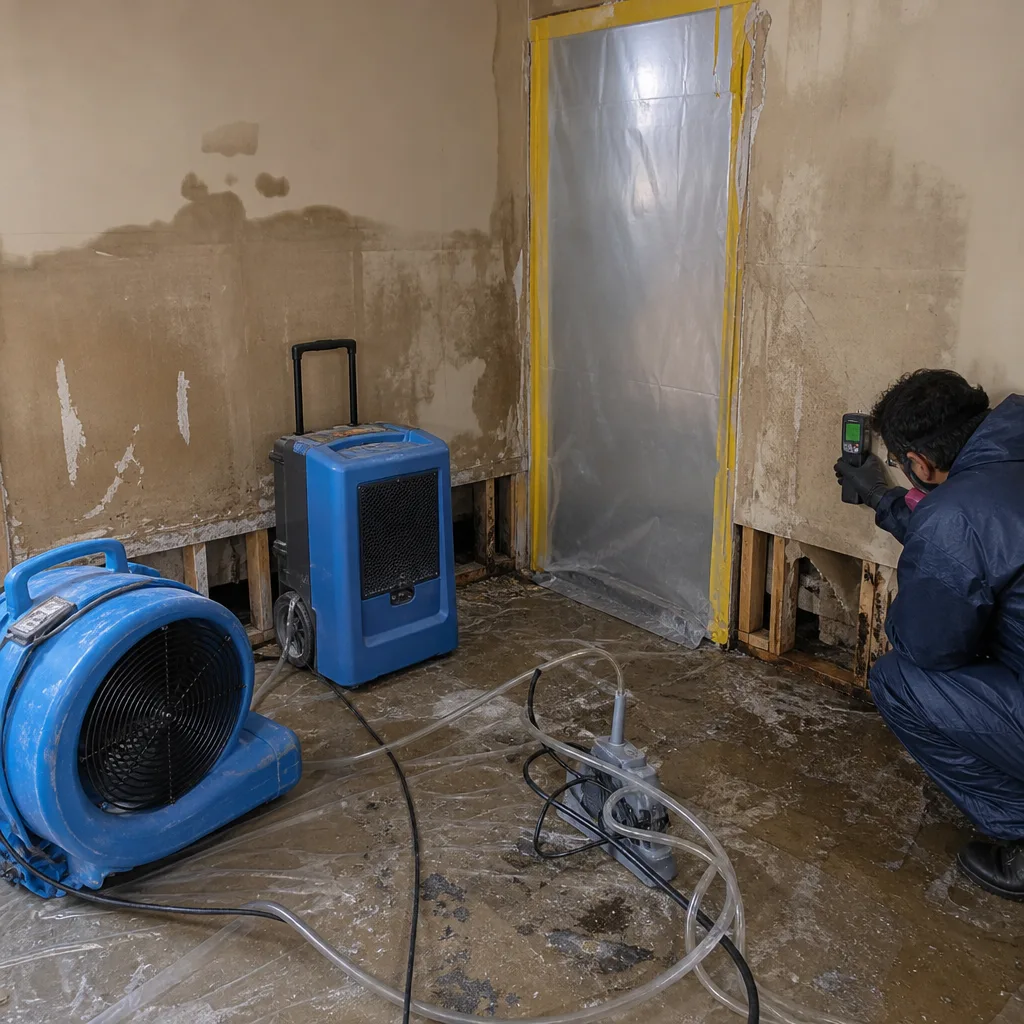 Before
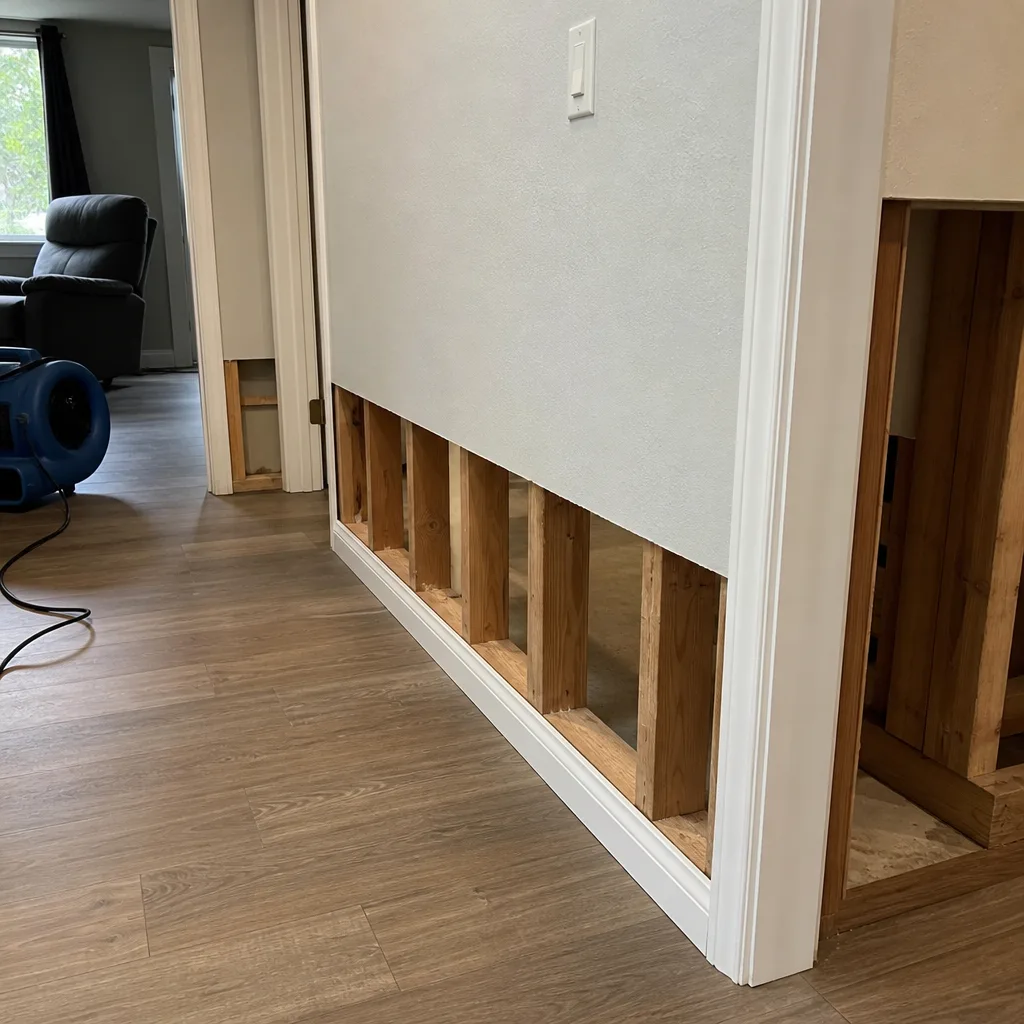 After
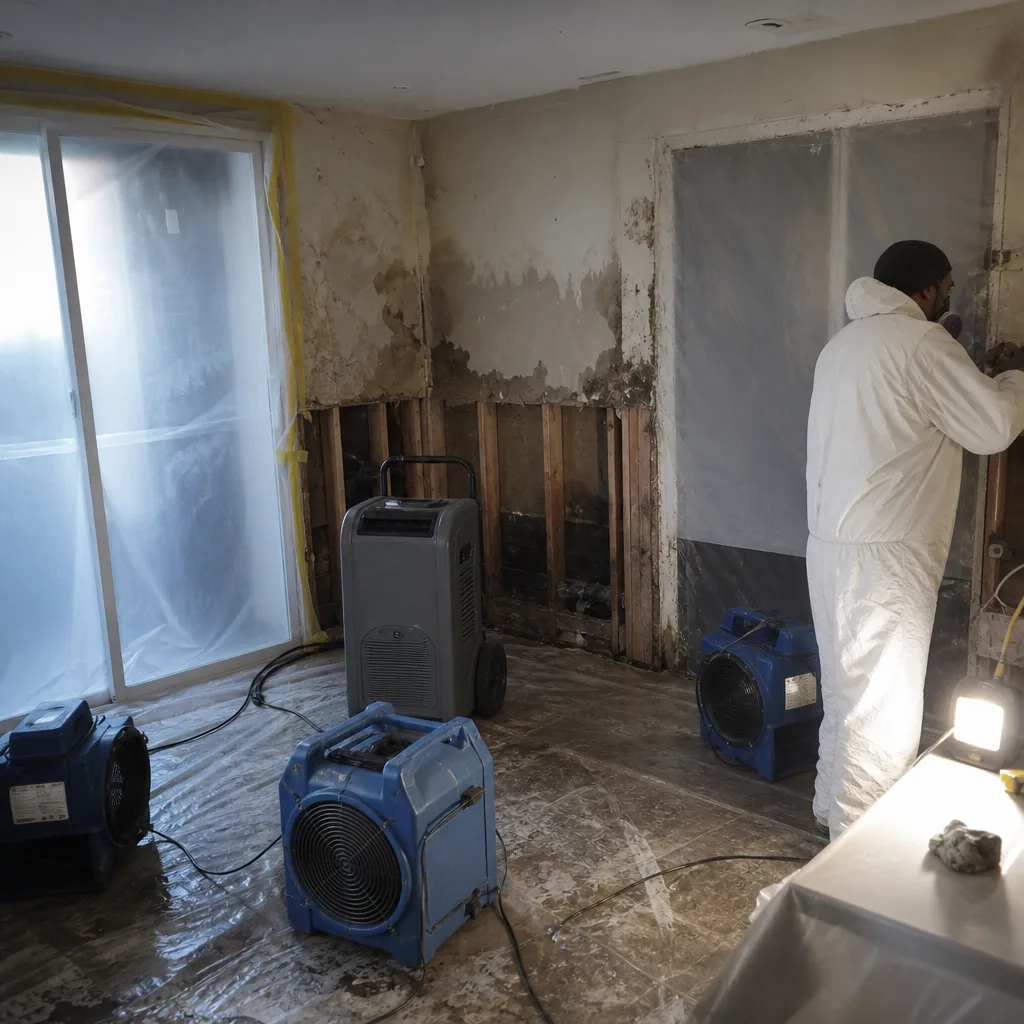 Before
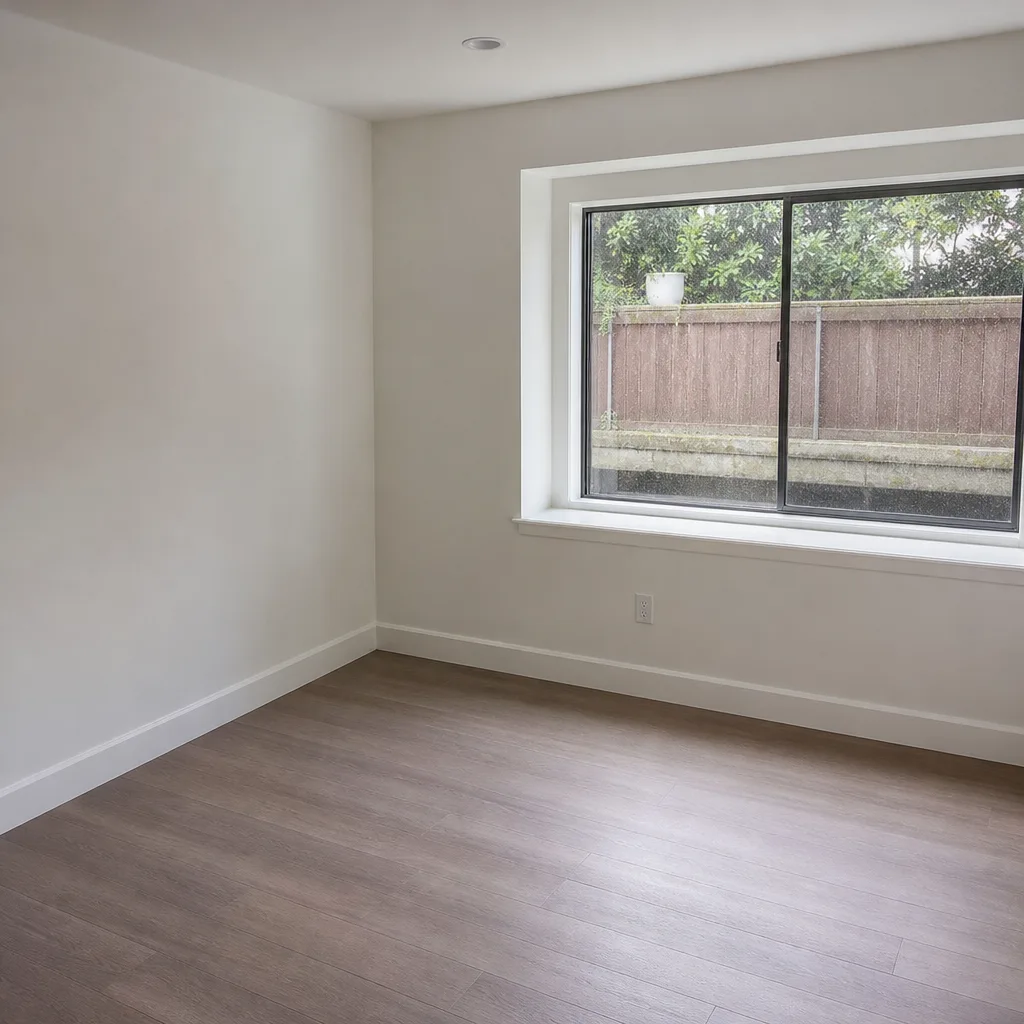 After
Pricing for Water Damage Restoration in Ladera Ranch, CA
Water damage restoration pricing in Ladera Ranch is shaped by three things: how far the water traveled, whether shared walls or common areas are involved, and whether HOA design review applies to any visible repair. A straightforward water mitigation on a single bedroom or hallway runs $1,800 to $3,500. A townhome leak that crosses a unit line and requires dual-unit drying, containment, and HOA-approved stucco patch runs $4,000 to $8,500. Category 3 sewage or storm water losses in a flooded below-grade space run $5,000 to $9,500. Flood cleanup from a winter storm event involving multiple rooms and carpet removal typically falls between $3,500 and $7,000. Burst pipe restoration that requires drywall replacement and repainting on both sides of a wall runs $3,800 to $8,000, depending on whether we’re matching the HOA-approved paint and texture. Ceiling and roof leak water damage in Ladera Ranch clay tile homes averages $2,400 to $5,500 for dry-out and finish repair, assuming no structural framing replacement. Call (833) 620-3891 for a free estimate with a written scope, no obligation.
Ladera Ranch’s HOA Design Standards Change the Job
Here’s what a generic restoration page won’t tell you. Ladera Ranch’s developer-built neighborhoods are under strict HOA architectural control, and that applies to repairs, not just remodels. If a water damage event means we have to open an exterior stucco wall, patch a clay tile roof section, or replace a fascia board visible from the street, the HOA’s approved stucco and clay tile palette must be matched, and the association often requires design-review sign-off before we can close up the wall or re-tile the roof. That adds a day or two to the schedule and, depending on the association, a small review fee. But skipping it is worse: we’ve seen Ladera Ranch homeowners have to tear out completed work because a contractor used a “close enough” stucco color or a standard-issue concrete tile instead of the community’s specified clay tile. Our crews know this before we cut the first hole, so it’s built into the scope and the price from day one, not a surprise change order after the fact.
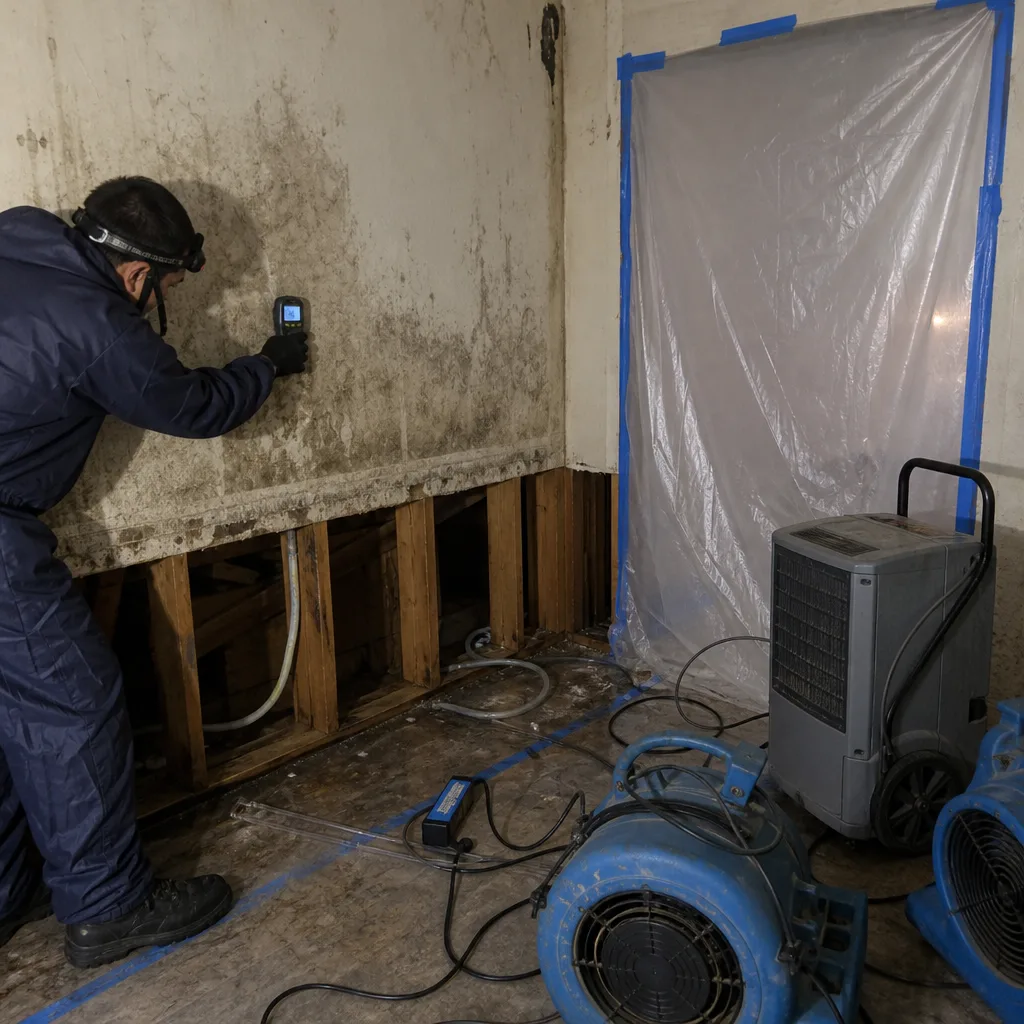
We responded to a category 2 supply-line failure in a Ladera Ranch zero-lot-line home where water had wicked into the shared wall and the neighboring unit’s framing. Using moisture mapping and thermal imaging, we traced the migration across the unit line, set up containment with Dri-Eaz dehumidifiers and XPOWER air movers, and logged daily moisture readings until both sides of the wall met dry standard. The exterior stucco patch was color-matched to the HOA’s approved palette, and the pack-out of affected belongings was coordinated with the homeowner to avoid a second trip.
We Also Serve Cities Near Ladera Ranch
Our crews work throughout the Saddleback Valley. We regularly run water damage jobs in Ladera Ranch, Coto De Caza, Mission Viejo, Laguna Hills, and Laguna Woods. If your property is in one of these nearby communities, call (833) 620-3891 and we’ll confirm our next available dispatch window for your area.
Serving Ladera Ranch, CA — Our Local Coverage Area
We’re based in the Ladera Ranch area and know this community well. Use the map below to see our service coverage — if you’re nearby, we can almost certainly help.
FAQs About Water Damage Restoration in Ladera Ranch
Shared-wall construction doubles or triples the number of surfaces we have to test and dry. We don’t just extract the water you can see; we map the wall cavity, the floor assembly, and the shared wall with thermal imaging and moisture meters to determine whether water crossed into the neighbor’s side of the framing or the common-area drywall. When it has, the scope expands to include containment and drying on both sides, and we coordinate access with the HOA or the adjacent unit owner before equipment is placed. That’s the difference between a two-day dry-out and a two-week dual-unit restoration, and it’s why a Ladera Ranch townhome job costs more than a single-family home with stand-alone walls. Call (833) 620-3891 for a written scope on your specific unit.
Yes, if the repair touches exterior-visible stucco, clay tile roofing, fascia, or any element covered by the community’s design guidelines. Ladera Ranch’s developer-era HOA standards require that visible water damage repair match the community’s approved stucco and clay tile palette, so even a small supply-line leak can trigger a color and material approval process before drywall or exterior patching is finished. Interior work like drywall replacement, baseboard repair, and paint matching to your own unit’s interior finishes usually doesn’t require design review. We handle the HOA submittal paperwork as part of the restoration scope when the job requires it, so you’re not stuck navigating the association’s forms while your walls are open. Call us and we’ll tell you upfront whether your scope is HOA-triggering.
Newer Ladera Ranch construction is built tight, with good insulation, sealed windows, and efficient HVAC. That’s great for energy bills but terrible for drying out: moisture from a slow plumbing leak or roof drip gets trapped inside wall and floor cavities with no natural airflow, and the indoor humidity plus summer heat creates ideal mold conditions. Mold can appear within 24 to 48 hours of a slow leak in these homes, faster than in older, draftier houses. That’s why we recommend calling us at (833) 620-3891 the same day you notice a musty smell, a water stain, or a higher-than-usual water bill. The earlier we start drying, the less mold remediation you’ll need.
Yes, and we do it routinely. Zero-lot-line homes have almost no side-yard space, so floodwater from a water heater or storm drain overflow tends to pool along the shared property line and wick into the neighbor’s side of the wall. Our containment and drying setup is self-contained inside the affected unit: we place extractors, dehumidifiers, and air movers within the flood zone and run exhaust through existing vents or windows, without placing equipment in common areas or the neighbor’s yard. We also document the water migration path so the neighbor’s insurance adjuster, if one gets involved, has the same data we used. If the shared wall is wet, we coordinate access directly with the adjacent unit owner or the property manager, and we work around their schedule. Call (833) 620-3891 to schedule a same-day assessment before the water spreads further.
We run IICRC-certified crews that follow the S500 standard for water damage restoration, which is the documented, peer-reviewed benchmark for extraction, drying, and structural testing. Our equipment is commercial-grade: Dri-Eaz and Phoenix dehumidifiers, XPOWER air movers, and Injectidry cavity-drying panels for in-wall and in-floor drying without unnecessary demolition. We’re members of the Restoration Industry Association (RIA) and the IFA, so our methods and equipment calibration are subject to ongoing professional standards beyond the initial certification. We don’t use rental-shop fans or big-box dehumidifiers on Ladera Ranch jobs; the equipment we deploy is the same class used on large commercial losses, sized for residential square footage. If you’d like a copy of our current certifications or a written scope referencing the S500 standard, call (833) 620-3891 and we’ll send both with your free estimate.
Written by Noel Carbajal, Owner at Renew Water Damage, serving Ladera Ranch and the Saddleback Valley since 2019.
If you’re standing in water, looking at a spreading ceiling stain, or smelling something musty in a Ladera Ranch townhome or zero-lot-line house, call us now at (833) 620-3891. We’ll walk you through what to do in the next ten minutes, then send a certified crew to your 92694 address with commercial drying equipment on the truck. Estimates are free, and the scope is in writing before any equipment starts running.