

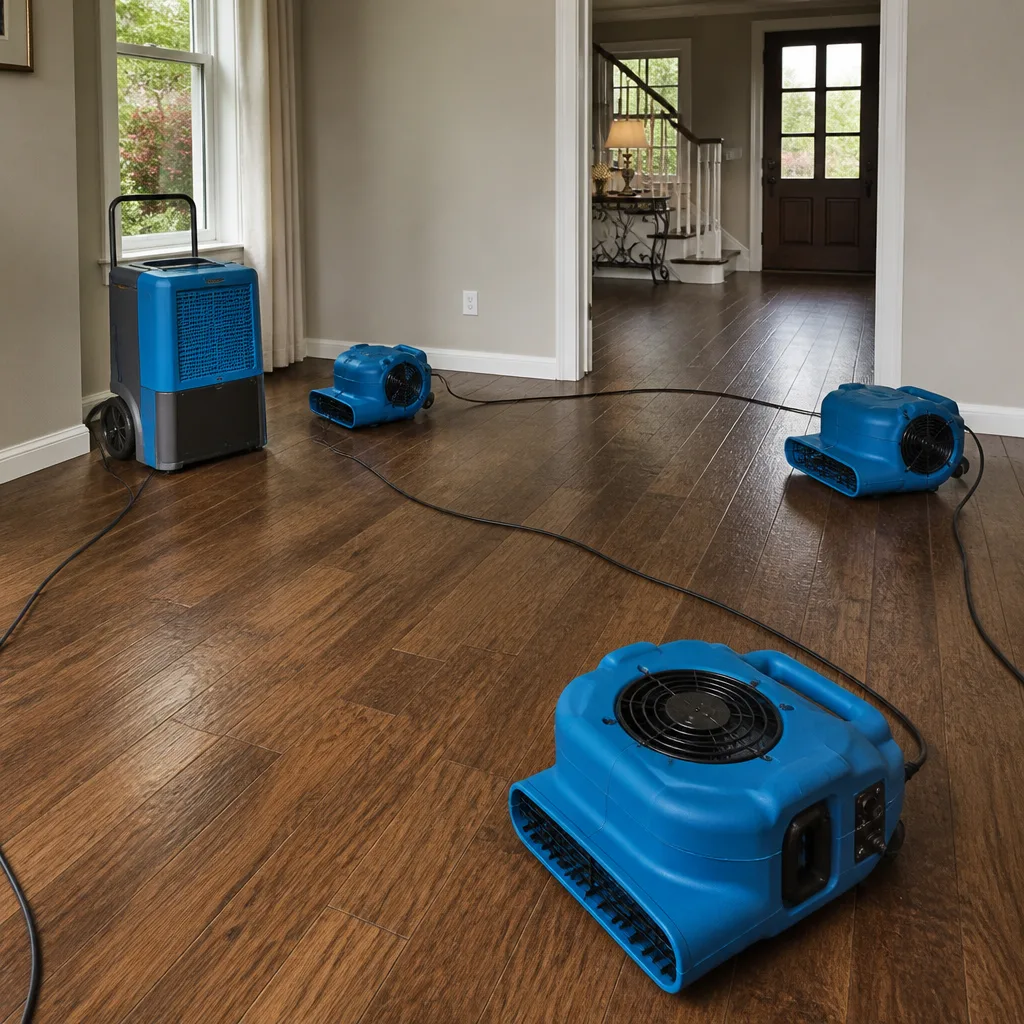
 Water damage drying
 Fire & smoke cleanup
 Mold remediation
 Storm response
 Sewage cleanup
 Reconstruction
Free visual inspection and a written scope of work before any mitigation begins - photos, moisture readings, and drying logs go in your claim file
The scope we write is the scope we bill. Anything new gets shown to you, in writing, before we touch it.
Get your free estimateFast, Reliable Mold Remediation Across San Antonio Heights
Mold remediation in San Antonio Heights typically runs $1,800 – $6,500 depending on the size of the colony, where it’s hiding, and whether post-fire ash or debris-flow mud contaminated the building materials. We reach most San Antonio Heights properties the same day you call (833) 620-3891, including the steep driveways and narrow canyon roads above the valley floor. This isn’t a generic cleanup town – it’s a foothill community with wood-shake roofs, eave vents, and seasonal wildfire ember exposure that creates mold problems valley crews never think to look for. You need a team that knows the difference between a bathroom humidity issue and an attic assembly sitting wet since the last fire season.
Why Renew Water Damage Is San Antonio Heights’s Preferred Mold Remediation Company
Noel Carbajal leads a crew that has worked enough San Antonio Heights homes to know the local failure points before we even walk in. We’ve traced mold on Vineyard Drive back to an ember breach in the eave vents from a fire that happened six months prior. We’ve opened walls on Euclid Avenue post-mudslide and found Category 3 water trapped behind drywall that looked dry from the outside. That pattern recognition isn’t luck. It comes from treating Mold Remediation as a forensic process, not a spray-and-paint job.
Our IICRC-certified technicians follow S520 remediation standards on every job in San Antonio Heights. That means documented moisture mapping, proper containment, HEPA air scrubbing, and third-party clearances where the situation calls for them. We’re members of the Restoration Industry Association and IFA, and we bring commercial-grade equipment on residential calls because the homes up here demand it. A single dehumidifier in a 1970s hillside build with a wet attic won’t cut it.
We reach San Antonio Heights from our Orange County base quickly enough to stop active mold growth before it spreads through the HVAC system. The drive up Euclid or Mountain Avenue isn’t a problem for our trucks. The long, narrow driveways off 23rd Street and the canyon roads heading north? We’ve navigated them with compact setups and extended hose runs when the terrain won’t allow a full-size vehicle at the door.
Restoration work we handle
Mold Inspection in San Antonio Heights
A Mold Inspection in San Antonio Heights has to go beyond the visible spots because this community’s housing stock hides moisture in places flatland inspectors never check. We start with the attic, not the bathroom. Why? Wood-shake roofs and eave vents common up here let wildfire embers smolder and winter storms drive rain into roof valleys where the shake has already been compromised. The mold you see on a bedroom ceiling is often a symptom of a problem 20 feet higher.
Ember-Intrusion Attic Assessment
When we inspect a San Antonio Heights home, we don’t just shine a flashlight around the attic and leave. We run moisture mapping across the roof decking, paying closest attention to eave vents and valley intersections where ember damage tends to concentrate. Elevated readings there tell us water has been sitting in the assembly long enough to support fungal growth. A valley-based inspection that never accesses the attic would miss it entirely. Our inspection costs $350 – $650 depending on square footage and access difficulty, and includes a written scope with photos if remediation is needed.
Post-Fire and Post-Debris Flow Assessment
If your property sits at the base of a canyon or below a fire-scarred slope, we check for contamination that ordinary mold inspections ignore. Mud and ash intrusion after debris flows can introduce Category 3 water – the kind that carries sewage, soil bacteria, and combustion byproducts. When that water soaks drywall or insulation, drying it in place guarantees mold returns within weeks. A proper inspection here means testing those materials and recommending removal where the S520 standard requires it.
Mold Removal Specialist in San Antonio Heights
A Mold Removal Specialist in San Antonio Heights has to handle more than cutting out drywall. The real skill is knowing which materials to remove, which to treat, and how to set up containment so spores don’t migrate through the house while we work. Homes up here – the mid-century ranch builds and the later hillside additions – often have open-beam ceilings, tongue-and-groove sheathing, and custom millwork you can’t just replace at the local lumberyard. We treat what can be saved and remove what can’t, with photo documentation throughout.
Containment and Structural Drying
Every removal job starts with proper containment. We use floor-to-ceiling polyethylene barriers, negative air pressure with HEPA filtration, and air scrubbers that pull spores out of the workspace before they reach the rest of the house. For the moisture side, we deploy Dri-Eaz and Phoenix dehumidifiers alongside XPOWER air movers sized to the actual cubic footage, not a guess. A hillside home with a wet attic assembly needs more than one air mover. We size it right the first time.
Antimicrobial Treatment and Source Correction
Removing visible mold without fixing the source is a temporary fix, and San Antonio Heights sources are usually in the attic or the foundation. We treat affected framing and sheathing with EPA-registered antimicrobials, then correct the underlying issue – whether that’s sealing eave vents, repairing shake roof valleys, or addressing drainage at the base of a canyon-side foundation wall. The goal is one trip and done, which is why our scopes are written before work starts, not discovered mid-project.
Trusted Brands We Service in San Antonio Heights
We don’t bring homeowner-grade equipment to San Antonio Heights. Our drying arsenal includes Dri-Eaz and Phoenix dehumidifiers, the same machines used on large commercial losses, plus XPOWER air movers for directed airflow across wet surfaces. When a hillside property off Mountain Avenue has a hidden attic moisture problem, that equipment matters. These units pull moisture out of dense wood framing and subfloor cavities in days, not weeks. We also stock replacement parts and antimicrobials for common San Antonio Heights home types, so we’re not waiting on a supplier run from the valley when your job is mid-remediation.
See the difference
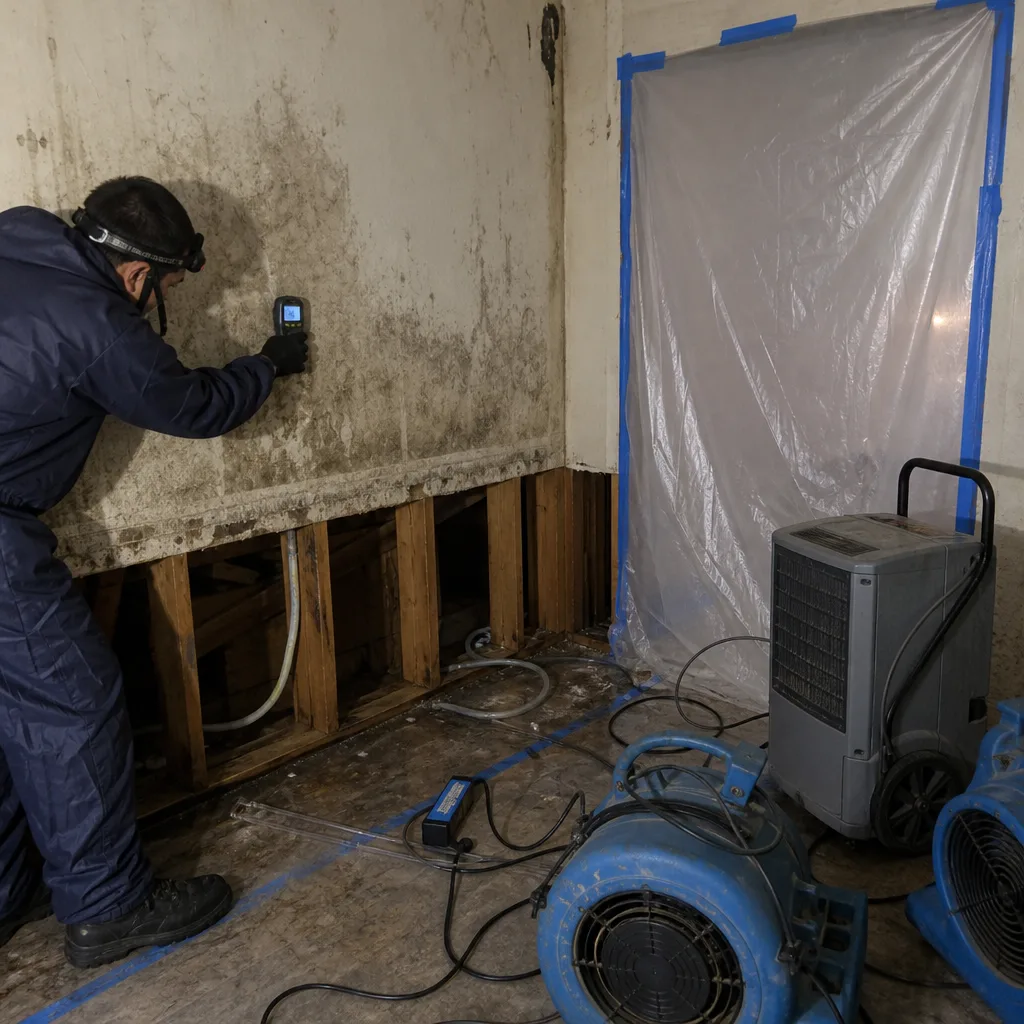 Before
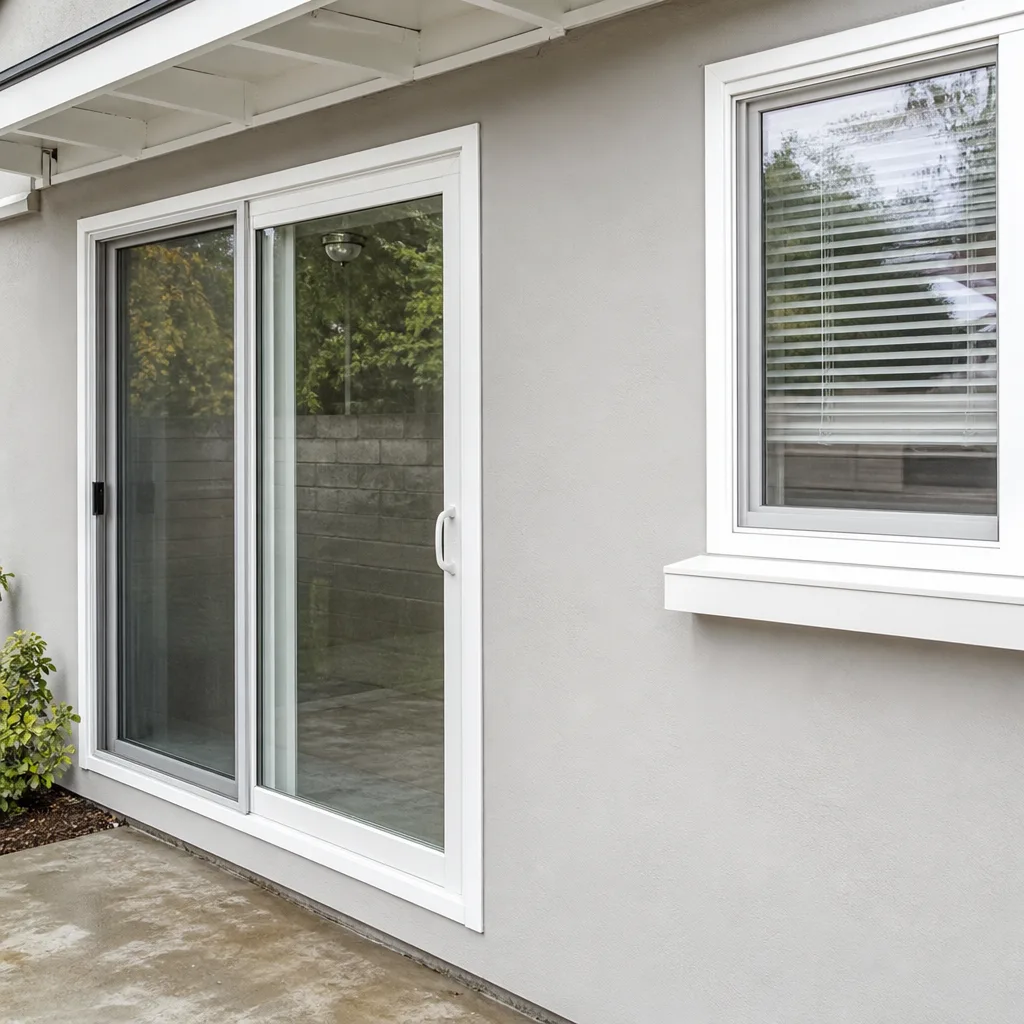 After
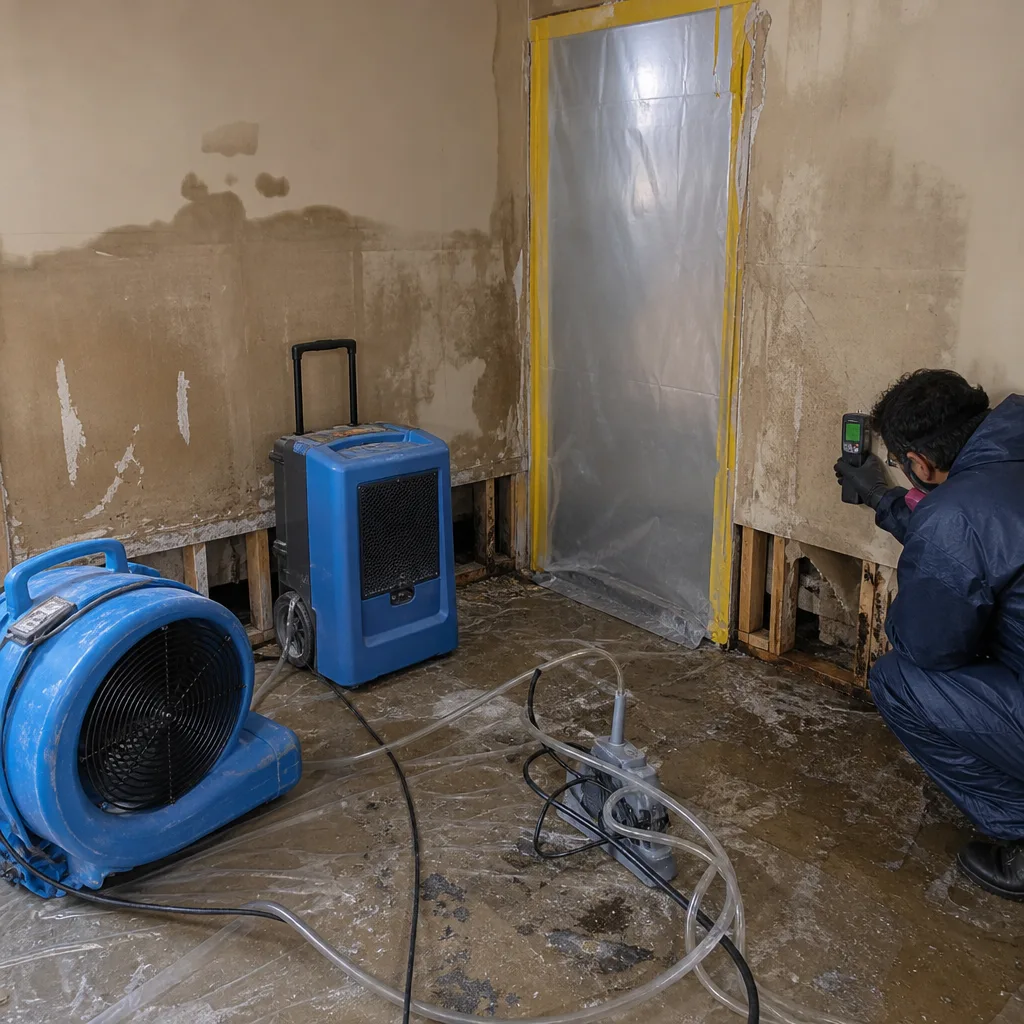 Before
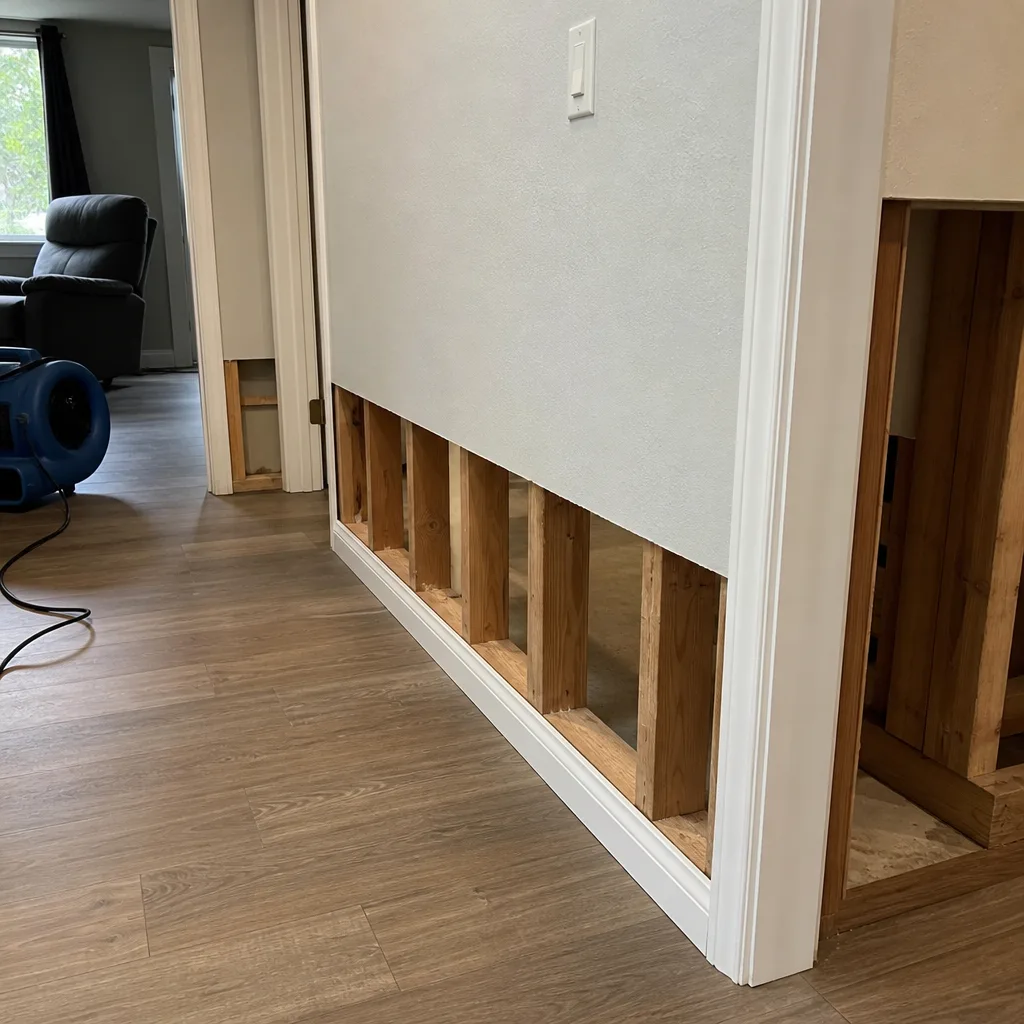 After
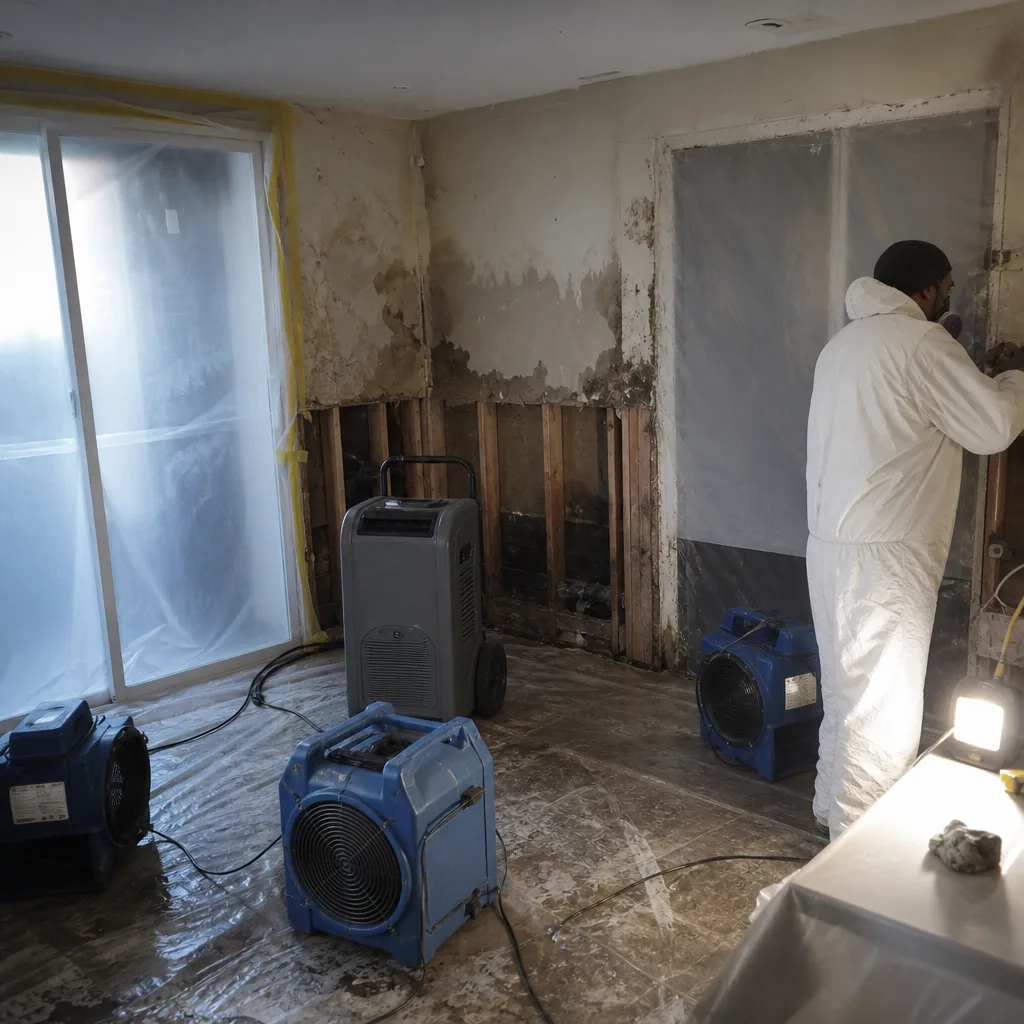 Before
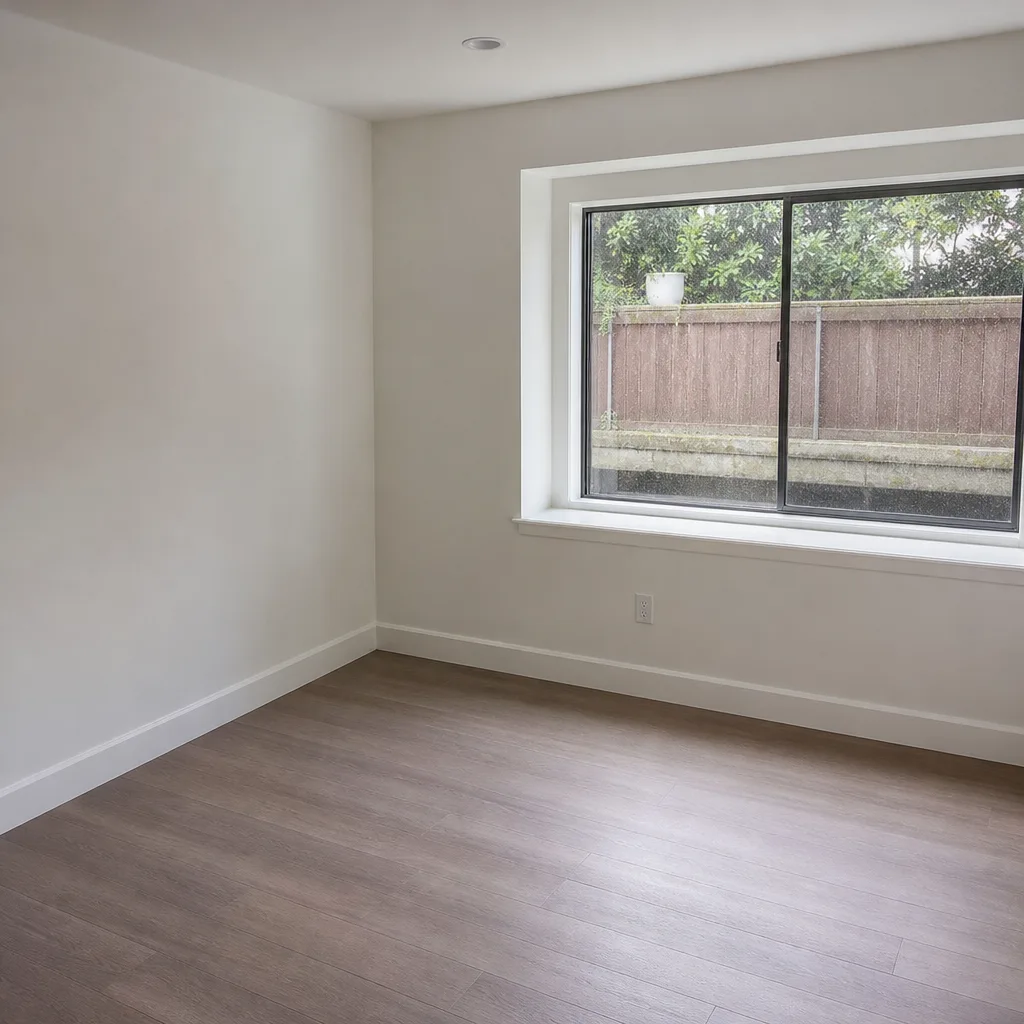 After
Common Mold Remediation Problems We See in San Antonio Heights Homes
- Wood-shake roof and eave-vent ember breaches. After a wildfire season, embers lodge in shake shingles and eave vents, smolder, and create openings for winter rain. The resulting moisture hides in the attic assembly, growing mold that eventually stains the ceiling below. A standard inspection that skips the attic never finds it.
- Category 3 contamination from post-fire debris flows. Mud and ash that push into homes at canyon bases carry soil bacteria and combustion residue. When contractors treat that water as clean and simply dry the drywall, mold returns within weeks. The correct scope means removal and replacement of affected materials.
- Undersized drying equipment on long, narrow driveways. Some companies send one air mover because the driveway is hard to reach. A 1970s ranch home with a wet attic and saturated framing needs multiple dehumidifiers and directed airflow. Undersized equipment leaves the structure damp and the mold comes back.
- Original galvanized plumbing failures. Many San Antonio Heights homes still run original galvanized supply lines. When those pipes develop pinhole leaks inside wall cavities, the water sits unnoticed until mold shows through. We trace the moisture, not just the visible spot.
Pricing for Mold Remediation in San Antonio Heights, CA
Here’s what you can expect to pay in San Antonio Heights, based on the work we typically perform in the 91784 zip code. A focused mold removal job – one bathroom, one closet, a small attic section – runs $1,800 – $3,200. A full attic remediation with containment, structural drying, and antimicrobial treatment runs $3,500 – $6,500. Mold inspection with moisture mapping and a written scope is $350 – $650. Post-fire or debris-flow jobs that require Category 3 material removal run higher because the scope includes contaminated material disposal and often drywall replacement. We provide a written estimate before work starts, so you know the number before we cut anything. Call (833) 620-3891 and we’ll schedule a site visit.
We Also Serve Cities Near San Antonio Heights
Our crews work throughout the foothill corridor and the valley below. If you’re searching for Mold Remediation in San Antonio Heights, we also handle jobs in Upland, Claremont, Rancho Cucamonga, and Montclair. Same IICRC-certified team, same equipment, same written scope policy.
Serving San Antonio Heights, CA — Our Local Coverage Area
We’re based in the San Antonio Heights area and know this community well. Use the map below to see our service coverage — if you’re nearby, we can almost certainly help.
FAQs About Mold Remediation in San Antonio Heights
Because the moisture source was never found. In San Antonio Heights, the source is usually an attic assembly that got wet through a shake roof or eave vent breached during a wildfire season, or a crawl space taking on water from hillside drainage. Cleaning visible mold without correcting the attic or drainage issue just buys you a few months. Our inspections map moisture first, then we treat the mold and fix the source. Call (833) 620-3891 to schedule an inspection that actually finds the problem.
Yes. We keep compact trucks and extended hose runs available specifically for the foothill roads off Euclid, Mountain, and the smaller canyon access points. If a full-size vehicle can’t make the final turn, we walk equipment in or run lines from the nearest accessible point. We’ve done it on driveways that would stop a valley crew, and the job still gets full containment and proper drying. The equipment travels; the standards don’t change.
Debris flows carry mud, ash, and soil contaminants into homes, and when that water soaks drywall, insulation, or subflooring, it’s classified as Category 3. Drying those materials in place – even with professional equipment – doesn’t remove the contamination. Mold grows back because the organic material and bacteria are still in the substrate. Proper remediation means removal of affected porous materials, antimicrobial treatment, and structural drying. If your home took on mud or ash water from a debris flow, call (833) 620-3891 before someone convinces you it just needs to dry out.
No, not if the inspection only looks at visible surfaces. Original galvanized plumbing in mid-century ranch homes develops pinhole leaks inside wall cavities and floor systems, where the moisture never shows on the surface until mold stains appear. A proper inspection for these homes needs moisture mapping of wall cavities, plus a check of the attic assembly if the roof is shake or has eave vents. Our inspectors cover both. Standard visual inspections miss the hidden sources that matter most in this housing stock.
A handyman typically sprays the visible mold and paints over it. We follow IICRC S520 standards: containment, HEPA air scrubbing, moisture mapping, removal of contaminated porous materials, antimicrobial treatment, and structural drying with commercial equipment. We also document everything with photos for insurance purposes and provide a written scope before work starts. The difference is whether the mold is actually gone or just hidden for a few months. Call (833) 620-3891 to talk through what your San Antonio Heights home actually needs.
Written by Noel Carbajal, Owner at Renew Water Damage, serving San Antonio Heights since day one of our foothill remediation work.