

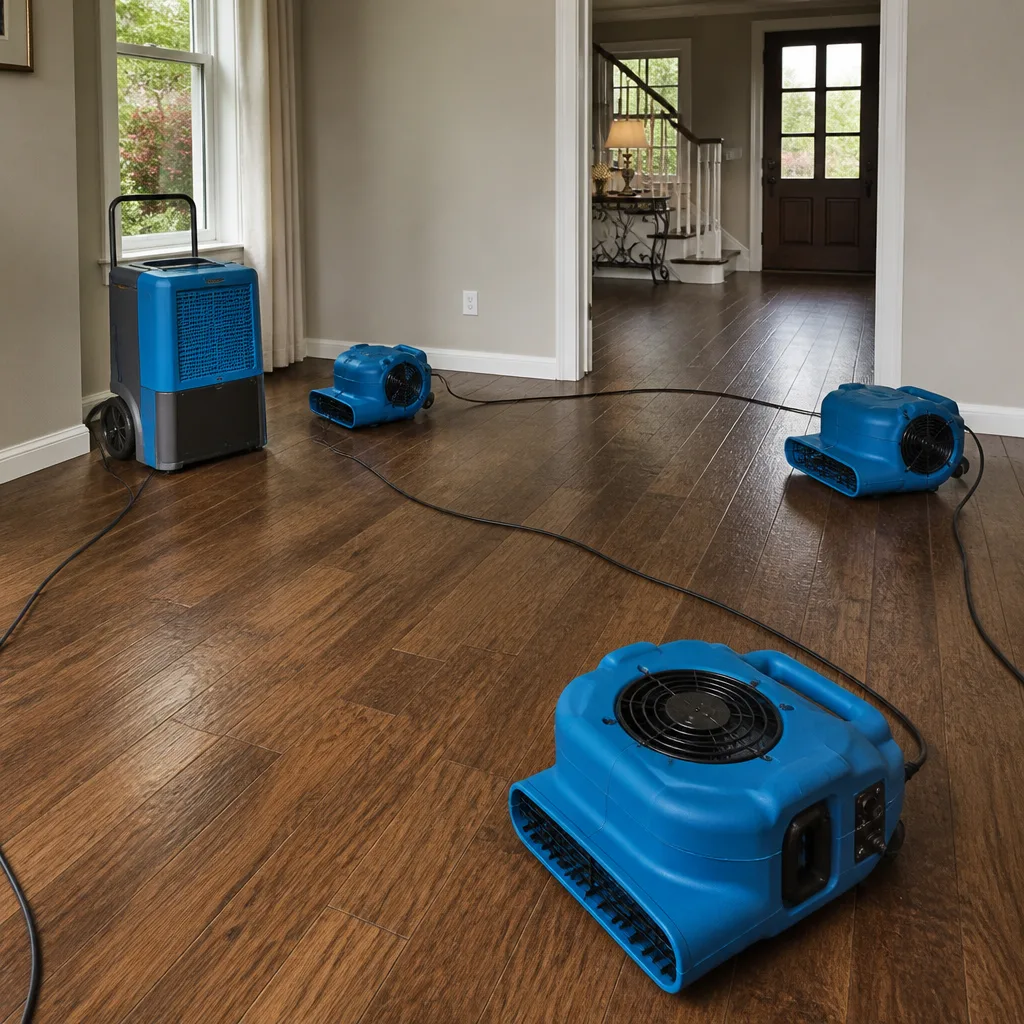
 Water damage drying
 Fire & smoke cleanup
 Mold remediation
 Storm response
 Sewage cleanup
 Reconstruction
Free visual inspection and a written scope of work before any mitigation begins - photos, moisture readings, and drying logs go in your claim file
The scope we write is the scope we bill. Anything new gets shown to you, in writing, before we touch it.
Get your free estimateFast, Reliable Mold Remediation Across Bloomington
Mold remediation in Bloomington typically costs $1,800 – $4,200 for a contained removal of affected drywall and framing in a mid-century tract home, and we can usually have a certified crew on site within 24 to 48 hours. The mold we find in Bloomington’s 1950s – 70s stucco homes is rarely the result of a burst pipe. More often it starts with Santa Ana wind-driven rain pushing water behind original stucco where the flashing has quietly failed over five or six decades. If you’re seeing dark staining at a wall corner, catching a musty smell in a north-facing bedroom, or your tenant on Cedar Avenue just called about a ceiling discoloration, call (833) 620-3891. We’ll tell you what we think over the phone before anyone schedules anything.
Why Renew Water Damage Is Bloomington’s Preferred Mold Remediation Company
We’re not a general contractor who added mold to a list of services. Mold Remediation is one of three core disciplines we run as a certified restoration company, and our work in Bloomington keeps proving that older stucco homes demand a different inspection approach than newer construction. Noel Carbajal built Renew Water Damage around the idea that restoration work should follow documented industry standards, not crew-level guesswork. That’s why our technicians carry IICRC certification, and why we run moisture mapping before we ever recommend demolition. We’ve pulled moldy drywall off walls in Bloomington where the exterior looked perfectly intact, and that’s the point: what’s hidden inside the cavity is what costs you later.
Bloomington homeowners call us because the problem doesn’t announce itself. A 1962 ranch off Cedar Avenue might smell faintly musty for weeks before anyone connects it to a February wind event. By the time we arrive, we treat every job as potentially larger than the visible stain. Our Dri-Eaz dehumidifiers and Phoenix units are commercial grade, the same tier used on large commercial losses, and we document moisture readings before, during, and after drying. That documentation helps when you’re working with an insurance adjuster who only sees the finished repair, not the four days of drying that happened behind containment.
Restoration work we handle
Black Mold Removal in Bloomington
Black mold removal in Bloomington starts with understanding where the water came from, because in a 1960s stucco tract home the source is often wind-driven rain that entered through a failed flashing detail rather than an obvious leak. The mold you see on the interior drywall is the symptom. The cause sits inside the wall cavity, behind original stucco that was installed before modern building paper and weep screeds became standard. We set up containment before opening any wall, because disturbing a mature mold colony inside a wood-frame cavity sends spores into adjacent rooms fast. Then we remove the affected drywall, bag it, treat the framing with an antimicrobial, and dry the structure to pre-loss moisture levels before any reconstruction begins.
Wind-Driven Moisture Behind Original Stucco
Bloomington’s original tract homes were built with stucco applied directly over wood framing, without the drainage plane a modern build would include. When a Santa Ana event drives rain horizontally into a north- or east-facing wall, water follows the path of least resistance. It wicks into sheathing and studs, and the arid climate hides it until the drywall starts staining or the room smells. We use pin meters and thermal imaging to find those hidden reservoirs before we cut.
Antimicrobial Treatment and Controlled Drying
Removing moldy drywall is only half the job. The framing behind it carries spores and moisture that will re-bloom if the wood isn’t treated and dried correctly. We apply an antimicrobial to the exposed framing and run Dri-Eaz dehumidifiers with air movers inside containment for as long as the moisture readings require. In Bloomington’s older wood-frame homes, that’s typically three to five days for a wall cavity that reads above 25% moisture content.
Mold Removal Contractor in Bloomington
Hiring a mold removal contractor in Bloomington means finding someone who won’t just wipe the surface and paint over the problem. We’re often the second company called after a handyman or painter cleaned a stain that returned six weeks later. A proper mold removal contractor in this market needs to understand mid-century stucco construction, because the failure mode here isn’t the same as a flood in a slab-on-grade newer home. It’s slow, wind-driven moisture trapped in aging wood-frame walls, and the fix requires controlled demolition, treatment, drying, and a moisture-management plan so the same wall doesn’t fail again next wind season.
Containment Before Any Wall Is Opened
We never open a mold-affected wall in Bloomington without setting up containment first. Older homes often have unsealed attics and shared wall cavities, which means spores can travel through the structure in ways a three-bedroom floor plan doesn’t reveal. Containment is the difference between a contained remediation and a whole-house spore event that shows up in a closet two weeks later.
Written Scope Before Work Begins
You’ll get a written scope that says exactly what we’re removing, what we’re treating, and how long we expect the drying phase to last. Bloomington homeowners have reason to be wary after years of hearing stories about restoration crews that inflated scopes once walls were open. We don’t work that way. The moisture map drives the scope, and we walk you through the readings before any demolition starts.
Trusted Brands We Service in Bloomington
Our equipment trailer carries the same brands you’ll find on large commercial restoration projects: Dri-Eaz dehumidifiers, Phoenix units, and XPOWER and B-Air air movers. For Bloomington’s older wood-frame homes, we also run Injectidry wall-cavity drying systems, which force dry air into wall and floor cavities without requiring full drywall removal in every case. That matters on a mid-century Bloomington home where original lath-and-plaster or early drywall may not be worth replacing if the cavity can be dried in place. We keep the consumables stocked for fast turnaround on Bloomington jobs, and our crews know which machine matches which situation rather than running everything at once and hoping.
See the difference
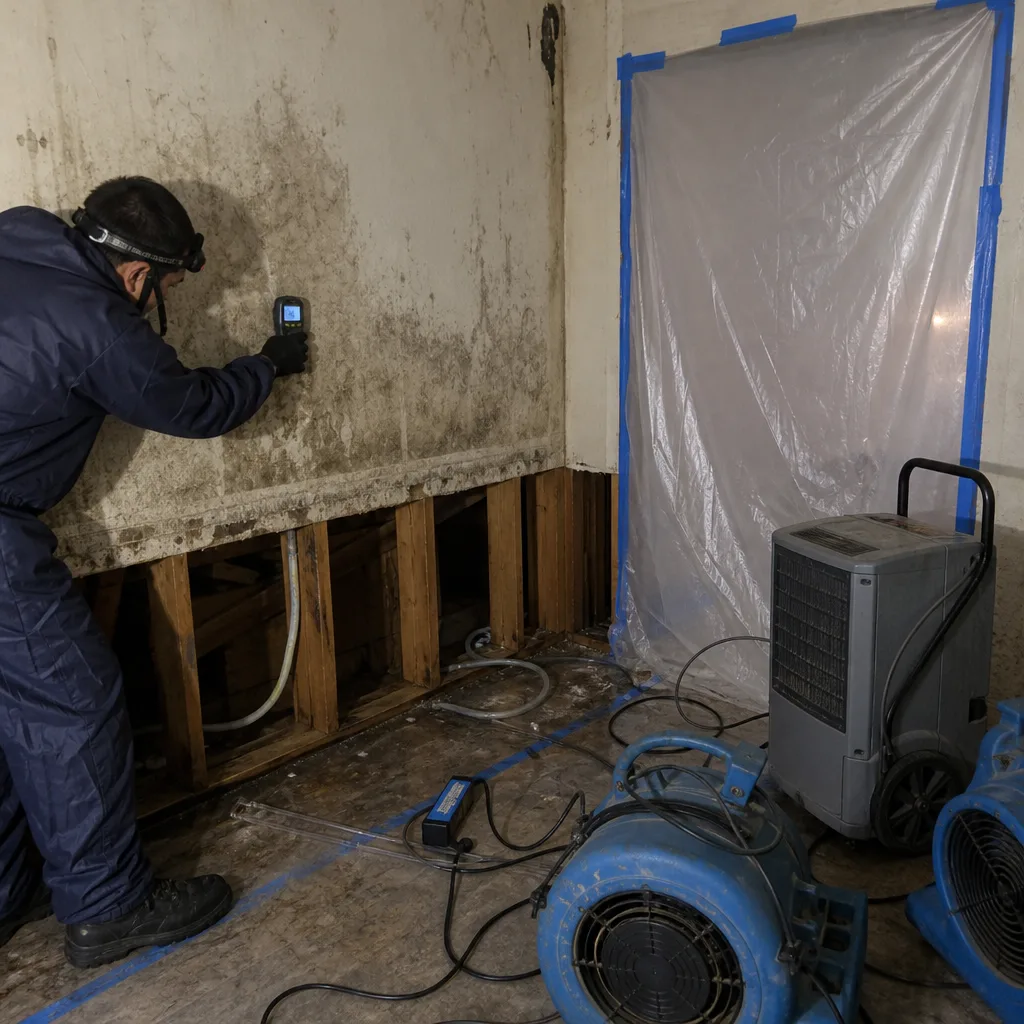 Before
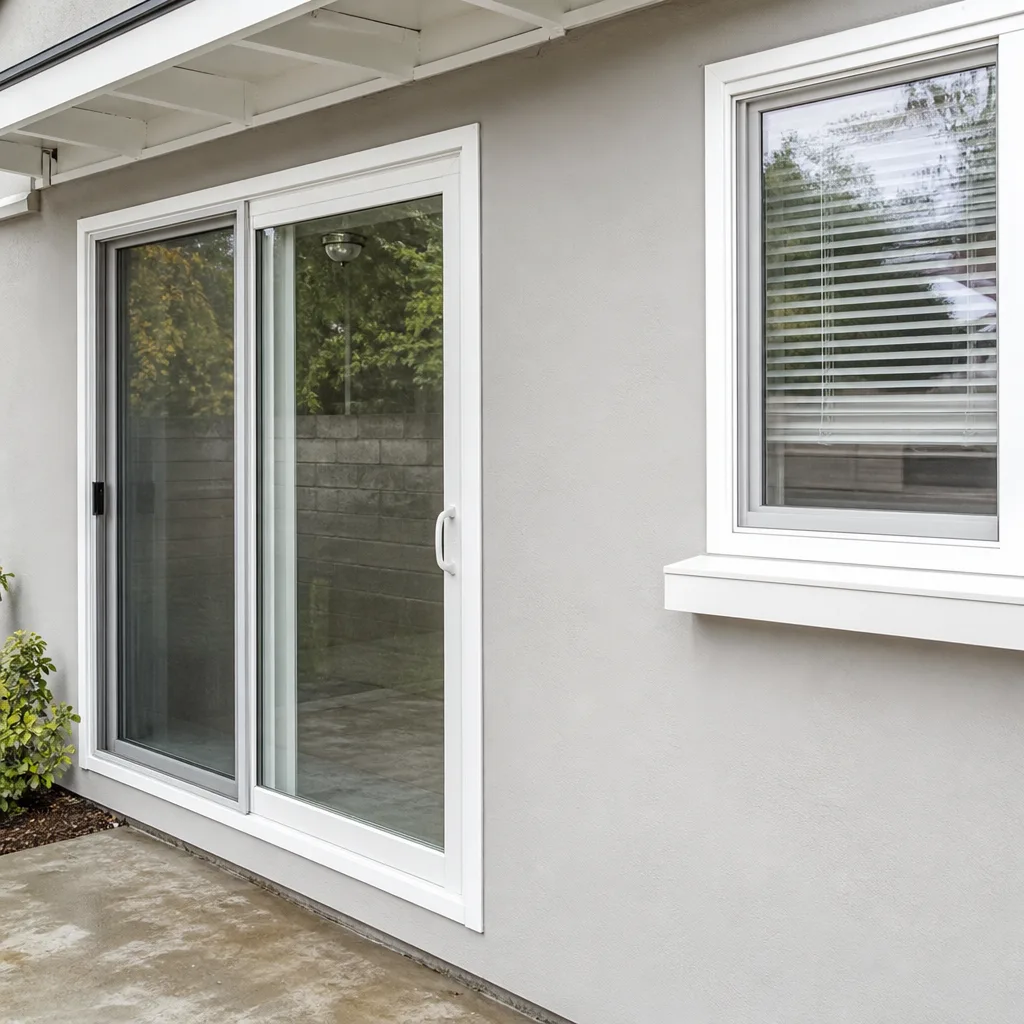 After
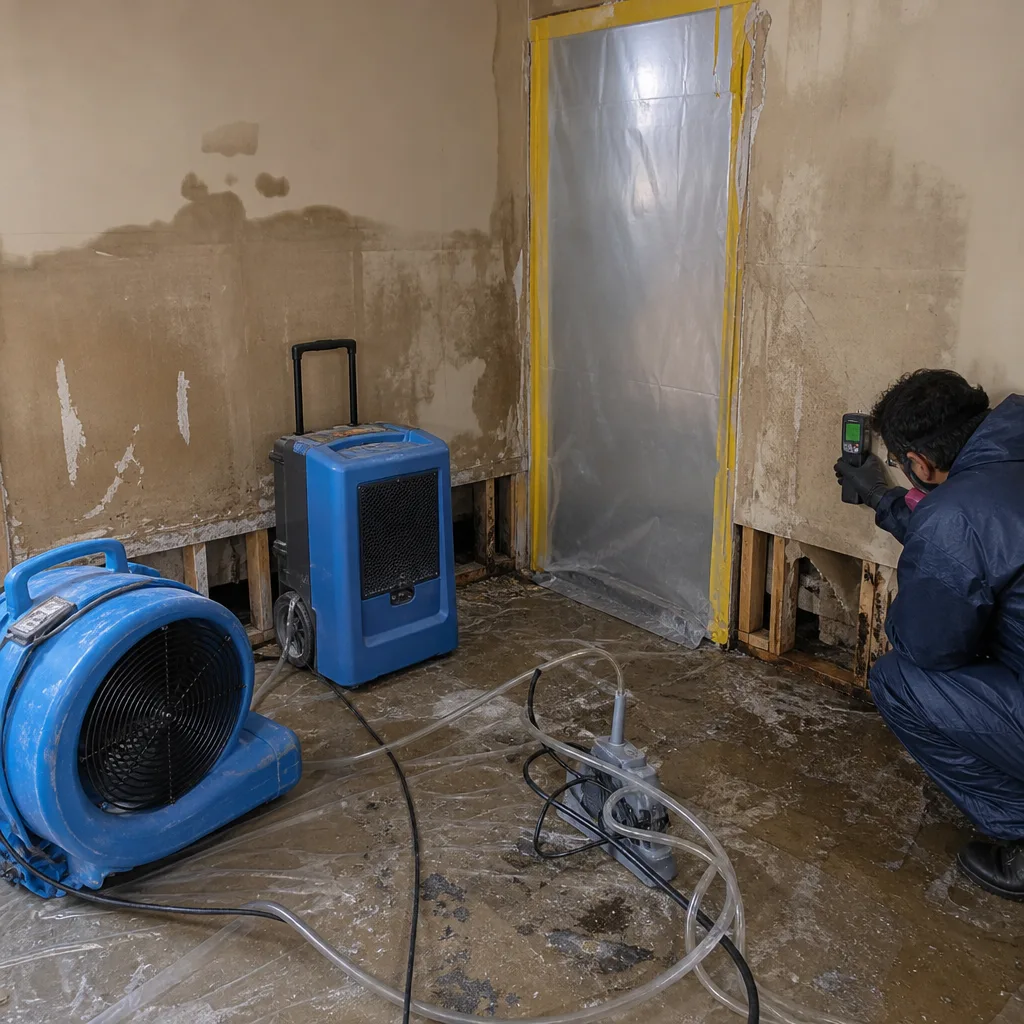 Before
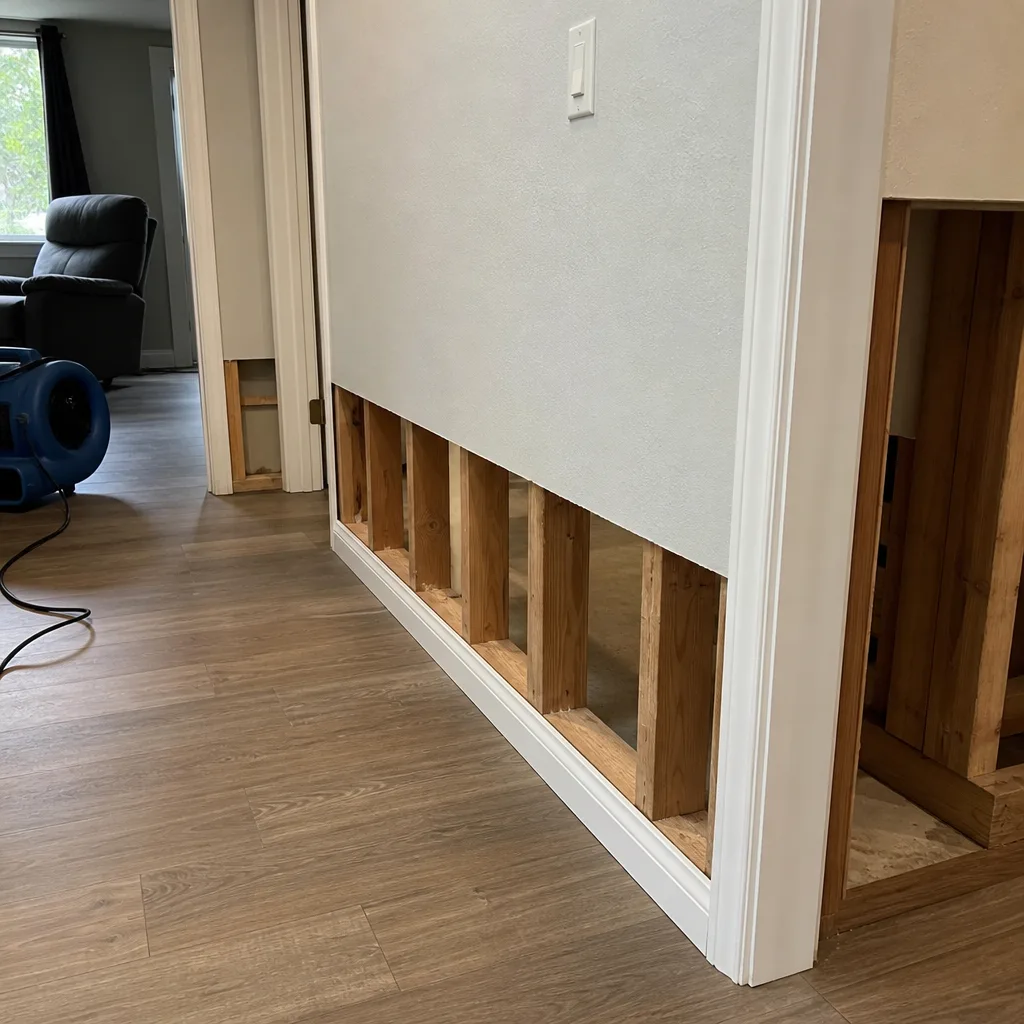 After
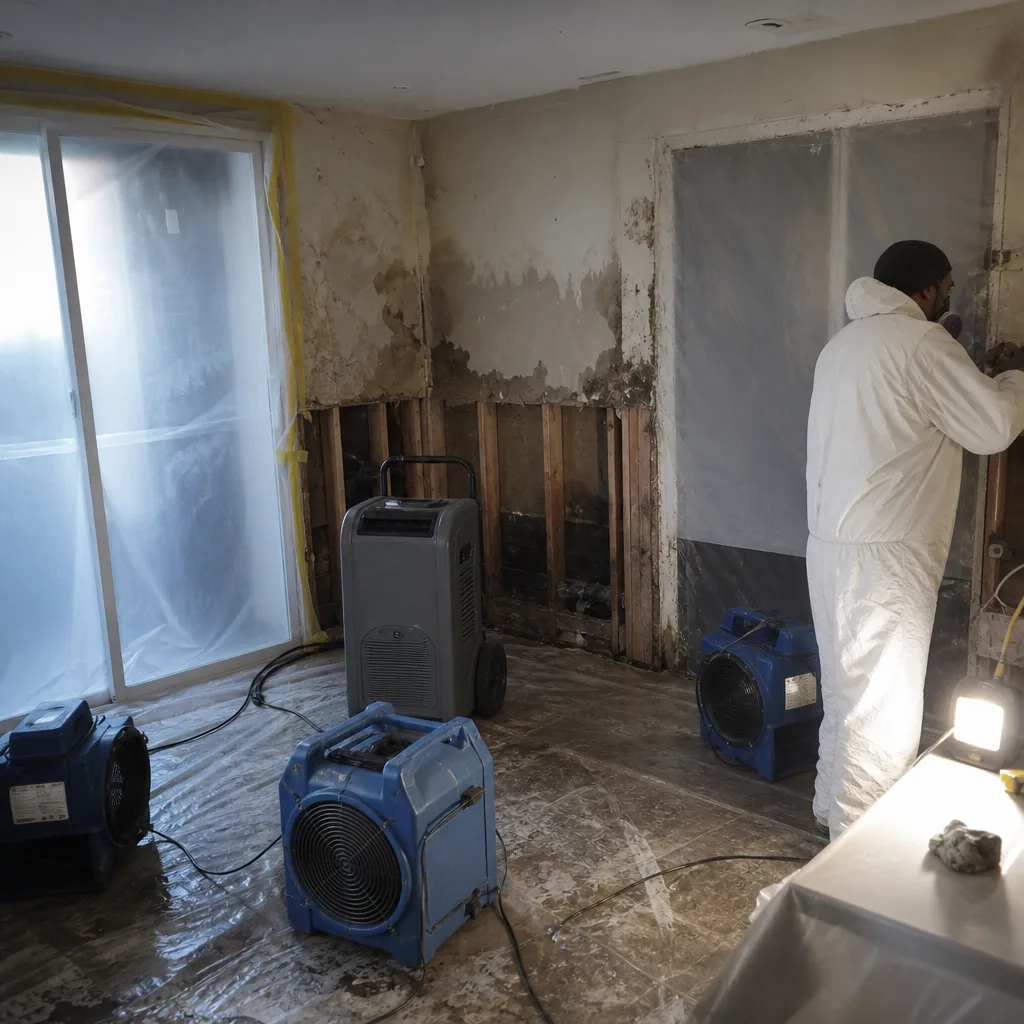 Before
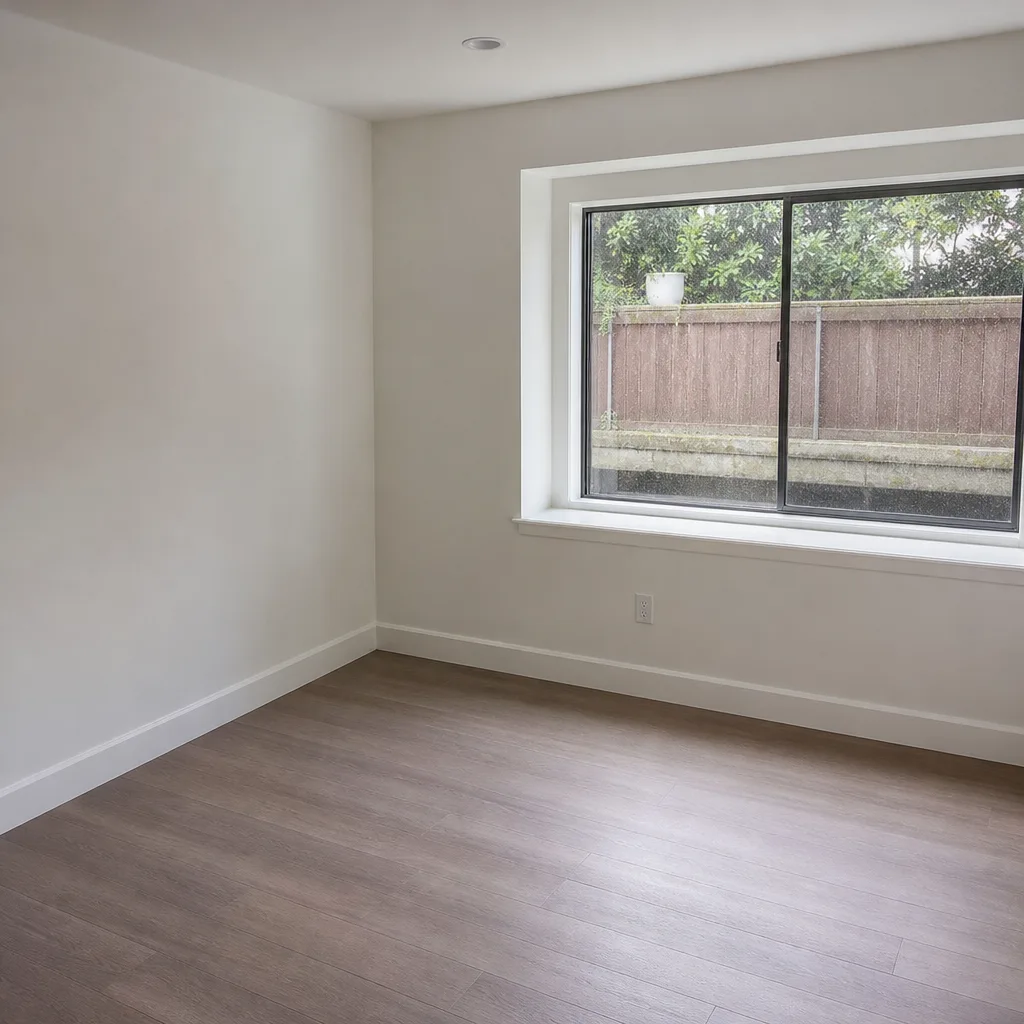 After
Common Mold Remediation Problems We See in Bloomington Homes
- Hidden moisture behind intact stucco. The arid climate of Bloomington lulls homeowners into thinking mold needs visible water. Santa Ana wind events push rain into north- and east-facing stucco walls through failed flashing, and the damage stays invisible until odor or staining appears months later.
- Superficial cleaning that misses the cavity. We regularly follow crews that wiped visible mold from drywall but never opened the wall. The mold in the cavity doesn’t care that the surface looks clean; it comes back within weeks because the moisture source is still there.
- Spore spread from uncontained drying. Running air movers in an older Bloomington home without containment pushes mold spores through unsealed attics and shared wall cavities into rooms that were never affected. By the time anyone notices, the problem has moved.
- Aging plumbing hidden inside original framing. Many Bloomington tract homes still carry original galvanized supply lines or cast-iron drain sections that fail slowly. A pinhole leak inside a wall cavity feeds mold for months before any visible sign appears on the interior surface.
Pricing for Mold Remediation in Bloomington, CA
Mold remediation in Bloomington typically runs $1,800 – $4,200 for a contained removal in a single wall or ceiling area of a 1950s – 70s tract home. That range covers containment setup, removal of affected drywall, antimicrobial treatment of framing, and three to five days of controlled drying with commercial-grade equipment. If the affected area spreads across multiple rooms or includes original lath-and-plaster rather than drywall, the job moves toward the upper end of that range. A small isolated patch under a sink with no cavity moisture might come in around $900 – $1,400. Every job gets a written scope with the moisture readings explained before we start. Call (833) 620-3891 for a free estimate based on your specific Bloomington home.
We Also Serve Cities Near Bloomington
Our crews work throughout the western Inland Empire, and we regularly cross into Bloomington from nearby jobs in Fontana, Rialto, Glen Avon, and Pedley. The housing stock in those communities shares the same mid-century stucco construction and Santa Ana exposure, so the failure modes we see in Bloomington carry directly across the city line. If you’re in one of those surrounding areas and have questions about a musty smell or dark staining, call us. We’ll tell you what we think is happening before anyone schedules a visit.
Serving Bloomington, CA — Our Local Coverage Area
We’re based in the Bloomington area and know this community well. Use the map below to see our service coverage — if you’re nearby, we can almost certainly help.
FAQs About Mold Remediation in Bloomington
Bloomington’s mid-century tract homes were built with stucco applied directly over wood framing, without modern building paper or weep screeds, so horizontal Santa Ana-driven rain enters through failed flashing and wicks into the wall cavity. The moisture then feeds mold inside the framing long before any interior stain appears. If your north- or east-facing wall smells musty after a wind event, call (833) 620-3891 for a moisture check.
Mold can begin colonizing within 48 to 72 hours of water intrusion in a wood-frame wall cavity, and Bloomington’s arid climate actually hides the problem because the exterior stucco dries quickly while the interior cavity stays wet. By the time you smell it, the colony has typically been active for weeks. The sooner we run moisture mapping after a suspected wind-driven leak, the smaller the remediation scope tends to be.
Usually yes, because the mold we find in Bloomington’s 1950s – 70s walls is almost always growing inside the cavity, not just on the drywall surface. In some cases Injectidry cavity drying can dry a wall in place without full removal, but if the drywall itself shows visible mold growth or water staining, it comes out. We make that call based on moisture readings and the condition of the drywall, and we show you those readings before any cutting starts.
Yes. A Category 1 water loss is clean water, like a supply-line leak, but if the water sits inside a wall or under flooring for more than 48 hours, the microbial growth that follows is the same mold problem you’d get from contaminated water. Bloomington’s aging galvanized plumbing makes these slow clean-water leaks common, and they often go unnoticed because the leak is small and the water is clean. The mold that follows doesn’t care how clean the water started.
We run Dri-Eaz and Phoenix dehumidifiers with XPOWER and B-Air air movers inside containment, and we use Injectidry cavity drying systems for moisture trapped inside wall and subfloor cavities without full demolition. For Bloomington’s original wood-frame construction, moisture mapping with pin meters and thermal imaging tells us where the hidden reservoirs are so we’re not cutting blindly. Every drying job is documented with before, during, and after readings.
Written by Noel Carbajal, Owner at Renew Water Damage, serving Bloomington since founding the company to bring certified restoration standards to Southern California’s older housing stock.